Water Distribution System Monitoring
Water Distribution System Monitoring
Water distribution system monitoring is a critical component of modern municipal and industrial infrastructure management. As urban populations grow and water scarcity becomes a pressing global concern, the ability to accurately track, manage, and optimize water flow and storage is essential. Effective monitoring ensures that water reaches its destination at the correct pressure and volume while minimizing losses due to leaks, overflows, or equipment failure. Central to this process is the integration of reliable level measurement technologies that provide real-time data to SCADA (Supervisory Control and Data Acquisition) systems.
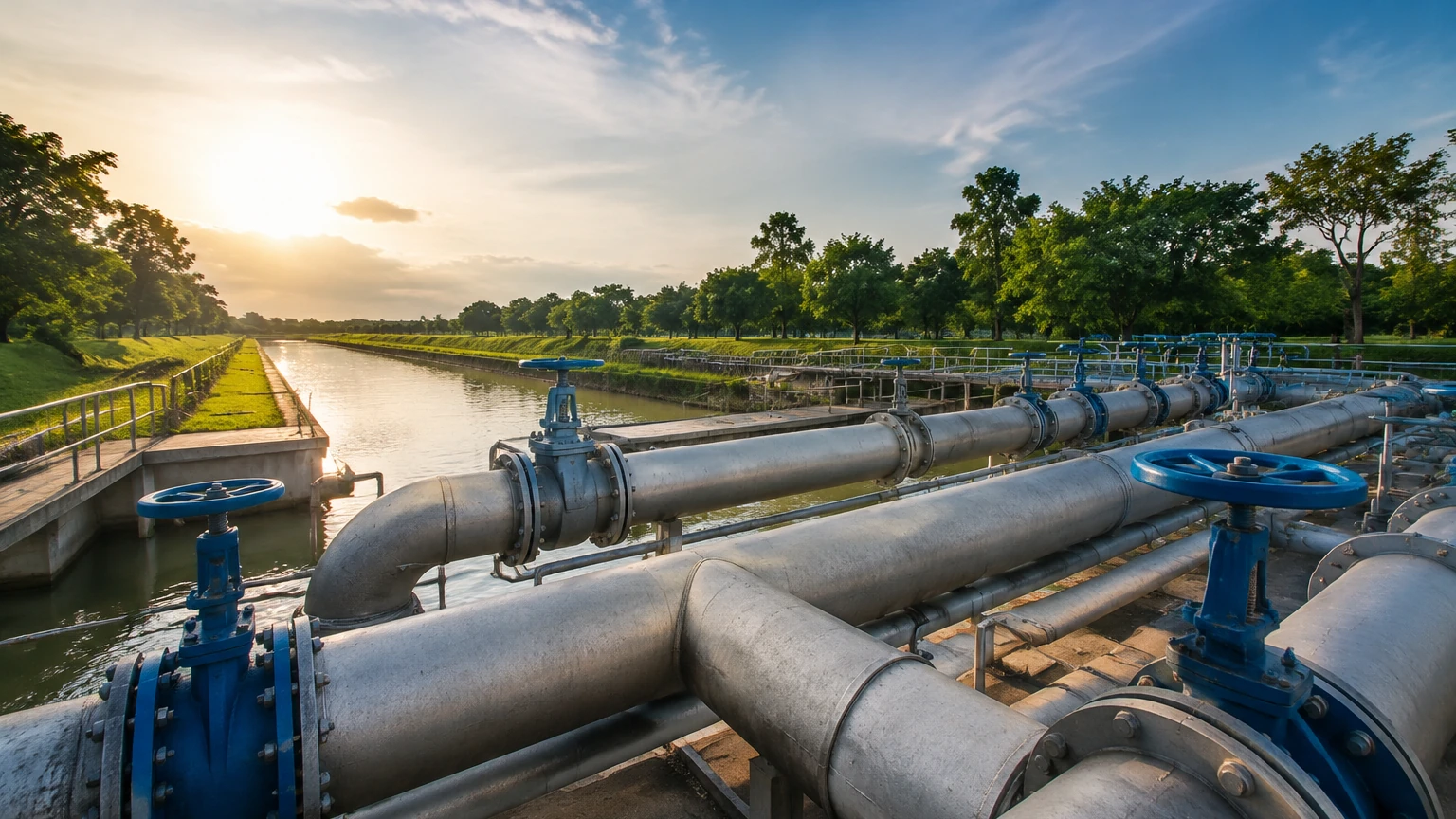
In the context of industrial automation and water treatment, monitoring involves a network of sensors, transmitters, and data loggers placed at strategic points within the distribution grid. These points include clear water reservoirs, elevated storage tanks, pumping stations, and pressure-reducing valve (PRV) chambers. By employing advanced level and pressure instrumentation, operators can maintain the delicate balance between supply and demand, ensuring the longevity of the infrastructure. For a comprehensive overview of available instrumentation and technical specifications, engineers can refer to the Main Page of our product catalog.
Measurement Principles in Water Monitoring
Before selecting specific instruments for water distribution system monitoring, it is vital to understand the physics behind the measurement. In water applications, three primary principles dominate the landscape: hydrostatic pressure, ultrasonic time-of-flight, and radar (microwave) technology.
Hydrostatic Level Measurement
Hydrostatic measurement is based on the principle that the pressure at a specific point in a liquid is proportional to the height of the liquid column above it. The formula used is $P = \rho \cdot g \cdot h$, where $P$ is pressure, $\rho$ is the density of the water, $g$ is gravity, and $h$ is the height of the liquid.
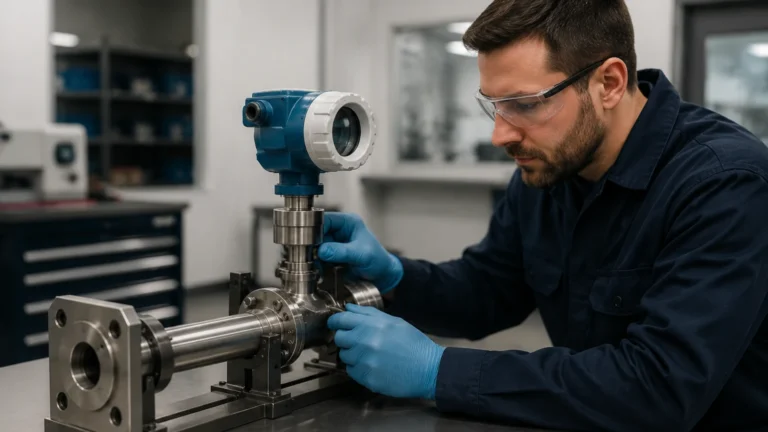
Submersible hydrostatic transmitters are widely used in deep wells and reservoirs. These devices consist of a sensing diaphragm and a vented cable that compensates for changes in atmospheric pressure. Because water density is relatively constant, hydrostatic sensors offer a highly reliable and cost-effective method for monitoring deep-water assets where surface access is limited.
Ultrasonic Level Measurement
Ultrasonic sensors are non-contact devices that emit high-frequency sound pulses. These pulses reflect off the surface of the water and return to the sensor. By measuring the time it takes for the pulse to travel to the surface and back (Time-of-Flight), the instrument calculates the distance.
Ultrasonic technology is ideal for open channels, weirs, and tanks where the sensor should not come into contact with the fluid. However, it is sensitive to environmental factors such as heavy foam, steam, or significant temperature fluctuations, which can alter the speed of sound and affect accuracy.
Radar Level Measurement
Radar level meters operate similarly to ultrasonic sensors but use electromagnetic waves (microwaves) instead of sound. High-frequency radar (typically 26GHz or 80GHz) is unaffected by air temperature, pressure, or vapor. This makes it the preferred choice for high-precision water distribution system monitoring in outdoor reservoirs or tanks where wind and solar heating might interfere with ultrasonic signals. Radar provides millimeter-level accuracy and requires virtually no maintenance due to its non-contact nature.
Selecting the Right Technology for Distribution Assets
Choosing the correct instrument depends on the specific asset being monitored. The following table provides a comparison of the most common technologies used in water distribution networks.
| Feature | Hydrostatic Transmitter | Ultrasonic Sensor | Radar Level Meter |
| :— | :— | :— | :— |
| Measurement Type | Contact (Submerged) | Non-contact | Non-contact |
| Accuracy | ±0.1% to ±0.5% FS | ±0.25% of range | ±1mm to ±3mm |
| Ideal Application | Deep wells, boreholes | Open channels, small tanks | Large reservoirs, elevated tanks |
| Maintenance | Low (occasional cleaning) | Medium (sensor face cleaning) | Very Low |
| Influence of Foam | None | High interference | Low to Moderate |
| Cost | Economical | Moderate | Premium |
Elevated Storage Tanks
Elevated tanks provide the head pressure required for the distribution network. Monitoring these tanks is crucial to prevent overflows and ensure fire protection reserves. Radar level meters are often recommended here because they can be mounted on the top of the tank and provide accurate readings regardless of the internal atmosphere or turbulence during filling cycles.
Underground Reservoirs and Clear Wells
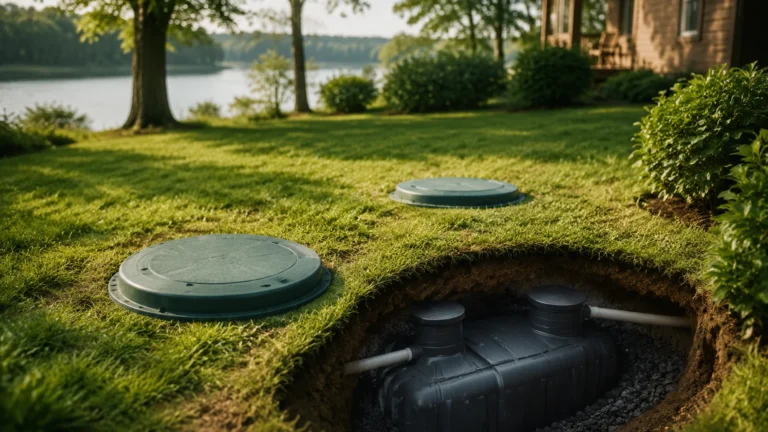
For underground assets, hydrostatic transmitters are often the most practical choice. They can be lowered into the reservoir via a stilling well, providing continuous level data even in confined spaces where mounting a non-contact sensor might be difficult due to structural beams or internal ladders.
Installation and Engineering Considerations
Proper installation is as important as selecting the right technology. In water distribution system monitoring, several engineering factors must be addressed to ensure long-term reliability.
1. Stilling Wells: In reservoirs where there is significant turbulence or inflow, a stilling well (a vertical pipe) should be used. This stabilizes the water surface for ultrasonic and radar sensors and protects hydrostatic probes from mechanical stress.
2. Cable Management: For submersible sensors, the vented cable must be protected from kinks and moisture. The use of a specialized junction box with a breathable desiccant filter is recommended to prevent condensation from forming inside the vent tube, which could lead to measurement errors.
3. Dead Zones: All non-contact sensors (ultrasonic and radar) have a "dead zone" or "blocking distance" directly beneath the sensor where measurements cannot be taken. It is essential to mount the sensor high enough to ensure the maximum water level never enters this zone.
4. Lightning Protection: Since many water distribution assets are located in exposed or elevated areas, surge protection is mandatory. Integrated surge protection in the transmitter, combined with proper grounding of the signal loop, prevents damage during electrical storms.
Overcoming Challenges in Remote Monitoring
Many points in a water distribution network are located in remote areas without access to the main power grid. This presents a challenge for continuous water distribution system monitoring. To address this, modern instrumentation must be optimized for low power consumption.
Power and Connectivity
Loop-powered (2-wire) transmitters are standard, but for truly remote sites, battery-powered or solar-powered systems are used. These systems often utilize NB-IoT (Narrowband Internet of Things) or LoRaWAN protocols to transmit data back to the central utility office. By using instruments with fast start-up times, the system can "wake up," take a measurement, transmit the data, and return to sleep, significantly extending battery life.
Environmental Factors
Outdoor installations must contend with extreme temperatures. While radar is largely immune to these changes, ultrasonic sensors require integrated temperature compensation. Furthermore, all outdoor equipment should have at least an IP68 rating to ensure it remains functional during heavy rain or accidental submersion.
Limitations and Practical Constraints
While modern level meters are highly advanced, they are not without limitations.
* Hydrostatic Limitations: These sensors are sensitive to changes in liquid density. If the water has high salinity or varying chemical concentrations (e.g., in a treatment stage), the sensor must be recalibrated for the specific gravity of the fluid.
* Ultrasonic Limitations: Strong winds can "blow" the sound pulse away from the receiver in long-range outdoor applications. Additionally, heavy condensation on the sensor face can attenuate the signal.
* Radar Limitations: While highly robust, radar signals can be reflected by internal tank structures like ladders or pipes. This requires the use of "false echo suppression" software during commissioning to map out and ignore these static reflections.
Frequently Asked Questions (FAQ)
Q: How often should level sensors in water distribution be calibrated?
A: For most municipal applications, an annual calibration check is sufficient. However, hydrostatic sensors should be checked more frequently if they are installed in water with high sediment levels that could coat the diaphragm.
Q: Can one sensor type be used for all distribution needs?
A: While radar is the most versatile, it may not be cost-effective for every point in the system. A hybrid approach—using radar for critical storage tanks and hydrostatic sensors for deep wells—is usually the most efficient strategy for water distribution system monitoring.
Q: What is the impact of chlorine on sensor longevity?
A: In treated water distribution, chlorine levels are generally low enough not to affect standard stainless steel (316L) sensors. However, in concentrated chemical dosing areas, specialized materials like PVDF or PTFE-coated sensors should be used to prevent corrosion.
Q: How does the system handle signal loss?
A: Modern transmitters can be programmed to output a specific "fault" current (e.g., 3.6mA or 21mA) if the signal is lost. The SCADA system then triggers an alarm to alert operators of a potential instrument failure.
Conclusion
Reliable water distribution system monitoring is the backbone of efficient utility management. By understanding the principles of hydrostatic, ultrasonic, and radar measurement, engineers can design systems that reduce waste and improve service reliability. Whether managing a small rural network or a vast metropolitan grid, the selection of high-quality instrumentation—such as those found on the Welk Main Page—ensures that every drop of water is accounted for and delivered safely to the end-user. As technology continues to evolve, the integration of smart sensors and IoT connectivity will further enhance our ability to protect and manage this vital resource.