Water Level Probe Sensor
Water Level Probe Sensor
In the landscape of industrial automation and process control, the water level probe sensor stands as a fundamental component for monitoring and managing liquid resources. Whether utilized in municipal water treatment, chemical processing, or deep-well monitoring, these sensors provide the critical data required to prevent overflows, manage pump cycles, and ensure the safety of storage infrastructure. Selecting the appropriate technology requires a deep understanding of the physical principles governing different sensor types, as well as the specific environmental challenges of the application site.
As a professional manufacturer, Welk specializes in providing a diverse range of industrial level measurement instruments. This guide serves as a practical engineering reference for selecting, installing, and maintaining water level probe sensors across various industrial sectors.
Measurement Principles of Water Level Probes
Before selecting a sensor, it is essential to understand the primary technologies used to detect water levels. The term "probe" can refer to several distinct physical measurement principles, each suited to different fluid characteristics and vessel geometries.
Hydrostatic Pressure Measurement
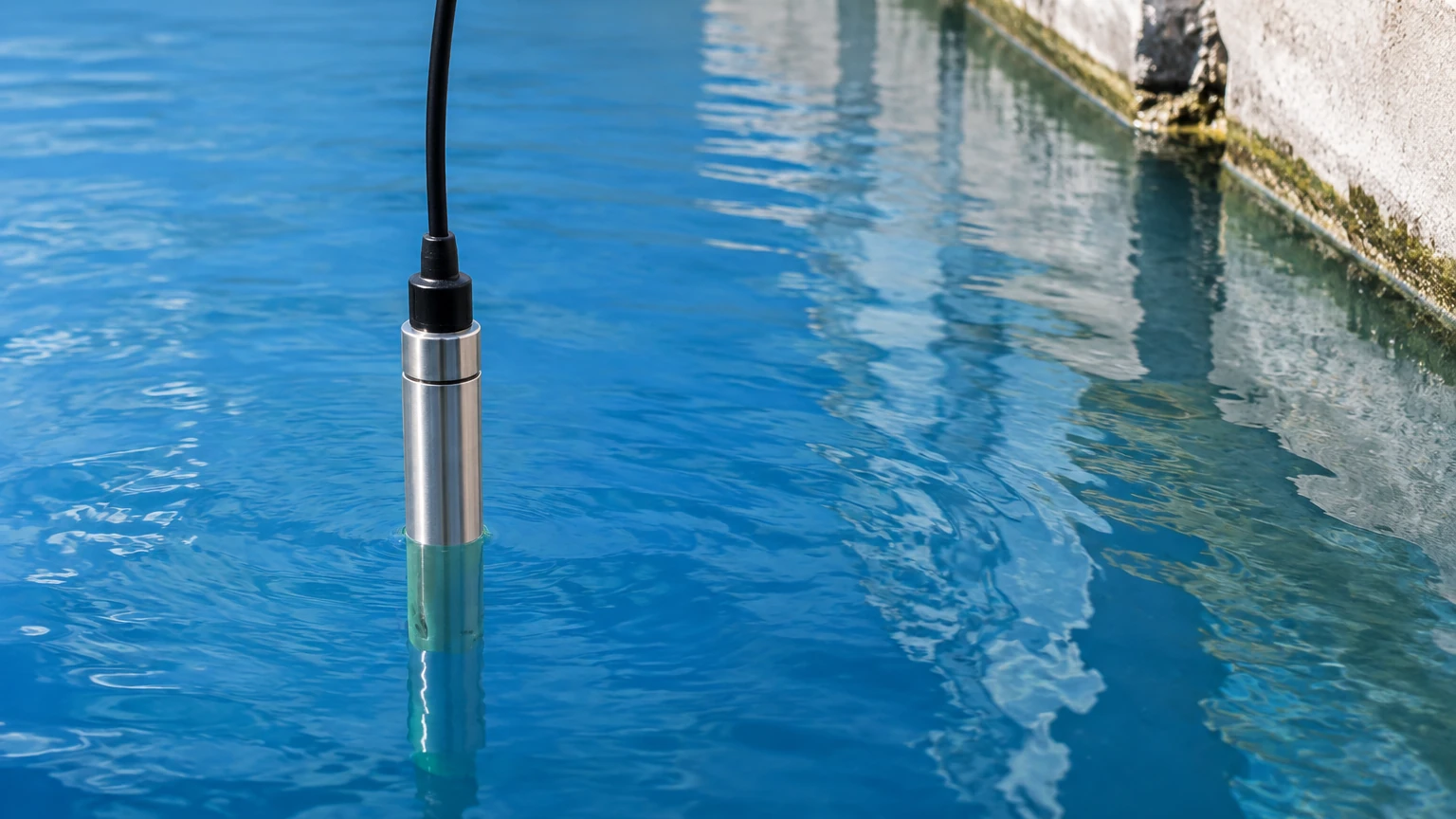
Hydrostatic water level probe sensors operate on the principle that the pressure at a specific depth within a liquid is directly proportional to the height of the liquid column above it. The relationship is defined by the formula:
P = ρ × g × h
Where:
* P is the hydrostatic pressure (Pa).
* ρ (rho) is the density of the liquid (kg/m³).
* g is the gravitational acceleration (approximately 9.81 m/s²).
* h is the height of the liquid column (m).
These sensors are typically submersible. They consist of a sensing diaphragm and a vented cable. The diaphragm detects the combined pressure of the liquid and the atmosphere. To provide an accurate level reading, the atmospheric pressure is "canceled out" via a small vent tube running through the length of the cable to the sensor head. This ensures that the sensor only measures the pressure exerted by the water column.
Conductive Level Detection
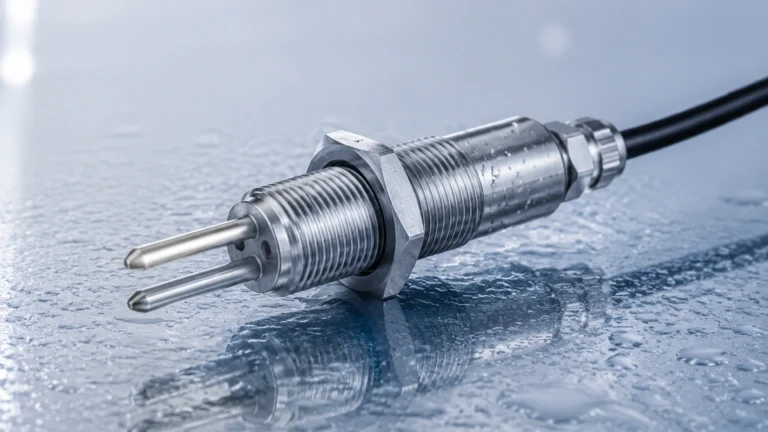
Conductive probes are used for point-level detection (sensing when water reaches a specific height). This technology relies on the electrical conductivity of the liquid. A low-voltage AC signal is applied to an electrode. When the water level rises and touches the probe, the circuit is completed through the liquid to a reference electrode or the metal tank wall. This change in state triggers a switch, which can be used to start or stop pumps or activate alarms.
Capacitive Level Measurement
Capacitive probes measure the change in electrical capacitance between two conductors. In a typical setup, the probe acts as one plate of a capacitor, and the tank wall (or a reference rod) acts as the second plate. As the water level rises, it replaces the air between the plates. Since water has a significantly higher dielectric constant than air, the total capacitance increases. This change is converted into a continuous 4-20mA or digital signal representing the level.
Key Evaluation Criteria for Selection
Choosing the right water level probe sensor involves more than just matching a measurement range. Engineers must evaluate the following criteria to ensure long-term reliability:
1. Chemical Compatibility: The housing and cable materials must withstand the process media. While SS316L is standard for water, aggressive chemicals may require PTFE, PVDF, or Hastelloy components.
2. Measurement Range: Submersible hydrostatic probes are available for ranges from 1 meter (3.28 ft) up to 500 meters (1,640 ft) or more. Accurate scaling is vital for resolution.
3. Accuracy and Stability: Industrial applications typically require accuracy within 0.1% to 0.5% of the full scale. Long-term drift should be minimized through high-quality sensor elements.
4. Output Signals: Common options include 4-20mA analog signals, Modbus RTU (RS485), or HART protocols for integration into PLC and SCADA systems.
5. Environmental Conditions: Consider the operating temperature (typically -20°C to +80°C for standard probes) and potential pressure surges (water hammer).
For a detailed review of specific instrument specifications and to determine the best fit for your application, you may consult the Main Page for our full product catalog and technical support.
Practical Selection Table
The following table compares the most common types of probe-style level sensors used in industrial water management.
| Sensor Type | Measurement Mode | Best For | Limitations |
| :— | :— | :— | :— |
| Hydrostatic Submersible | Continuous | Deep wells, open reservoirs, vented tanks | Sensitive to density changes and high turbulence |
| Conductive Probe | Point (Switch) | Pump control, overflow protection | Requires conductive liquid; prone to fouling |
| Capacitive Probe | Continuous/Point | Small tanks, chemical storage | Affected by material buildup or coating on the probe |
| Magnetic Float Probe | Continuous | High-pressure tanks, clean water | Moving parts can stick if solids are present |
Installation Considerations
Proper installation is as critical as sensor selection. Even the most accurate water level probe sensor will fail if environmental factors are ignored during setup.
Positioning and Stability
In applications involving moving water, such as tanks with agitators or open channels, the probe must be protected from lateral forces. A "stilling well" (a perforated pipe) is often used to house the sensor, providing a calm environment for measurement while allowing the water level to equalize inside the pipe.
Cable Management and Venting
For hydrostatic probes, the vented cable is the most vulnerable component. The vent tube must remain unobstructed to ensure accurate atmospheric compensation. It is recommended to use a junction box with a breathable desiccant filter to prevent moisture from entering the vent tube, which could lead to internal corrosion or sensor drift.
Grounding and Lightning Protection
In outdoor installations, such as reservoirs or boreholes, sensors are susceptible to lightning strikes and electrical surges. Utilizing sensors with built-in surge protection and ensuring the system is properly grounded to the plant's common ground is essential for preventing catastrophic electronics failure.
Limitations and Common Risks
While probe-style sensors are highly effective, they are not universal solutions. Engineers should be aware of the following risks:
* Media Density Variations: Since hydrostatic sensors measure weight, a change in liquid density (due to temperature shifts or chemical concentration) will result in a level error. If density varies significantly, compensation via a secondary temperature sensor or a different technology (like radar) may be required.
* Fouling and Scaling: In wastewater or hard water applications, minerals and biological growth can accumulate on the sensor diaphragm or electrodes. Conductive probes are particularly sensitive to "bridging," where a layer of conductive film causes a false positive reading.
* Turbulence and Foam: Rapidly changing levels or surface foam can interfere with capacitive and ultrasonic measurements. Hydrostatic probes are generally unaffected by foam but can be physically displaced by high-velocity flows.
Frequently Asked Questions (FAQs)
Q: How often should a water level probe sensor be calibrated?
A: For most industrial applications, an annual calibration check is recommended. However, in critical processes or harsh environments, semi-annual checks may be necessary to account for sensor drift.
Q: Can a hydrostatic probe be used in a sealed tank?
A: If the tank is pressurized, a standard vented hydrostatic probe cannot be used alone, as it would measure the head pressure of the gas above the liquid. In these cases, a differential pressure transmitter or a non-contact radar sensor is preferred.
Q: What is the maximum cable length for a submersible probe?
A: Cable lengths can exceed 1,000 meters (3,280 ft), but signal degradation and voltage drop must be considered. For very long distances, RS485/Modbus digital signals are superior to 4-20mA analog loops.
Q: Are these sensors suitable for wastewater?
A: Yes, but specific designs are required. For wastewater, probes with large, flush-mounted diaphragms are used to prevent clogging from solids and debris.
Conclusion and Technical Support
Selecting the right water level probe sensor requires balancing technical requirements with budget constraints and site-specific challenges. By understanding the underlying physics of hydrostatic, conductive, and capacitive measurement, engineering teams can implement robust systems that provide years of reliable service.
Welk provides a comprehensive suite of level measurement solutions, including radar, ultrasonic, and hydrostatic transmitters tailored for the most demanding industrial environments. For further technical documentation, CAD drawings, or to request a quote for your specific project, please visit our Main Page to connect with our application engineers.