Water Level Sensor for Tank
Water Level Sensor for Tank
In industrial process control, the selection of a water level sensor for tank applications is a fundamental engineering decision that impacts operational safety, inventory management, and process efficiency. Whether managing municipal water treatment, chemical storage, or industrial cooling towers, the choice of technology must align with the physical properties of the liquid, the geometry of the vessel, and the environmental conditions of the site.
Reliable level measurement prevents tank overflows, protects pumps from dry running, and ensures accurate dosing in automated systems. This guide examines the primary measurement principles, selection criteria, and installation best practices for industrial tank level monitoring. For a comprehensive overview of available technologies, engineers may refer to the Main Page to review product options and application support.
Measurement Principles for Tank Level Sensing
Before selecting a specific instrument, it is essential to understand the physics behind the various measurement technologies. Industrial sensors are generally categorized into non-contact and contact methods.
Radar Level Measurement (Non-Contact)
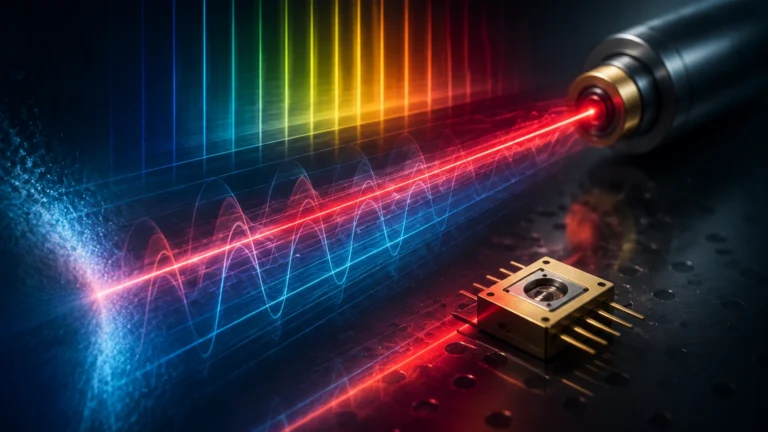
Radar level meters, particularly those operating at 26GHz or 80GHz frequencies, utilize the Frequency Modulated Continuous Wave (FMCW) or pulse radar principle. The sensor emits a high-frequency electromagnetic signal that travels to the liquid surface and reflects back. The instrument calculates the distance based on the time-of-flight or frequency shift.
Radar is highly regarded for its precision (often within ±2mm) and its immunity to changes in air temperature, pressure, or the presence of vapors and dust. This makes it a preferred water level sensor for tank environments where the headspace may be saturated with steam or volatile gases.
Ultrasonic Level Measurement (Non-Contact)
Ultrasonic sensors function by emitting sound waves at frequencies above the human hearing range. These waves reflect off the water surface and return to the transducer. The distance is calculated using the speed of sound.
While cost-effective and easy to install, ultrasonic sensors are sensitive to air temperature fluctuations (which change the speed of sound) and can be hindered by heavy foam or significant surface turbulence. They are most effective in stable, ambient-pressure water storage tanks.
Hydrostatic Pressure Measurement (Contact)
Hydrostatic sensors operate on the principle that the pressure at the bottom of a liquid column is directly proportional to the height of that column. The formula used is $P = \rho gh$, where $P$ is pressure, $\rho$ is the density of the liquid, $g$ is gravity, and $h$ is the height of the liquid.
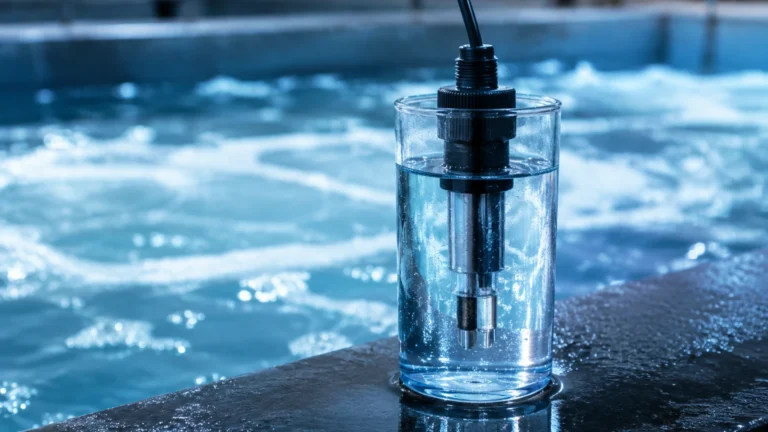
These sensors can be submersible (dropped to the bottom of the tank) or externally mounted via a flange or thread at the tank base. Hydrostatic measurement is exceptionally reliable for deep tanks and reservoirs, provided the liquid density remains constant.
Magnetic Level Gauges and Switches (Contact)
Magnetic level gauges utilize a float containing a permanent magnet that moves with the liquid level inside a bypass chamber. Externally mounted flaps or a transmitter track the float's position. Conversely, simple level switches provide point-level detection, triggering an electrical signal when the water reaches a specific high or low threshold. These are critical for redundant safety alarms.
Key Evaluation Criteria for Selection
Choosing the correct water level sensor for tank applications requires a systematic evaluation of the following factors:
1. Tank Geometry and Internal Obstructions: The presence of agitators, heating coils, or ladders can interfere with non-contact signals. Radar sensors with narrow beam angles are often required in tanks with complex internals.
2. Chemical Compatibility: If the "water" contains corrosive additives (such as chlorine in treatment plants or acids in industrial cleaning), the wetted parts of the sensor (e.g., PVDF, PTFE, or 316L Stainless Steel) must be chemically resistant.
3. Process Conditions: Consider the maximum and minimum operating temperatures and pressures. Hydrostatic sensors must be vented to the atmosphere if used in open tanks to compensate for barometric pressure changes.
4. Accuracy Requirements: For simple inventory monitoring, an accuracy of ±1% of the span may suffice. For custody transfer or precise chemical dosing, high-frequency radar with millimeter precision is necessary.
Practical Selection Table
The following table provides a comparison of common technologies used for water level sensing in industrial tanks.
| Technology | Measuring Range | Typical Accuracy | Advantages | Primary Limitations |
| :— | :— | :— | :— | :— |
| 80GHz Radar | Up to 120m | ±2 mm | Non-contact, unaffected by vapor/temp | Higher initial cost |
| Ultrasonic | 0.3m to 15m | ±0.25% of range | Low cost, no moving parts | Affected by foam and wind |
| Hydrostatic | 1m to 200m | ±0.5% FS | Simple installation, very stable | Density changes affect reading |
| Magnetic Gauge | 0.3m to 6m | ±5 mm | Visual indication + electronic | Requires bypass pipe installation |
| Float Switch | Point Level | N/A | Lowest cost, high reliability | No continuous measurement |
Installation Considerations
Correct installation is as critical as selecting the right technology. Poor placement can lead to false readings or premature equipment failure.
Positioning and Dead Zones
Every non-contact sensor has a "dead zone" or "blocking distance" near the transducer face where measurements are impossible. For example, if an ultrasonic sensor has a 0.3m (approx. 1 foot) dead zone, the tank cannot be filled above that point without losing the signal. The sensor should be mounted high enough to account for the maximum possible water level.
Avoiding the Inlet
Sensors should never be mounted directly above the tank inlet. The incoming water flow creates turbulence, bubbles, and physical interference that will cause erratic readings. Ideally, the sensor should be placed in a calm area of the tank, typically 1/4 to 1/6 of the tank diameter away from the wall to avoid signal reflection issues.
Mounting Nozzles
For radar and ultrasonic sensors, the mounting nozzle should be as short and wide as possible. If the nozzle is too long or narrow, the signal may reflect off the nozzle walls before reaching the water, creating "false echoes." If a long nozzle is unavoidable, a radar sensor with a specialized antenna or a guided wave radar (GWR) may be required.
Limitations and Common Risks
While modern sensors are robust, certain conditions present risks to measurement integrity:
* Foam Accumulation: Heavy, thick foam on the water surface absorbs ultrasonic and radar signals. In such cases, hydrostatic sensors or guided wave radar (which uses a physical probe) are more effective.
* Condensation and Build-up: In warm water tanks, condensation can form on the sensor face. While many radar sensors can "see through" light condensation, heavy build-up may require sensors with a drip-off lens design or a purging system.
* Vacuum Conditions: Ultrasonic sensors cannot function in a vacuum because sound waves require a medium (air) to travel. Radar is the standard choice for vacuum or pressurized vessels.
* Scaling: In hard water applications, lime scale can build up on contact probes or hydrostatic diaphragms. Regular maintenance and cleaning schedules are necessary to ensure long-term accuracy.
Frequently Asked Questions (FAQ)
Q: Can I use an ultrasonic sensor for a tank containing boiling water?
A: It is not recommended. The heavy steam and temperature gradients significantly alter the speed of sound, leading to large errors. A high-frequency radar sensor is the better choice for high-temperature, high-vapor applications.
Q: How do I measure the level in a tank with a very narrow diameter?
A: For narrow tanks, Guided Wave Radar (GWR) is often best because the signal is contained along a probe, eliminating interference from the tank walls. Alternatively, an 80GHz radar with a very narrow beam angle (e.g., 3 degrees) can be used.
Q: Does the shape of the tank bottom affect the sensor?
A: For continuous level measurement, the shape (conical, flat, or dished) does not affect the sensor's distance reading, but it does affect the volume calculation. Most modern transmitters allow you to input the tank geometry to provide an accurate volume output (liters or cubic meters).
Q: What is the maintenance requirement for a hydrostatic water level sensor for tank use?
A: Maintenance is generally low. However, if the water contains silt or debris, the sensor diaphragm should be checked periodically for clogging. For submersible types, the breather tube in the cable must be kept clear of moisture to ensure accurate atmospheric pressure compensation.
Conclusion
Selecting a water level sensor for tank monitoring is an exercise in matching technology to the environment. While hydrostatic sensors offer simplicity for deep, stable reservoirs, radar technology provides the versatility and precision required for complex industrial processes. By considering factors like foam, vapor, and tank internals during the design phase, engineers can ensure a reliable measurement solution that minimizes downtime and maximizes safety. For further technical specifications and product comparisons, visiting the Main Page can provide the necessary data to finalize a selection.