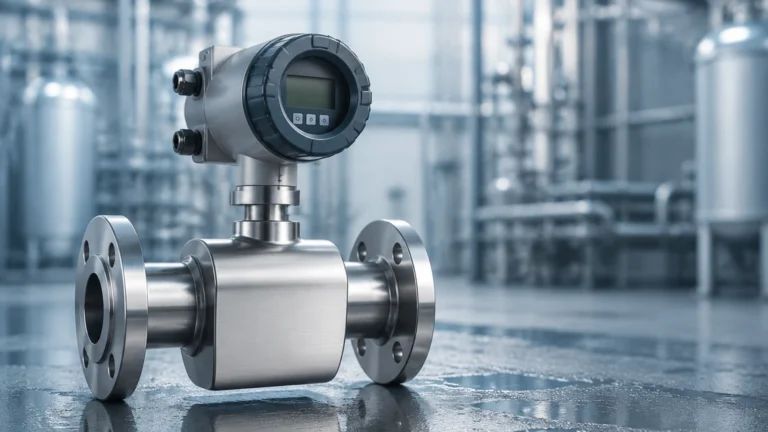
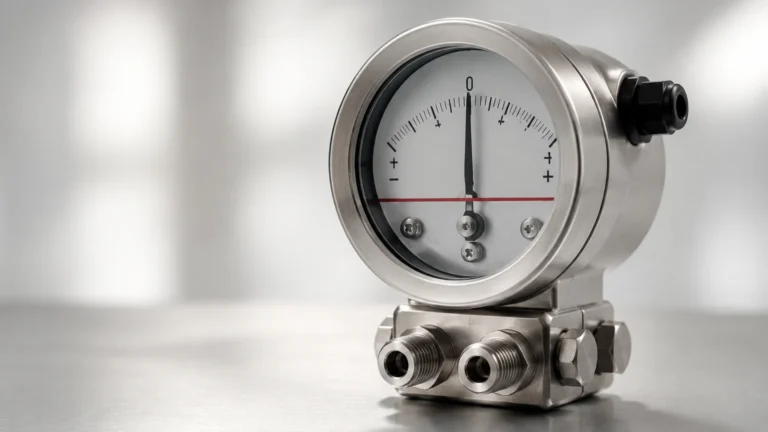
Water Tank Level Monitor
Water Tank Level Monitor
In industrial and municipal infrastructure, the ability to accurately track liquid inventory is fundamental to operational continuity. A water tank level monitor is an integrated system of sensors and transmitters designed to provide real-time data on the volume, height, or percentage of water contained within a storage vessel. Whether the application involves potable water storage, industrial process cooling, or wastewater treatment, selecting the correct monitoring technology is critical to preventing overflows, ensuring pump protection, and maintaining precise inventory control.
Effective water management relies on more than just a simple visual check. Modern industrial monitors utilize various physical principles—ranging from acoustic waves to hydrostatic pressure—to convert physical levels into standardized electrical signals. This guide explores the technical foundations of these systems, provides a framework for selection, and addresses the practicalities of installation in professional environments.
Core Measurement Principles
Before selecting a water tank level monitor, engineers must understand the underlying physics of different sensing technologies. Each method offers distinct advantages depending on the tank geometry, environmental conditions, and the specific characteristics of the water being measured.
Ultrasonic Level Measurement (Non-Contact)
Ultrasonic monitors operate on the "Time-of-Flight" (ToF) principle. The sensor, mounted at the top of the tank, emits a high-frequency acoustic pulse toward the water surface. This pulse reflects off the surface and returns to the transducer. By measuring the time elapsed between emission and reception, and knowing the speed of sound in air (approximately 343 m/s at 20°C), the system calculates the distance to the water.
* Advantages: No moving parts, non-contact (ideal for corrosive or contaminated water), and relatively easy to install.
* Key Consideration: The speed of sound is temperature-dependent. High-quality ultrasonic monitors include integrated temperature compensation to maintain accuracy across seasonal variations.
Radar Level Measurement (Non-Contact)
Radar monitors also use ToF but employ high-frequency electromagnetic waves (typically in the 24GHz or 80GHz range) instead of sound. These waves travel at the speed of light and are virtually unaffected by air temperature, pressure, or the presence of steam and dust.
* Advantages: Exceptional accuracy (often within ±2 mm), capable of measuring through foam or heavy vapor, and suitable for high-pressure vessels.
* Key Consideration: Radar is often the preferred choice for large-scale industrial reservoirs where precision is paramount. For a comprehensive range of these technologies, engineers can visit the Main Page to review specific model specifications.
Hydrostatic Pressure Measurement (Contact)
This method relies on the relationship between the height of a liquid column and the pressure it exerts at the base. The formula $P = \rho gh$ (where $P$ is pressure, $\rho$ is density, $g$ is gravity, and $h$ is height) allows the monitor to determine the level based on the weight of the water above the sensor.
* Advantages: Highly reliable for deep tanks or underground wells; unaffected by surface turbulence or foam.
* Key Consideration: The sensor must be submerged or mounted via a flange at the bottom of the tank. It is sensitive to changes in liquid density, though this is rarely an issue with standard water applications.
Magnetic Level Gauges and Switches
For applications requiring both a local visual indicator and a remote signal, magnetic level gauges are used. A float containing a magnet moves with the water level inside a bypass chamber, flipping colored flaps on an external scale. Level switches, conversely, are used for point-level detection (e.g., high-level alarms or low-level pump shut-off).
Practical Selection Criteria
Choosing the right water tank level monitor requires a systematic evaluation of the application's constraints. Use the following table as a preliminary engineering reference for comparing common technologies.
Level Monitor Comparison Table
| Technology | Typical Accuracy | Max Range | Contact Type | Best For |
| :— | :— | :— | :— | :— |
| Ultrasonic | ±0.25% of range | 15 – 20 meters | Non-contact | Clean water, open sumps, plastic tanks |
| Radar (80GHz) | ±2 mm | Up to 120 meters | Non-contact | Large silos, process tanks, steam/vapor |
| Hydrostatic | ±0.1% to 0.5% | 200+ meters | Contact | Deep wells, pressurized vessels, underground |
| Magnetic Gauge | ±5 mm | 6 meters | Contact | Visual monitoring + remote 4-20mA signal |
| Float Switch | N/A (Point level) | N/A | Contact | Pump control, overflow prevention |
Evaluation Factors
1. Tank Geometry: Tall, narrow tanks may cause signal interference for ultrasonic sensors (false echoes from walls). Radar with narrow beam angles is better suited for these environments.
2. Environmental Conditions: If the tank is located outdoors in a region with extreme temperature swings, radar or hydrostatic sensors are more stable than ultrasonic ones.
3. Power and Connectivity: Most industrial monitors require a 24V DC power supply and output a 4-20mA signal, though many now support digital protocols like Modbus RS485 or HART for integration into SCADA systems.
Installation Considerations and Best Practices
Even the most advanced water tank level monitor will fail to provide accurate data if installed incorrectly. Engineering teams should adhere to the following guidelines during the commissioning phase.
Avoiding the "Dead Zone"
All ultrasonic and radar sensors have a "dead zone" (or blocking distance) immediately below the transducer where measurements cannot be taken. For example, if a sensor has a 0.3m dead zone, it must be mounted at least 0.3m above the maximum possible high-water level to avoid signal loss.
Mounting Position and Obstructions
Sensors should be mounted away from the tank walls to prevent side-wall reflections. Furthermore, they must be positioned away from internal obstructions such as ladders, heating coils, or inlet pipes. If an inlet pipe creates significant splashing or turbulence, the monitor should be installed in a "stilling well" (a vertical pipe that dampens surface movement) to ensure a stable reading.
Electrical Protection
In industrial environments, signal cables should be shielded to prevent electromagnetic interference (EMI) from large motors or variable frequency drives (VFDs). For outdoor tanks, surge protection is essential to protect the sensitive electronics of the monitor from lightning strikes.
Common Risks and Limitations
While modern monitoring systems are robust, they are not infallible. Understanding the limitations of a water tank level monitor is essential for risk mitigation.
* Foam and Turbulence: Heavy foam can absorb ultrasonic pulses, leading to a "lost signal" error. In these cases, radar or hydrostatic sensors are superior.
* Condensation and Build-up: In enclosed tanks, moisture can condense on the face of non-contact sensors. Some high-end radar units feature drip-off lens designs to mitigate this, but regular inspection is still required.
* Vacuum Conditions: Hydrostatic sensors that are vented to the atmosphere may provide inaccurate readings if the tank is under vacuum or internal pressure. In such scenarios, a differential pressure (DP) transmitter is required.
Frequently Asked Questions (FAQ)
Q: Can a water tank level monitor be used for chemicals or wastewater?
A: Yes, but material compatibility is key. For wastewater, non-contact sensors like ultrasonic or radar are preferred to prevent clogging. For chemicals, the wetted parts of a hydrostatic sensor must be made of corrosion-resistant materials like PTFE or high-grade stainless steel.
Q: How often do these monitors require calibration?
A: Most digital radar and ultrasonic monitors are "calibrated for life" under standard conditions. However, a yearly verification against a manual tape measure is recommended for critical applications like fire water storage.
Q: What is the difference between a level transmitter and a level switch?
A: A transmitter provides continuous measurement (e.g., "the tank is 64% full"), while a switch provides point-level detection (e.g., "the tank is full" or "the tank is empty").
Q: Is it possible to monitor a water tank remotely via a smartphone?
A: Yes. By connecting the monitor's 4-20mA or RS485 output to an IoT gateway or a cellular RTU, data can be transmitted to cloud platforms for remote viewing and SMS alerting.
Summary of Technical Requirements
Before finalizing a project specification for a water tank level monitor, the engineering team should confirm the following details:
* Maximum and Minimum Level: To ensure the sensor's range and dead zone are appropriate.
* Tank Material: Some radar frequencies can penetrate plastic tank lids, allowing for mounting outside the vessel.
* Output Requirements: Whether the system needs to integrate with an existing PLC (4-20mA) or act as a standalone display.
* Hazardous Area Rating: Whether the installation site requires ATEX or IECEx certification for explosive atmospheres (common in industrial chemical water treatment).
By carefully matching the measurement principle to the environmental constraints and following rigorous installation standards, facility managers can ensure their water tank level monitor provides reliable, long-term service. For detailed product datasheets and application-specific advice, professional engineers often refer to the Main Page of specialized manufacturers to compare the latest advancements in sensor technology.