Water Usage Management Services
Water Usage Management Services
In the modern industrial landscape, water is no longer viewed as a cheap, inexhaustible utility but as a critical strategic asset. Effective water usage management services provide the framework for industrial facilities to monitor, analyze, and optimize their water consumption. These services are essential for achieving sustainability goals, ensuring regulatory compliance, and reducing operational costs. However, the efficacy of any management service is fundamentally dependent on the accuracy and reliability of the primary data collected at the source. This data is provided by industrial level measurement instruments, which serve as the "eyes" of the system.
For engineers and facility managers, selecting the right measurement technology is the first step in building a robust water management strategy. This guide explores the technical principles of level measurement, how they integrate into broader management services, and the practical considerations for implementation.
Core Measurement Principles for Water Monitoring
Before implementing water usage management services, it is vital to understand the physics behind the sensors that track water movement and storage. Different environments—ranging from deep groundwater wells to turbulent chemical mixing tanks—require specific measurement principles.
1. Ultrasonic Level Measurement (Non-Contact)
Ultrasonic sensors operate on the "time-of-flight" principle. The sensor emits a high-frequency acoustic pulse that travels through the air, reflects off the water surface, and returns to the transducer. The distance ($d$) is calculated using the formula $d = (v \cdot t) / 2$, where $v$ is the speed of sound and $t$ is the elapsed time.
Because the speed of sound is affected by air temperature, professional-grade ultrasonic sensors, such as those manufactured by Welk, include integrated temperature compensation. These are ideal for open-channel flow measurement and atmospheric storage tanks where the medium is relatively stable.
2. Radar Level Measurement (Non-Contact)
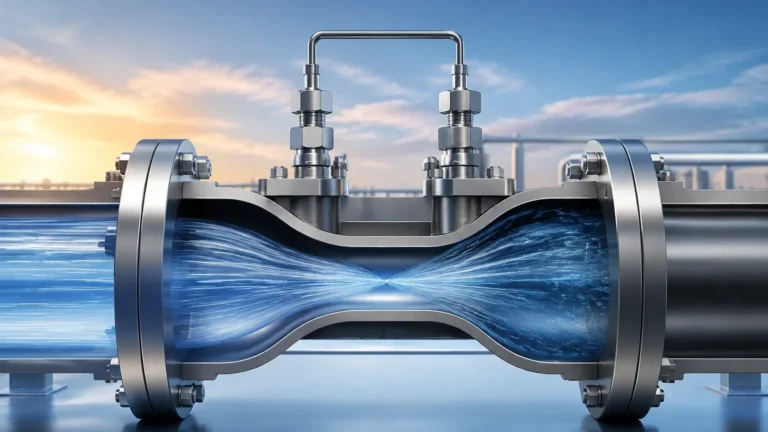
Radar transmitters use high-frequency electromagnetic waves (typically 26GHz or 80GHz). Similar to ultrasonic sensors, they measure time-of-flight, but because they use microwave energy, they are unaffected by air temperature, pressure, or the presence of steam and dust.
80GHz radar technology is particularly valuable for water usage management services because of its narrow beam angle. This allows the sensor to avoid internal tank obstructions like ladders or agitators, providing a clean signal even in complex geometries. Radar is the preferred choice for process water tanks in the chemical and oil and gas industries.
3. Hydrostatic Level Measurement (Contact)
Hydrostatic sensors measure the pressure exerted by the liquid column above the sensor diaphragm. The relationship is defined by $P = \rho \cdot g \cdot h$, where $P$ is pressure, $\rho$ is the liquid density, $g$ is gravity, and $h$ is the height of the liquid.
Submersible hydrostatic transmitters are frequently used in deep well monitoring and reservoir management. They are highly reliable for water applications because the density of water remains relatively constant, ensuring that pressure readings translate accurately to level data.
The Role of Industrial Instruments in Water Management
Water usage management services transform raw data from the sensors mentioned above into actionable insights. In a B2B context, these services typically involve the following components:
* Real-Time Monitoring: Continuous data streams allow for the immediate detection of anomalies, such as pipe bursts or pump failures.
* Consumption Analytics: By comparing level changes over time across different departments or processes, companies can identify high-usage areas and implement targeted conservation measures.
* Regulatory Reporting: Many jurisdictions require precise reporting on water extraction and discharge. Automated systems ensure this data is logged accurately and is tamper-proof.
* Inventory Management: In industries like food and beverage or chemicals, water is a raw material. Level sensors ensure that production lines never run dry, optimizing the supply chain.
To explore specific hardware solutions that support these services, engineers can consult the Main Page for detailed technical specifications on radar and ultrasonic sensors.
Selection Criteria for Level Instrumentation
Choosing the incorrect sensor can lead to data gaps that undermine the entire water management strategy. The following table provides a comparison of common technologies used in water applications.
Technology Selection Table
| Feature | Ultrasonic | Radar (80GHz) | Hydrostatic | Magnetic Gauge |
| :— | :— | :— | :— | :— |
| Measurement Type | Non-contact | Non-contact | Contact (Pressure) | Contact (Float) |
| Typical Accuracy | ±0.25% of range | ±2 mm | ±0.5% of span | ±5 mm |
| Max Range | Up to 15m | Up to 30m+ | Up to 200m+ | Up to 6m |
| Environmental Limits | Sensitive to foam/wind | Unaffected by vapor | Sensitive to density | Sensitive to debris |
| Installation | Top-mounted | Top-mounted | Submerged/Side | Side-mounted |
| Cost | Low to Moderate | Moderate to High | Moderate | Moderate |
Installation Guidelines and Best Practices
Even the most advanced sensor will fail if installed incorrectly. When integrating hardware into water usage management services, follow these engineering best practices:
1. Avoid the "Dead Zone": All non-contact sensors have a minimum distance (blocking distance) near the transducer face where measurements are impossible. Ensure the maximum water level never enters this zone.
2. Beam Path Clearance: For ultrasonic and radar sensors, the "signal cone" must be clear of obstructions. For a radar sensor with a 3-degree beam angle, the clearance required is much smaller than a standard ultrasonic sensor with a 10-degree angle.
3. Stilling Wells: In applications with heavy surface turbulence or foam, installing the sensor inside a stilling well (a vertical pipe) can stabilize the liquid surface and provide a more accurate reading.
4. Submersible Cable Protection: For hydrostatic sensors in deep wells, ensure the vented cable is protected from kinks and that the moisture filter at the top of the vent tube is maintained. This prevents atmospheric pressure changes from skewing the level reading.
Limitations and Common Risks
While modern instrumentation is highly reliable, certain conditions can pose risks to data integrity within water usage management services:
* Foam and Turbulence: Heavy foam can absorb ultrasonic signals, leading to a "loss of echo." While radar is more resistant, extremely dense foam may still attenuate the signal.
* Build-up and Scaling: In wastewater applications, the buildup of fats, oils, and grease (FOG) on contact sensors or the faces of ultrasonic transducers can cause drift or failure. Non-contact radar is generally the best solution for high-buildup environments.
* Density Fluctuations: Hydrostatic sensors assume a constant liquid density. If the water contains varying concentrations of dissolved solids or experiences significant temperature swings without compensation, the level reading will be inaccurate.
* Signal Interference: In large metal tanks, multiple reflections (multipath interference) can create "false echoes." Using sensors with advanced software filtering and narrow beam angles is necessary to map out these false signals.
Frequently Asked Questions (FAQ)
Q: How often should level sensors be calibrated for water management?
A: For most industrial water applications, an annual calibration check is sufficient. However, in regulated industries or high-accuracy billing applications, semi-annual calibration may be required. Many Welk sensors offer self-diagnostic features that alert users when a signal is degrading, reducing the need for manual checks.
Q: Can one sensor type be used for all water applications?
A: No. While radar is the most versatile, it may be overkill for a simple sump pump application where a low-cost ultrasonic sensor or a float switch would suffice. Conversely, hydrostatic sensors are uniquely suited for deep-well applications where top-down mounting is impractical.
Q: How do these sensors connect to water usage management services?
A: Most modern sensors output a 4-20mA signal with HART protocol, Modbus RS485, or Profibus. This allows them to integrate directly into PLC/SCADA systems or IoT gateways that transmit data to cloud-based management platforms.
Q: What is the impact of temperature on accuracy?
A: Temperature primarily affects ultrasonic sensors because the speed of sound changes with air density. Radar and hydrostatic sensors are largely immune to air temperature changes, though hydrostatic sensors must account for changes in the density of the water itself if the temperature range is extreme.
Conclusion
Effective water usage management services are built on a foundation of precise, reliable data. By understanding the measurement principles of ultrasonic, radar, and hydrostatic technologies, industrial operators can select the most appropriate tools for their specific environment. Whether the goal is to reduce waste in a cooling tower or manage groundwater extraction, the right instrumentation ensures that management decisions are based on facts rather than estimates. For those looking to upgrade their monitoring capabilities, reviewing technical documentation and product options on the manufacturer's Main Page is a recommended next step in the engineering process.