Waterpilot Fmx21
Waterpilot Fmx21
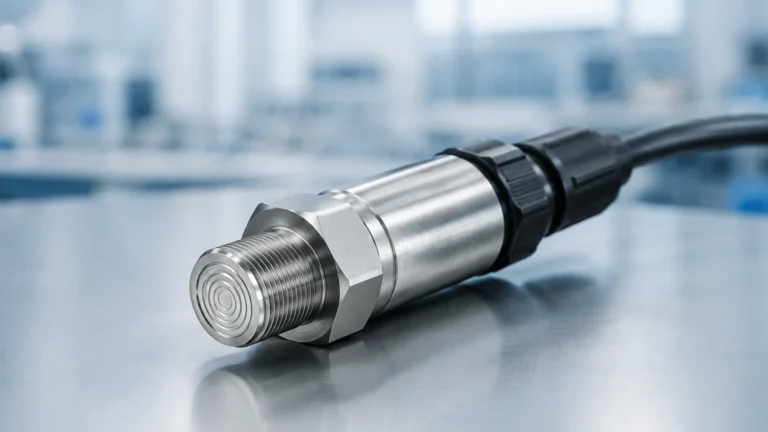
In the field of industrial process automation, hydrostatic level measurement remains one of the most reliable methods for monitoring liquids in tanks, wells, and open bodies of water. The Waterpilot FMX21 is a high-performance submersible pressure transmitter specifically engineered for these environments. This guide examines the technical foundations of hydrostatic measurement, the specific features of the FMX21, and the practical considerations engineers must address when selecting and installing this equipment in demanding B2B applications.
Understanding Hydrostatic Level Measurement Principles
Before evaluating specific hardware like the Waterpilot FMX21, it is essential to understand the physics governing its operation. Hydrostatic level measurement is based on the principle that the pressure at a specific depth in a static liquid is proportional to the height of the liquid column above it.
The Fundamental Equation
The relationship is expressed by the formula:
P = ρ · g · h
Where:
* P is the hydrostatic pressure (measured in bar or Pascal).
* ρ (rho) is the density of the medium (kg/m³).
* g is the local acceleration due to gravity (approximately 9.81 m/s²).
* h is the height of the liquid column (m).
Because gravity is constant and the density of many liquids (such as water) is relatively stable, the pressure measured by a sensor at the bottom of a tank or well can be directly converted into a level reading. For example, a water column of 10 meters (32.8 ft) exerts a pressure of approximately 1 bar (14.5 psi).
Atmospheric Pressure Compensation
Submersible transmitters like the FMX21 measure "gauge pressure." To ensure accuracy, the sensor must account for changes in atmospheric pressure acting on the surface of the liquid. This is achieved via a ventilation tube integrated within the suspension cable, which allows the back of the sensor diaphragm to be exposed to the same ambient air pressure as the liquid surface, effectively canceling out barometric fluctuations.
Technical Specifications and Features of the Waterpilot FMX21
The Waterpilot FMX21 is designed for robustness and long-term stability. It is frequently deployed in applications ranging from groundwater monitoring to wastewater treatment and process water management.
Measuring Cell Technology
One of the defining features of the FMX21 is its use of a high-purity ceramic measuring cell (99.9% Al2O3), often referred to as a dry measuring cell. Unlike metallic diaphragms that use internal fill fluids, the ceramic cell is highly resistant to corrosion and mechanical abrasion. It offers excellent overload resistance, which is critical in applications where pressure surges or "water hammer" might occur.
Communication and Integration
The device typically provides a 4 to 20 mA output signal. Advanced versions support the HART protocol, allowing for remote configuration and diagnostics. It can also be integrated into digital networks via PROFIBUS PA or FOUNDATION Fieldbus when used with appropriate transmitters. For applications requiring temperature data, the FMX21 often includes an integrated Pt100 temperature sensor, providing dual-parameter measurement (level and temperature) through a single process entry point.
Material Selection
To accommodate diverse chemical environments, the FMX21 is available in various materials:
* Housing: 316L stainless steel is standard, but for aggressive media like seawater, specialized coatings or alternative materials are utilized.
* Cables: Options include Polyethylene (PE) for general water use and Fluorinated Ethylene Propylene (FEP) for chemically aggressive or high-temperature environments.
Application-Specific Selection Criteria
Selecting the correct configuration of a hydrostatic transmitter requires a detailed analysis of the process environment. Engineers should consult a professional manufacturer's Main Page to compare these specifications against other technologies like radar or ultrasonic sensors.
Media Density
Since hydrostatic measurement depends on density, any significant change in the liquid's composition or temperature will affect the accuracy. If a tank alternates between fresh water and brine, the transmitter must be recalibrated, or a density correction factor must be applied in the control system.
Outer Diameter Requirements
The FMX21 is available in different outer diameters, typically 22 mm (0.87 in) and 42 mm (1.65 in). The 22 mm version is specifically designed for small-diameter boreholes and observation wells, while the 42 mm version is often used in heavy-duty wastewater applications where a larger diaphragm helps prevent clogging.
Selection Table: FMX21 Configuration Overview
| Feature | Standard Configuration | Heavy-Duty / Chemical Option |
| :— | :— | :— |
| Housing Material | 316L Stainless Steel | Alloy C or Coated 316L |
| Cable Material | PE (Polyethylene) | FEP (Fluorinated Ethylene Propylene) |
| Measuring Range | 0 to 20 bar (200 mH2O) | Customized ranges available |
| Accuracy | ±0.2% of span | ±0.1% (High-precision version) |
| Output | 4-20 mA | 4-20 mA HART, PROFIBUS PA |
Installation Best Practices for Submersible Transmitters
Proper installation is the most critical factor in ensuring the longevity and accuracy of a hydrostatic level sensor. Failure to follow these guidelines often leads to premature sensor failure or erratic readings.
Cable Suspension and Mounting
The transmitter should be suspended using a dedicated mounting clamp that secures the cable without crushing the internal vent tube. In deep wells or tanks with significant turbulence, the sensor should be housed within a "still pipe" (a perforated guide pipe) to prevent mechanical damage and minimize the impact of lateral movement.
Ventilation and Moisture Protection
The integrated vent tube in the cable must remain unobstructed. Most installations utilize a specialized terminal junction box equipped with a breathable, moisture-resistant filter (e.g., a GORE-TEX membrane). This allows for pressure equalization while preventing humidity from entering the tube and condensing behind the sensor diaphragm, which could cause internal corrosion or signal drift.
Avoiding Interference
When installing in tanks with agitators or near pump inlets, the sensor must be positioned away from areas of high velocity or cavitation. Rapid fluid movement across the diaphragm can create localized pressure drops (Bernoulli effect), leading to false low-level readings.
Limitations and Considerations
While the Waterpilot FMX21 is a versatile tool, it is not suitable for every application. Engineers must recognize its functional boundaries:
1. Pressurized Tanks: Hydrostatic submersible sensors are generally designed for tanks vented to the atmosphere. In pressurized vessels, a differential pressure (DP) transmitter is required to subtract the top-side gas pressure from the bottom-side total pressure.
2. Solid Content: While the ceramic cell is robust, extremely high concentrations of suspended solids or "sludge" can settle around the sensor, insulating the diaphragm from the true liquid pressure.
3. Temperature Extremes: The operating temperature range is typically limited by the cable material (e.g., PE cables are usually limited to 60°C / 140°F). For higher temperatures, FEP cables or alternative technologies like non-contact radar should be considered.
For complex industrial automation projects, reviewing the full catalog of Level Meters is recommended to ensure the chosen technology aligns with the specific chemical and thermal demands of the process.
Frequently Asked Questions (FAQs)
How often does the Waterpilot FMX21 require calibration?
In stable environments like clean water wells, the FMX21 can maintain accuracy for several years. However, in wastewater or chemical processes where build-up is possible, an annual verification is recommended. The ceramic cell is known for minimal long-term drift compared to metallic sensors.
Can the cable be shortened in the field?
Yes, the cable can be shortened. However, it is vital to ensure that the vent tube is not crimped and that the electrical connections are resealed correctly within the junction box to maintain the IP66/67 rating.
What happens if the vent tube becomes blocked?
If the vent tube is blocked, the sensor can no longer compensate for changes in barometric pressure. This results in an error proportional to the weather-related pressure change. For instance, a 30 mbar change in atmospheric pressure would result in a level error of approximately 30 cm (11.8 in) in water.
Is the FMX21 suitable for seawater applications?
Yes, but it requires specific material choices. The version with a TPE cable and a high-purity ceramic cell is often used, but for long-term immersion in salt water, engineers should verify the compatibility of the housing material and consider additional cathodic protection or specialized coatings.
Conclusion
The Waterpilot FMX21 represents a standard-setting solution for hydrostatic level measurement, combining the durability of ceramic sensing technology with the flexibility of submersible deployment. By understanding the underlying physics of pressure measurement and adhering to strict installation protocols—particularly regarding cable venting and mechanical protection—process engineers can achieve high-precision level monitoring in diverse water and wastewater applications. For those seeking a broader range of industrial measurement instruments, including ultrasonic and radar alternatives, exploring the options available through a professional manufacturer like Welk on their Main Page will provide the necessary technical support and product variety to meet specific project requirements.