What Instruments Are Used to Measure Pressure
What Instruments Are Used to Measure Pressure
In industrial process control, pressure measurement is a fundamental requirement for ensuring safety, efficiency, and product quality. Whether monitoring a steam boiler, managing a chemical reactor, or determining the volume of liquid in a storage tank, understanding what instruments are used to measure pressure is essential for plant engineers and technicians. Pressure is defined as the force exerted by a fluid (liquid or gas) per unit of surface area. In the metric system, this is typically expressed in Pascals (Pa) or bar, while imperial systems use pounds per square inch (psi).
This guide explores the various technologies used to quantify pressure, the physical principles behind them, and how these measurements are often leveraged to determine other critical process variables, such as liquid level.
Fundamental Principles of Pressure Measurement
Before selecting an instrument, it is necessary to understand the three primary types of pressure references:
1. Gauge Pressure: Measured relative to the local atmospheric pressure. This is the most common measurement in industrial applications, where the "zero" point is the ambient air pressure.
2. Absolute Pressure: Measured relative to a perfect vacuum. This is critical in vacuum distillation or high-altitude applications where atmospheric pressure varies significantly.
3. Differential Pressure (DP): The difference in pressure between two points in a system. This is widely used for flow measurement (across an orifice plate) and level measurement in pressurized tanks.
Most instruments function by converting the physical force of the fluid into a mechanical displacement or an electrical signal. Mechanical instruments use elastic elements like tubes or diaphragms, while electronic instruments utilize sensors that change their electrical properties under stress.
Mechanical Pressure Measurement Instruments
Mechanical gauges are often used for local indication where external power is unavailable or unnecessary. They provide a direct visual readout of the process state.
Bourdon Tube Gauges
The Bourdon tube is the most widely used mechanical pressure instrument. It consists of a flattened circular or spiral tube made of metal (such as stainless steel or brass). When pressure is applied to the inside of the tube, the cross-section tends to become more circular, causing the tube to straighten slightly. This movement is transmitted through a gear mechanism to a pointer on a dial.
* Pros: Cost-effective, durable, and requires no power.
* Cons: Sensitive to vibration and mechanical shock; accuracy is generally lower than electronic transmitters.
Diaphragm Gauges
A diaphragm gauge uses a flexible, circular membrane that deflects when pressure is applied to one side. This deflection is linked to a pointer. Diaphragm gauges are particularly useful for measuring low pressures or for handling viscous and corrosive media, as the diaphragm acts as a physical barrier between the fluid and the internal mechanism.
Bellows Gauges
Bellows are thin-walled metallic cylinders with deep convolutions. When pressure is applied, the bellows expand or contract axially. They are more sensitive than Bourdon tubes and are typically used for low-pressure applications, often in the range of 0 to 0.5 bar (approx. 7.2 psi).
Electronic Pressure Transmitters
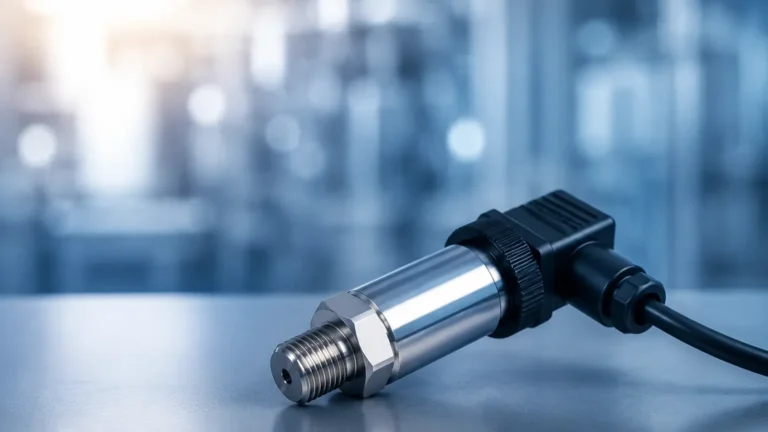
In modern automated facilities, electronic transmitters are the standard. They convert physical pressure into a standardized electrical signal, typically 4-20mA, or a digital protocol like HART or Modbus, allowing for remote monitoring and control via a PLC or DCS. For comprehensive options in industrial automation, engineers often consult a Main Page of specialized instrumentation providers to compare technical specifications.
Piezoresistive Sensors
These sensors utilize the piezoresistive effect, where the electrical resistance of a semiconductor (usually silicon) changes when it is subjected to mechanical strain. The sensor is typically mounted on a diaphragm. As the diaphragm deflects, the resistance changes, which is then converted into a voltage or current signal.
Capacitive Sensors
Capacitive pressure sensors measure the change in electrical capacitance between a flexible sensing diaphragm and a fixed reference electrode. As pressure moves the diaphragm, the distance between the plates changes, altering the capacitance. These sensors are known for high accuracy and stability, making them ideal for differential pressure applications.
Pressure Instruments in Level Measurement
A critical application of pressure measurement is determining the level of liquid in a tank, known as hydrostatic level measurement. According to the hydrostatic law, the pressure at the bottom of a liquid column is directly proportional to the height of the liquid and its density:
P = ρ × g × h
* P = Hydrostatic pressure
* ρ (rho) = Density of the liquid
* g = Gravitational acceleration
* h = Height of the liquid column
* Ref: 1 meter of water exerts approximately 9.8 kPa (0.098 bar or 1.42 psi) of pressure.
Hydrostatic Level Transmitters
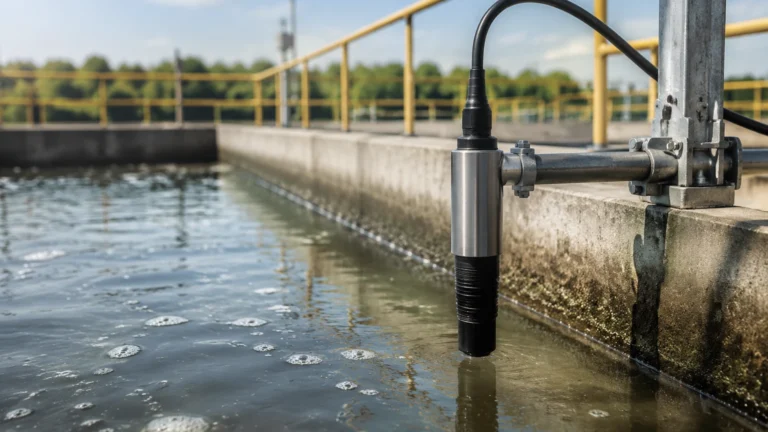
These instruments are essentially specialized pressure transmitters designed to be submerged in the liquid or mounted at the bottom of a tank. For vented (open) tanks, a single pressure sensor is used. For pressurized (closed) tanks, a differential pressure transmitter is required to subtract the overhead gas pressure from the total pressure at the bottom.

Selection Table: Choosing the Right Instrument
| Instrument Type | Measurement Range | Accuracy | Best For |
| :— | :— | :— | :— |
| Bourdon Tube | 0.6 bar to 7,000 bar | ±1.0% to ±3.0% | Local indication, high pressure |
| Diaphragm Gauge | 10 mbar to 40 bar | ±1.5% to ±2.5% | Corrosive/viscous fluids, low pressure |
| Piezoresistive Transmitter | 0.1 bar to 1,000 bar | ±0.1% to ±0.5% | General industrial automation, level |
| Capacitive DP Transmitter | 1 mbar to 400 bar | ±0.05% to ±0.2% | High precision, pressurized tanks |
| Bellows Gauge | 10 mbar to 1 bar | ±1.0% to ±2.0% | Very low pressure, gas systems |
Installation and Engineering Considerations
Proper installation is as critical as instrument selection. Incorrect mounting can lead to measurement errors or premature device failure.
1. Impulse Piping: For remote-mounted transmitters, the tubing (impulse lines) connecting the process to the sensor must be sloped to prevent gas bubbles (in liquid lines) or liquid condensate (in gas lines) from being trapped, which would cause false pressure readings.
2. Siphon Tubes: When measuring steam or hot vapors, a pigtail siphon should be used to create a water seal, protecting the instrument's internal components from high temperatures.
3. Isolation and Venting: Always install a block-and-bleed valve or a manifold. This allows the instrument to be isolated from the process for calibration or replacement without shutting down the entire line.
4. Environmental Protection: In outdoor installations, instruments should be rated for the appropriate Ingress Protection (IP) level (e.g., IP67 or IP68) and may require heat tracing or insulation in cold climates to prevent the process fluid from freezing in the sensor neck.
Limitations and Common Risks
While pressure instruments are robust, they have specific limitations:
* Overpressure: Exceeding the maximum pressure rating of a sensor can permanently deform the diaphragm or Bourdon tube, leading to "zero shift" or total failure. Always select an instrument with a safety margin above the maximum possible process pressure.
* Temperature Effects: Changes in ambient or process temperature can cause the fluid inside the instrument (or the sensor material itself) to expand or contract, leading to thermal drift. High-quality transmitters include internal temperature compensation.
* Clogging: In wastewater or slurries, small pressure ports can easily clog. In these cases, a "flush diaphragm" design is preferred, where the sensing surface is level with the pipe wall.
Frequently Asked Questions (FAQs)
What is the difference between a pressure gauge and a pressure transmitter?
A pressure gauge provides a local visual display via a needle and dial and usually requires no power. A pressure transmitter converts the pressure into an electrical signal (like 4-20mA) for transmission to a control system.
How often should pressure instruments be calibrated?
In most industrial settings, annual calibration is standard. However, for critical safety loops or highly corrosive environments, semi-annual or quarterly checks may be necessary to ensure accuracy hasn't drifted.
Can I use a standard pressure transmitter for liquid level?
Yes, provided you know the density of the liquid. For an open tank, the transmitter is mounted at the bottom and measures the hydrostatic head. If the tank is pressurized, you must use a differential pressure transmitter to compensate for the top-side pressure.
Why is my pressure gauge vibrating?
Vibration is common near pumps or compressors. This can lead to rapid wear of the gear mechanism. To solve this, use a liquid-filled gauge (usually glycerin or silicone oil), which dampens the needle movement and lubricates the internals.
What instruments are used to measure pressure in vacuum applications?
Absolute pressure transmitters or specialized vacuum gauges (like Pirani or cold cathode gauges for high vacuum) are used. For standard industrial vacuum, a compound gauge (measuring both vacuum and positive pressure) is often sufficient.
By carefully evaluating the process media, required accuracy, and environmental conditions, engineers can select the most appropriate tools from the wide array of what instruments are used to measure pressure. For those specifically focused on tank inventory and process automation, visiting the Main Page of a dedicated manufacturer provides the necessary technical data to ensure a reliable installation.
Download What Instruments Are Used to Measure Pressure as a PDF