What Is a Lift Station for Sewer
What Is a Lift Station for Sewer
In municipal and industrial wastewater management, gravity is the primary driver for moving effluent through a network of pipes. However, terrain variations often make continuous gravity flow impossible. This is where a lift station becomes an essential component of the infrastructure. Understanding what is a lift station for sewer requires looking at it as an integrated system designed to move wastewater from lower to higher elevations, ensuring it reaches treatment facilities without backup or overflow.
For engineers and facility managers, the reliability of a lift station depends heavily on the precision of its control system, which is governed by level measurement technology. As a professional manufacturer, Welk provides the instrumentation necessary to automate these critical nodes in the sewer network.
The Fundamental Function of a Lift Station
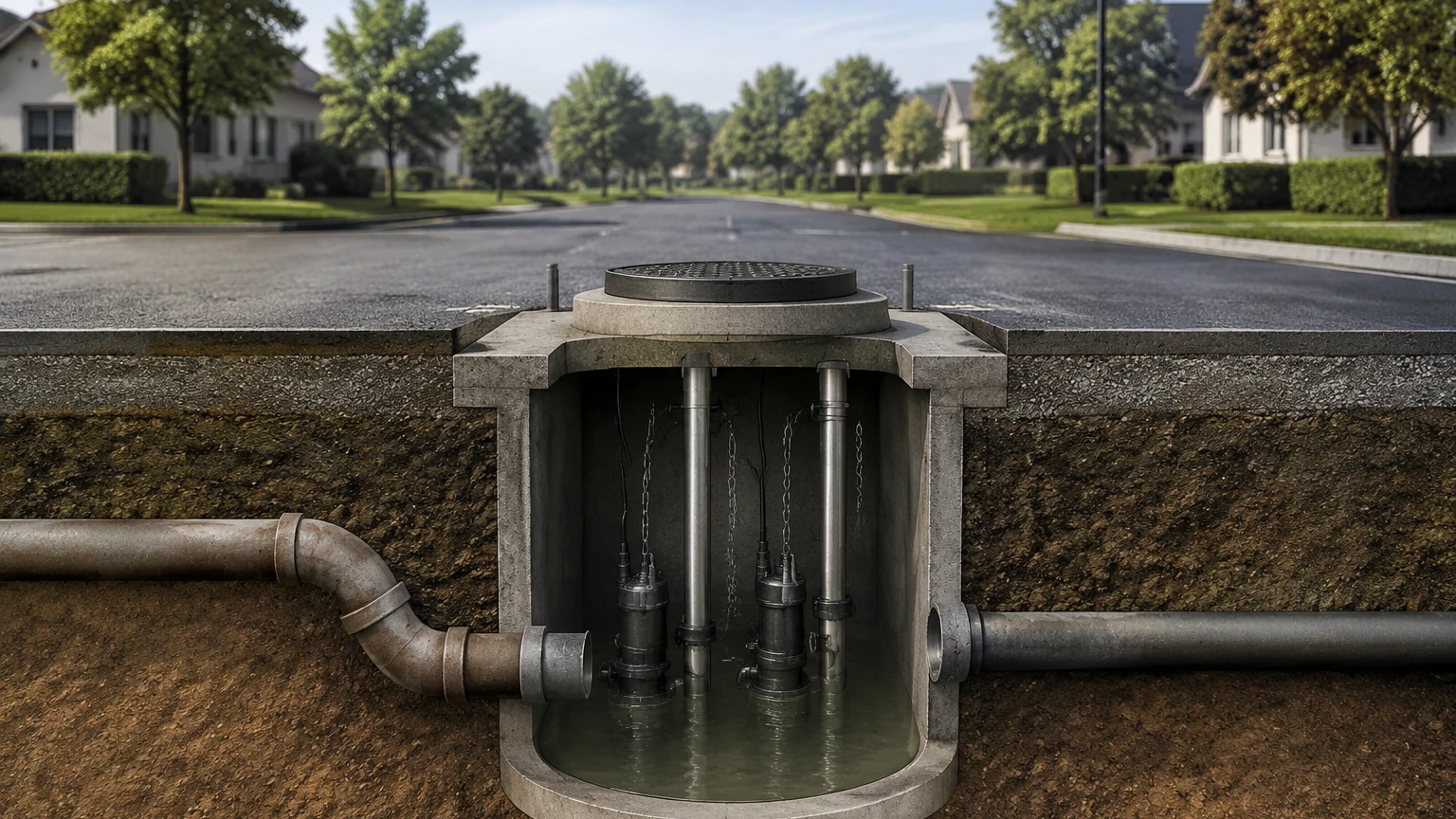
A lift station, also commonly referred to as a pump station, is a facility positioned at a low point in a gravity-fed sewer system. Its primary purpose is to collect wastewater in a reservoir—known as a wet well—and then pump it to a higher elevation or into a pressurized pipe known as a force main. This process allows the wastewater to continue its journey toward a treatment plant via gravity once it reaches the new elevation.
These stations are typically used when:
1. The cost of deep excavation for gravity pipes is prohibitive.
2. The topography includes hills or ridges that gravity cannot overcome.
3. The sewage must be lifted to enter a treatment plant located at a higher elevation than the collection point.
Core Components of a Sewer Lift Station
To understand what is a lift station for sewer in a practical sense, one must identify its four main components:
1. The Wet Well: A sealed underground tank or chamber where sewage is collected. It serves as the intake point for the pumps.
2. Pumping System: Usually consisting of two or more submersible pumps (often configured in a lead/lag arrangement) that handle solids and high-volume flow.
3. The Control Panel: The "brain" of the station that receives signals from level sensors to start and stop pumps.
4. Level Measurement Instrumentation: The critical sensors that monitor the rising and falling wastewater levels to prevent dry running of pumps or wet well overflows.
Principles of Level Measurement in Lift Stations
Effective automation of a lift station requires accurate level data. Since sewage is a harsh, turbulent, and often corrosive environment, several measurement principles are employed depending on the specific site requirements.
Ultrasonic Level Measurement (Non-Contact)
Ultrasonic sensors emit high-frequency sound pulses that reflect off the surface of the wastewater. The sensor measures the time it takes for the echo to return (Time-of-Flight). This distance is then converted into a level reading.
* Pros: No contact with the corrosive liquid; relatively low cost.
* Cons: Performance can be affected by heavy foam, steam, or significant temperature fluctuations.
Radar Level Measurement (Non-Contact)
Radar sensors use high-frequency microwave pulses rather than sound. Like ultrasonic sensors, they measure Time-of-Flight but are significantly more robust in challenging environments.
* Pros: Unaffected by foam, vapor, vacuum, or high temperatures. Highly accurate over long distances (up to 30 meters or approximately 98 feet).
* Cons: Higher initial investment compared to ultrasonic sensors.
Hydrostatic Pressure Measurement (Contact)
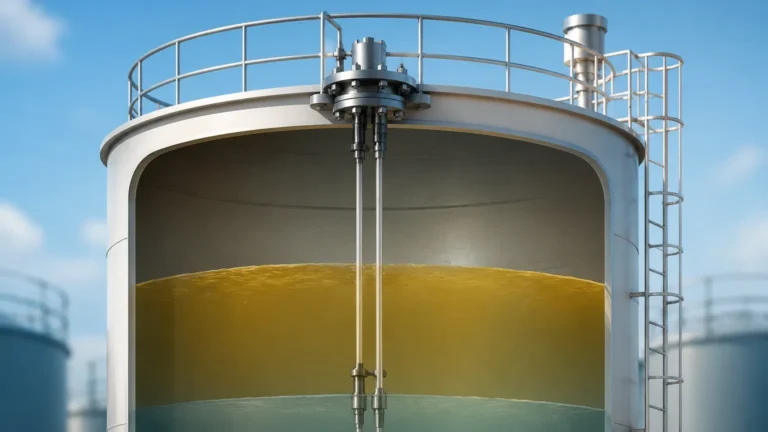
These are submersible transmitters placed at the bottom of the wet well. They measure the pressure exerted by the column of liquid above them. Since pressure is directly proportional to the height of the liquid, the sensor provides a continuous level reading.
* Pros: Simple installation; unaffected by surface foam or turbulence.
* Cons: Susceptible to damage from debris or grease buildup on the diaphragm.
Float Switches (Point Level)
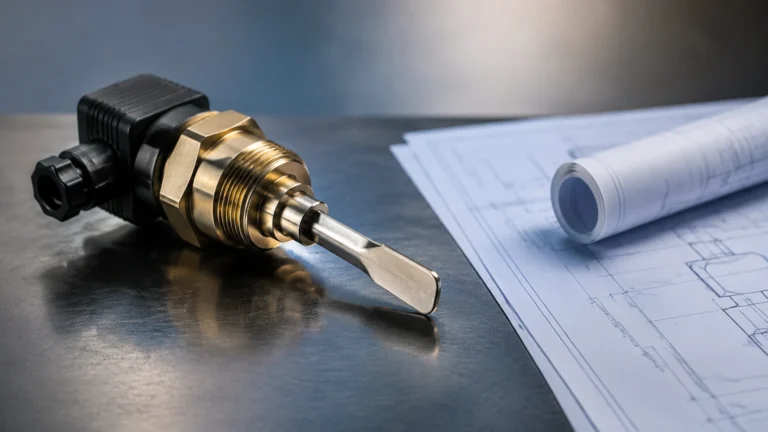
Float switches are mechanical devices that tip when the water reaches a certain height, opening or closing an electrical circuit. In most lift stations, these serve as redundant safety backups for high-level alarms or low-level pump shut-offs.
Selection Criteria for Lift Station Instrumentation
Choosing the right technology is vital for operational longevity. Engineers should evaluate the following criteria when selecting sensors from the Main Page of a professional supplier:
| Feature | Ultrasonic Sensors | Radar Level Meters | Hydrostatic Transmitters |
| :— | :— | :— | :— |
| Measurement Style | Non-contact (Sound) | Non-contact (Microwave) | Contact (Pressure) |
| Accuracy | ±0.25% to ±0.5% | ±1 mm to ±3 mm | ±0.1% to ±0.5% |
| Maintenance | Low (if clean) | Very Low | Moderate (cleaning needed) |
| Foam Resistance | Poor | Excellent | Excellent |
| Turbulence Resistance | Moderate | High | High |
| Typical Cost | $$ | $$$ | $ |
Installation Considerations for Sewer Lift Stations
Proper installation of level sensors is just as important as the technology itself. Poorly placed sensors lead to false readings and pump cycling issues.
Avoiding the Dead Zone
Every non-contact sensor (ultrasonic or radar) has a "dead zone" or "near-range blanking distance" directly beneath the sensor face (typically 0.2 m to 0.5 m / 8 to 20 inches). The sensor must be mounted high enough so that the maximum possible water level never enters this zone.
Positioning Relative to Inflow
Sensors should never be mounted directly above the inflow pipe. The turbulence and splashing from incoming sewage will cause erratic readings. Ideally, the sensor should be placed in a calm area of the wet well or protected by a stilling well (a vertical pipe that dampens surface movement).
Mounting and Accessibility
Because lift stations are confined spaces with hazardous gases (like H2S), sensors should be mounted such that they can be serviced from the surface without requiring personnel to enter the wet well. Bracket-mounted sensors with swing-arm designs are preferred for this reason.
Common Risks and Limitations
Operating a lift station involves managing several environmental risks that can degrade equipment performance:
1. Grease and "Fatbergs": In municipal sewer systems, fats, oils, and grease (FOG) often congeal on the surface of the wet well. This can coat hydrostatic diaphragms or create a false surface for ultrasonic waves. Regular cleaning and the use of non-stick radar faces help mitigate this.
2. Hydrogen Sulfide (H2S) Corrosion: Wastewater generates H2S gas, which is highly corrosive to electronics and metal housings. Instrumentation must have high ingress protection (IP68) and be constructed from corrosion-resistant materials like PVDF or high-grade stainless steel.
3. Foaming: Detergents in the wastewater can create thick foam. This foam absorbs ultrasonic signals, leading to a "loss of echo." Radar is the preferred solution if foaming is a frequent occurrence.
Maintenance Best Practices
To ensure the lift station remains operational, a routine maintenance schedule is required:
* Monthly Inspection: Check for grease buildup on sensors and floats.
* Calibration Verification: Compare the sensor's digital reading against a physical measurement (e.g., a weighted tape) to ensure accuracy hasn't drifted.
* Pump Alternation: Ensure the control logic is correctly alternating between pumps to prevent uneven wear.
Frequently Asked Questions (FAQ)
Q: How many sensors are typically needed in a lift station?
A: Most modern stations use one primary continuous level sensor (Radar or Ultrasonic) and two to three redundant float switches for "High-High" and "Low-Low" alarm conditions.
Q: What happens if the level sensor fails?
A: If the primary sensor fails, the redundant float switches should trigger an emergency pump start or a system alarm to prevent an overflow. This is why multi-technology redundancy is a standard engineering practice.
Q: Can I use a radar sensor in a very narrow wet well?
A: Yes. Modern high-frequency radar (e.g., 80 GHz) has a very narrow beam angle (as small as 3 degrees), allowing it to measure accurately even in tight spaces with internal obstructions like ladders or pipes.
Q: Is a lift station the same as a septic tank?
A: No. A septic tank is a passive treatment system where solids settle out. A lift station is an active transport system designed to move raw sewage to another location.
Conclusion
Understanding what is a lift station for sewer is fundamental for anyone involved in urban planning, industrial waste management, or civil engineering. These stations are the unsung heroes of modern sanitation, preventing environmental contamination by moving waste against the constraints of gravity. By integrating advanced level measurement solutions, such as those found on the Welk Main Page, operators can ensure these systems run efficiently, reduce maintenance costs, and avoid the catastrophic consequences of sewer overflows.