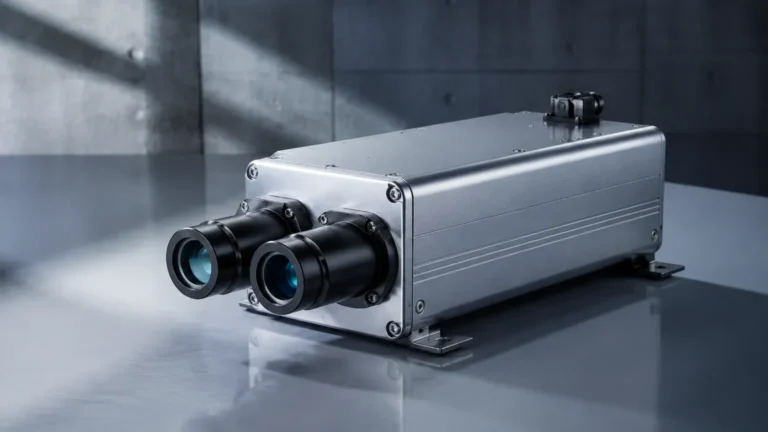
What Is Gea Module Bluetooth
What Is Gea Module Bluetooth
In the evolving landscape of industrial automation, the method by which engineers interact with field instrumentation has shifted from physical wiring and handheld communicators toward wireless, localized solutions. The GEA module Bluetooth is a specialized communication interface designed for industrial level measurement instruments, such as radar level meters and ultrasonic sensors. It serves as a bridge between the internal processing electronics of a sensor and external mobile devices, allowing for commissioning, diagnostics, and parameter configuration without the need for a physical connection.
For process industries involving water treatment, chemical storage, and oil and gas, level measurement often occurs in hazardous or inaccessible locations. The GEA module Bluetooth addresses these challenges by utilizing Bluetooth Low Energy (BLE) technology to provide a secure, short-range wireless link. This article explores the technical principles, practical applications, and selection criteria for integrating these modules into industrial level measurement workflows.
Measurement Principles and Module Integration
To understand the role of a GEA module Bluetooth, one must first understand the measurement principles of the instruments it supports. Industrial level meters, such as those manufactured by Welk, primarily utilize Time-of-Flight (ToF) technology.
Radar Level Measurement
Radar level meters emit high-frequency electromagnetic pulses (typically in the 26 GHz or 80 GHz range). These pulses travel at the speed of light, reflect off the surface of the medium (liquid or solid), and return to the sensor antenna. The instrument calculates the distance based on the time interval between emission and reception.
Ultrasonic Level Measurement
Ultrasonic sensors function similarly but use mechanical sound waves. A transducer emits an ultrasonic pulse that bounces off the target and returns. Because the speed of sound is influenced by air temperature, these sensors include integrated temperature compensation to maintain accuracy.
The Role of the GEA Module
The GEA module Bluetooth is integrated into the sensor housing, often as a plug-in component or a built-in circuit. It intercepts the digital data from the sensor’s microprocessor. Instead of requiring an engineer to connect a HART modem or a proprietary cable to the sensor terminals, the GEA module broadcasts the sensor’s status and configuration menu to a smartphone or tablet equipped with a compatible app. This is particularly useful for visualizing "echo curves"—graphical representations of the signal strength and reflections within a tank—which are essential for identifying and suppressing false echoes caused by internal obstructions like agitators or ladders.
Technical Specifications and Capabilities
The GEA module Bluetooth is designed to operate in harsh industrial environments. Unlike consumer-grade Bluetooth devices, these modules must adhere to strict standards for signal stability and electromagnetic compatibility (EMC).
1. Communication Range: Typically, the module provides a reliable connection within a range of 10 meters (33 feet) to 15 meters (49 feet). This distance is sufficient for an operator to stand safely at the base of a tank or outside a secondary containment area while configuring a sensor mounted at the top.
2. Frequency Band: Operating on the 2.4 GHz ISM band, the module uses frequency-hopping spread spectrum (FHSS) technology to minimize interference from other wireless signals in a factory setting.
3. Power Consumption: Since many level transmitters operate on a 4-20mA loop-powered system (two-wire), the GEA module must be extremely energy-efficient. It draws minimal current to ensure it does not interfere with the primary measurement signal or exceed the power limitations of the loop.
4. Security: Industrial GEA modules employ multi-level security, including unique PIN codes for pairing and encrypted data transmission to prevent unauthorized access to process parameters.
Practical Selection Table for Communication Interfaces
When choosing between a GEA module Bluetooth and other communication methods, engineers should consider the specific requirements of the installation site. The following table compares common interfaces used in level measurement.
| Feature | GEA Module Bluetooth | HART Protocol (Wired) | Modbus RTU (RS485) | NB-IoT / 4G |
| :— | :— | :— | :— | :— |
| Primary Use | Local commissioning & diagnostics | Remote monitoring & configuration | System integration (PLC/SCADA) | Long-range remote monitoring |
| Max Distance | 10–15 m (33–49 ft) | 1,000+ m (3,280+ ft) | 1,200 m (3,937 ft) | Global (Cellular coverage) |
| Data Speed | High (supports echo curves) | Low (1,200 bps) | Medium (up to 115.2 kbps) | Variable |
| User Interface | Smartphone / Tablet App | Handheld Communicator / PC | PLC / HMI | Web Dashboard / Cloud |
| Installation | Wireless (Plug & Play) | Requires physical wiring | Requires shielded twisted pair | Requires SIM & Antenna |
Key Benefits in Industrial Applications
Implementing a GEA module Bluetooth within a level measurement system offers several operational advantages, particularly for complex setups involving Main Page solutions where accuracy and ease of maintenance are paramount.
Improved Personnel Safety
In many chemical and oil and gas facilities, level sensors are installed on top of tall silos or over hazardous open sumps. Traditional configuration requires a technician to climb to the instrument, open the housing, and connect a communicator. With a Bluetooth module, the technician can perform all necessary tasks from the ground, significantly reducing the risk of falls or exposure to toxic vapors.
Rapid Troubleshooting with Echo Curve Visualization
One of the most powerful features enabled by the GEA module is the ability to view real-time echo curves on a mobile device. If a radar level meter is reporting an incorrect level due to an internal obstruction, the engineer can instantly see the "noise" on the graph and apply a "false echo suppression" or "static alignment" command. This visual feedback is far more intuitive than the text-based menus found on traditional HART communicators.
Simplified Commissioning
For OEM/ODM services and large-scale projects, commissioning dozens of sensors can be time-consuming. The GEA module allows for rapid parameter copying. An engineer can configure one sensor, save the profile on their mobile app, and upload the same settings to other identical sensors in the fleet, ensuring consistency across the plant.

Installation and Safety Considerations
While the GEA module Bluetooth simplifies operation, certain technical boundaries must be respected during installation to ensure reliable performance.
Housing and Signal Attenuation
Level meters are often housed in robust metal enclosures (aluminum or stainless steel) to protect the electronics. Since metal blocks Bluetooth signals, the GEA module must be positioned behind a radio-transparent window (usually made of high-strength plastic or glass) or integrated into the display unit. If the sensor is installed inside a fully enclosed metal tank with no openings, the Bluetooth signal may be contained within the tank unless the module is part of an external display unit.
Hazardous Area Certifications
In environments with explosive gases or dust, the GEA module must carry the same certifications as the level meter itself, such as ATEX or IECEx. The Bluetooth radio emission must be low-energy enough to meet "Intrinsically Safe" (IS) standards, ensuring that the wireless transmission cannot provide enough energy to ignite a combustible atmosphere.
Environmental Factors
Extreme temperatures can affect the performance of wireless components. Most industrial GEA modules are rated for operation between -40°C and +80°C (-40°F to +176°F). In outdoor installations, ensure that the sensor housing is properly sealed (IP66/IP67) to prevent moisture ingress, which can attenuate the Bluetooth signal and damage the circuitry.
Limitations and Constraints
Despite its advantages, the GEA module Bluetooth is not a universal replacement for wired systems. Its primary limitation is distance; it is intended for local interaction, not for transmitting continuous process data to a control room kilometers away. Furthermore, in areas with high densities of 2.4 GHz equipment (such as heavy Wi-Fi traffic or other proprietary wireless networks), signal latency may increase.
Security remains a critical consideration. While encryption is standard, facility managers should implement strict protocols regarding PIN management to ensure that only authorized personnel can modify critical process limits, such as high-level alarms that prevent tank overfills.
Frequently Asked Questions (FAQ)
Q: Does the GEA module Bluetooth require a separate power supply?
A: No. In most industrial level meters, the module is powered directly from the instrument's internal power supply, whether it is a 24V DC four-wire system or a 4-20mA loop-powered two-wire system.
Q: Can I use any Bluetooth-enabled phone to connect to the module?
A: While most modern smartphones have the hardware capability, you must use the specific software application provided by the instrument manufacturer (such as Welk's dedicated app) to interpret the data and access the configuration menus.
Q: What happens if the Bluetooth signal is lost during configuration?
A: Industrial level meters are designed with safety in mind. If the connection is dropped, the sensor continues to operate using its last saved parameters. The configuration app will typically indicate a connection loss and require a re-pairing process before changes can be committed.
Q: Is the GEA module compatible with older radar level meters?
A: Compatibility depends on the hardware architecture. Some manufacturers offer the GEA module as a retrofittable display/communication component that can replace an older, non-wireless display unit on existing sensors.
By integrating GEA module Bluetooth technology, operators of industrial level measurement systems can achieve a higher degree of efficiency and safety. Whether managing a single water tank or a complex chemical processing facility, the ability to wirelessly access real-time diagnostics and echo curves ensures that level instruments remain accurate and reliable throughout their service life.