What Is Ph Sensor
What Is Ph Sensor
In industrial process control and environmental monitoring, understanding the chemical composition of a liquid is as critical as monitoring its physical volume. While level measurement instruments determine the quantity of a substance, analytical sensors provide insight into its quality. Among these, the pH sensor is perhaps the most fundamental tool. This article explores the technical foundations of what is ph sensor technology, its operating principles, and how it integrates into broader industrial automation systems alongside level measurement solutions.
Fundamental Principles of pH Measurement
To answer the question of what is ph sensor technology, one must first understand the pH scale itself. pH is a logarithmic measurement of the hydrogen ion ($H^+$) activity in a solution. The scale ranges from 0 to 14, where 7 is neutral, values below 7 are acidic, and values above 7 are alkaline (basic).
The Electrochemical Reaction
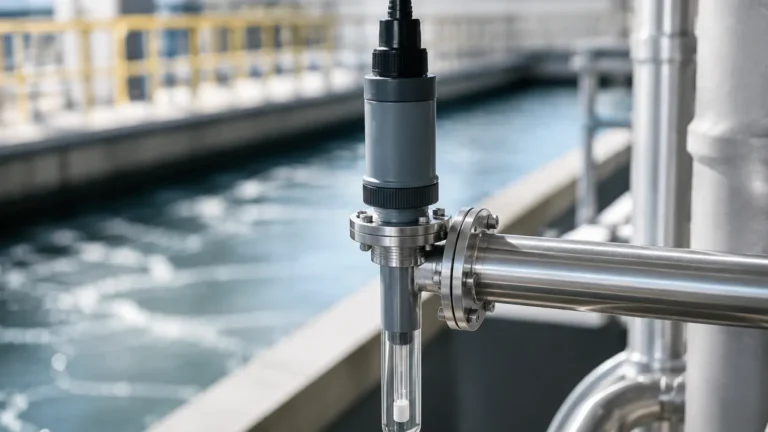
At its core, a pH sensor is an electrochemical device that converts chemical activity into an electrical potential (voltage). Most industrial pH sensors utilize a glass electrode system. When the sensing glass membrane is immersed in a liquid, a hydrated gel layer forms on both the inner and outer surfaces of the glass.
An ion exchange occurs between the hydrogen ions in the solution and the sodium or lithium ions in the gel layer. This exchange creates a potential difference across the glass membrane. According to the Nernst Equation, this potential is directly proportional to the pH of the solution:
$$E = E_0 – \frac{2.303RT}{nF} \log(a_{H^+})$$
Where:
* E: Measured potential
* E0: Standard potential
* R: Gas constant
* T: Absolute temperature (Kelvin)
* n: Ionic charge
* F: Faraday constant
* aH+: Activity of hydrogen ions
The Reference System
Because a single electrode cannot measure a potential in isolation, a pH sensor requires a reference electrode. This electrode provides a stable, known potential that remains constant regardless of the solution's pH. The difference between the sensing electrode and the reference electrode is measured by a high-impedance transmitter and converted into a pH value.
Core Components of an Industrial pH Sensor
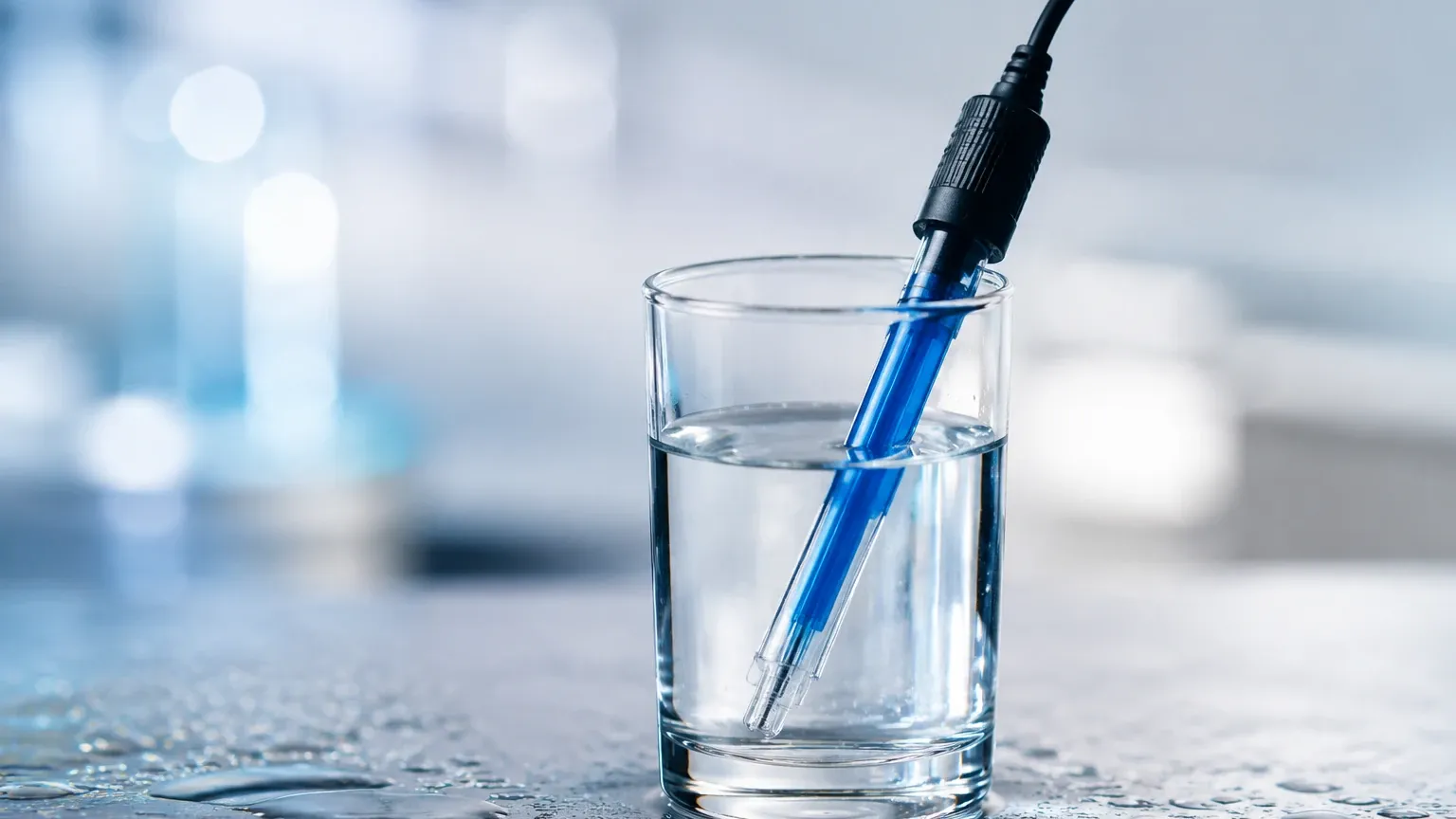
Modern industrial pH sensors are typically "combination electrodes," meaning the sensing electrode and the reference electrode are housed within a single body. The primary components include:
1. Sensing Glass Bulb: Specially formulated glass sensitive to hydrogen ions.
2. Internal Reference Solution: Usually a potassium chloride (KCl) solution with a neutral pH of 7.
3. Reference Junction: A porous material (ceramic, Teflon, or wood) that allows electrical contact between the reference system and the process liquid.
4. Temperature Element: Since pH is temperature-dependent, most industrial sensors include a PT100 or PT1000 thermistor for automatic temperature compensation (ATC).
Types of pH Sensors and Their Applications
Selecting the correct sensor depends heavily on the chemical environment and physical conditions of the process. For engineers managing complex tank systems, consulting a Main Page for integrated instrumentation is often the first step in designing a complete monitoring solution.
1. Combination Glass Electrodes
These are the standard for most water treatment and light chemical applications. They are cost-effective and provide high accuracy in stable environments.
2. Differential pH Sensors
In harsh industrial environments where ground loops or reference poisoning are concerns, differential sensors are preferred. They use three electrodes instead of two, providing a much higher degree of reliability in heavy industrial waste or chemical processing.
3. ISFET (Ion-Sensitive Field-Effect Transistor)
Unlike glass electrodes, ISFET sensors use a solid-state semiconductor to measure hydrogen ion activity. They are "glass-free," making them ideal for the food and beverage industry where glass breakage is a safety hazard.
pH Measurement in Level Control Systems
In many B2B applications, pH monitoring and level measurement are inseparable. For instance, in a chemical neutralization tank, a hydrostatic level transmitter or an ultrasonic level sensor monitors the volume of the effluent, while the pH sensor determines the dosage of neutralizing agents (acids or bases).
Reliable level measurement ensures that the pH sensor remains submerged. If a tank level drops below the sensor's installation point, the electrode will dry out, leading to sluggish response times or permanent damage to the glass membrane. Therefore, integrating high-quality level switches or continuous level meters is essential for protecting analytical instrumentation.
Practical Selection Table for pH Sensors
| Feature | Standard Glass | Differential Sensor | ISFET (Solid State) |
| :— | :— | :— | :— |
| Typical Accuracy | ±0.02 pH | ±0.05 pH | ±0.1 pH |
| Max Temperature | 80°C to 100°C | 95°C to 110°C | 100°C |
| Pressure Rating | Up to 7 bar | Up to 10 bar | Up to 10 bar |
| Maintenance | High (Calibration/Cleaning) | Medium | Low (Robust) |
| Best For | Water Treatment | Chemical Processing | Food & Pharma |
Installation Considerations for Industrial Environments
Proper installation is paramount to the longevity and accuracy of a pH sensor. Engineers should consider the following factors:
* Mounting Angle: Glass pH electrodes must be installed at an angle of at least 15° above the horizontal. This ensures that the internal air bubble does not settle in the tip of the electrode, which would break the electrical circuit.
* Flow Velocity: In pipeline installations, the flow should be directed toward the sensing face. However, excessive velocity (above 2 m/s) can cause "streaming potentials," leading to noisy readings.
* Submersion Depth: Ensure the sensor is deep enough to remain covered during minimum level conditions but accessible enough for regular maintenance.
* Cable Runs: pH signals are high-impedance and very weak. Use shielded cables and keep distances between the sensor and transmitter as short as possible, or use a digital sensor (Modbus/Smart) to avoid signal degradation.
Limitations and Challenges
While understanding what is ph sensor technology is straightforward, managing its limitations requires engineering expertise:
1. Coating and Fouling: In wastewater or oily environments, substances can coat the glass bulb or clog the reference junction. This leads to slow response times. Automatic cleaning systems (water jets or ultrasonic cleaners) may be required.
2. Chemical Incompatibility: Hydrofluoric acid (HF) will dissolve glass electrodes. For these applications, specialized antimony or non-glass sensors must be used.
3. Aging: pH sensors are consumables. The glass membrane and reference electrolyte deplete over time. In continuous industrial use, a lifespan of 6 to 18 months is typical.
Maintenance and Calibration Protocols
Unlike level meters, which may operate for years without adjustment, pH sensors require periodic calibration. This process involves testing the sensor against known buffer solutions (usually pH 4.0, 7.0, and 10.0).
* Two-Point Calibration: This is the industrial standard. It establishes the "Zero" (offset) at pH 7.0 and the "Slope" (efficiency) using a second buffer.
* Cleaning: Use mild detergents for oils, 5% HCl for mineral scales, and specialized protein cleaners for food applications. Never wipe a pH bulb with a dry cloth, as this creates static charges that interfere with measurement.
Frequently Asked Questions (FAQs)
Q: How often should I calibrate my pH sensor?
A: In stable water treatment applications, once a month may suffice. In aggressive chemical processes, weekly or even daily calibration might be necessary to maintain accuracy.
Q: Can I use a pH sensor to measure level?
A: No. A pH sensor only measures chemical properties. To measure the height or volume of a liquid, you must use a dedicated level meter, such as a radar level meter or a magnetic level gauge.
Q: Why is my pH reading drifting?
A: Drifting is often caused by a clogged reference junction or a contaminated reference electrolyte. It can also occur if there are stray electrical currents in the tank (ground loops).
Q: What is the difference between an ORP sensor and a pH sensor?
A: While they look similar, an ORP (Oxidation-Reduction Potential) sensor measures the total oxidative state of a solution using a noble metal electrode (like platinum), whereas a pH sensor specifically measures hydrogen ion activity.
Conclusion
Understanding what is ph sensor technology is the first step toward achieving precise process control. By selecting the right sensor type, ensuring proper installation, and maintaining a rigorous calibration schedule, industrial operators can ensure the quality and safety of their liquid processes. When combined with reliable level measurement instruments, pH sensors form the backbone of modern industrial automation. For comprehensive measurement solutions, including radar and ultrasonic systems, engineers often refer to the Main Page of specialized manufacturers to find the right balance of accuracy and cost-effectiveness.