When Should a Thermometer Probe Be Cleaned and Sanitized
When Should a Thermometer Probe Be Cleaned and Sanitized
In industrial process automation and food safety management, the accuracy of measurement instruments is paramount. Whether monitoring the temperature of a chemical reactor or the level of a storage tank, the integrity of the sensor probe directly impacts the quality and safety of the final product. A common question across various sectors—from food processing to pharmaceutical manufacturing—is: when should a thermometer probe be cleaned and sanitized? Understanding the timing and methodology of probe maintenance is essential for preventing cross-contamination, ensuring regulatory compliance, and maintaining the precision of industrial sensors.
While this guide focuses on temperature probes, the principles of hygiene and maintenance are equally applicable to level measurement instruments, such as those found on the Welk Main Page. In many industrial applications, temperature and level are monitored simultaneously, and both types of probes require rigorous cleaning protocols to function correctly.
Measurement Principles and the Importance of Probe Integrity
Before addressing the specific timing of cleaning and sanitization, it is necessary to understand how thermometer probes function and why surface cleanliness is critical to their operation. Most industrial thermometer probes utilize either Resistance Temperature Detectors (RTDs) or Thermocouples.
Resistance Temperature Detectors (RTDs)
RTDs operate on the principle that the electrical resistance of a metal (usually platinum) changes predictably with temperature. The sensing element is typically encased in a protective metal sheath, often made of 316L stainless steel. If a layer of residue or "biofilm" builds up on this sheath, it acts as an insulator. This thermal lag results in slower response times and inaccurate readings, as the sensor measures the temperature of the buildup rather than the process medium.
Thermocouples
Thermocouples consist of two different metals joined at one end, producing a voltage proportional to the temperature difference. Like RTDs, thermocouples are often housed in thermowells or probes. Contamination on the probe surface can lead to chemical corrosion, which eventually degrades the junction and leads to sensor failure.
In the context of industrial level measurement, similar principles apply. For instance, a hydrostatic level transmitter or a contact-type radar probe relies on direct contact with the fluid. If the probe is coated in material, the accuracy of the level reading is compromised. Therefore, the cleaning protocols for thermometer probes often mirror those for level sensors in the same environment.
When Should a Thermometer Probe Be Cleaned and Sanitized?
The frequency of cleaning and sanitizing is dictated by the risk of contamination and the specific requirements of the process. In B2B environments, these intervals are usually defined by Hazard Analysis and Critical Control Points (HACCP) plans or Standard Operating Procedures (SOPs).
1. Before Initial Use
Every new thermometer probe must be cleaned and sanitized before its first insertion into a process line. Even if the probe appears clean, manufacturing residues, oils, or dust from packaging can contaminate the medium.
2. Between Different Batches or Materials
To prevent cross-contamination, probes must be sanitized whenever there is a change in the material being measured. This is especially critical in the food and beverage industry when moving from raw ingredients (such as raw meat or unpasteurized milk) to cooked or processed products. In chemical manufacturing, this prevents unwanted reactions between different chemical batches.
3. After Any Potential Contamination
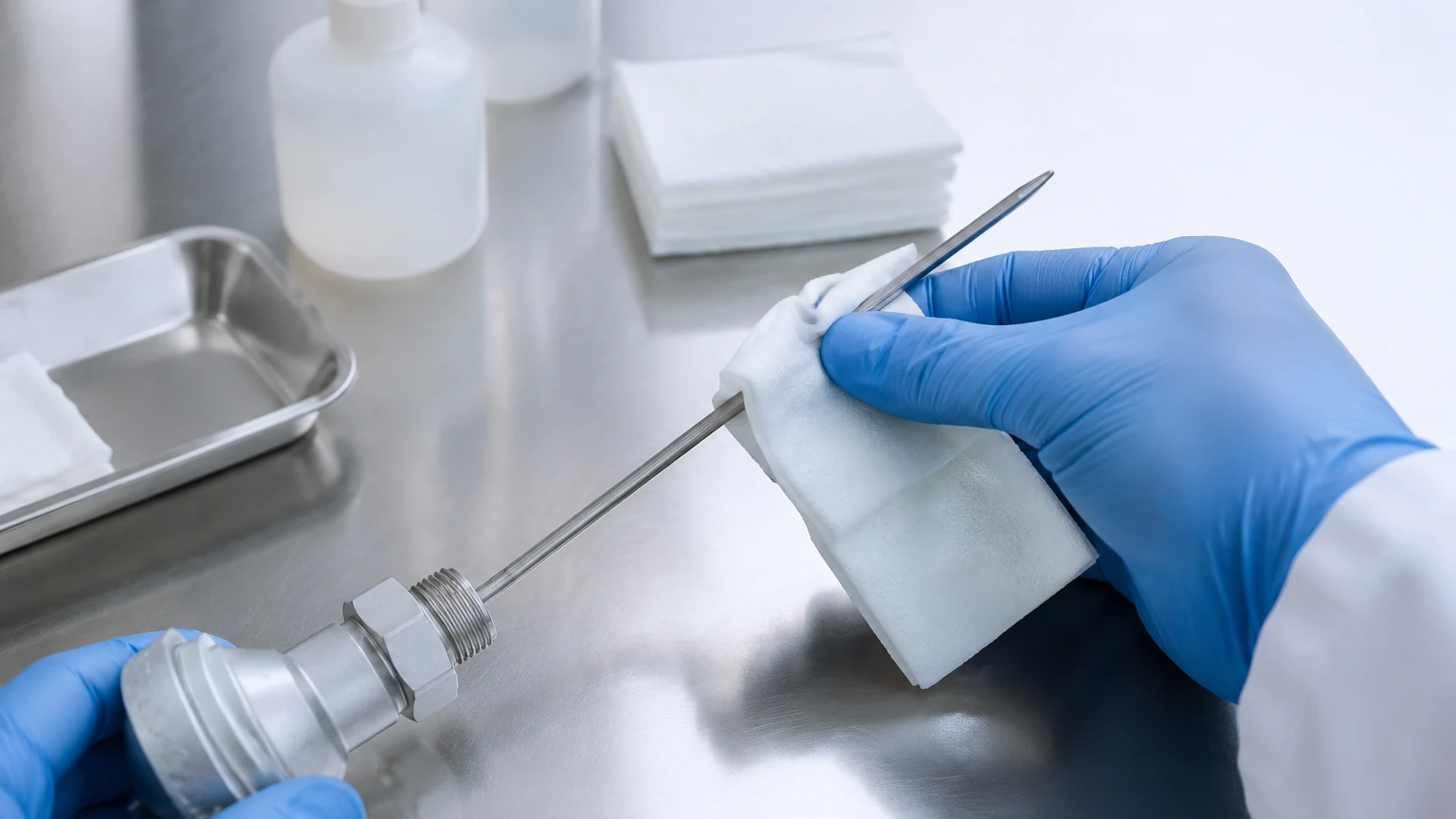
If a probe is dropped, touched by an operator’s hand, or comes into contact with any non-sanitized surface, it must be cleaned immediately. In industrial settings, this includes contact with non-sterile tools or exposure to the ambient environment during maintenance.
4. At Scheduled Intervals (CIP/SIP)
In automated industrial lines, cleaning often occurs at fixed intervals through Clean-in-Place (CIP) or Sterilization-in-Place (SIP) cycles. These cycles typically involve flushing the system with caustic or acidic solutions followed by high-temperature steam (often at 121°C or 250°F). Probes must be designed to withstand these harsh conditions without losing calibration.
5. When Readings Show Drift or Lag
If an operator notices that a temperature reading is taking longer than usual to stabilize (increased response time) or if the values seem inconsistent with other process indicators, it is a sign of probe fouling. In such cases, the probe should be removed and inspected for buildup.
Selection and Maintenance Table
Choosing the right probe and understanding its maintenance needs is vital for long-term operational efficiency. The following table compares different probe types and their typical cleaning requirements.
| Probe Type | Application | Cleaning Method | Sanitization Frequency |
| :— | :— | :— | :— |
| Fixed RTD Probe | Continuous process monitoring | CIP/SIP Systems | Per batch or daily cycle |
| Handheld Digital Probe | Spot checks in food/lab | Alcohol wipes (70% Isopropyl) | Between every single measurement |
| Infrared (Non-contact) | High-temp or moving parts | Lens cleaning with soft cloth | When lens is visibly dusty |
| Level Probe (Contact) | Tank level monitoring | Manual scrub or CIP | During tank turnaround |
| Thermowell-mounted | High-pressure pipes | External pipe cleaning | Per facility SOP |
Installation Considerations for Optimal Hygiene
Proper installation is just as important as the cleaning process itself. If a probe is installed incorrectly, it can create "dead zones" where fluid becomes trapped and bacteria can grow, making sanitization nearly impossible.
1. Avoid Dead Legs: In piping systems, the probe should be installed in a way that the process fluid flows constantly across the sensing tip. Avoid mounting probes in long, vertical pipe sections where fluid can stagnate.
2. Surface Finish: For hygienic applications, the probe surface should have a Ra (Roughness Average) of less than 0.8 µm. A smoother surface prevents the adhesion of proteins and microorganisms.
3. Gaskets and Seals: Use food-grade or chemically resistant seals (such as EPDM or PTFE) that do not degrade when exposed to sanitizing agents. Degraded seals can harbor contaminants.
4. Immersion Depth: Ensure the probe is immersed deep enough into the medium (typically 10 times the probe diameter) to get an accurate reading, but ensure the mounting threads or flanges are outside the high-contamination zone.
Limitations and Challenges in Probe Sanitization
While cleaning is necessary, it is not without risks and limitations. Maintenance teams must be aware of the following factors:
* Thermal Shock: Rapidly moving a probe from a cold sanitizing solution to a hot process (or vice versa) can cause thermal shock, potentially cracking the internal ceramic insulators in some sensors.
* Chemical Compatibility: Some sanitizers, particularly those containing high concentrations of chlorine, can cause pitting corrosion on stainless steel probes if not rinsed properly.
* Calibration Drift: Frequent cleaning, especially involving mechanical scrubbing or high-heat sterilization, can cause the sensor to drift over time. Regular calibration against a reference standard is required.
* Sensor Fragility: While industrial probes are rugged, the internal wires are delicate. Excessive vibration or rough handling during manual cleaning can lead to intermittent signals or total failure.
Frequently Asked Questions (FAQs)
Can I use a thermometer probe for both raw and cooked food?
Yes, but only if it is thoroughly cleaned and sanitized between uses. Failure to do so is a primary cause of foodborne illness in commercial kitchens and processing plants.
What is the difference between cleaning and sanitizing?
Cleaning is the physical removal of dirt, debris, and food particles using detergents and water. Sanitizing is the process of reducing the number of microorganisms on the surface to a safe level, usually through heat or chemicals.
How long should a probe be in contact with a sanitizer?
This depends on the chemical used. For 70% isopropyl alcohol, the surface should remain wet for at least 30 seconds. For chlorine-based sanitizers, the contact time is usually specified by the manufacturer, often ranging from 1 to 2 minutes.
Do level measurement probes need the same level of sanitization?
In the food, beverage, and pharmaceutical industries, yes. Any probe that comes into contact with the product must meet the same hygienic standards as a thermometer probe to prevent contamination of the batch.
Conclusion
Determining when a thermometer probe should be cleaned and sanitized is a critical component of industrial quality control. By adhering to a strict regimen—cleaning before first use, between batches, and during scheduled CIP cycles—operators can ensure both the safety of their products and the accuracy of their data.
For organizations looking to integrate high-precision measurement into their workflows, selecting the right equipment is the first step. From temperature monitoring to advanced level measurement, the solutions available through Welk's Main Page provide the reliability and hygienic design required for modern industrial applications. Maintaining these instruments through proper cleaning protocols ensures they provide a high return on investment and remain compliant with global safety standards.
Download When Should a Thermometer Probe Be Cleaned and Sanitized as a PDF