Wifi Water Level Sensor
Wifi Water Level Sensor
In the landscape of modern industrial automation and remote monitoring, the wifi water level sensor has emerged as a critical component for real-time data acquisition. By combining traditional level measurement physics with wireless internet connectivity, these devices allow plant managers, engineers, and facility operators to monitor liquid levels in tanks, reservoirs, and sumps without the need for extensive signal cabling. This guide provides a technical overview of the measurement principles, selection criteria, and installation requirements for industrial-grade wifi level measurement systems.
Understanding the Core Measurement Principles
Before selecting a wifi-enabled device, it is essential to understand the underlying sensing technology. A wifi water level sensor is essentially a standard level transmitter integrated with a wireless communication module. The primary technologies used include ultrasonic, radar, and hydrostatic pressure sensing.
Ultrasonic Level Measurement
Ultrasonic sensors operate on the "Time of Flight" (ToF) principle. The sensor head emits a high-frequency sound pulse (typically 40 kHz to 200 kHz). This pulse travels through the air, reflects off the surface of the water, and returns to the transducer. The device calculates the distance based on the time taken for the echo to return and the speed of sound in air.
* Advantages: Non-contact, low maintenance, and cost-effective for clean liquids.
* Limitations: Performance can be affected by heavy foam, extreme steam, or significant temperature fluctuations that alter the speed of sound.
Radar (Microwave) Level Measurement
Radar sensors also use the ToF principle but utilize electromagnetic waves instead of sound. High-frequency microwave pulses (often 26GHz or 80GHz) are emitted and reflected by the liquid surface. Because electromagnetic waves are not influenced by air temperature, pressure, or vacuum, radar is often considered more robust than ultrasonic technology.
* Advantages: Highly accurate (up to ±2mm), unaffected by vapor or dust, and suitable for high-pressure environments.
* Limitations: Higher initial cost compared to ultrasonic sensors.
Hydrostatic Pressure Measurement
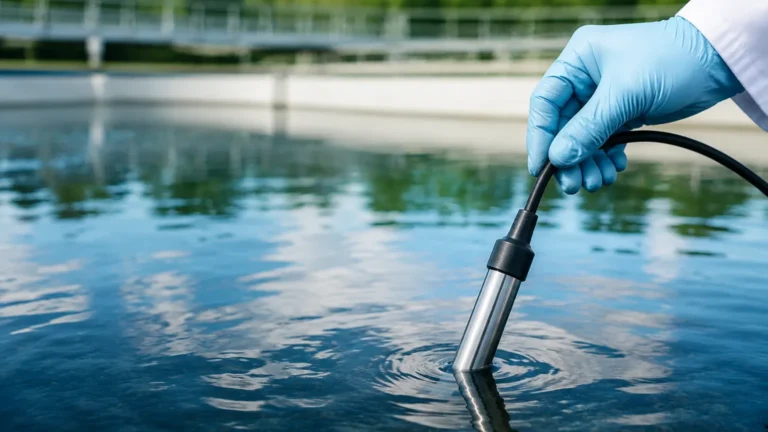
Hydrostatic sensors are contact-based devices. A submersible pressure transmitter is lowered to the bottom of the water source. It measures the pressure exerted by the liquid column above it. The relationship is defined by the formula: $P = \rho \cdot g \cdot h$, where $P$ is pressure, $\rho$ is the density of the liquid, $g$ is gravity, and $h$ is the height of the liquid.
* Advantages: Unaffected by surface turbulence, foam, or physical obstructions in the tank.
* Limitations: Requires physical contact with the liquid, which may not be suitable for corrosive chemicals unless specialized materials like PTFE are used.
System Architecture and Connectivity
An industrial wifi water level sensor system typically consists of three main layers:
1. The Sensing Layer: The physical probe (ultrasonic, radar, or pressure) that detects the water level.
2. The Transmission Layer: A WiFi module (IEEE 802.11 b/g/n) that packages the sensor data into digital protocols such as MQTT, HTTP, or Modbus TCP.
3. The Application Layer: A local server, SCADA system, or cloud platform where data is visualized, logged, and used to trigger alarms.
In industrial settings, these sensors often feature high-gain antennas to overcome structural interference. When evaluating professional-grade hardware, users can explore the Main Page to find specific radar or ultrasonic configurations that support wireless integration.
Key Selection Criteria for Industrial Applications
Choosing the right wifi water level sensor requires a detailed analysis of the application environment. Engineers should confirm the following parameters before procurement:
1. Measurement Range and Accuracy
Determine the maximum height of the tank or the depth of the well. Ultrasonic sensors typically cover ranges from 0.5m to 15m, while specialized radar sensors can reach up to 30m or 70m. Accuracy requirements vary; standard industrial applications often require ±0.25% of the full scale, while custody transfer or precise chemical dosing may require higher precision.
2. Power Supply Strategy
WiFi communication is relatively power-intensive compared to other wireless protocols like LoRaWAN.
* Mains Power (AC/DC): Ideal for continuous monitoring where a power source is available.
* Battery Power: Suitable for remote locations. These units often use "sleep modes" to conserve energy, waking up at set intervals (e.g., every 15 minutes) to take a reading and transmit data.
* Solar-Assisted: A common choice for outdoor reservoirs, combining rechargeable batteries with a small photovoltaic panel.
3. Environmental Ratings and Materials
For water treatment and chemical industries, the sensor housing must withstand harsh conditions. Look for an IP67 or IP68 rating for waterproof protection. If the sensor is installed in a tank containing corrosive liquids, the wetted parts should be made of Polypropylene (PP), PVDF, or 316L Stainless Steel.
Comparative Analysis of Sensor Technologies
The following table provides a quick reference for selecting the appropriate technology for a wifi-enabled system:
| Feature | Ultrasonic Sensor | Radar Sensor | Hydrostatic Transmitter |
| :— | :— | :— | :— |
| Measurement Type | Non-contact | Non-contact | Contact (Submersible) |
| Best Use Case | Open tanks, sumps | Chemical tanks, steam | Deep wells, vented tanks |
| Max Range (Typical) | Up to 15 meters | Up to 70 meters | Up to 200 meters |
| Accuracy | ±0.25% to ±0.5% | ±2mm to ±5mm | ±0.1% to ±0.5% |
| Influence of Foam | High interference | Moderate interference | No interference |
| Typical Cost | Moderate | High | Moderate |
Installation and Commissioning Best Practices
Proper installation is paramount to ensuring the reliability of a wifi water level sensor. Failure to follow engineering guidelines often leads to signal loss or false readings.
Positioning and Mounting
* Avoid the Dead Zone: Every non-contact sensor has a "dead zone" (blocking distance) directly beneath the transducer face where measurements cannot be taken. Ensure the sensor is mounted high enough so the maximum water level never enters this zone.
* Clear Path: For ultrasonic and radar sensors, the "beam angle" must be considered. Ensure there are no internal obstructions like ladders, pipes, or agitators within the signal path.
* Vertical Alignment: The sensor must be installed perfectly perpendicular to the liquid surface. A tilt of even a few degrees can cause the signal to bounce away from the receiver, leading to "Lost Echo" errors.
WiFi Signal Optimization
* Signal Strength (RSSI): Before permanent mounting, perform a site survey to check the Received Signal Strength Indicator (RSSI). A value between -30 dBm and -60 dBm is excellent; anything lower than -80 dBm will likely result in intermittent connectivity.
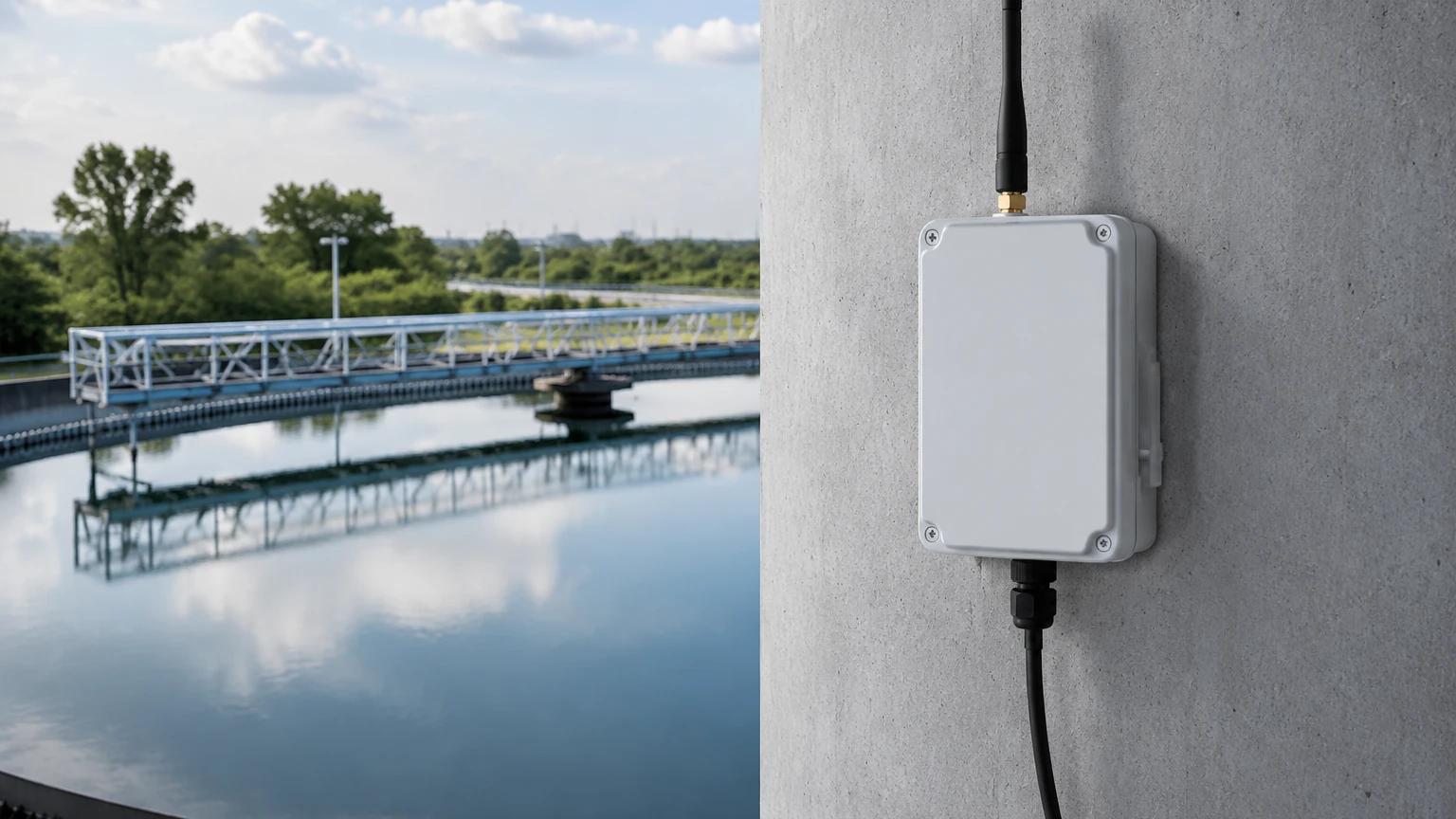
* Antenna Orientation: If the sensor is inside a metal enclosure or a concrete pit, the WiFi signal will be heavily attenuated. In such cases, use an external high-gain antenna extended to the outside of the structure.
Operational Limitations and Risk Mitigation
While wifi water level sensors offer significant convenience, they come with specific risks that must be managed in a B2B environment.
* Network Dependency: If the local WiFi router or access point fails, data transmission stops. For critical applications, ensure the sensor has internal data logging capabilities to store readings locally until the connection is restored.
* Cybersecurity: Industrial IoT devices can be vulnerable to unauthorized access. Always use WPA2/WPA3 encryption, change default administrative passwords, and consider isolating the sensors on a dedicated VLAN (Virtual Local Area Network).
* Latency: WiFi is not a real-time deterministic protocol. If the application requires sub-second response times for emergency shut-offs, a hardwired level switch should be used as a redundant safety backup.
Frequently Asked Questions (FAQs)
Q: Can a wifi water level sensor work in a metal tank?
A: Yes, but the WiFi signal cannot penetrate metal. You will need a sensor with a remote antenna that can be mounted on the exterior of the tank, or use a gateway located very close to a non-metallic inspection hatch.
Q: How long do batteries typically last in a wifi sensor?
A: This depends on the transmission frequency. If the sensor reports once per hour, high-quality lithium batteries can last 12 to 24 months. If it reports every minute, the battery may deplete within weeks.
Q: Is it possible to calibrate the sensor remotely?
A: Most industrial wifi sensors support remote configuration via a web interface or mobile app. This allows users to adjust the empty/full calibration points, damping factors, and alarm thresholds without physical access to the device.
Q: What happens if the water surface is turbulent?
A: For turbulent surfaces, radar is generally superior to ultrasonic. Additionally, most sensors allow you to increase the "damping" or "averaging" time in the software to smooth out fluctuations in the readings.
Conclusion
The integration of WiFi technology into level measurement instruments provides a flexible and scalable solution for modern fluid management. By understanding the physics of ultrasonic, radar, and hydrostatic sensing, and by accounting for the nuances of wireless signal propagation, engineering teams can implement robust monitoring systems that reduce manual inspections and improve operational efficiency. For those seeking specific hardware specifications and application support, visiting the Main Page of a professional manufacturer is the recommended next step to ensure the selected equipment meets the rigorous demands of industrial service.