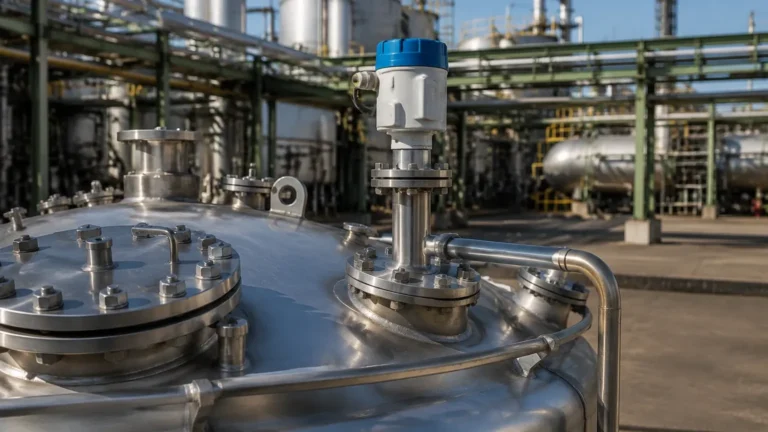
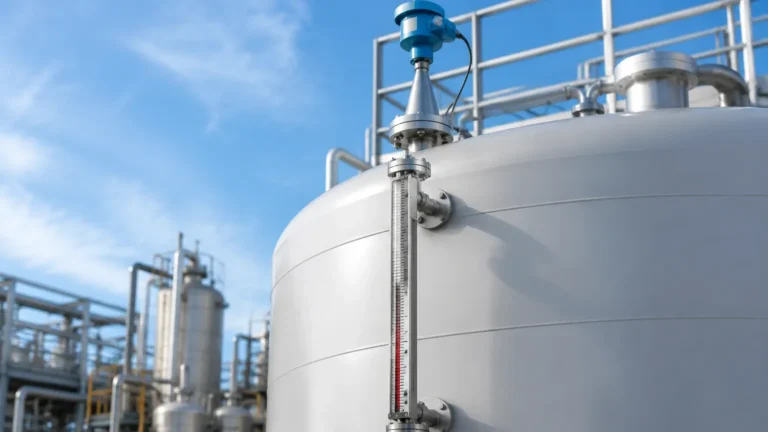
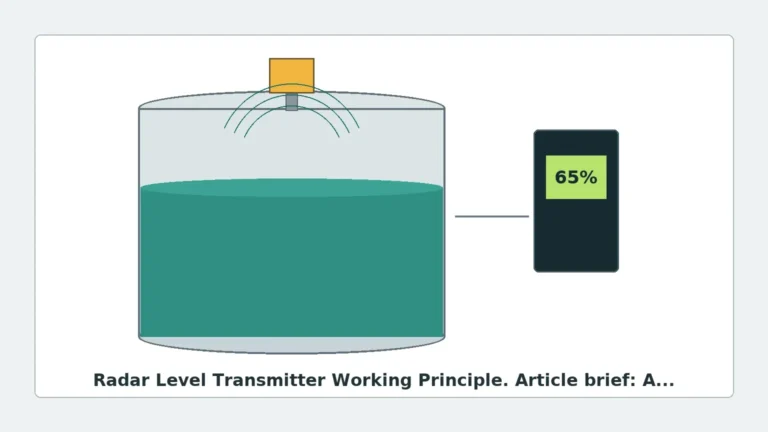
Forbes Marshall Radar Level Transmitter
Engineering Guide to Forbes Marshall Radar Level Transmitter Applications
In the landscape of industrial process control, accurate level measurement is a cornerstone of safety, efficiency, and inventory management. Among the various technologies available, non-contact radar has emerged as a preferred solution for challenging environments. This guide examines the technical specifications, operating principles, and application engineering considerations for the forbes marshall radar level transmitter, providing a factual reference for engineers and procurement specialists.
Understanding Radar Level Measurement Principles
Before selecting a specific instrument, it is essential to understand the underlying physics of radar technology. Radar level measurement operates on the Time of Flight (ToF) principle. The device emits high-frequency electromagnetic waves—typically in the microwave spectrum—which travel at the speed of light. When these waves encounter a medium with a different dielectric constant (DK) than the air or gas above it, a portion of the energy is reflected back to the transmitter.
There are two primary methods used in modern Radar Level Meters:
1. Pulse Radar: The transmitter emits a series of short microwave pulses. The time delay between transmission and reception is measured to calculate the distance to the product surface. This method is often used for its lower power consumption.
2. FMCW (Frequency Modulated Continuous Wave): The transmitter emits a continuous signal with a constantly changing frequency. The difference between the frequency of the emitted signal and the reflected signal is proportional to the distance. FMCW is generally considered more accurate and provides better signal-to-noise ratios in turbulent or dusty environments.
For the forbes marshall radar level transmitter range, the focus is often on high-frequency (typically 26 GHz or 80 GHz) FMCW technology, which allows for smaller antenna sizes and narrower beam angles, reducing interference from tank internals.
Technical Profile: Forbes Marshall Radar Level Transmitter
Forbes Marshall provides instrumentation designed for steam and process efficiency. Their radar level transmitters are engineered to handle the rigors of industrial processing, including high temperatures and pressures. These units are frequently employed in sectors such as chemical processing, power generation, and water treatment.
Key Features and Capabilities
* High Frequency Operation: Modern iterations utilize 80 GHz technology. The higher frequency results in a shorter wavelength, which improves reflection from low-dielectric materials and allows the signal to penetrate heavy dust or steam more effectively.
* Narrow Beam Angle: With beam angles as narrow as 3 degrees, these transmitters can be installed in tall, narrow nozzles or tanks with complex internal structures like agitators and heating coils without receiving false echoes.
* Non-Contact Measurement: Since the sensor does not touch the process media, it is immune to the corrosive or abrasive nature of the fluid, significantly reducing maintenance requirements compared to contact-based methods like hydrostatic or float-based systems.
Selection Criteria and Technical Comparison
Choosing the correct model requires an analysis of the process media, vessel geometry, and environmental conditions. The following table outlines the general selection parameters for radar transmitters in industrial settings.
Selection Table: Industrial Radar Parameters
| Feature | 26 GHz Radar | 80 GHz Radar (High Precision) |
| :— | :— | :— |
| Typical Accuracy | ±3 mm to ±5 mm | ±1 mm to ±2 mm |
| Beam Angle | 8° to 20° | 3° to 6° |
| Max Range | Up to 30 meters | Up to 100+ meters |
| Antenna Size | Larger (DN50 – DN150) | Compact (DN25 – DN80) |
| Best Use Case | General liquid storage | Tall silos, narrow tanks, low DK liquids |
| Media Type | Liquids, slurries | Solids, powders, high-purity liquids |
When evaluating a forbes marshall radar level transmitter, engineers must verify the dielectric constant of the medium. Materials with a DK lower than 1.4 (such as certain liquified gases or hydrocarbons) reflect very little energy, requiring high-sensitivity electronics or guided wave radar alternatives.
Installation Guidelines for Industrial Environments
Proper installation is critical to the performance of any radar level meter. Even the most advanced signal processing cannot fully compensate for a poorly positioned sensor.
1. Nozzle Geometry
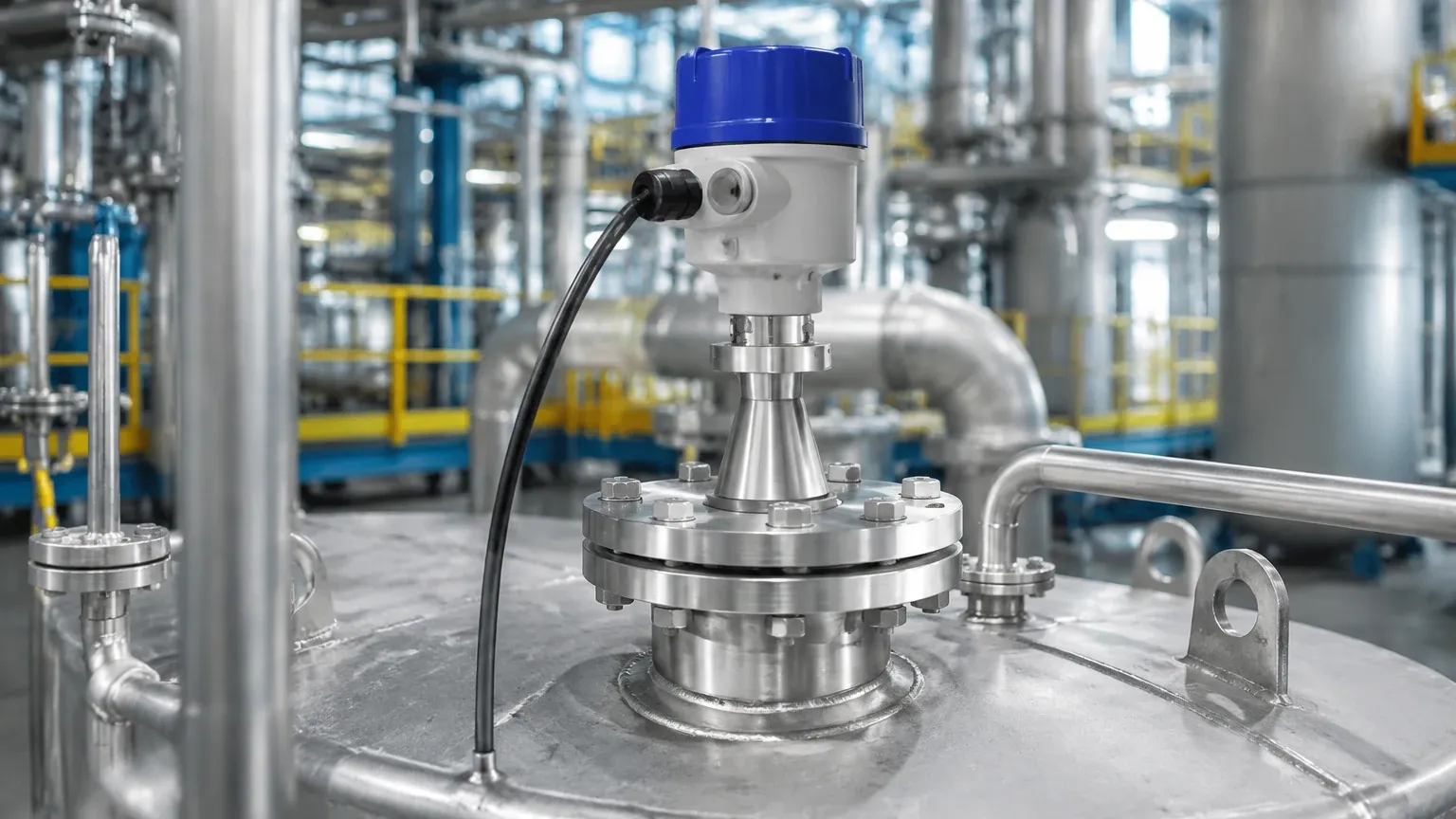
The nozzle height should be kept as short as possible. For standard radar units, the antenna should ideally extend slightly beyond the nozzle into the tank to prevent signal ringing within the pipe. If the nozzle is long, a higher frequency (80 GHz) unit is recommended due to its narrower beam, which avoids the nozzle walls.
2. Avoiding Obstructions
The "signal beam" is shaped like a cone. Any metal structure within this cone—such as ladders, pipes, or agitator blades—will create a reflection. While software can often "map out" these fixed reflections, it is best practice to install the transmitter at a distance from the tank wall (typically 1/6th of the tank diameter) and away from the center to avoid multiple reflections from the tank roof.
3. Turbulence and Foam
In tanks with heavy agitation, the surface of the liquid may be uneven, causing the signal to scatter. Similarly, thick, dense foam can absorb the radar signal entirely. In these cases, installing a stilling well (a perforated pipe that acts as a guide) can provide a calm surface for the radar to measure accurately.
Operational Limitations and Risk Mitigation
While radar is highly versatile, it is not a universal solution. Engineers must be aware of the following limitations:
* Dielectric Sensitivity: As mentioned, low DK materials are difficult to track. If the level is lost, the transmitter may lock onto the tank bottom. This is mitigated by using "bottom-tracking" software or choosing a transmitter with a higher dynamic range.
* Condensation and Buildup: In high-humidity applications, condensation can form on the antenna lens. While many forbes marshall radar level transmitter models feature PTFE or PEEK covers to shed moisture, heavy crystalline buildup or thick oil coatings can attenuate the signal. Periodic cleaning or the use of an air purge system may be required.
* Pressure and Temperature Limits: Standard radar sensors are rated for specific pressure ranges (e.g., up to 40 bar) and temperatures (e.g., up to 200°C). For extreme steam applications, specialized cooling fins or ceramic seals must be specified.
Procurement Guide for International Buyers
When sourcing industrial instrumentation like the Forbes Marshall range or other high-end Radar Level Meters, international buyers should confirm several technical and regulatory factors to ensure compatibility and compliance.
1. Certification: Ensure the device carries the necessary hazardous area certifications (ATEX, IECEx, or FM) if it is being installed in explosive atmospheres.
2. Communication Protocols: Most modern transmitters offer 4-20mA with HART as standard. However, if the facility uses Foundation Fieldbus, Profibus, or Modbus, this must be specified at the time of order.
3. Process Connections: Verify the flange standards (ANSI, DIN, or JIS) and the material of construction (SS316L, Hastelloy, etc.) to match the existing piping and the corrosivity of the medium.
4. Factory Acceptance Testing (FAT): For critical applications, request a calibration certificate traceable to international standards to verify the accuracy claims before the unit leaves the manufacturer.
Frequently Asked Questions (FAQ)
Q: Can a radar level transmitter measure through a plastic tank lid?
A: Yes. Because plastic has a low dielectric constant, microwave signals can pass through it. This allows for non-invasive measurement where the sensor is mounted outside a plastic or fiberglass tank, provided the material is not carbon-filled or metallic-lined.
Q: How does steam affect the accuracy of a forbes marshall radar level transmitter?
A: Unlike ultrasonic sensors, which are affected by changes in air density and temperature, radar signals are largely unaffected by steam. However, at extremely high pressures, the dielectric constant of the steam itself increases slightly, which can cause a small measurement offset that requires compensation in high-precision applications.
Q: What is the difference between "Accuracy" and "Repeatability" in these devices?
A: Accuracy refers to how close the measured value is to the actual physical level. Repeatability refers to the device's ability to provide the same reading under identical conditions. In many process control loops, high repeatability is more important than absolute accuracy.
Q: Is a stilling well always necessary for agitated liquids?
A: Not necessarily. With the advent of 80 GHz technology and advanced signal processing algorithms (which can filter out intermittent noise from agitator blades), many applications that previously required stilling wells can now be handled with open-tank radar mounting.
By following these engineering principles and selection criteria, industrial operators can ensure that their investment in level measurement technology provides long-term reliability and data integrity.