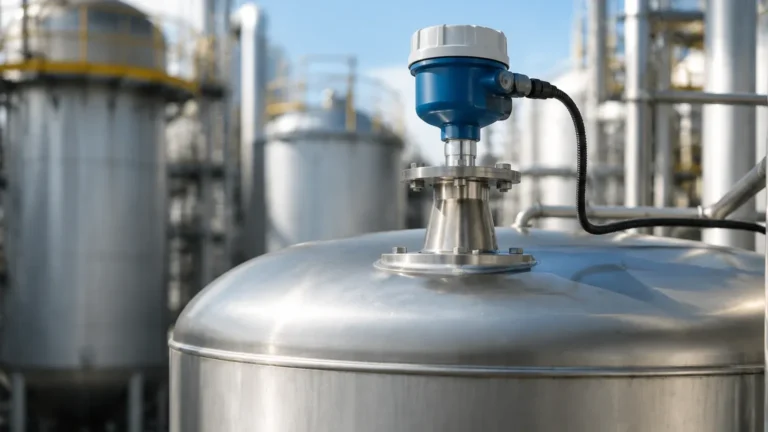
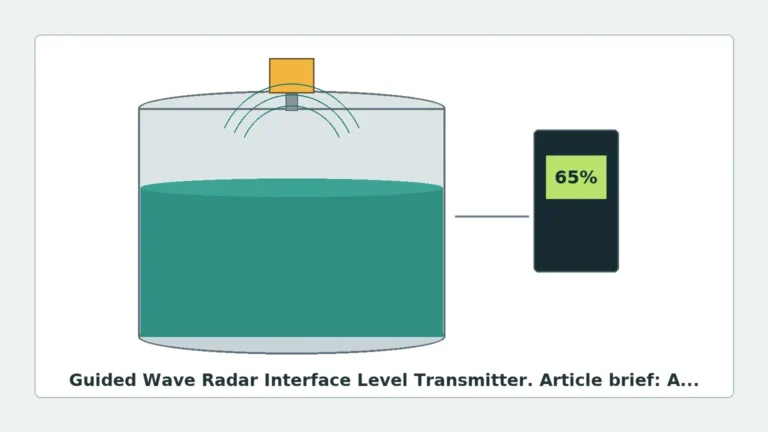
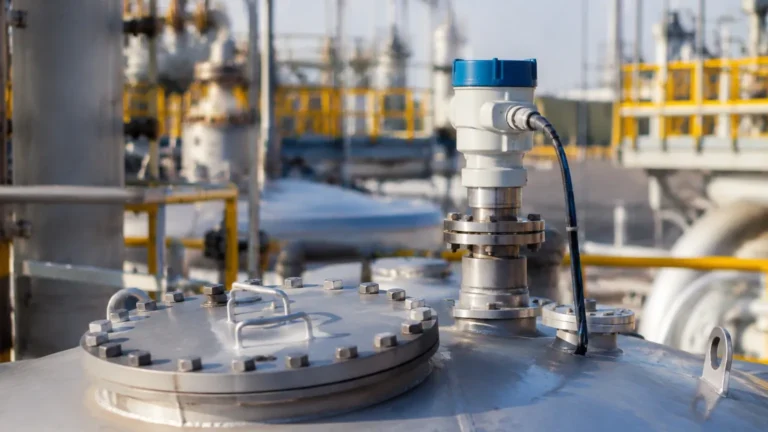
Vegapuls 31 Radar Level Transmitter
Engineering Guide: The Vegapuls 31 Radar Level Transmitter in Industrial Applications
In the landscape of industrial automation, the demand for non-contact level measurement has shifted toward higher frequency and greater precision. The vegapuls 31 radar level transmitter represents a significant evolution in this field, utilizing 80 GHz Frequency Modulated Continuous Wave (FMCW) technology to address the challenges of liquid and solid level monitoring in compact environments. As process industries move away from traditional ultrasonic sensors—which are often susceptible to air temperature fluctuations and signal interference—radar technology has become the benchmark for reliability.
This article provides a technical overview of the measurement principles, selection criteria, and installation requirements for the Vegapuls 31, while situating it within the broader context of high-performance Radar Level Meters.
1. Understanding the 80 GHz FMCW Measurement Principle
Before selecting a specific instrument, it is essential to understand the physics that differentiate modern radar sensors from older generations. The vegapuls 31 radar level transmitter operates on the FMCW principle, which differs fundamentally from the older "Pulse" radar method.
The FMCW Method
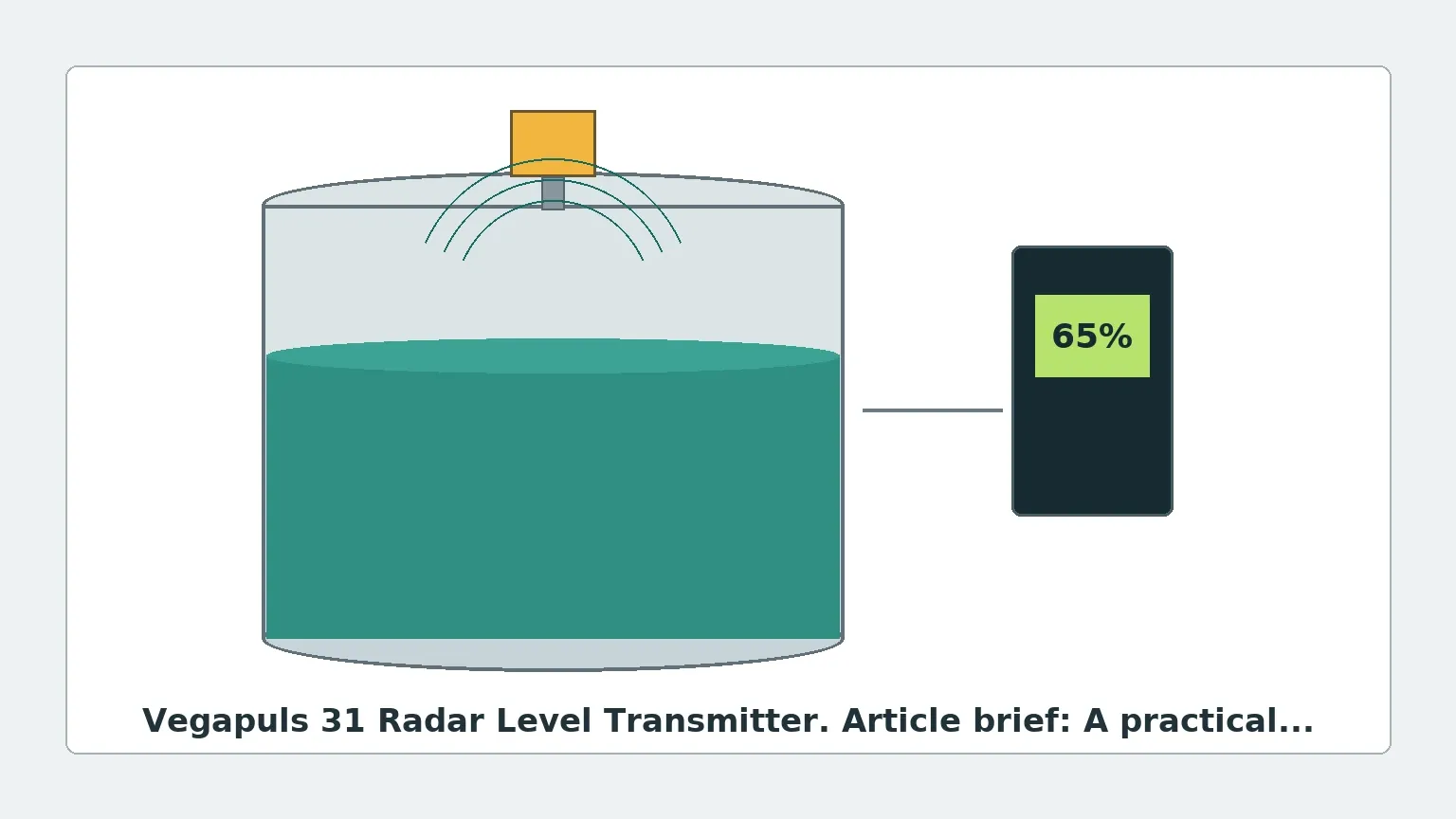
In FMCW radar, the sensor emits a continuous signal with a frequency that increases linearly over time (a frequency sweep). This signal travels to the medium's surface, reflects, and returns to the sensor. By the time the reflected signal reaches the receiver, the transmitter is already emitting a higher frequency. The difference between the emitted frequency and the received frequency is directly proportional to the travel time, and thus the distance to the product surface.
Why 80 GHz Matters
The transition from 26 GHz to 80 GHz frequency is a critical advancement for industrial Radar Level Meters. Higher frequencies result in a much shorter wavelength, which allows for:
* Narrower Beam Angle: An 80 GHz sensor can achieve a beam angle as narrow as 8°, compared to the 20° or 30° typical of lower-frequency units. This prevents the signal from hitting tank walls or internal obstructions like agitators and ladders.
* Better Focusing: The energy is concentrated on a smaller area, resulting in a stronger reflection (echo) from the medium, even if the surface is turbulent or has a low dielectric constant.
* Smaller Antenna Size: High-frequency components allow the entire transmitter to be housed in a compact, thread-mounted body, suitable for small vessels.
2. Technical Profile of the Vegapuls 31 Radar Level Transmitter
The Vegapuls 31 is designed as a cost-effective, compact solution for simple process conditions. It is frequently used in water treatment, chemical storage, and auxiliary processes where space is limited but accuracy is paramount.
Key Specifications
* Measuring Range: Up to 15 meters (approx. 49 feet).
* Accuracy: ±2 mm (0.08 inches).
* Process Temperature: -40°C to +80°C.
* Process Pressure: -1 to 3 bar (-100 to 300 kPa).
* Output Signal: 4…20 mA or Modbus RTU, often with HART protocol for remote configuration.
* Housing Material: PVDF (Polyvinylidene fluoride), providing excellent chemical resistance.
* Protection Rating: IP66/IP67 (Type 4X).
One of the defining features of this transmitter is its integration with wireless adjustment tools. Engineers can configure the device via Bluetooth using a smartphone or tablet, which is particularly useful for sensors mounted in hard-to-reach locations or hazardous areas.
3. Selection Criteria: Comparing Radar Technologies
When specifying level measurement instrumentation, engineers must decide between various radar types. The following table compares the Vegapuls 31 (representing compact 80 GHz FMCW) against traditional 26 GHz Pulse Radar and Ultrasonic sensors.
| Feature | Vegapuls 31 (80 GHz FMCW) | 26 GHz Pulse Radar | Ultrasonic Sensors |
| :— | :— | :— | :— |
| Beam Angle | Very Narrow (~8°) | Medium (~20-30°) | Wide (~10-15°) |
| Accuracy | ±2 mm | ±5 mm to ±10 mm | ±10 mm |
| Influence of Vapor/Dust | Negligible | Low | High (Affects sound speed) |
| Internal Obstructions | Easily avoided | Often causes false echoes | Significant interference |
| Mounting Size | Small (1" or 1.5" threads) | Large (Flanged) | Medium to Large |
| Cost | Moderate | High | Low to Moderate |
For most modern industrial applications, the 80 GHz Radar Level Meters offer the best balance of performance and ease of installation, effectively making ultrasonic technology obsolete in pressurized or temperature-varying environments.
4. Installation Guidelines and Best Practices
To ensure the vegapuls 31 radar level transmitter performs to its specified accuracy, certain installation constraints must be observed. Despite the narrow beam angle of 80 GHz technology, physical placement remains the most common factor in measurement failure.
Positioning the Sensor
* Distance from Wall: The sensor should not be mounted directly in the center of a tank (to avoid multiple reflections) nor too close to the wall (to avoid signal attenuation). A distance of at least 200 mm (approx. 8 inches) from the wall is recommended.
* Avoiding Obstructions: Ensure the signal path is clear of heating coils, agitators, or fill streams. If an obstruction is unavoidable, the narrow beam of the 80 GHz signal should be aimed to bypass it.
* Nozzle Height: If mounting on a nozzle, the bottom of the sensor (the antenna) should ideally extend slightly into the tank. If the nozzle is very long and narrow, signal ringing can occur, though 80 GHz systems are much more resilient to this than 26 GHz systems.
Alignment
The sensor must be mounted perpendicular to the product surface. In applications involving solids (where the surface may have an angle of repose), an adjustable mounting flange may be required to aim the sensor at the most representative point of the level.
5. Industrial Application Scenarios
The versatility of the Vegapuls 31 allows it to be deployed across various sectors. Below are three common use cases:
Water and Wastewater Management
In pump stations and open channels, ultrasonic sensors often fail due to fog, wind, or air temperature gradients. The Vegapuls 31 provides a maintenance-free alternative for monitoring well levels or flume flow. Because it measures through plastic tank lids, it can even be installed outside a sealed plastic tank to measure the level inside without making contact with the liquid.
Chemical Storage
Small-scale chemical dosing tanks often contain aggressive media like acids or alkalis. The PVDF housing of the Vegapuls 31 is highly resistant to corrosion. Its compact size makes it ideal for IBC (Intermediate Bulk Container) monitoring or small plastic storage vessels found in water treatment plants.
Food and Beverage (Auxiliary Processes)
While not always the primary choice for hygienic food contact (where specialized stainless steel models are used), the Vegapuls 31 is excellent for utility applications like wastewater pits, CIP (Clean-In-Place) chemical storage, and cooling water tanks.
6. Operational Limitations and Application Risks
While the vegapuls 31 radar level transmitter is a robust instrument, it is not a universal solution for every process. Engineers must be aware of the following limitations:
* Heavy Foam: While radar can penetrate some light foam, extremely dense, thick foam (like shaving cream) can absorb the 80 GHz signal, leading to a loss of echo. In these cases, a guided wave radar or a lower frequency radar might be necessary.
* Pressure and Temperature Extremes: With a limit of 3 bar and 80°C, this transmitter is not suitable for high-pressure boilers or high-temperature reactors. For those environments, heavy-duty Radar Level Meters with cooling extensions and high-pressure seals are required.
* Extremely Low Dielectric Media: Some non-polar hydrocarbons have a very low dielectric constant (εr < 1.5). While 80 GHz technology is sensitive, measurement of these fluids in a large tank may require a bypass pipe or a stilling well to concentrate the signal.
7. Buyer’s Checklist and FAQ
When sourcing a vegapuls 31 radar level transmitter or similar equipment for international projects, buyers should confirm the following details with their supplier:
1. Process Connection: Does the thread type (G1½, 1½ NPT, etc.) match the existing tank port?
2. Output Requirements: Is a standard 4…20 mA loop sufficient, or is digital communication (Modbus, HART) required for the PLC?
3. Cable Length: Does the unit come with a pre-assembled cable, or is a plug-in connector required?
4. Hazardous Area Certification: Does the installation site require ATEX, IECEx, or FM approvals for explosive atmospheres?
Frequently Asked Questions
Q: Can the Vegapuls 31 measure through a plastic tank wall?
A: Yes. Because 80 GHz radar signals pass through non-conductive materials like polyethylene or polypropylene, the sensor can often measure the liquid level from outside the tank, provided the wall is not too thick or reinforced with metal.
Q: How does the Vegapuls 31 handle condensation?
A: The sensor is designed with a convex antenna surface that allows condensation to bead off, preventing the buildup of water droplets that could attenuate the signal. This makes it superior to flat-faced ultrasonic sensors in humid environments.
Q: Is a stilling well necessary?
A: In most cases, no. The narrow beam angle of the 80 GHz signal allows it to operate without a stilling well even in tanks with internal structures, provided there is a clear "line of sight" to the liquid surface.
8. Conclusion
The vegapuls 31 radar level transmitter represents the modern standard for compact, reliable, and cost-effective level measurement. By leveraging 80 GHz FMCW technology, it overcomes the historical limitations of both ultrasonic sensors and lower-frequency radar units. For industrial operators looking to upgrade their monitoring systems, understanding the specific technical requirements of their process—dielectric constant, temperature, and physical obstructions—is the first step toward successful implementation. For a wider range of solutions tailored to more demanding process conditions, exploring the full category of Radar Level Meters will provide the necessary options for high-pressure or high-temperature environments.