Radar Level Sensor Hs Code
Radar Level Sensor HS Code: A Technical and Regulatory Guide for Industrial Measurement
In the landscape of industrial process automation, the transition toward non-contact measurement has solidified the role of radar technology. For procurement departments, engineering firms, and international distributors, understanding the technical specifications of Radar Level Meters is only half of the requirement. Navigating the logistical framework, specifically the radar level sensor hs code, is essential for ensuring compliance, calculating tariffs, and streamlining global supply chains.
This guide provides a comprehensive analysis of radar level measurement principles, selection criteria, and the regulatory classifications necessary for international trade in industrial instrumentation.
Understanding Radar Level Measurement Principles
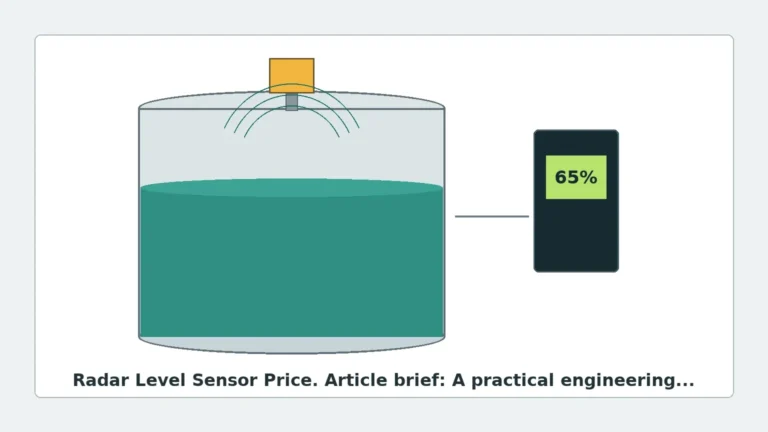
Before addressing the administrative aspects of the radar level sensor hs code, it is critical to understand the physics that dictate how these instruments are categorized and applied. Radar level sensors operate on the principle of Time of Flight (ToF). The sensor emits electromagnetic pulses or continuous waves that travel at the speed of light, reflect off the surface of the medium, and return to the receiver.
Pulse Radar vs. FMCW
There are two primary methods used in modern industrial radar sensors:
1. Pulse Radar: The instrument emits a short microwave pulse and measures the time taken for the pulse to travel to the surface and back. This method is often used in battery-powered or loop-powered devices due to its lower energy consumption.
2. Frequency Modulated Continuous Wave (FMCW): The sensor emits a continuous signal with a constantly changing frequency. The difference in frequency between the emitted signal and the reflected signal is proportional to the distance. FMCW is generally preferred for high-precision applications and environments with significant vapor or turbulence.
Guided Wave vs. Non-Contact
* Guided Wave Radar (GWR): Uses a physical probe (rod or cable) to guide the microwave signal. This is ideal for liquids with low dielectric constants or applications where internal tank obstructions might interfere with a free-to-air signal.
* Non-Contact Radar: Emits signals through the air via an antenna (horn, drop, or lens). This is the standard for corrosive or hygienic applications where the sensor should not touch the process media.
The Significance of the Radar Level Sensor HS Code
The Harmonized System (HS) is an internationally standardized system of names and numbers to classify traded products. For industrial instrumentation, the classification determines the import duty rates, VAT, and whether specific export licenses are required.
Primary Classification: Chapter 90
Most industrial level measurement instruments fall under Chapter 90 of the HS code system, which covers "Optical, photographic, cinematographic, measuring, checking, precision, medical or surgical instruments and apparatus."
Specifically, radar level sensors are typically classified under:
* HS Code 9026.10: Instruments and apparatus for measuring or checking the flow or level of liquids.
* HS Code 9026.90: Parts and accessories for these instruments.
In many jurisdictions, the specific radar level sensor hs code used for customs declarations is 9026.10.11 or 9026.10.20, depending on whether the device is electronic and its specific functional design. It is important to note that while the first six digits are harmonized globally, the subsequent digits may vary by country (e.g., HTS codes in the United States or CN codes in the European Union).
Selection Criteria for Industrial Radar Level Meters
Selecting the correct radar sensor requires an evaluation of both the process environment and the physical properties of the medium. Engineers must consider the following factors to ensure reliable performance:
1. Frequency Selection
The frequency of the radar signal significantly impacts the beam angle and the sensor's ability to penetrate foam or dust.
* 6 GHz (C-Band): Best for applications with heavy foam or extreme turbulence, as the longer wavelength is less affected by surface agitation.
* 26 GHz (K-Band): The versatile standard for most liquid and solid applications. It offers a balance between beam focus and signal strength.
* 80 GHz (W-Band): Features a very narrow beam angle (often less than 3 degrees), making it ideal for tall, narrow tanks with internal obstructions or for measuring through plastic tank walls.
2. Dielectric Constant (Dk)
The dielectric constant of the material determines how much of the radar signal is reflected. Materials with a high Dk (e.g., water, Dk ≈ 80) reflect signals strongly. Materials with a low Dk (e.g., hydrocarbons, Dk < 2) reflect very little energy, often requiring Guided Wave Radar or high-sensitivity FMCW sensors.
3. Process Conditions
* Temperature: Standard sensors operate up to 80°C (176°F), but specialized high-temperature versions can withstand over 400°C (752°F).
* Pressure: High-pressure seals (e.g., ceramic or glass) are required for pressurized vessels, with ratings often exceeding 100 bar (1450 psi).
Technical Comparison Table
The following table outlines the typical performance characteristics of different radar technologies used in industrial settings.
| Feature | 26 GHz Non-Contact Radar | 80 GHz Non-Contact Radar | Guided Wave Radar (GWR) |
| :— | :— | :— | :— |
| Measurement Range | Up to 30m (98 ft) | Up to 120m (393 ft) | Up to 75m (246 ft) |
| Accuracy | ±3mm | ±1mm | ±2mm |
| Beam Angle | 8° – 20° | 3° – 8° | N/A (signal follows probe) |
| Media Type | Liquids / Solids | Liquids / Fine Powders | Liquids / Slurries |
| Foam Resistance | Moderate | Low | High |
| Typical HS Code | 9026.10 | 9026.10 | 9026.10 |
Installation Considerations and Best Practices
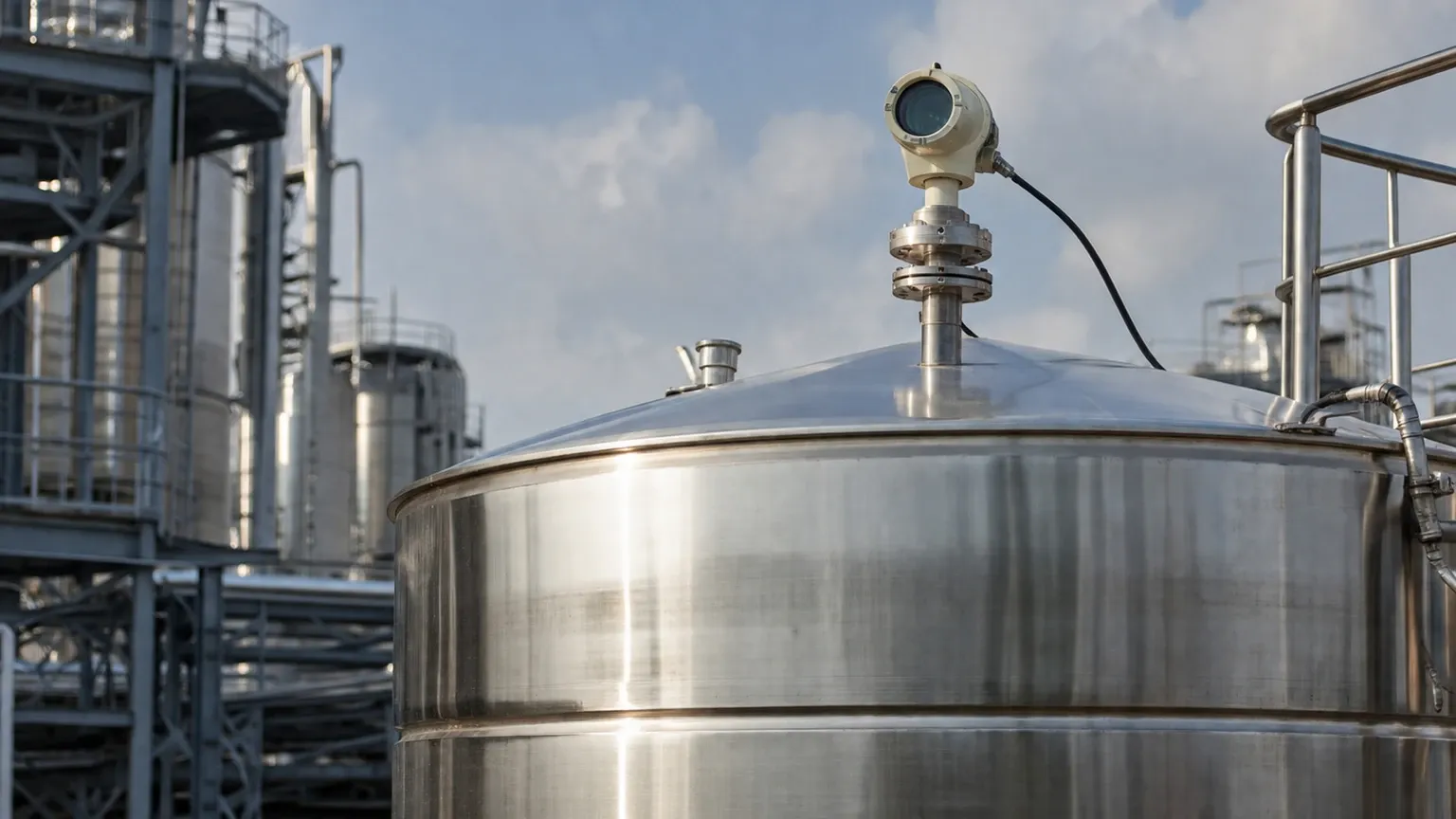
Correct installation is paramount to the accuracy of Radar Level Meters. Even the most advanced sensor will fail if placed incorrectly relative to the tank geometry.
Nozzle Geometry
The nozzle height and diameter must be considered to prevent "ringing" or signal interference. For non-contact radar, the antenna should ideally extend slightly beyond the nozzle or be positioned so the beam does not hit the nozzle edge. If using an 80 GHz sensor, the narrow beam allows for installation in longer, narrower nozzles compared to 26 GHz models.
Obstruction Avoidance
Radar signals spread as they travel. Any internal structure—such as ladders, heating coils, or agitators—within the beam's path will create a false reflection. Most modern sensors include "False Signal Suppression" software, allowing the user to map out these static reflections, but it is always better to install the sensor in a clear path to the product surface.
Mounting Position
* Avoid the Center: Do not mount the sensor in the exact center of a domed tank, as this can cause multiple reflections to converge at the receiver, leading to signal errors.
* Distance from Wall: Maintain a minimum distance from the tank wall (typically 1/10th of the tank height) to avoid interference from side-wall reflections.
Limitations and Application Risks
While radar is highly versatile, it is not a universal solution. Engineers should be aware of the following limitations:
1. Heavy Foam: Extremely thick, dense foam can absorb the radar signal entirely, preventing a reflection. In these cases, hydrostatic or ultrasonic sensors might be considered, though GWR is often the best alternative.
2. Vacuum Conditions: While radar works in a vacuum (unlike ultrasonic sensors), the mechanical seals of the sensor must be rated for vacuum service to prevent air ingress or damage to the electronics.
3. Extremely Low Dielectric Media: If the Dk is below 1.4, the reflection may be too weak for standard non-contact radar. A bypass chamber or GWR is usually recommended for these fluids.
International Trade and Compliance
When purchasing or exporting these instruments, the radar level sensor hs code serves as the primary identifier for regulatory bodies. Beyond the HS code, buyers should confirm the following documentation for international shipments:
* Certificate of Origin: Required to determine eligibility for trade agreements.
* Calibration Certificates: Essential for quality assurance and compliance with ISO standards.
* Ex-Proof Certifications: If the sensor is destined for a hazardous area, ATEX, IECEx, or UL certifications must be clearly documented and matched with the equipment's nameplate.
Frequently Asked Questions (FAQ)
Q: Does the radar level sensor hs code change if the device is for solids instead of liquids?
A: Generally, no. Most customs authorities classify radar level sensors under 9026.10 regardless of the media, as the primary function is level measurement. However, some regional codes may distinguish between liquid and bulk solid measurement tools.
Q: Why is 80 GHz radar becoming the industry standard?
A: The 80 GHz frequency allows for smaller antenna sizes and a much narrower beam. This reduces the risk of interference from tank walls and internal obstructions, making it easier to install and more accurate in complex vessel geometries.
Q: Can I use a radar level meter on a plastic tank?
A: Yes. Radar signals can penetrate plastic and fiberglass. It is possible to mount a radar sensor above a plastic tank and measure the level through the top wall, provided the material is not conductive and the thickness is within the sensor's penetration capability.
Q: How does temperature affect the radar signal?
A: Unlike ultrasonic waves, radar signals are electromagnetic and do not require a medium to travel. Therefore, changes in air temperature or pressure do not significantly affect the speed of the signal or the accuracy of the measurement.
Conclusion
Radar level sensors represent the pinnacle of modern level measurement technology, offering non-contact, high-precision data across a vast range of industrial applications. For B2B professionals, mastering the technical nuances of frequency and dielectric constants is just as important as ensuring the correct radar level sensor hs code is applied during procurement and shipping. By adhering to proper selection and installation guidelines, facilities can achieve reliable, long-term monitoring of their most critical assets.
For more detailed technical specifications and product configurations, engineers are encouraged to review the available Radar Level Meters to find the solution that best fits their specific process requirements.