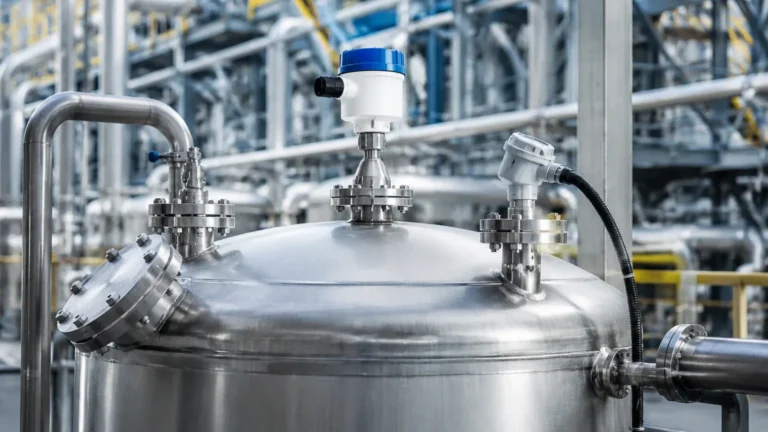
Radar Level Sensor Price
Radar Level Sensor Price: A Comprehensive Engineering Selection Guide
In the landscape of industrial automation, the transition from traditional mechanical level measurement to non-contact electronic sensing has been driven by the need for higher precision and lower maintenance. Radar technology stands at the forefront of this shift. However, for procurement engineers and plant managers, understanding the variables that dictate a radar level sensor price is essential for balancing capital expenditure with long-term operational reliability.
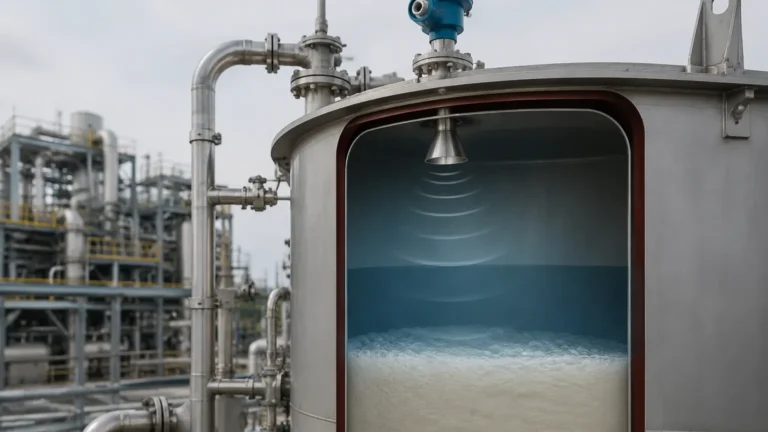
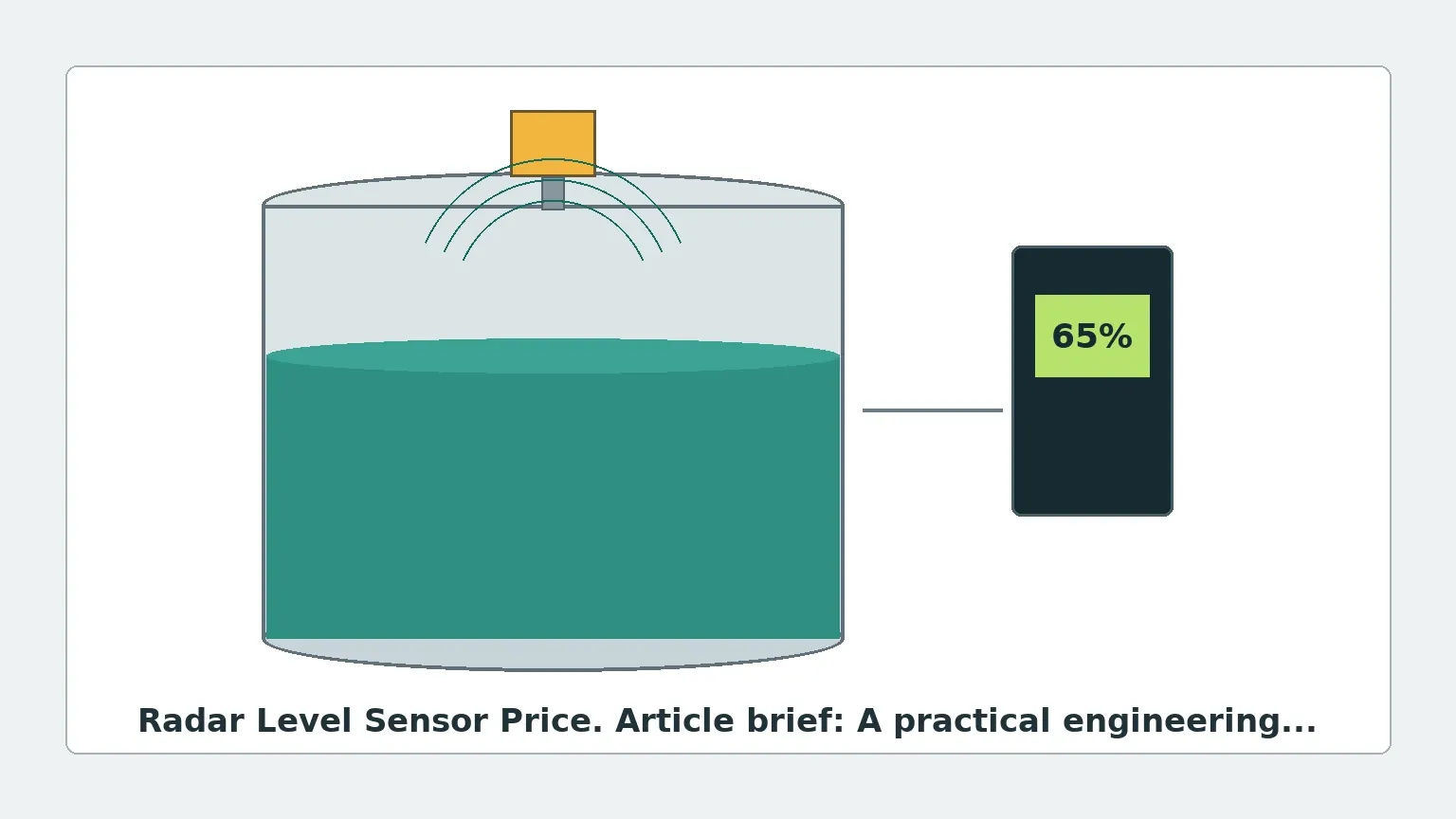
Radar level meters utilize electromagnetic waves to measure the distance to a product surface. Unlike ultrasonic sensors, which rely on sound waves and are susceptible to air temperature and pressure changes, radar waves travel at the speed of light and are largely unaffected by the gas phase composition in a tank. This guide explores the technical foundations of these instruments and the commercial factors influencing their market cost.
Measurement Principles: Pulse vs. FMCW
Before evaluating costs, it is critical to understand the two primary operating principles used in modern Radar Level Meters.
1. Pulse Radar (Time of Flight)
Pulse radar instruments emit a short microwave pulse toward the medium. The sensor measures the time it takes for the pulse to travel to the surface and reflect back to the receiver. Because the speed of light is constant, the distance is calculated as:
*Distance = (C × t) / 2*
(Where *C* is the speed of light and *t* is the transit time).
Pulse radar is often favored for simpler liquid applications. These units are generally more energy-efficient and are frequently used in loop-powered (2-wire) configurations. From a cost perspective, pulse radar sensors often represent the entry-level to mid-range segment of the market.
2. FMCW (Frequency Modulated Continuous Wave)
FMCW radar does not send a single pulse but rather a continuous signal with a constantly changing frequency (a frequency sweep). The reflection from the medium is compared to the signal being emitted at that exact moment. The difference in frequency (the "beat frequency") is directly proportional to the distance.
FMCW technology offers significantly higher resolution and a better signal-to-noise ratio. This makes it the preferred choice for measuring solids, powders, or liquids with low dielectric constants. Due to the complexity of the signal processing electronics, FMCW units typically command a higher radar level sensor price than standard pulse units.
Key Factors Influencing Radar Level Sensor Price
Several technical specifications directly impact the manufacturing cost and, consequently, the final price of the instrument.
Frequency (6GHz to 80GHz)
* Low Frequency (approx. 6GHz – 10GHz): These sensors have a wider beam angle and are less affected by foam or heavy steam. However, they require larger antennas (often 150mm or larger) to maintain focus.
* High Frequency (26GHz): The industry standard for many years, offering a balance between antenna size and accuracy.
* Ultra-High Frequency (80GHz): The current state-of-the-art. 80GHz radar allows for very narrow beam angles (as small as 3 degrees), enabling measurement in narrow tanks or through small nozzles. The precision and miniaturization of 80GHz components usually result in a higher price point.
Antenna Design and Material
Antennas are exposed to the process environment. A standard plastic (PP or PVDF) encapsulated antenna for water treatment is significantly more affordable than a PTFE-coated horn antenna or a parabolic antenna designed for high-temperature chemical reactors. Materials like SS316L, Hastelloy, or Tantalum for corrosive environments will scale the price upward.
Process Pressure and Temperature
Standard sensors are typically rated for -40°C to +80°C and pressures up to 3 bar. If the application involves high-pressure steam boilers or cryogenic storage, the sensor must feature specialized ceramic seals and thermal cooling fins. These engineering enhancements can double or triple the base cost of the sensor.
Certifications and Housing
Industrial environments often require Explosion-Proof (Ex d) or Intrinsically Safe (Ex ia) ratings. Furthermore, the housing material—ranging from reinforced plastic to aluminum or investment-cast stainless steel—affects durability and price. SIL 2/3 (Safety Integrity Level) ratings for overfill protection also add a premium due to the rigorous testing and documentation required.
Technical Selection Table
The following table provides a comparison of common radar configurations and their typical application profiles.
| Feature | 26GHz Pulse Radar | 80GHz FMCW Radar | Guided Wave Radar (GWR) |
| :— | :— | :— | :— |
| Measurement Style | Non-contact | Non-contact | Contact (Probe) |
| Beam Angle | 8° – 20° | 3° – 8° | N/A |
| Accuracy | ±3mm to ±5mm | ±1mm to ±2mm | ±2mm |
| Best For | Large liquid tanks | Small nozzles, solids | Low dielectric, foam |
| Max Range | Up to 30m | Up to 120m | Up to 75m |
| Relative Price | Moderate | High | Moderate to High |
Engineering Installation Guidelines
Even the most expensive radar sensor will fail to provide accurate data if installed incorrectly. When considering the radar level sensor price, one must also factor in the cost of proper mounting hardware and potential tank modifications.
1. The 1/6 Rule: For standard vertical tanks, the sensor should be installed at a distance of 1/6 of the tank diameter from the side wall. Installing too close to the wall causes signal interference, while installing in the center can lead to multiple reflections (echoes) from the tank bottom or roof.
2. Nozzle Height: The antenna must extend at least 10mm (0.4 inches) beyond the bottom of the mounting nozzle to prevent the signal from reflecting off the nozzle's internal edges.
3. Obstruction Avoidance: Avoid mounting the sensor directly above internal structures such as ladders, heating coils, or agitators. If obstructions are unavoidable, high-frequency 80GHz radar is recommended due to its narrow beam, or the use of "False Echo Suppression" software must be configured during commissioning.
4. Beam Path: Ensure the signal path is perpendicular to the liquid surface. For solids (silos), an adjustable flange (aiming kit) is often necessary to direct the beam toward the angle of repose of the material.
Limitations and Application Risks
While radar is highly versatile, it is not a universal solution. Engineers should be aware of the following limitations:
* Dielectric Constant (εr): The ability of a medium to reflect radar waves depends on its dielectric constant. Hydrocarbons (oil, diesel) have low εr (1.9 to 2.5), which results in a weaker return signal compared to water (εr ≈ 80). If the εr is below 1.4, non-contact radar may struggle, and Guided Wave Radar (GWR) becomes a more reliable, albeit sometimes more expensive, alternative.
* Heavy Foam: Dense, thick foam can absorb radar signals entirely. In such cases, low-frequency radar or contact-based level measurement (like magnetic level gauges) may be required.
* Vacuum Conditions: While radar works in a vacuum, the sealing of the instrument becomes the primary concern. Specialized vacuum-tight glass or ceramic seals are required, which impacts the instrument's cost.
International Procurement Checklist
When requesting a quote for an industrial radar sensor, providing comprehensive data ensures an accurate radar level sensor price and prevents costly returns. Confirm the following with your supplier:
* Medium Type: Is it a liquid, slurry, or solid? Is it corrosive or abrasive?
* Process Temperature/Pressure: Provide both normal operating and maximum design limits.
* Tank Dimensions: Total height and nozzle diameter/height.
* Output Requirements: 4-20mA, HART, Modbus RS485, or Profibus.
* Compliance: Are CE, RoHS, or ATEX/IECEx certificates required for your region?
Frequently Asked Questions (FAQ)
Q: Why is 80GHz radar more expensive than 26GHz?
A: 80GHz technology requires more sophisticated high-frequency signal processing chips and more precise manufacturing tolerances. However, it often reduces total project costs by allowing for smaller process connections and reducing the need for expensive bypass pipes.
Q: Can a radar level sensor measure through a plastic tank roof?
A: Yes, if the tank is made of a non-conductive material like PE or PP and is not reinforced with metal mesh, the radar can measure through the roof. This allows for the sensor to be mounted outside the tank, avoiding contact with corrosive chemicals.
Q: How long do radar level sensors typically last?
A: As non-contact instruments with no moving parts, radar sensors can have a service life of 10 to 15 years in standard conditions. Maintenance is usually limited to occasional cleaning of the antenna if the medium is prone to heavy coating.
Q: How does the dielectric constant affect the price?
A: For media with very low dielectric constants, you may need a more sensitive sensor with a larger antenna or a higher-powered FMCW signal processor, which increases the price compared to a standard sensor used for water-based liquids.
By understanding these technical nuances, industrial buyers can move beyond simply comparing the initial radar level sensor price and instead focus on the total cost of ownership and the specific accuracy requirements of their process automation needs.