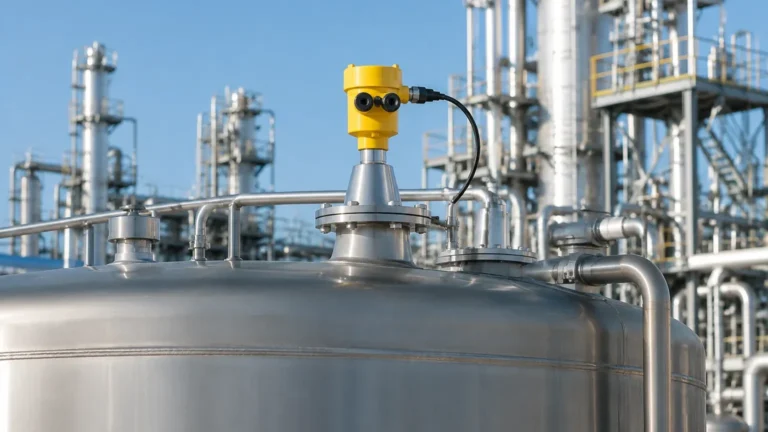
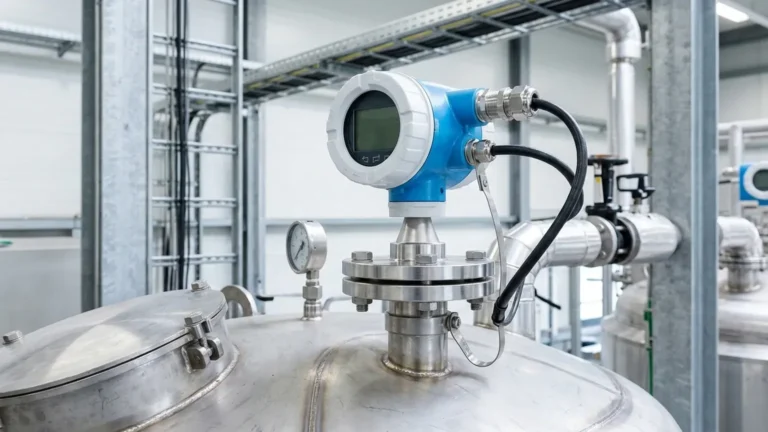
Radar Level Sensor Siemens
Radar Level Sensor Siemens: Engineering Selection and Application Guide
In the landscape of industrial automation, precise level measurement is a cornerstone of process efficiency, safety, and inventory management. Among the various technologies available, non-contacting radar has emerged as a preferred solution for challenging environments. The radar level sensor Siemens (marketed under the SITRANS brand) represents a significant portion of the global installed base, offering a range of frequencies and designs tailored to specific media.
This guide provides a technical deep dive into the operating principles of radar technology, the specifics of the Siemens portfolio, and the critical engineering factors that international buyers must evaluate when selecting Radar Level Meters for industrial applications.
Understanding Radar Level Measurement Principles
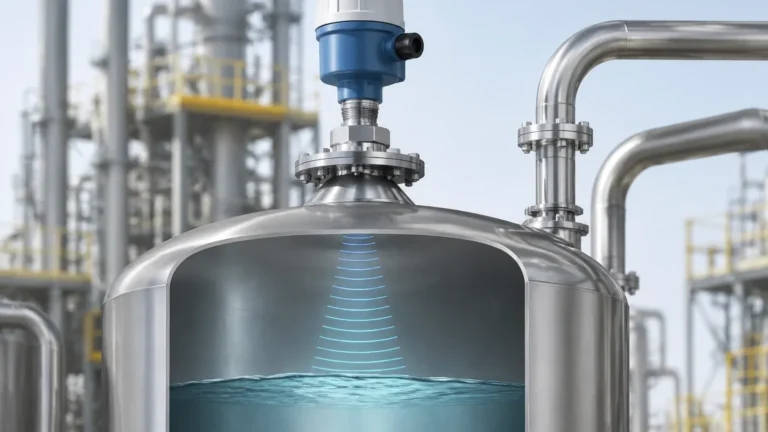
Before selecting a specific model, it is essential to understand how radar sensors interact with the process media. Radar level measurement is based on the Time of Flight (ToF) principle, but it is typically implemented through two distinct methods: Pulse Radar and Frequency Modulated Continuous Wave (FMCW).
Pulse Radar
Pulse radar sensors emit short microwave pulses toward the material surface. The sensor measures the time it takes for the pulse to travel to the surface and return to the receiver. Since the speed of light is constant, the distance is calculated as `Distance = (Speed of Light × Time) / 2`. This method is known for its energy efficiency and is often used in loop-powered (2-wire) devices.
FMCW (Frequency Modulated Continuous Wave)
FMCW radar, utilized in higher-end Siemens models like the SITRANS LR560 or LR100 series, transmits a continuous signal with a constantly changing frequency. The reflected signal is compared to the transmitted signal at that moment. The frequency difference (beat frequency) is directly proportional to the distance. FMCW provides a much higher signal-to-noise ratio, allowing for greater accuracy and the ability to track levels in high-dust or turbulent environments.
The Role of Frequency
Frequency is a primary differentiator in radar sensors:
- 6 GHz (C-band): Less affected by foam or heavy vapors but requires larger antennas to maintain a narrow beam.
- 24 GHz (K-band): The "all-rounder" for liquids and solids, offering a balance between antenna size and signal focus.
- 80 GHz (W-band): The modern standard for precision. It uses a very narrow beam (as small as 4 degrees), allowing it to avoid internal tank obstructions and measure through narrow nozzles.
The Siemens Radar Portfolio: SITRANS LR Series
Siemens categorizes its radar sensors into the SITRANS LR series, each designed for specific industrial niches.
1. SITRANS LR100 Series (80 GHz)
These are compact, W-band transmitters designed primarily for the water and wastewater industry or simple chemical storage. They often feature Bluetooth connectivity for commissioning via mobile apps. Their high frequency allows for a narrow beam that ignores pipe walls and ladders.
2. SITRANS LR250 (25 GHz)
This is a versatile 2-wire pulse radar transmitter. It is frequently used for liquid level measurement in storage and process vessels with extreme pressures and temperatures. It is available with various antenna types, including horn and encapsulated lens antennas for corrosive media.
3. SITRANS LR560 (78 GHz)
Specifically engineered for solids, the LR560 is a 2-wire FMCW radar. It is highly effective in tall silos containing cement, plastic pellets, or grain. Its high frequency allows it to penetrate dust and reflect off the sloped surfaces of solid materials.
4. SITRANS Probe LR (6 GHz)
As a C-band pulse radar, the Probe LR is often selected for applications where heavy foam or steam is present, as lower frequencies are less likely to be scattered by these surface conditions.
Technical Selection Criteria for Industrial Applications
When specifying a radar level sensor Siemens, engineers must look beyond the brand and focus on the physical and chemical constraints of the application. Use the following table as a preliminary selection matrix:
| Application Requirement | Recommended Technology | Siemens Model Example | Key Consideration |
| :— | :— | :— | :— |
| Narrow Nozzles / Small Tanks | 80 GHz FMCW | SITRANS LR110 / LR120 | Narrow beam avoids nozzle interference. |
| High Dust Solids (Silos) | 78-80 GHz FMCW | SITRANS LR560 | High frequency handles sloped surfaces better. |
| Corrosive Chemicals | Encapsulated 24-26 GHz | SITRANS LR250 (PTFE) | Media compatibility with antenna material. |
| Heavy Foam/Vapor | 6 GHz Pulse | SITRANS Probe LR | Lower frequency penetrates foam more effectively. |
| Hygienic (Food/Pharma) | 80 GHz FMCW | SITRANS LR150 | Flush-mounted lens antennas prevent buildup. |
Dielectric Constant (εr)
The dielectric constant of the material is the most critical factor in radar measurement. It determines how much energy is reflected back to the sensor.
- High εr (>10): Water-based liquids. Excellent reflection, easy to measure.
- Low εr (1.5 to 3): Hydrocarbons, oils, and some powders. Weak reflection; requires high-sensitivity FMCW radar or Guided Wave Radar (GWR).
Installation Guidelines and Best Practices
Even the most advanced radar sensor will fail if installed incorrectly. For Siemens SITRANS units, several "rules of thumb" apply to ensure signal integrity.
Nozzle Geometry
The nozzle height should be kept to a minimum. If a nozzle is too long or narrow, the radar signal will reflect off the nozzle walls (ringing), creating a "dead zone" at the top of the tank. 80 GHz sensors are more forgiving in this regard, but for 24 GHz units, the nozzle diameter should ideally be equal to or larger than the antenna diameter.
Positioning
- Avoid the Center: Do not install the sensor in the center of a circular tank. This can lead to multiple reflections (parabolic effect) that confuse the signal processor.
- Distance from Wall: Install the sensor at a distance of at least 1/7th of the tank diameter from the wall to avoid side-lobe interference.
- Clear Path: Ensure the "beam cone" is free of obstructions like agitators, heating coils, or ladders. If obstructions are unavoidable, Siemens sensors utilize "Auto False Echo Suppression" to digitally map out and ignore these static reflections.
Environmental Protection
For outdoor installations, a sunshade is recommended to prevent electronic drift caused by extreme temperature fluctuations. In high-pressure applications, ensure the process connection (flange or thread) matches the vessel's pressure rating (e.g., PN40 or Class 300).

Limitations and Mitigation Strategies
While radar is highly robust, it is not a universal solution. Engineers must be aware of the following risks:
1. Heavy Foam: Certain types of dense, dry foam can completely absorb a radar signal. In these cases, a 6 GHz sensor may work, but often a displacement-type sensor or a magnetic level gauge is more reliable.
2. Vacuum Conditions: While radar works in a vacuum (unlike ultrasonic sensors which require a medium to travel through), the mechanical seals of the sensor must be rated for vacuum to prevent air ingress or sensor damage.
3. Condensation: Droplets on the antenna lens can attenuate the signal. Siemens often uses PTFE or PEEK lens covers that are convex (curved) to encourage droplets to run off. In extreme cases, an integrated air purge system is used to keep the antenna face clean.
Comparative Analysis: Radar vs. Other Technologies
To justify the investment in a radar level sensor Siemens, it is helpful to compare it against common alternatives used in industrial automation.
Radar vs. Ultrasonic
Ultrasonic sensors are cost-effective but rely on the speed of sound, which changes with temperature, pressure, and gas composition. Radar is unaffected by these variables, making it significantly more accurate in process tanks where vapors or temperature gradients exist.
Radar vs. Guided Wave Radar (GWR)
GWR uses a probe that remains in contact with the media. While GWR is superior for very low dielectric liquids (εr < 1.4) or interface measurement (e.g., oil over water), non-contact radar is preferred for corrosive, sticky, or hygienic applications where probe fouling is a concern.
Frequently Asked Questions (FAQ)
Q: Can a Siemens radar sensor measure the level through a plastic tank roof?
A: Yes, 80 GHz models like the SITRANS LR110 are capable of measuring through the top of plastic (HDPE/PP) tanks, allowing for measurement without cutting a hole in the vessel. This is common in chemical IBC monitoring.
Q: What communication protocols are supported?
A: Most Siemens SITRANS LR units support 4-20 mA with HART as standard. Options for Profibus PA, Foundation Fieldbus, and Modbus RTU are available for integration into PLC/DCS systems.
Q: How do I handle measurement in a tank with an agitator?
A: Use the "False Echo Suppression" feature. During a commissioning cycle when the tank is empty (or the agitator is visible), the sensor records the reflections from the agitator blades and masks them out of the live measurement.
Conclusion for International Buyers
Selecting a radar level sensor Siemens requires a balance between frequency choice, antenna design, and a deep understanding of the process media's dielectric properties. While 80 GHz technology has simplified many applications by providing narrower beams and smaller footprints, legacy 6 GHz and 24 GHz systems still hold a place in environments with heavy foam or specific vapor profiles.
For procurement professionals and engineers, the focus should remain on verifying the dielectric constant of the media and the physical constraints of the vessel. By adhering to strict installation geometries and utilizing digital signal processing features, these instruments provide some of the most reliable data points in modern industrial automation. For further technical specifications and a broader range of hardware options, reviewing various Radar Level Meters can provide the necessary context for a final engineering decision.