Radar Level Transmitter Manufacturers in India
Radar Level Transmitter Manufacturers in India: An Engineering Selection Guide
In the rapidly evolving landscape of industrial automation, the demand for precise and non-contact level measurement has led to a significant surge in the adoption of radar technology. For process engineers and procurement specialists evaluating radar level transmitter manufacturers in India, understanding the technical nuances of the equipment is as critical as assessing the manufacturing capabilities of the supplier. This guide provides a comprehensive technical overview of radar level measurement principles, selection criteria, and the practical considerations necessary for successful deployment in the Indian industrial sector.
Understanding Radar Level Measurement Principles
Before engaging with radar level transmitter manufacturers in India, it is essential to understand the two primary technologies utilized in modern Radar Level Meters: Pulse Radar and Frequency Modulated Continuous Wave (FMCW).
Pulse Radar Technology
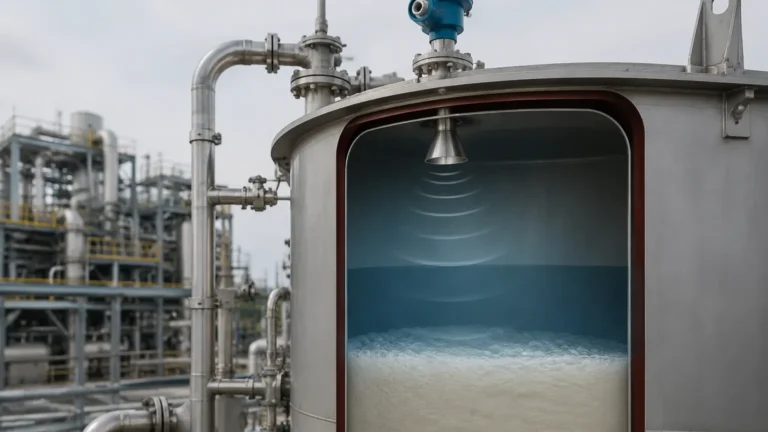
Pulse radar instruments emit a high-frequency microwave signal toward the material surface in short, concentrated bursts. The sensor measures the "Time of Flight" (ToF)—the duration it takes for the pulse to travel to the surface and return to the receiver. Since the speed of light is constant, the distance is calculated using the formula:
*Distance = (Speed of Light × Time of Flight) / 2*
Pulse radar is often preferred for its lower power consumption, making it suitable for loop-powered (2-wire) installations.
FMCW (Frequency Modulated Continuous Wave)
FMCW technology involves the continuous emission of a signal with a constantly changing frequency. The difference between the frequency of the emitted signal and the reflected signal at any given moment is proportional to the distance. FMCW is generally considered superior for high-precision applications and environments with significant noise or turbulence, as it offers a higher signal-to-noise ratio compared to pulse radar.
Frequency Considerations
Manufacturers typically offer devices operating in different frequency bands, each suited to specific process conditions:
* 6 GHz (C-Band): Best for applications with heavy foam, steam, or extreme turbulence, though they require larger antennas to maintain a narrow beam.
* 26 GHz (K-Band): The industry standard for most liquid and solid applications, offering a balance between beam angle and signal strength.
* 80 GHz (W-Band): The latest advancement, providing an extremely narrow beam angle (often less than 3 degrees), which is ideal for tall, narrow tanks or vessels with internal obstructions.
Evaluating Radar Level Transmitter Manufacturers in India
The Indian market is home to a diverse range of instrumentation providers, from local subsidiaries of multi-national corporations to indigenous manufacturers and specialized distributors. When sourcing from radar level transmitter manufacturers in India, engineers must look beyond the price point and evaluate the following technical and logistical factors:
1. Certification and Compliance: For hazardous environments common in the oil and gas or chemical sectors, ensure the manufacturer provides PESO (Petroleum and Explosives Safety Organization) certification, alongside international standards like ATEX or IECEx.
2. Application Expertise: A reliable manufacturer should offer pre-sales engineering support to perform a "site survey" or signal simulation, ensuring the chosen frequency and antenna type are compatible with the specific dielectric constant of the medium.
3. Local Support and Calibration: Given the environmental conditions in India—ranging from extreme humidity in coastal regions to high ambient temperatures in the north—local calibration services and robust housing (IP67/IP68) are non-negotiable.
Technical Selection Criteria
Choosing the right radar level transmitter requires a detailed analysis of the process environment. The following table outlines the primary selection parameters for industrial applications.
Radar Selection Matrix
| Process Condition | Recommended Radar Type | Antenna Consideration | Rationale |
| :— | :— | :— | :— |
| Corrosive Liquids | 80 GHz / 26 GHz | PTFE/PFA Encapsulated | Prevents chemical attack on the sensor head. |
| Solid Silos (Dusty) | 26 GHz / 80 GHz | Lens Antenna with Purge | High frequency penetrates dust; air purge prevents buildup. |
| Agitated Tanks | FMCW (80 GHz) | Narrow Beam | Minimizes reflections from agitator blades. |
| High Pressure/Temp | Pulse or FMCW | Metallic Horn with Seal | Specialized seals (e.g., Kalrez) handle extreme cycles. |
| Small Vessels | 80 GHz | Small Threaded Connection | High frequency allows for compact antenna sizes. |
Installation Considerations and Best Practices
Even the most advanced instrument from top-tier radar level transmitter manufacturers in India will fail if installation guidelines are ignored. Accuracy is heavily dependent on the mounting position and the avoidance of "false echoes."
Nozzle Geometry
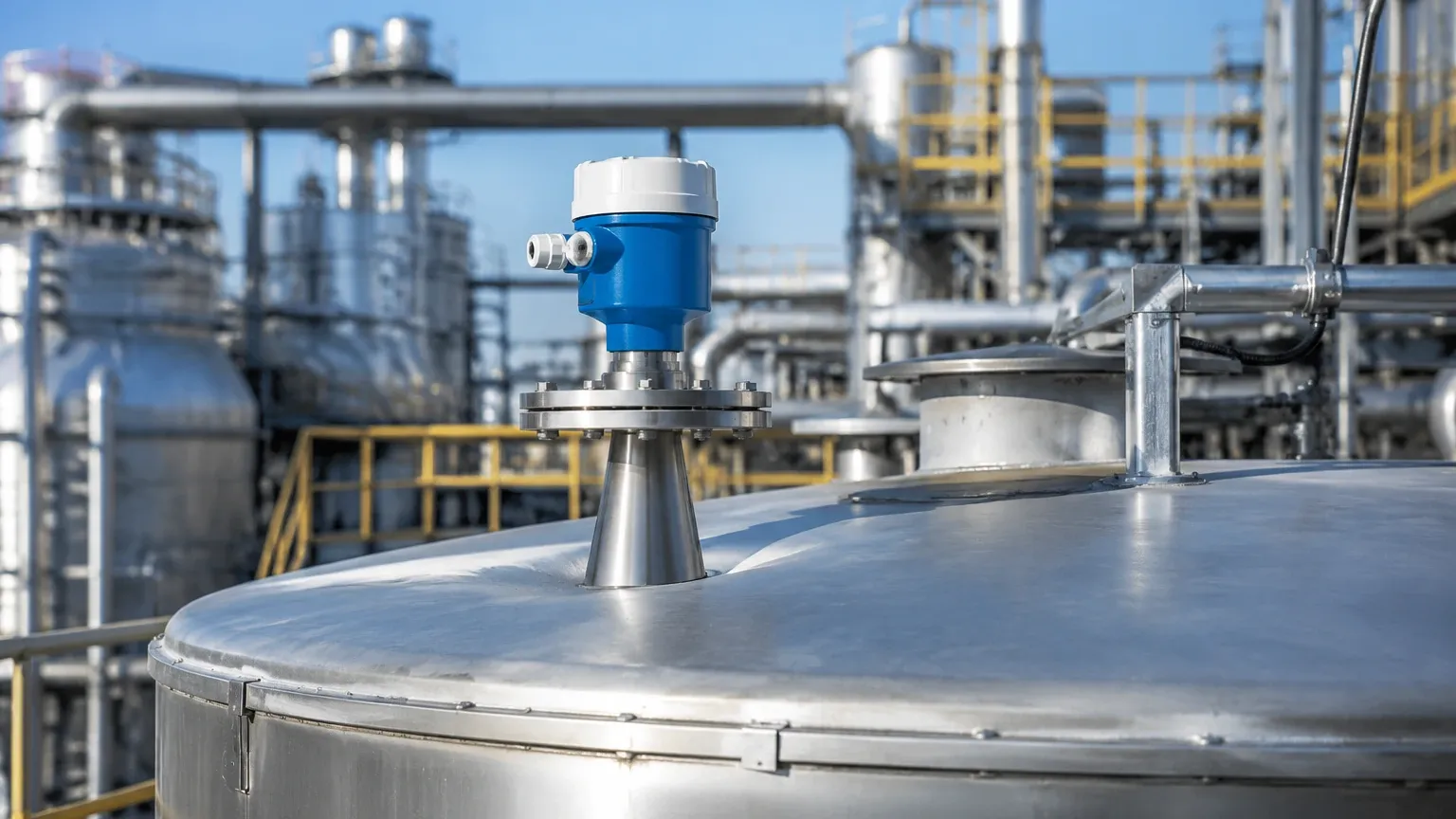
The mounting nozzle should be as short as possible. If the nozzle is too long or narrow, the radar signal may reflect off the internal walls of the pipe before reaching the process medium, creating a "ringing" effect that masks the true level signal. Ideally, the antenna should extend slightly beyond the bottom of the nozzle.
Beam Path Obstructions
Radar signals spread in a cone shape. Any internal vessel structures—such as ladders, heating coils, or inlet pipes—that enter this cone will reflect the signal. While modern software can "map out" these fixed obstructions (False Echo Suppression), it is best practice to install the sensor in a location with a clear line of sight to the product surface.
Distance from Tank Wall
To avoid interference from the tank wall, the transmitter should typically be installed at a distance of 1/6th to 1/4th of the tank diameter from the wall. It should never be mounted in the exact center of a domed-roof tank, as this can cause multiple reflections to converge at the sensor, leading to signal errors.
Limitations and Application Risks
While radar is a highly versatile technology, it is not a universal solution. Engineers must be aware of the following limitations:
* Dielectric Constant (εr): Radar relies on the reflection of electromagnetic waves. Materials with a very low dielectric constant (e.g., liquefied gases or certain oils) reflect very little energy. In these cases, a Guided Wave Radar (GWR) or a high-sensitivity FMCW unit is required.
* Heavy Foam: While C-Band radar can penetrate some foam, thick, dense foam (like shaving cream) can absorb the radar signal entirely, resulting in a "Loss of Echo" (LOE) error.
* Vacuum Conditions: While radar works in a vacuum (unlike ultrasonic sensors), the mechanical seals of the transmitter must be rated for vacuum service to prevent air ingress or sensor damage.
The Role of Global Manufacturers like Welk
While many buyers focus on radar level transmitter manufacturers in India for local accessibility, global manufacturers like Welk play a crucial role in providing the core technology and high-precision components that drive the industry. As a professional manufacturer of industrial level measurement instruments, Welk offers a range of Radar Level Meters designed for the most demanding environments.
Welk’s solutions are characterized by:
* Advanced Signal Processing: Algorithms that distinguish between true level and complex interference.
* Customized OEM/ODM Services: Allowing local Indian integrators to provide bespoke solutions tailored to specific regional industrial needs.
* Material Integrity: Use of high-grade alloys and plastics to ensure longevity in the diverse Indian climate.
Frequently Asked Questions (FAQ)
Q: Can a radar level transmitter measure through a plastic tank lid?
A: Yes, non-contact radar can often see through non-conductive materials like plastic or glass. This allows for measurement without opening the tank, which is ideal for hazardous chemicals.
Q: What is the maintenance requirement for a radar level meter?
A: Because there are no moving parts and the measurement is non-contact, maintenance is minimal. Periodic inspection of the antenna for buildup and verification of the 4-20mA or digital output is usually sufficient.
Q: How does ambient temperature affect accuracy?
A: Unlike ultrasonic sensors, which depend on the speed of sound (which changes with air density/temperature), radar uses electromagnetic waves. Therefore, changes in gas temperature or pressure have a negligible effect on radar accuracy.
Q: Is 80 GHz always better than 26 GHz?
A: Not necessarily. While 80 GHz offers a narrower beam and better resolution, 26 GHz may be more robust in applications with heavy condensation or certain types of foam where a slightly longer wavelength can be advantageous.
Conclusion
Selecting from the various radar level transmitter manufacturers in India requires a disciplined engineering approach. By prioritizing technical specifications such as frequency, beam angle, and material compatibility, and by adhering to strict installation standards, industrial operators can achieve reliable and maintenance-free level measurement. Whether sourcing locally or looking toward global experts like Welk, the key to success lies in matching the specific physics of the radar signal to the unique challenges of the process environment.
Download Radar Level Transmitter Manufacturers in India as a PDF