Siemens Radar Level Transmitter Lr250
Siemens Radar Level Transmitter LR250: A Technical Engineering Guide
In the landscape of industrial process control, selecting the appropriate instrumentation for liquid level measurement is a critical decision that impacts safety, efficiency, and product quality. Among the various technologies available, Radar Level Meters have become the industry standard for non-contact measurement. The Siemens radar level transmitter LR250 represents a significant milestone in this category, utilizing 25 GHz pulse radar technology to provide reliable data in complex process environments.
This guide explores the technical principles, selection criteria, and installation requirements for the SITRANS LR250, providing process engineers and procurement professionals with the factual foundation needed for successful deployment.
1. Measurement Principle: 25 GHz Pulse Radar Technology
To understand the performance of the Siemens radar level transmitter LR250, one must first understand the physics of pulse radar. Unlike Frequency Modulated Continuous Wave (FMCW) radar, which emits a continuous signal with varying frequency, pulse radar sends out short microwave bursts.
The Time of Flight (ToF) Method
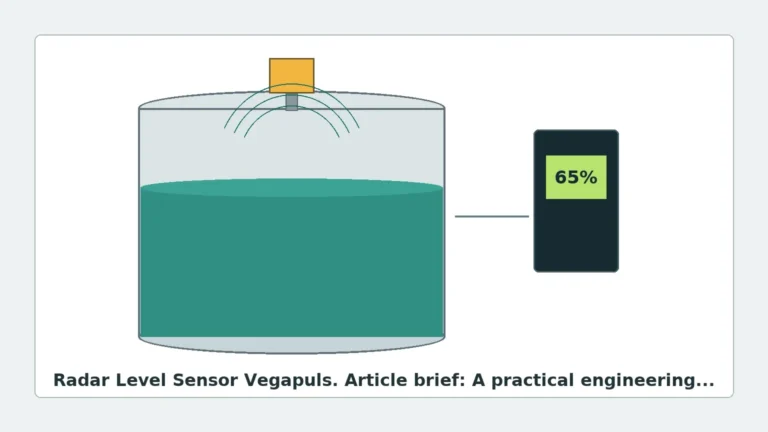
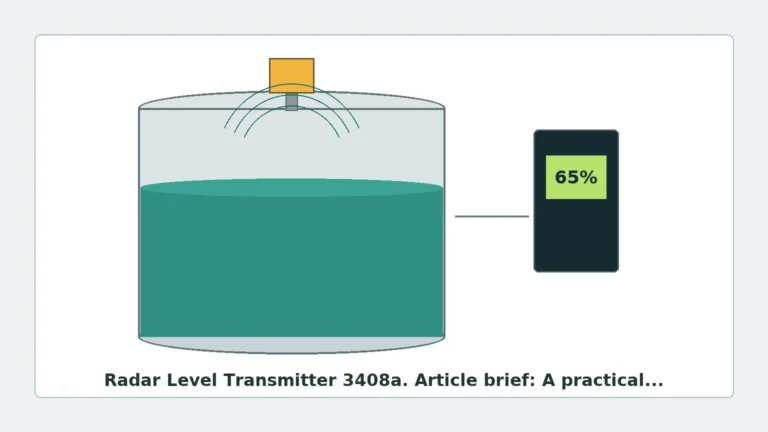
The LR250 operates on the "Time of Flight" principle. The transmitter's antenna emits a microwave pulse toward the material surface. When the pulse hits the medium, a portion of the energy is reflected back to the antenna. Since microwaves travel at the speed of light ($c$), the distance ($D$) to the material can be calculated using the formula:
$$D = \frac{c \times t}{2}$$
Where $t$ is the measured transit time. The device then subtracts this distance from the total tank height (the "Empty" calibration point) to determine the level of the material.
Why 25 GHz?
The 25 GHz frequency is often referred to as the "sweet spot" for liquid applications. It offers a narrower beam angle than lower-frequency 6 GHz radars, allowing for easier installation in tanks with internal obstructions like ladders or pipes. Simultaneously, it is less susceptible to signal attenuation from steam or heavy vapor than higher-frequency 80 GHz systems, making it a versatile choice for a wide range of chemical and industrial processes.
2. Technical Specifications and Variants
The Siemens radar level transmitter LR250 is a 2-wire, loop-powered instrument designed primarily for liquid and slurry applications. It is characterized by its high signal-to-noise ratio and Process Intelligence signal processing software.
Key Variants
1. Horn Antenna: The standard version, suitable for most storage and process vessels. It is available in various sizes (1.5", 2", 3", 4") to accommodate different nozzle diameters.
2. Threaded PVDF/PTFE Encapsulated: Designed for corrosive environments where the antenna must be protected from the process media. This version is common in chemical storage.
3. Flanged Encapsulated: Features a flush-mounted lens antenna, ideal for applications where buildup on the antenna is a concern or where hygienic standards are required.
4. Hygienic Encapsulated: Specifically designed for the food, beverage, and pharmaceutical industries, meeting 3-A and EHEDG standards.
3. Selection Table for Engineering Design
When specifying a radar transmitter, engineers must match the antenna type to the process conditions. The following table provides a general guideline for the LR250 series.
| Feature | Horn Antenna | Encapsulated Antenna | Hygienic Version |
| :— | :— | :— | :— |
| Measuring Range | Up to 20 meters | Up to 10 or 20 meters | Up to 10 meters |
| Process Connection | Threaded or Flanged | Flanged / Threaded | Sanitary Clamps |
| Material | 316L Stainless Steel | PVDF / PTFE / TFM | 316L / USP Class VI |
| Max Temperature | 200°C (392°F) | 170°C (338°F) | 170°C (338°F) |
| Max Pressure | 40 bar (580 psi) | 12 bar (174 psi) | 10 bar (145 psi) |
| Best Use Case | General process tanks | Corrosive chemicals | Food & Pharma |
4. Installation Considerations and Constraints
The accuracy of any radar level meter is heavily dependent on its installation. Even the most advanced Siemens radar level transmitter LR250 can fail if positioned incorrectly.
Beam Angle and Obstructions
The 25 GHz signal propagates in a cone shape. The beam angle depends on the antenna size; for example, a 2-inch (50 mm) horn has a beam angle of approximately 19 degrees. The transmitter must be mounted so that the signal path is clear of internal obstructions such as:
* Inlet pipes and fill streams.
* Heating coils or agitators.
* Wall-mounted ladders or structural supports.
Nozzle Geometry
The nozzle height should be kept as short as possible. If the nozzle is too long or too narrow, it can cause internal reflections (ringing) that interfere with the near-field measurement. Ideally, the horn of the antenna should extend slightly beyond the bottom of the nozzle.
Mounting Location
* Avoid the Center: Do not mount the transmitter in the exact center of a domed tank. This can cause multiple reflections to converge at the antenna, leading to false readings.
* Avoid the Wall: Maintain a minimum distance from the tank wall (typically 10% of the tank height or at least 300 mm) to prevent signal interference from wall seams or welds.
5. Application Risks and Limitations
While the LR250 is robust, certain process conditions present challenges that require careful engineering mitigation.
Low Dielectric Constants ($\epsilon_r$)
Radar relies on the difference in dielectric constant between the air/gas space and the material being measured. If a liquid has a very low dielectric constant (e.g., certain hydrocarbons or liquefied gases with $\epsilon_r < 1.6$), the reflected signal may be too weak to detect reliably. In these cases, a guided wave radar or a larger horn antenna may be necessary.
Heavy Foam
Dense, thick foam can absorb the microwave signal rather than reflecting it. If the foam is light and airy, the radar may see through it to the liquid; however, if the foam is conductive or extremely dense, it may cause the transmitter to report the top of the foam layer or lose the signal entirely.
Rapid Turbulence and Agitation
In tanks with high-speed agitators, the surface of the liquid can become slanted or extremely turbulent. This scatters the radar signal. The LR250 uses "Process Intelligence" to filter out these intermittent signals, but in extreme cases, a stilling well may be required to provide a calm surface for measurement.
6. Information for International Buyers
When sourcing a Siemens radar level transmitter LR250 for global projects, procurement teams must confirm several technical parameters to ensure the device is fit for purpose and compliant with local regulations.
1. Communication Protocol: Specify whether the system requires HART, PROFIBUS PA, or FOUNDATION Fieldbus. This determines how the device integrates with the Distributed Control System (DCS).
2. Hazardous Area Approvals: Confirm if the installation site requires ATEX, IECEx, FM, or CSA certifications for explosive atmospheres.
3. Process Connection Standards: Ensure the flanges match local standards (e.g., ASME/ANSI in the US, EN/DIN in Europe, or JIS in Asia).
4. Dielectric Constant of Media: Always provide the minimum dielectric constant of the liquid to the supplier to verify signal reliability.
7. Frequently Asked Questions (FAQ)
Q: Can the LR250 be used for solids or powders?
A: The LR250 is optimized for liquids and slurries. For solids, the SITRANS LR560 (an 80 GHz radar) is generally the preferred choice due to its ability to handle steep angles of repose and dust.
Q: Does the LR250 require periodic recalibration?
A: Because it is a non-contact electronic instrument with no moving parts, the LR250 does not suffer from mechanical wear. Recalibration is usually only necessary if the process media or tank geometry changes significantly.
Q: How does the device handle condensation on the antenna?
A: The 25 GHz frequency handles light condensation well. However, for applications with heavy steaming or droplets, the encapsulated version with a PTFE lens is recommended, as its smooth surface encourages droplets to shed.
Q: Is a laptop required for configuration?
A: No. The LR250 features a Local User Interface (LUI) with a graphical display and a 4-button infrared handheld programmer, allowing for full setup without opening the enclosure or using external software. However, SIMATIC PDM software can be used for more advanced diagnostics and echo profile analysis.
Conclusion
The Siemens radar level transmitter LR250 remains a cornerstone of liquid level measurement due to its balance of frequency, signal processing, and physical durability. By understanding the constraints of the 25 GHz beam and selecting the appropriate antenna variant, engineers can ensure high-precision data in even the most demanding chemical and industrial environments. For those exploring a wider range of Radar Level Meters, the LR250 serves as a benchmark for pulse radar performance in the modern process plant.