Vega 69 Radar Level Transmitter Manual
Vega 69 Radar Level Transmitter Manual: Engineering Guide for High-Frequency Measurement
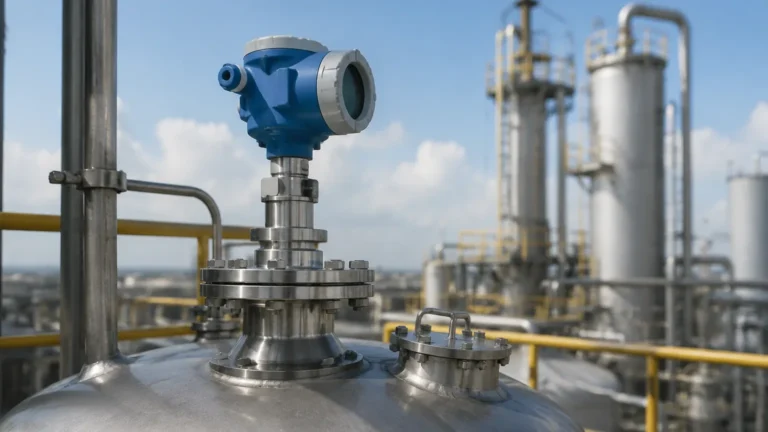
In the landscape of industrial automation, the precision of level measurement directly impacts process efficiency, safety, and inventory management. Among the various technologies available, high-frequency radar has emerged as the gold standard for challenging environments, particularly in bulk solids. The vega 69 radar level transmitter manual serves as a critical technical reference for engineers and technicians tasked with deploying 80 GHz radar technology.
Understanding the nuances of this equipment is essential for optimizing performance in silos, bunkers, and large storage vessels. This guide provides a comprehensive technical overview of the operating principles, selection criteria, and installation requirements for high-frequency Radar Level Meters to ensure reliable data acquisition in industrial settings.
1. Measurement Principle: The 80 GHz FMCW Advantage
Before delving into the specifics of the manual's configuration, it is vital to understand how high-frequency radar transmitters operate. Most modern high-end transmitters, such as those in the 80 GHz class, utilize Frequency Modulated Continuous Wave (FMCW) technology.
Frequency Modulated Continuous Wave (FMCW)
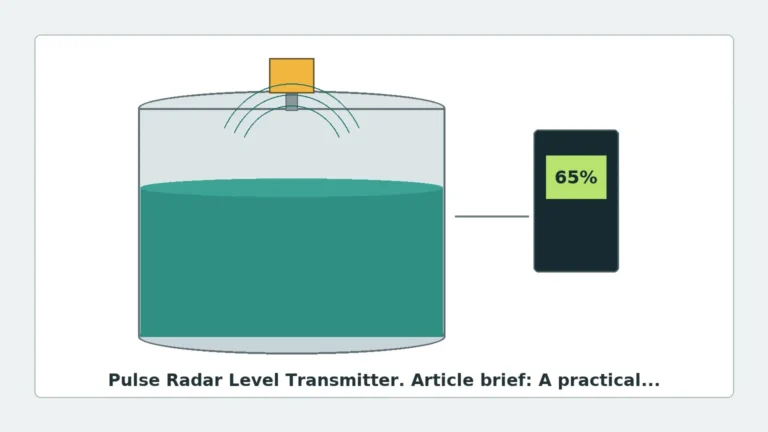
Unlike traditional pulse radar, which measures the time-of-flight of a single microwave pulse, FMCW radar emits a continuous signal with a constantly changing frequency. The signal is reflected by the product surface and received by the antenna. Because the frequency of the emitted signal changes over time, there is a frequency difference between the emitted and the received signal. This frequency difference is proportional to the distance to the medium.
Why 80 GHz Matters
The frequency of a radar transmitter determines its beam angle and its ability to penetrate dust or steam. A higher frequency (80 GHz) allows for a significantly smaller antenna design while maintaining a narrow beam angle (often as low as 3°). This narrow focus is crucial for avoiding internal tank obstructions like ladders, agitators, or structural braces, which frequently cause false echoes in lower-frequency systems (e.g., 6 GHz or 26 GHz).
2. Technical Specifications and Selection Criteria
Selecting the correct radar level meter requires a detailed analysis of the process material and the vessel geometry. The following table outlines the typical selection parameters found in a standard high-frequency transmitter specification sheet.
Selection Table: Radar Level Transmitter Comparison
| Feature | 80 GHz Radar (e.g., VEGAPULS 69) | 26 GHz Radar | Guided Wave Radar (GWR) |
| :— | :— | :— | :— |
| Primary Application | Bulk solids, tall silos, dusty environments | Liquids, large storage tanks | Small tanks, low dielectric media |
| Beam Angle | 3° to 4° | 8° to 20° | N/A (Contacting) |
| Measuring Range | Up to 120m (393.7 ft) | Up to 30m (98.4 ft) | Up to 75m (246 ft) |
| Accuracy | ±5 mm | ±2 mm to ±5 mm | ±2 mm |
| Dust/Vapor Resistance | Excellent | Good | Excellent |
| Installation | Non-contacting | Non-contacting | Contacting (Probe) |
When reviewing the vega 69 radar level transmitter manual, buyers should confirm the "Sensitivity" and "Dynamic Range" specifications. A higher dynamic range allows the sensor to detect weak signals reflected from materials with low dielectric constants (εr), such as plastic powders or dry wood chips.
3. Installation and Mounting Guidelines
Proper installation is the single most important factor in ensuring the longevity and accuracy of a radar level meter. Even the most advanced 80 GHz sensor will fail if mounted incorrectly.
Nozzle Positioning
* Distance from Wall: The transmitter should be mounted at least 200 mm (7.87 in) away from the vessel wall to prevent interference from wall reflections.
* Avoid Central Mounting: In silos with conical bottoms, mounting the sensor in the exact center can lead to multiple reflections (parabolic effect), which confuses the signal processing unit.
* Inflow Interference: Never install the sensor directly above the material filling stream. The falling product will create significant noise and may damage the antenna over time.
Antenna Alignment
For bulk solids, the angle of repose must be considered. High-frequency transmitters often feature an integrated swiveling holder. The manual typically recommends aligning the radar beam perpendicular to the product surface to maximize the reflected signal strength. In tall silos, a 1° or 2° tilt toward the center of the discharge cone can often improve signal stability during emptying cycles.
Metric Installation Constraints
* Nozzle Height: Ensure the nozzle height (H) does not exceed the nozzle diameter (D) significantly. A common rule of thumb is H < 1.5 × D to minimize internal nozzle reflections.
* Dead Zone: Every radar has a "blocking distance" or dead zone (typically 0 mm to 250 mm from the antenna). Measurement is not possible within this range.
4. Commissioning and Configuration
Modern transmitters are configured via three primary methods: local display interfaces, PC-based software (via DTM/FDT), or mobile applications via Bluetooth. The vega 69 radar level transmitter manual details the following critical steps for initial setup:
1. Unit Selection: Define the measurement units (Metric: m, cm, mm; Imperial: ft, in).
2. Vessel Height Setup: Enter the distance from the sensor reference plane to the 0% (empty) and 100% (full) levels.
3. Medium Adjustment: Select the material type (Liquid or Solid). For solids, further categorize the material (e.g., fine dust, coarse gravel) to optimize the signal processing filters.
4. False Signal Suppression: This is a vital step. With the vessel empty or partially empty, the user records a "mapping" of the tank. The software identifies fixed obstructions (like braces) and instructs the transmitter to ignore echoes at those specific distances.
5. Industrial Application Scenarios
Cement and Mining
In cement silos, dust concentrations are extremely high. The 80 GHz signal's short wavelength allows it to pass through heavy dust clouds with minimal attenuation. The narrow beam ensures that even in silos 60 meters tall, the signal does not hit the side walls, which are often coated with material buildup.
Chemical and Petrochemical
For aggressive liquids, radar transmitters are often equipped with a PTFE drop antenna. This design prevents condensate buildup from clinging to the antenna surface, which would otherwise attenuate the signal. When using Radar Level Meters in pressurized vessels, engineers must verify the pressure and temperature ratings of the process seal (e.g., FKM, FFKM, or EPDM).

6. Limitations and Application Risks
While 80 GHz radar is highly versatile, it is not a universal solution. Engineers must be aware of the following limitations:
* Heavy Foam: Extremely thick, dense foam can absorb the microwave signal entirely, leading to a "loss of echo" error. In such cases, a low-frequency radar (6 GHz) or a guided wave radar may be more appropriate.
* Extreme Dielectric Properties: Materials with a dielectric constant below 1.5 (e.g., certain liquefied gases) reflect very little energy. These applications require specialized high-sensitivity settings or a stilling well.
* Internal Obstructions: While the narrow beam helps, large horizontal cross-braces directly in the path of the beam will still cause issues if not mapped out correctly during commissioning.
7. Maintenance and Troubleshooting
Radar transmitters are solid-state devices with no moving parts, making them low-maintenance. However, the following checks should be performed annually:
* Visual Inspection: Check the antenna for material buildup or corrosion. Even though 80 GHz radar can see through some buildup, excessive crusting can degrade the signal.
* Signal Quality Check: Use the diagnostic software to check the "Echo Curve." A healthy signal should have a clear peak at the product level with a signal-to-noise ratio of at least 10-15 dB.
* Error Codes: Common error codes found in the manual include:
* E013: Loss of Echo (Check for foam, extreme dust, or incorrect alignment).
* E036: Sensor Hardware Error (Requires factory service).
* E113: Communication Error (Check loop power and HART wiring).
8. Frequently Asked Questions (FAQ)
Q: Can the 80 GHz radar measure through a plastic tank lid?
A: Yes. Microwaves can penetrate non-conductive materials like plastics (PE, PP, PVC) and glass. This allows for non-intrusive measurement where the sensor is mounted outside the tank.
Q: Is a license required to operate these high-frequency transmitters?
A: Most modern 80 GHz industrial radars are LPR (Level Probing Radar) or TLPR (Tank Level Probing Radar) certified, meaning they can be used without a specific site license in most jurisdictions, provided they are installed according to the manufacturer's guidelines.
Q: How does the vega 69 handle internal agitators?
A: Through the "False Signal Suppression" or "Static Echo Storage" feature. The transmitter learns the position of the agitator blades and filters them out of the measurement logic.
Q: What is the maximum temperature these sensors can handle?
A: Standard models typically handle up to +80°C, but high-temperature versions with specialized cooling fins or ceramic seals can operate in environments up to +450°C.
Conclusion
The implementation of high-frequency radar technology represents a significant step forward in process reliability. By consulting the vega 69 radar level transmitter manual and adhering to established engineering best practices for installation and commissioning, industrial facilities can achieve millimeter-precise measurement even in the most punishing environments. For those seeking to upgrade their current systems, exploring the latest Radar Level Meters provides a pathway to reduced maintenance costs and enhanced operational safety.
When purchasing equipment, international buyers should always confirm the local explosion-proof certifications (ATEX, IECEx, or FM) and ensure the selected flange or thread connection matches the existing vessel nozzles to avoid costly field modifications.