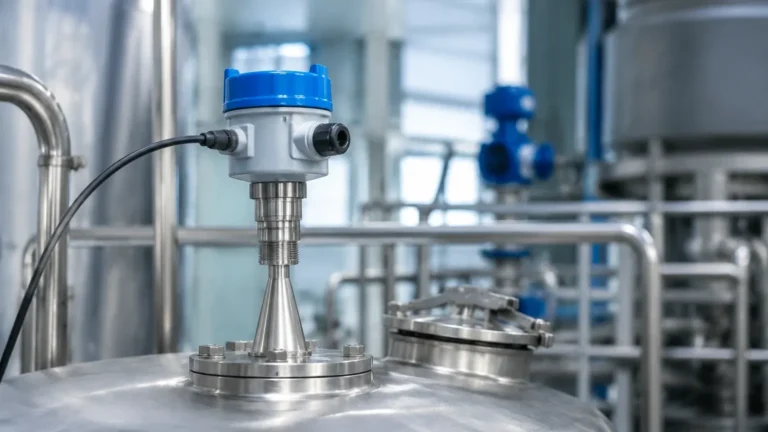
Vega Radar Level Transmitter 6x
Vega Radar Level Transmitter 6x: An Engineering Guide to High-Frequency Radar Selection
In the landscape of industrial automation, the demand for precision, reliability, and simplified procurement has led to significant advancements in non-contact level measurement. The vega radar level transmitter 6x represents a shift toward universal sensor platforms designed to handle both liquid and bulk solid applications. For process engineers and procurement specialists, understanding the technical nuances of this 80 GHz technology is essential for ensuring long-term operational stability in demanding environments such as chemical processing, water treatment, and heavy industry.
Understanding Radar Level Measurement Principles
Before selecting a specific instrument, it is critical to understand the underlying physics that govern Radar Level Meters. Most modern high-frequency transmitters, including the 6x series, utilize Frequency Modulated Continuous Wave (FMCW) technology.
FMCW vs. Pulse Radar
Unlike traditional pulse radar, which measures the time a single microwave pulse takes to travel to the product surface and back, FMCW transmitters emit a continuous signal with a constantly changing frequency. The transmitter compares the frequency of the received signal with the frequency currently being emitted. The difference between these frequencies is directly proportional to the distance of the material.
The Advantage of 80 GHz Frequency
The transition from 26 GHz to 80 GHz is perhaps the most significant evolution in radar instrumentation. A higher frequency results in a shorter wavelength, which allows for:
* Narrower Beam Angles: An 80 GHz signal can achieve a beam angle as narrow as 3°, whereas a 26 GHz sensor might have a beam angle of 10° or more for the same antenna size. This allows the radar to avoid internal obstructions like agitators, heating coils, or narrow vessel walls.
* Higher Dynamic Range: These sensors can detect much weaker signals, which is vital when measuring media with a low dielectric constant ($ε_r$) or surfaces with heavy foam and turbulence.
* Smaller Process Connections: High-frequency signals require smaller antennas, enabling high-accuracy measurement through process fittings as small as ¾" or 1".
Technical Specifications of the 6x Platform
The vega radar level transmitter 6x is engineered as a unified solution, replacing previous generations of specialized sensors (such as the VEGAPULS 61, 64, 67, 68, and 69). This consolidation simplifies the selection process for the end-user.
Key Performance Parameters
* Measuring Range: Up to 120 meters (approx. 394 ft), making it suitable for tall grain silos and deep mining shafts.
* Accuracy: Within ±1 mm (0.04 in), providing the precision required for custody transfer and high-value chemical storage.
* Process Temperature: Ranges typically from -196°C to +450°C (-320°F to +842°F), depending on the antenna and seal configuration.
* Process Pressure: Vacuum up to 160 bar (2320 psi).
* Communication: Standard 4…20 mA/HART, Profibus PA, Foundation Fieldbus, and Modbus, with integrated Bluetooth for wireless commissioning.
Industrial Application Selection Guide
Choosing the correct configuration for the vega radar level transmitter 6x requires an analysis of the media and the vessel environment. The following table provides a baseline for selection:
| Application Type | Media Characteristics | Recommended Antenna/Seal | Key Consideration |
| :— | :— | :— | :— |
| Corrosive Liquids | Acids, Bases, Solvents | PTFE / PFA Encapsulated | Material compatibility with wetted parts. |
| Bulk Solids (Dusty) | Cement, Flour, Plastic Pellets | Plastic Horn or Lens with Air Purge | Dust accumulation on the antenna lens. |
| High-Pressure Steam | Boiler Feed Water | Ceramic Seal with Graphite | Signal attenuation in dense vapor. |
| Hygienic/Food | Milk, Juice, Pharmaceuticals | Gap-free PTFE / Stainless Steel | CIP/SIP cleaning cycles and surface finish. |
| Small Vessels | Dosing tanks, small reactors | Threaded 1" or 1.5" lens antenna | Avoiding "near-field" dead zones. |
Installation Constraints and Engineering Considerations
Even the most advanced radar level meters can fail if installation guidelines are ignored. When deploying the vega radar level transmitter 6x, engineers must account for the following spatial and physical constraints:
1. Nozzle Geometry
The antenna should ideally extend beyond the bottom of the mounting nozzle. If the nozzle is long and narrow, internal reflections (ringing) can occur, creating a "dead zone" at the top of the tank. For 80 GHz sensors, the narrow beam allows for longer nozzles than 26 GHz models, but the nozzle interior should still be smooth and free of burrs.
2. Clearance from Walls and Obstructions
While the 3° beam angle is narrow, the signal still spreads as it travels. The sensor should be mounted at a distance from the tank wall at least 1/10th of the vessel height to avoid interference. Furthermore, the signal path must be clear of agitators, ladders, and inflow streams. If an obstruction is unavoidable, software-based "False Signal Suppression" must be used to map out the static interference.
3. Orientation and Polarization
Radar signals are polarized. Rotating the sensor in its mounting can sometimes help minimize reflections from vessel walls or internal structures. Most high-end transmitters include markings to indicate the polarization plane for easier alignment during installation.

Limitations and Application Risks
While the vega radar level transmitter 6x is highly versatile, it is not a "magic bullet" for every process. Engineers must be aware of the following risks:
* Dielectric Constant (ε_r): Radar relies on the reflection of electromagnetic waves. Materials with a very low dielectric constant (e.g., liquid nitrogen, certain hydrocarbons) reflect very little energy. If ε_r is below 1.5, a guided wave radar or a specialized high-sensitivity non-contact radar may be required.
* Heavy Foam: Dense, conductive foam can absorb the radar signal entirely, preventing it from reaching the liquid surface. In such cases, hydrostatic pressure or ultrasonic sensors might be considered, though 80 GHz radar performs better than lower frequencies in light foam.
* Condensation and Buildup: While 80 GHz radar is better at "seeing through" thin films of condensation, heavy buildup of conductive or metallic dust on the antenna lens will eventually attenuate the signal. Integrated air purge connections are recommended for these environments.
Procurement Checklist for International Buyers
When sourcing industrial instrumentation globally, technical specifications are only one part of the equation. Buyers should confirm the following before finalizing a purchase:
1. Hazardous Area Certifications: Ensure the device carries the correct ATEX, IECEx, or FM ratings for the specific zone (e.g., Zone 0, 1, or 2).
2. Safety Integrity Level (SIL): For safety-critical applications (overfill protection), verify if the unit is SIL2 or SIL3 certified.
3. Cybersecurity Compliance: Modern transmitters like the 6x often include Bluetooth and digital interfaces. Confirm compliance with IEC 62443-4-2 to ensure the device is protected against unauthorized access.
4. Documentation and Calibration: Request material traceability certificates (3.1), pressure test reports, and factory calibration certificates to meet ISO quality standards.
Frequently Asked Questions (FAQs)
Q: Can the vega radar level transmitter 6x be used for both liquids and solids?
A: Yes. The 6x platform is designed to be a universal sensor. The internal signal processing algorithms can be configured for either liquid or solid applications during commissioning.
Q: How does the 80 GHz frequency handle steam and vapor?
A: 80 GHz radar is generally less affected by steam than ultrasonic sensors. However, extremely high-pressure steam can change the dielectric constant of the medium in the vapor space, causing a slight measurement drift. For high-pressure boilers, this should be factored into the calibration.
Q: Is it possible to commission the device without a handheld programmer?
A: Yes. Most modern units feature Bluetooth connectivity, allowing engineers to use a smartphone or tablet with the manufacturer's app for configuration, as well as standard PC-based DTM/FDT tools.
Q: What is the minimum distance the sensor can measure?
A: While 80 GHz sensors have a very small "dead band," it is generally recommended to keep the product at least 50 mm to 100 mm (2-4 inches) away from the antenna to ensure maximum accuracy.
By adhering to these engineering principles and selection criteria, industrial facilities can leverage high-frequency radar technology to achieve more accurate inventory management and safer process control. Whether choosing a premium platform or exploring cost-effective Radar Level Meters for standard applications, the focus should always remain on the physical compatibility between the sensor and the process environment.