8 Ultrasonic Water Meter
8 Ultrasonic Water Meter: A Technical Guide to Large-Diameter Flow Measurement
In industrial water management and municipal distribution, the accuracy of large-diameter flow measurement is critical for operational efficiency and cost control. An 8 ultrasonic water meter (typically referring to a DN200 or 8-inch nominal diameter) represents a sophisticated solution for high-volume liquid monitoring. Unlike traditional mechanical meters, these devices utilize acoustic technology to provide precise readings without the wear and tear associated with moving parts.
For engineers and facility managers, selecting an 8-inch meter requires an understanding of ultrasonic principles, installation constraints, and the specific requirements of the application, whether it be in water treatment, chemical processing, or large-scale HVAC systems. This guide explores the technical foundations of ultrasonic metering and provides a framework for selecting and maintaining these essential instruments.
Measurement Principles of Ultrasonic Technology
Before selecting an 8 ultrasonic water meter, it is essential to understand how the technology captures data. Most industrial-grade ultrasonic meters for water applications utilize the Transit-Time (Time-of-Flight) principle.
Transit-Time Method
This method employs a pair of ultrasonic transducers mounted on the pipe. These transducers act as both emitters and receivers. The meter sends acoustic signals diagonally across the pipe, both upstream and downstream.
* Downstream Travel: The signal traveling with the flow of the water moves faster.
* Upstream Travel: The signal traveling against the flow moves slower.
The meter calculates the time difference between these two signals. This difference is directly proportional to the velocity of the water. By knowing the cross-sectional area of the 8-inch (DN200) pipe, the device converts velocity into a volumetric flow rate (e.g., cubic meters per hour or gallons per minute).
Comparison with Level Measurement
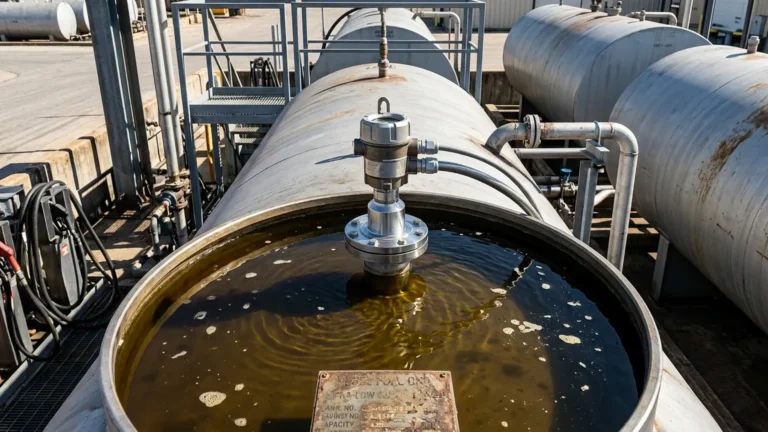
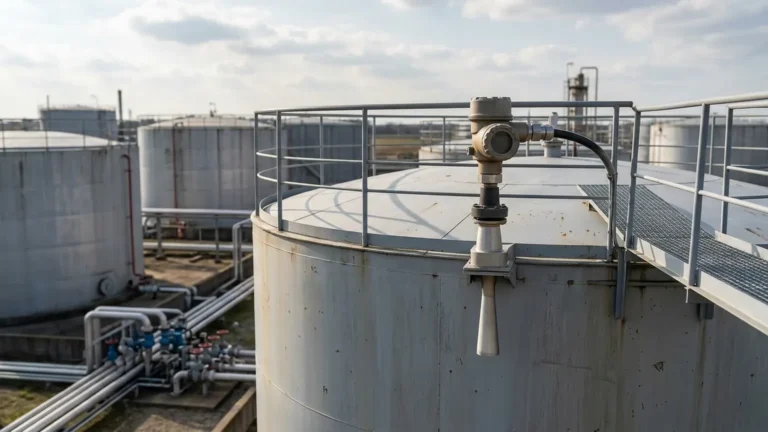
While flow meters measure velocity within a closed pipe, the underlying technology is closely related to Ultrasonic Level Meters, which measure the distance to a liquid surface in tanks or open channels. In integrated water management systems, both flow and level data are often combined to provide a complete picture of reservoir levels and distribution rates.
Key Features of the 8-Inch (DN200) Ultrasonic Meter
The 8-inch variant is a heavy-duty instrument designed for main distribution lines and industrial intake systems. Its primary advantages over mechanical alternatives (such as Woltman or turbine meters) include:
1. Low Pressure Drop: Because there are no internal rotors or obstructions, the meter causes negligible pressure loss, reducing pumping costs.
2. Wide Turndown Ratio: Ultrasonic meters can detect very low flow velocities that mechanical meters often miss, ensuring high accuracy even during periods of low demand.
3. Bi-directional Measurement: These meters can measure flow in both directions, which is vital for complex distribution networks where backflow may occur.
4. Longevity: The absence of moving parts means the meter is not subject to mechanical wear, significantly extending its service life and maintaining calibration stability over years of operation.
Technical Selection Criteria
When specifying an 8 ultrasonic water meter, technical parameters must align with the hydraulic conditions of the site. The following table outlines typical specifications for a DN200 (8-inch) industrial ultrasonic meter.
Table 1: Typical Specifications for 8" (DN200) Ultrasonic Water Meters
| Parameter | Specification (Metric) | Specification (Imperial) |
| :— | :— | :— |
| Nominal Diameter | DN200 | 8 inches |
| Maximum Flow Rate (Q4) | 500 m³/h | ~2,200 GPM |
| Nominal Flow Rate (Q3) | 400 m³/h | ~1,760 GPM |
| Minimum Flow Rate (Q1) | 1.6 m³/h | ~7 GPM |
| Accuracy Class | Class 2 (ISO 4064) | +/- 2% or better |
| Pressure Rating | PN16 / PN25 | 232 / 362 PSI |
| Temperature Range | 0.1°C to 50°C (Cold Water) | 32°F to 122°F |
| Communication | Modbus RTU, M-Bus, Pulse | RS485, 4-20mA |
| Protection Class | IP68 | Submersible |
Application Scenarios
Municipal Water Distribution
In city-wide networks, 8-inch meters are used at district metering areas (DMAs) to monitor water loss and leakage. Their high sensitivity allows for the detection of small leaks in large-mains systems.
Industrial Process Water
In chemical plants and manufacturing facilities, water is a critical utility. The 8 ultrasonic water meter provides the precision needed for batching processes and cooling tower makeup water monitoring, where chemical compatibility and reliability are paramount.
Agricultural Irrigation
Large-scale irrigation systems require robust meters that can handle high volumes of water without clogging. Since ultrasonic meters have a clear bore, they are less susceptible to damage from small particulates compared to mechanical meters.
Installation Considerations
Proper installation is the most critical factor in ensuring the accuracy of an ultrasonic flow meter. Because the technology relies on a stable velocity profile, turbulence must be minimized.
Straight Pipe Requirements
To achieve a laminar flow profile, the meter requires straight sections of pipe both upstream and downstream of the installation point.
* Upstream: Minimum 10 times the pipe diameter (10D). For an 8-inch meter, this is 80 inches (approx. 2 meters).
* Downstream: Minimum 5 times the pipe diameter (5D). For an 8-inch meter, this is 40 inches (approx. 1 meter).
If elbows, valves, or pumps are located closer than these distances, the flow profile may become distorted, leading to measurement errors.
Orientation and Filling
The meter must always be completely full of liquid to function. Installation in a vertical pipe with upward flow is often preferred to ensure the pipe remains full. In horizontal installations, the transducers should be positioned at the 3 o'clock and 9 o'clock positions to avoid air bubbles at the top and sediment at the bottom.
Limitations and Common Risks
While highly reliable, ultrasonic meters are not suitable for every environment. Potential risks include:
* Entrained Air: Large amounts of air bubbles or foam can scatter the ultrasonic signal, leading to "signal loss" errors. If air is present, an air eliminator should be installed upstream.
* High Solids Content: While some ultrasonic technologies (like Doppler) thrive on solids, transit-time meters require relatively clean water. Excessive suspended solids (typically >1% by volume) can attenuate the signal.
* Scaling and Coating: Over time, heavy mineral scaling on the internal pipe wall or transducer faces can interfere with the acoustic path. Regular inspection is recommended in hard-water applications.
* Electrical Interference: High-power variable frequency drives (VFDs) or motors near the signal cables can introduce noise. Shielded cabling and proper grounding are essential.
Maintenance and Troubleshooting
Maintenance for an 8 ultrasonic water meter is significantly lower than for mechanical meters, but it is not zero.
1. Signal Strength Monitoring: Most modern digital meters provide a diagnostic value for signal strength (often expressed as a percentage or dB). A sudden drop in signal strength may indicate scaling or air in the line.
2. Battery Life: For battery-powered units used in remote locations, battery health should be monitored via the communication interface. Typical industrial batteries last 6 to 10 years depending on the sampling rate.
3. Verification: Periodic in-situ verification using a portable clamp-on ultrasonic meter can confirm the accuracy of the permanent meter without interrupting the flow.
Frequently Asked Questions (FAQ)
Q: Can an 8 ultrasonic water meter be used for wastewater?
A: It depends on the solids content. For treated effluent with low turbidity, transit-time ultrasonic meters work well. For raw sewage with high solids or rags, an electromagnetic meter or a Doppler-based ultrasonic meter is usually preferred.
Q: How does temperature affect the measurement?
A: The speed of sound in water changes with temperature. High-quality ultrasonic meters include integrated temperature sensors to automatically compensate for these changes, maintaining accuracy across the rated temperature range.
Q: Is it possible to retrofit an 8-inch line with ultrasonic technology without cutting the pipe?
A: Yes, using "clamp-on" ultrasonic transducers. However, for billing and high-accuracy industrial custody transfer, an "in-line" or "spool-piece" meter (where the transducers are factory-calibrated within a specific pipe segment) is generally recommended.
Conclusion
The 8 ultrasonic water meter is a cornerstone of modern industrial and municipal water infrastructure. By eliminating moving parts and providing digital diagnostics, it offers a lower total cost of ownership compared to traditional mechanical meters. When integrated into a broader automation strategy—alongside Ultrasonic Level Meters for tank monitoring—it enables precise, data-driven management of water resources.
For successful implementation, engineers must prioritize correct pipe placement and ensure the fluid characteristics align with transit-time technology. With these factors addressed, the DN200 ultrasonic meter provides a reliable, long-term solution for high-volume flow measurement.