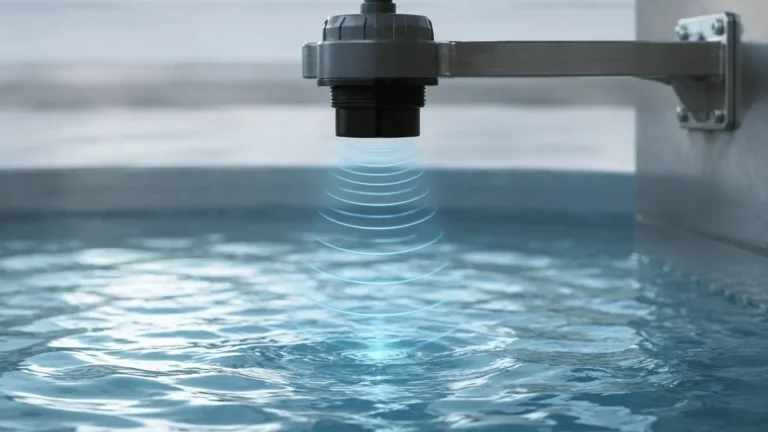
Ultrasonic Level Sensor High Temperature
Ultrasonic Level Sensor High Temperature: A Technical Engineering Guide
In the realm of industrial automation, non-contact level measurement remains one of the most sought-after solutions for liquid and solid monitoring. Among the various technologies available, Ultrasonic Level Meters are favored for their balance of accuracy, ease of installation, and cost-effectiveness. However, as process temperatures rise, the physical properties of sound and the mechanical limits of sensor materials present significant engineering challenges.
Selecting an ultrasonic level sensor high temperature variant requires a deep understanding of how thermal energy interacts with acoustic waves and the structural integrity of the transducer itself. This guide explores the principles of ultrasonic measurement in thermal environments, selection criteria, and practical installation strategies for high-temperature applications.
Measurement Principles and the Role of Temperature
To effectively deploy an ultrasonic sensor in a high-temperature environment, one must first understand the fundamental physics of the technology. Ultrasonic level measurement is based on the "Time of Flight" (ToF) principle.
The Time of Flight Calculation
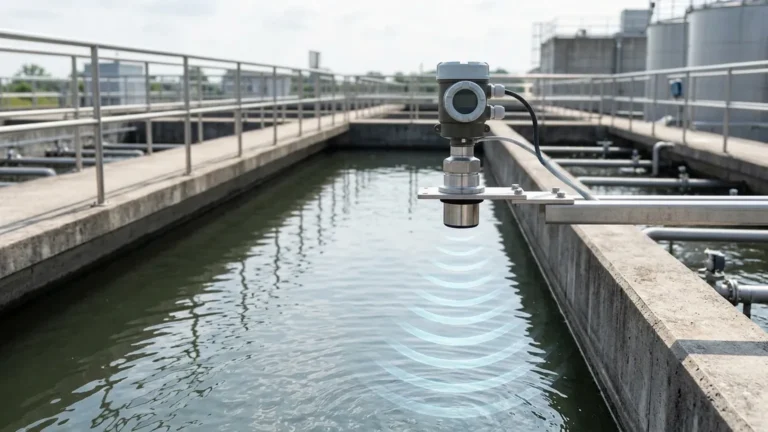
The sensor's transducer emits a high-frequency acoustic pulse that travels through the air (or gas) in the tank, reflects off the surface of the medium, and returns to the transducer. The distance (D) is calculated using the formula:
D = (c × t) / 2
Where:
* c is the speed of sound in the medium.
* t is the time elapsed between emission and reception.
The Temperature Dependency of Sound
The variable c (speed of sound) is not a constant; it is highly dependent on the temperature of the gas through which it travels. In dry air at sea level, the speed of sound is approximately 331.5 m/s at 0°C. As the temperature increases, the speed of sound increases according to the approximate formula:
c ≈ 331.5 + 0.6 × T (°C)
For an ultrasonic level sensor high temperature application, even a small fluctuation in temperature can lead to significant measurement errors if not properly compensated. For instance, a 10°C change in temperature can result in a measurement error of approximately 1.7% if the speed of sound is assumed to be constant. Professional-grade sensors incorporate internal temperature sensors to provide real-time compensation, though in high-temperature tanks, temperature gradients (where the air is hotter near the liquid and cooler near the sensor) can still complicate accuracy.
Challenges of High-Temperature Environments
Standard ultrasonic sensors are typically rated for operation between -40°C and +60°C. When process temperatures exceed these limits, several technical hurdles emerge:
1. Transducer Material Degradation: Most ultrasonic transducers use piezoelectric crystals. These crystals have a "Curie Point," the temperature at which they lose their piezoelectric properties. Furthermore, the potting compounds and face materials (like PVC or standard ABS) can soften or crack at high temperatures.
2. Electronic Component Reliability: If the electronics are integrated into the sensor head (integral design), the heat from the process can migrate up the housing, leading to premature failure of the circuit boards and displays.
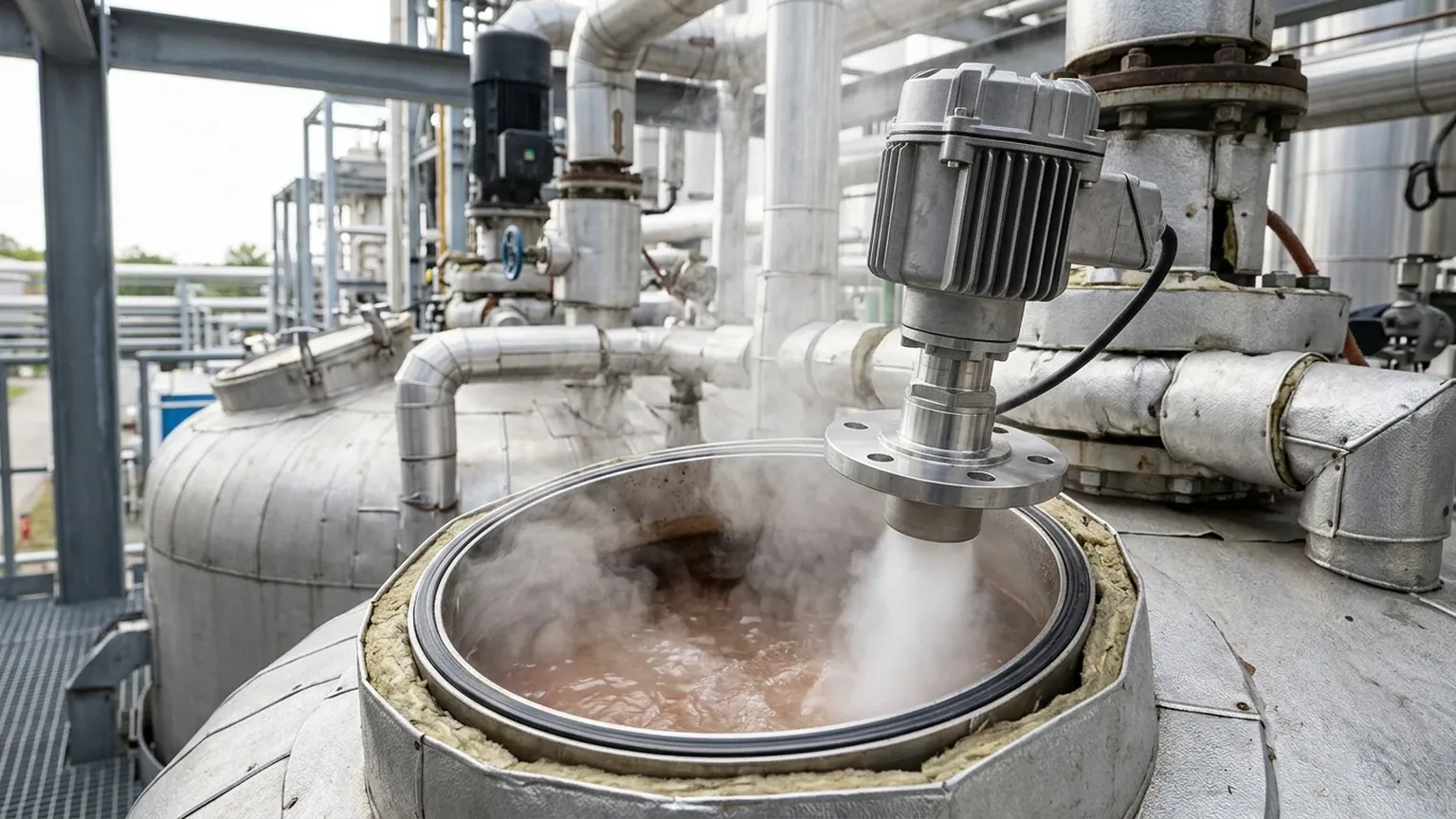
3. Vapor and Condensation: High-temperature liquids often produce vapors. These vapors change the composition of the air in the tank, which in turn changes the speed of sound. Additionally, steam can condense on the transducer face, dampening the acoustic signal and creating a "blind" condition.
4. Thermal Turbulence: Rapidly rising heat can create air currents and turbulence. This can scatter the acoustic beam, reducing the strength of the return echo.
Selection Criteria for Ultrasonic Level Sensor High Temperature Applications
When evaluating an ultrasonic level sensor high temperature solution, engineers must look beyond the basic range specification. The following criteria are critical for long-term reliability.
1. Transducer Material and Construction
For temperatures up to 80°C or 100°C, transducers are often constructed from PVDF (Polyvinylidene fluoride) or PTFE (Teflon). These materials offer excellent chemical resistance and thermal stability. For even higher temperatures, specialized ceramic faces or stainless steel diaphragms are utilized to protect the sensitive piezoelectric elements.
2. Remote vs. Integral Electronics
In high-heat applications, it is often advisable to use a "remote" configuration. This separates the transducer (the part in the heat) from the transmitter electronics (the part with the display and signal output). By mounting the electronics several meters away from the heat source, the lifespan of the device is significantly extended.
3. Temperature Compensation Methods
Ensure the sensor uses a high-speed thermistor for compensation. In tanks with significant temperature stratification, some advanced systems allow for the connection of external temperature probes placed at different heights to calculate a more accurate average speed of sound.
Practical Selection Table
| Feature | Standard Ultrasonic | High-Temp Ultrasonic | Extreme-Temp (Alternative) |
| :— | :— | :— | :— |
| Temp Range | -40°C to +60°C | -40°C to +95°C | Up to +250°C (Radar/Guided Wave) |
| Housing Material | ABS / Plastic | PVDF / Stainless Steel | Stainless Steel / Ceramic |
| Electronics | Integral | Integral or Remote | Remote Recommended |
| Typical Apps | Water tanks, sumps | Chemical processing, hot oils | Steam boilers, molten metals |
| Accuracy | 0.25% to 0.5% | 0.25% (Compensated) | 0.1% (Frequency Dependent) |
Installation Considerations for Thermal Environments
Proper installation is as important as hardware selection when dealing with high temperatures. Follow these guidelines to ensure stable performance:
Use of Standoff Pipes (Nozzles)
If the process temperature is at the absolute limit of the sensor's rating, mounting the sensor on a standoff pipe can help. The pipe acts as a thermal buffer, allowing the air near the sensor face to be slightly cooler than the process air. However, the pipe must be smooth and wide enough to prevent "ringing" or false echoes from the pipe walls.
Avoiding Heat Pockets
In outdoor tanks, solar gain can cause the top of the tank to become much hotter than the liquid. This creates a "heat pocket" that can distort the ultrasonic beam. Installing a sunshade or insulating the sensor housing can mitigate this effect.
Dealing with Condensation
In high-temperature, high-humidity environments, droplets will form on the transducer. Choosing a sensor with a self-cleaning function (achieved through high-intensity vibration) or a curved face that encourages droplets to run off is essential. In some cases, a light coating of silicone grease or PTFE spray can help prevent droplet adhesion.
Beam Angle and Obstructions
High temperatures can cause the acoustic beam to diverge more than in cool air. Ensure the beam path is clear of ladders, pipes, or agitators. A standard beam angle is usually between 5° and 12°; in hot environments, a narrower beam is generally preferred to maintain signal focus.
Limitations of Ultrasonic Technology
While Ultrasonic Level Meters are versatile, they are not universal. Engineers should be aware of the following limitations:
* Vacuum Conditions: Sound requires a medium to travel. Ultrasonic sensors cannot function in a vacuum.
* Extreme Pressure: High pressure increases the density of the gas, which can affect the acoustic impedance matching between the transducer and the air, reducing signal strength.
* Heavy Foam: Thick, dense foam absorbs acoustic energy rather than reflecting it. If the high-temperature process involves significant foaming, a radar or hydrostatic transmitter may be more appropriate.
* Dust and Powders: While some ultrasonic sensors work with solids, high-temperature dust clouds can attenuate the signal significantly.
Frequently Asked Questions (FAQ)
Q: Can I use an ultrasonic sensor for boiling liquids?
A: It is generally not recommended. Boiling liquids create significant steam and surface turbulence. The steam changes the gas composition (affecting sound speed), and the turbulence can scatter the signal. Radar level meters are usually a better fit for boiling applications.
Q: How do I know if my sensor is failing due to heat?
A: Common signs include a "Lost Echo" error that only occurs during peak process temperatures, erratic readings that fluctuate wildly despite a stable liquid level, or visible discoloration/warping of the transducer face.
Q: What is the maximum distance for a high-temperature ultrasonic sensor?
A: Most high-temperature models are optimized for shorter to medium ranges (typically up to 10 or 15 meters). This is because the higher energy required to penetrate hot, turbulent air limits the maximum effective range compared to standard cold-water applications.
Q: Does the chemical composition of the vapor matter?
A: Yes. If the "air" in the tank is actually a high concentration of CO2, Nitrogen, or solvent vapors, the speed of sound will be different than in standard air. Most high-end ultrasonic level sensor high temperature units allow you to input a custom gas constant to maintain accuracy.
Conclusion
Deploying an ultrasonic level sensor high temperature solution requires a balanced approach between physics and mechanical engineering. By accounting for the speed of sound variations, selecting chemically and thermally resistant materials like PVDF, and utilizing remote electronics where necessary, operators can achieve reliable level monitoring in demanding environments. For processes exceeding 95°C or involving heavy steam and vacuum, it is advisable to consult with a technical specialist to compare ultrasonic performance against alternative technologies such as radar or magnetic level gauges.