Level Ultrasonic Sensor Malaysia
Level Ultrasonic Sensor Malaysia: A Comprehensive Guide to Selection and Application
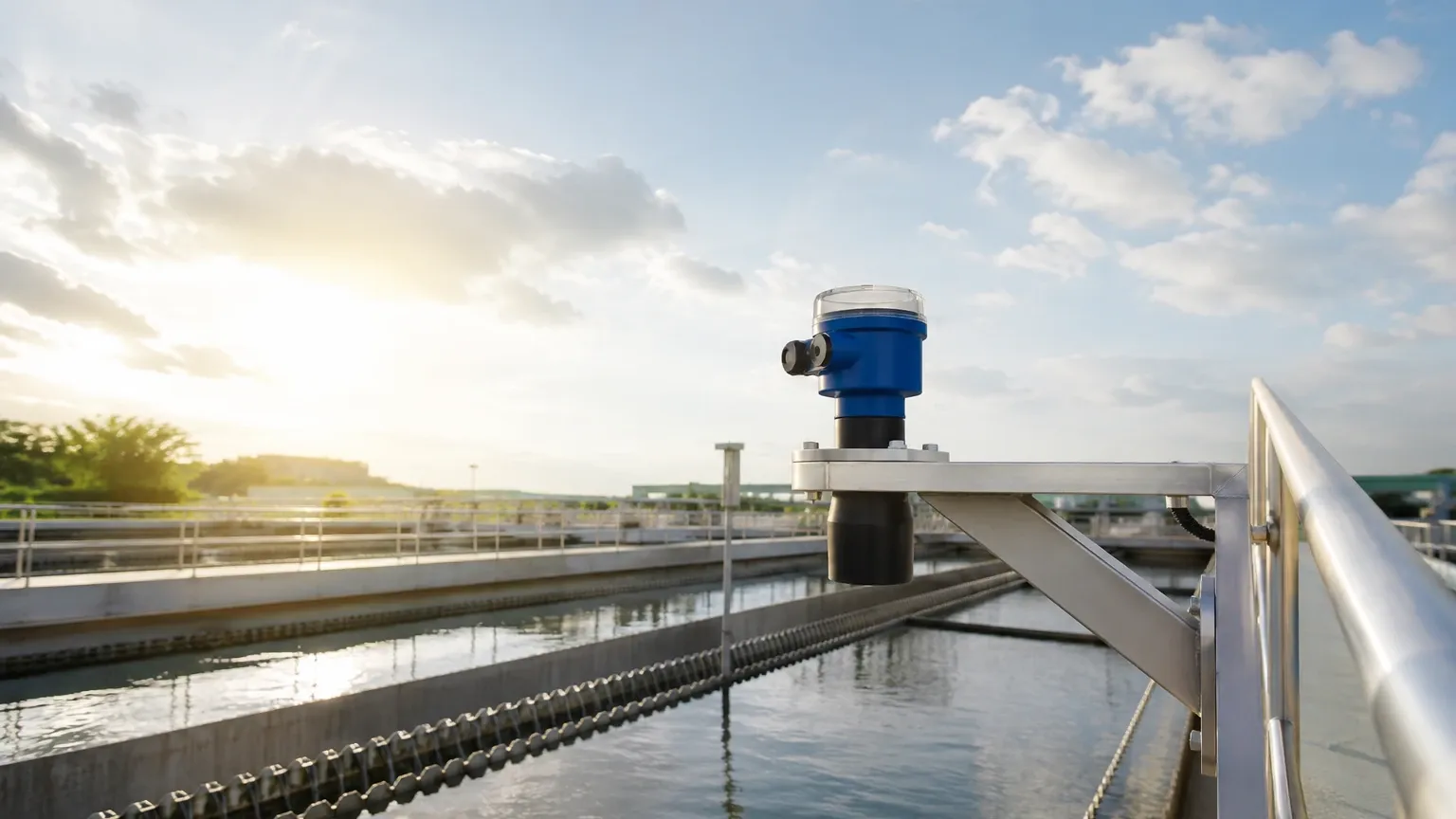
In the rapidly evolving industrial landscape of Southeast Asia, precision in process automation has become a cornerstone of operational efficiency. For engineers and procurement specialists seeking a level ultrasonic sensor Malaysia, understanding the technical nuances of non-contact measurement is essential. Whether managing water treatment facilities in Selangor, palm oil refineries in Johor, or chemical processing plants in Penang, the choice of level instrumentation directly impacts safety, waste reduction, and cost-effectiveness.
Ultrasonic Level Meters have emerged as a preferred solution for various liquid and solid applications due to their non-invasive nature and lack of moving parts. This guide explores the principles, selection criteria, and installation requirements for deploying these sensors effectively within the Malaysian industrial context.
Understanding Ultrasonic Level Measurement Principles
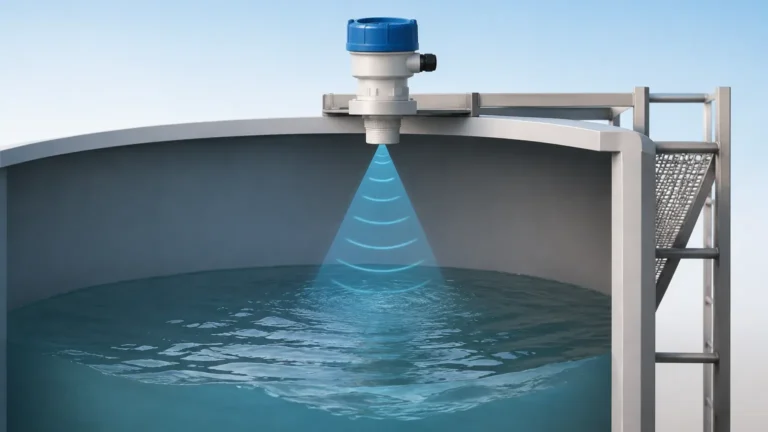
Ultrasonic level measurement is based on the "Time-of-Flight" (ToF) principle. The sensor, typically mounted at the top of a tank or above an open channel, contains a piezoelectric transducer. This transducer converts electrical energy into mechanical pulses of high-frequency sound waves—usually ranging from 20 kHz to 70 kHz.
The Measurement Cycle
1. Emission: The sensor emits a short ultrasonic pulse directed toward the surface of the medium.
2. Reflection: The sound waves travel through the air, hit the surface of the liquid or solid, and reflect back toward the sensor as an echo.
3. Detection: The transducer receives the reflected echo and converts it back into an electrical signal.
4. Calculation: The internal processor measures the time interval ($t$) between the emission and the reception. Using the known speed of sound in air ($c$), the distance ($D$) is calculated using the formula:
$$D = \frac{c \times t}{2}$$
By subtracting this distance from the total tank height (the calibration point), the transmitter determines the actual level of the material. Because the speed of sound is influenced by air temperature, modern sensors include integrated temperature compensation to maintain accuracy across fluctuating ambient conditions—a critical feature for outdoor installations in Malaysia’s tropical climate.
Key Considerations for Level Ultrasonic Sensor Malaysia Applications
Selecting the right sensor for the Malaysian market requires an assessment of both the process medium and the environmental conditions. High humidity, heavy rainfall, and ambient temperatures often exceeding 35°C must be factored into the engineering specifications.
1. Environmental Durability (IP Ratings)
For outdoor applications, such as flood monitoring or open-channel sewage measurement, sensors must possess high Ingress Protection (IP) ratings. An IP67 or IP68 rating is recommended to ensure the device remains functional despite heavy monsoon rains or temporary submersion.
2. Chemical Compatibility
In the chemical and palm oil industries, the sensor housing and transducer face must resist corrosive vapors. While standard ABS or PVC housings suffice for water, aggressive chemicals may require PVDF (Polyvinylidene fluoride) or PTFE (Teflon) coatings to prevent material degradation.
3. Integrated vs. Remote Displays
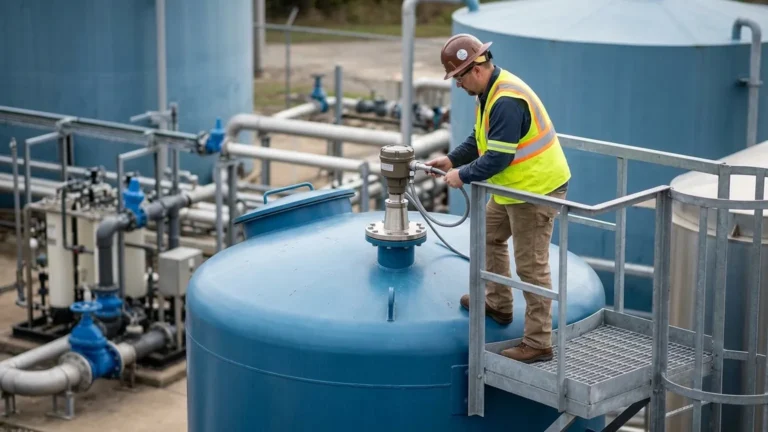
In many Malaysian facilities, tanks are located in restricted or elevated areas. Engineers must decide between an integral design (where the sensor and display are one unit) and a remote design (where the sensor is at the measurement point and the display/controller is mounted at eye level or in a control room). Remote units are often preferred for ease of maintenance and data monitoring.
Technical Selection Criteria and Comparison
When evaluating a level ultrasonic sensor Malaysia, technical parameters define the suitability for a specific task. The following table provides a comparison of typical configurations used in industrial automation.
| Feature | Compact/Integral Sensor | Remote/Split-Type System | High-Power Long Range |
| :— | :— | :— | :— |
| Measurement Range | 0.3m to 10m | 0.4m to 30m | Up to 40m+ |
| Output Signal | 4-20mA, RS485/Modbus | 4-20mA, Relays, Modbus | 4-20mA, HART, Profibus |
| Power Supply | 24V DC | 24V DC or 220V AC | 24V DC / 220V AC |
| Accuracy | ±0.25% to 0.5% of range | ±0.25% of range | ±0.2% of range |
| Best Use Case | Small tanks, indoor silos | Sumps, wastewater plants | Large grain silos, deep wells |
| Installation | Top-mounted (Threaded/Flange) | Bracket or Flange | Heavy-duty Flange |
Installation Best Practices for Accuracy
Even the most advanced ultrasonic level meter will fail to provide accurate data if installed incorrectly. Follow these engineering guidelines to ensure reliable performance:
Avoid the "Dead Zone"
Every ultrasonic sensor has a "dead zone" (also known as the blocking distance) directly beneath the transducer face. In this zone, the sensor cannot process reflections because it is still vibrating from the emission pulse. If the liquid level enters this zone, the reading will become erratic or fixed at the maximum value. Ensure the sensor is mounted high enough so the maximum liquid level never reaches the dead zone (typically 0.2m to 0.6m depending on the model).
Beam Angle and Obstructions
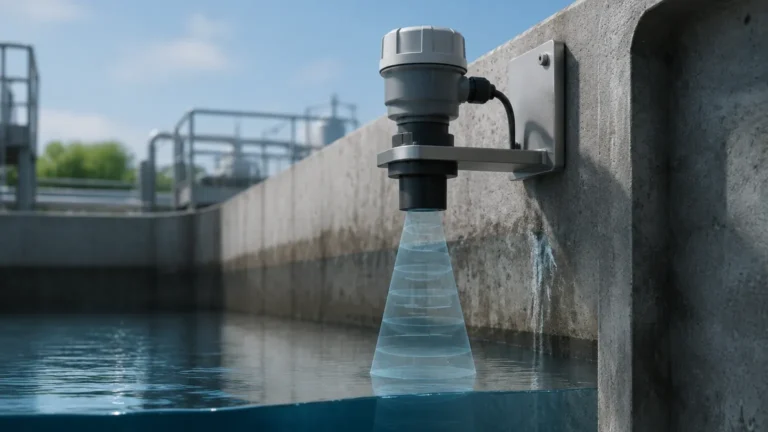
Ultrasonic waves spread in a cone shape. Any internal tank structures—such as ladders, heating coils, or agitators—that intersect this cone will create "false echoes."
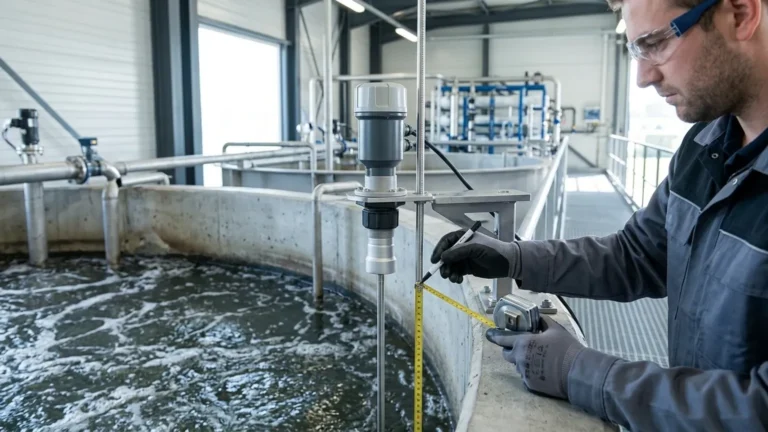
* Positioning: Install the sensor at least 20cm away from the tank wall to prevent signal interference.
* Alignment: The transducer face must be perfectly parallel to the liquid surface. A tilt of even a few degrees can cause the reflected signal to bounce away from the receiver, leading to signal loss.
Turbulence and Foam
In Malaysian wastewater treatment plants, surface turbulence and foam are common. Foam acts as an acoustic insulator, absorbing the ultrasonic pulse rather than reflecting it. If heavy foam is present, a stilling well (a vertical pipe) can be used to provide a calm surface for the sensor to measure, or a radar-based solution might be considered as an alternative.
Environmental and Process Limitations
While highly versatile, Ultrasonic Level Meters have specific physical boundaries. Understanding these prevents costly misapplications.
* Vacuum Conditions: Sound waves require a medium (air or gas) to travel. Therefore, ultrasonic sensors cannot function in a vacuum.
* High-Pressure Environments: Changes in pressure affect the density of the air, which in turn alters the speed of sound. While most sensors handle atmospheric pressure well, high-pressure vessels require specialized calibration or alternative technologies like Guided Wave Radar.
* Extreme Temperatures: If the process temperature exceeds 80°C, the rising vapors can create temperature gradients that distort the sound wave path. For high-temperature steam applications, non-contact radar is generally more stable.
* Heavy Dust: In solid level measurement (e.g., cement silos), excessive dust can attenuate the signal. High-power transducers with self-cleaning faces are required for these environments.
Maintenance and Troubleshooting in Tropical Climates
In Malaysia, the primary maintenance concerns are moisture ingress and biological growth.
1. Condensation Management: High humidity can lead to water droplets forming on the transducer face. While many Welk sensors feature a self-cleaning vibration effect, periodic inspection is recommended to ensure no mineral buildup or algae growth is obstructing the signal.
2. Cable Integrity: Ensure that cable glands are tightened and that drip loops are used to prevent rainwater from running down the cable into the housing.
3. Signal Loss (Lost Echo): If the device displays a "Lost Echo" error, check for surface foam, extreme turbulence, or if the material level has entered the dead zone.
Frequently Asked Questions (FAQ)
Q: Can ultrasonic sensors be used for palm oil level measurement?
A: Yes, they are widely used in storage tanks. However, if the oil is heated to very high temperatures and produces thick steam, a radar level meter may be more reliable. For standard storage, ultrasonic is a cost-effective choice.
Q: How does the Malaysian climate affect accuracy?
A: The main factor is temperature. Since the speed of sound changes by approximately 0.17% per degree Celsius, a sensor without temperature compensation would be inaccurate. Welk sensors include built-in temperature probes to automatically correct these fluctuations.
Q: What is the maximum range for an ultrasonic level sensor?
A: Standard industrial models typically cover up to 15 meters for liquids. Specialized high-power units can reach up to 40 meters, though signal reliability at these distances depends heavily on the absence of dust and vapors.
Q: Is it possible to measure solids with these sensors?
A: Yes, but the range is usually reduced by about 50% compared to liquids because solid surfaces (like grain or plastic pellets) reflect sound unevenly. The sensor must be positioned to account for the "angle of repose" of the solid pile.
By adhering to these technical guidelines and understanding the specific demands of the local environment, engineers can successfully implement a level ultrasonic sensor Malaysia project that delivers long-term accuracy and minimal maintenance. For specific application support or to review available hardware configurations, it is advisable to consult with a professional instrumentation manufacturer.