Ultrasonic Gas Level Sensor Matador
Engineering Guide to Ultrasonic Gas Level Sensor Matador and Industrial Level Measurement
In the landscape of industrial automation and process control, the ability to accurately monitor the contents of storage vessels is fundamental to operational efficiency and safety. Among the various technologies available, ultrasonic measurement has emerged as a preferred non-contact solution for both liquid and certain gas-phase applications. This guide explores the technical foundations of Ultrasonic Level Meters, with a specific focus on specialized applications such as the ultrasonic gas level sensor matador, which is frequently utilized for monitoring liquefied petroleum gas (LPG) and other pressurized gas cylinders.
The Physics of Ultrasonic Level Measurement
Before selecting a specific instrument, it is essential to understand the underlying physical principles that govern ultrasonic technology. Ultrasonic sensors operate on the "Time of Flight" (ToF) principle.
Measurement Principle
An ultrasonic transducer, typically containing a piezoelectric crystal, emits a high-frequency acoustic pulse. This pulse travels through the medium (usually air or a gas vapor space) until it encounters a boundary layer—the surface of the liquid or solid being measured. The acoustic energy is reflected from this surface back toward the transducer.
The instrument calculates the distance to the surface using the following formula:
Distance = (Speed of Sound × Time Delay) / 2
Because the speed of sound in air is approximately 343 meters per second (m/s) at 20°C but varies significantly with temperature, modern ultrasonic level meters incorporate internal temperature sensors to compensate for these fluctuations. This ensures that the measurement remains accurate even as the ambient or process temperature changes.
Frequency and Beam Angle
Industrial ultrasonic sensors typically operate at frequencies between 20 kHz and 200 kHz. Higher frequencies offer better resolution and are less susceptible to ambient noise but have a shorter effective range. Lower frequencies can penetrate dust and steam more effectively and cover longer distances (up to 30 or 40 meters). The beam angle, usually ranging from 5° to 12°, defines the spread of the pulse; a narrower beam is generally preferred to avoid false reflections from tank walls or internal obstructions like ladders and agitators.
Specialized Applications: Ultrasonic Gas Level Sensor Matador
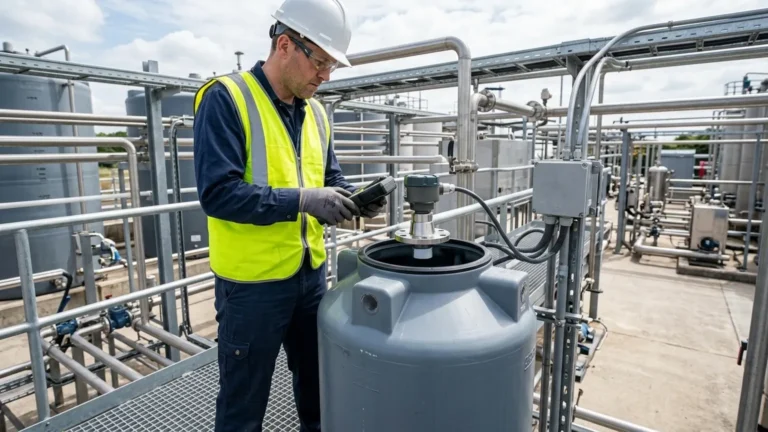
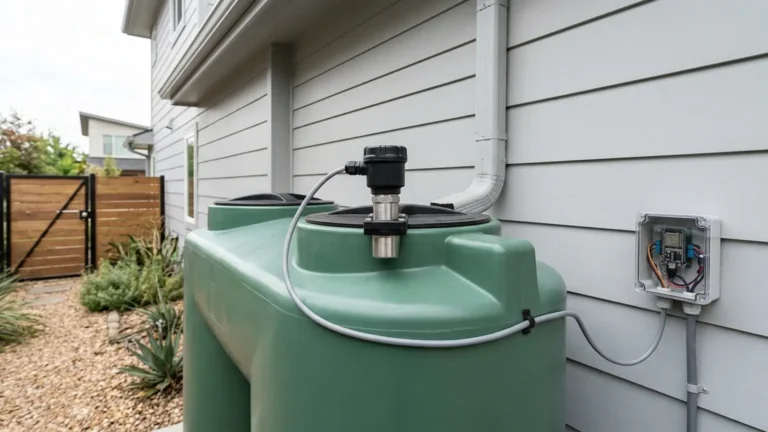
While standard ultrasonic meters are mounted at the top of a tank to measure the distance to a liquid surface, the ultrasonic gas level sensor matador represents a specialized subset of this technology. These sensors are often designed for external mounting, particularly for liquefied gas cylinders (such as LPG, propane, or butane).
External Sensing for Pressurized Cylinders
In the case of the matador-style gas level sensor, the transducer is often placed at the bottom of the cylinder. Instead of traveling through the vapor space, the ultrasonic signal is transmitted through the metal wall of the container and into the liquid. It reflects off the liquid-gas interface inside the tank and returns to the sensor.
This method is highly advantageous for B2B applications in the chemical and energy sectors because:
1. Non-Invasive: There is no need to break the seal of a pressurized vessel, maintaining the integrity of the containment system.
2. Safety: It eliminates the risk of leaks associated with traditional sight glasses or mechanical float gauges.
3. Portability: Many of these sensors are designed for quick checks on mobile gas banks or industrial gas storage units.
Technical Selection Criteria
Selecting the correct ultrasonic level meter requires a detailed analysis of the process environment. Engineers should evaluate the following parameters:
1. Measuring Range and Dead Zone
Every ultrasonic sensor has a "dead zone" (or blocking distance) directly in front of the transducer face where measurements are impossible. This is because the transducer cannot receive an echo while it is still vibrating from the transmission. For a sensor with a 5-meter range, the dead zone might be 0.25 meters (250 mm). The vessel must be designed so that the maximum liquid level never enters this zone.
2. Process Temperature and Pressure
Standard ultrasonic sensors are typically rated for temperatures between -40°C and +70°C. High-pressure environments can alter the density of the gas through which the sound travels, significantly affecting the speed of sound and measurement accuracy. If the pressure exceeds 0.3 MPa (3 bar), specialized calibration or alternative technologies like radar may be required.
3. Chemical Compatibility
The transducer face (wetted part) must be compatible with the process vapors. Common materials include PVDF (Polyvinylidene fluoride), PP (Polypropylene), or PTFE (Polytetrafluoroethylene) for corrosive environments.
Selection Comparison Table
| Feature | Standard Ultrasonic Level Meter | Ultrasonic Gas Level Sensor (Matador-style) |
| :— | :— | :— |
| Mounting Position | Top-mounted (Non-contact) | Bottom or Side-mounted (External contact) |
| Primary Target | Bulk liquids/solids in open/closed tanks | Liquefied gases in pressurized cylinders |
| Medium Contact | No (Vapor space only) | No (Through-wall measurement) |
| Typical Range | 0.5m to 30m | Specific to cylinder diameter/height |
| Common Output | 4-20mA, RS485, HART | Digital display, Bluetooth, or Relay |
| Best Use Case | Water treatment, chemical storage | LPG monitoring, refrigerant recovery |
Installation Considerations and Best Practices
To ensure the reliability of an ultrasonic level meter installation, several engineering guidelines must be followed:
* Perpendicularity: The transducer face must be installed perfectly parallel to the liquid surface. A tilt of even a few degrees can cause the reflected signal to miss the receiver, leading to a "Loss of Echo" error.
* Avoid Obstructions: The ultrasonic beam spreads as it travels. Ensure there are no pipes, brackets, or cooling coils within the beam's path. If an obstruction is unavoidable, many modern meters offer "False Echo Suppression" software to ignore these static reflections.
* Inlet Positioning: Never install the sensor directly above the tank's filling inlet. The turbulence and bubbles created during filling will scatter the ultrasonic signal.
* External Coupling: For sensors like the ultrasonic gas level sensor matador that measure through the tank wall, a coupling agent (such as acoustic gel or grease) is required to eliminate air gaps between the sensor and the metal surface.
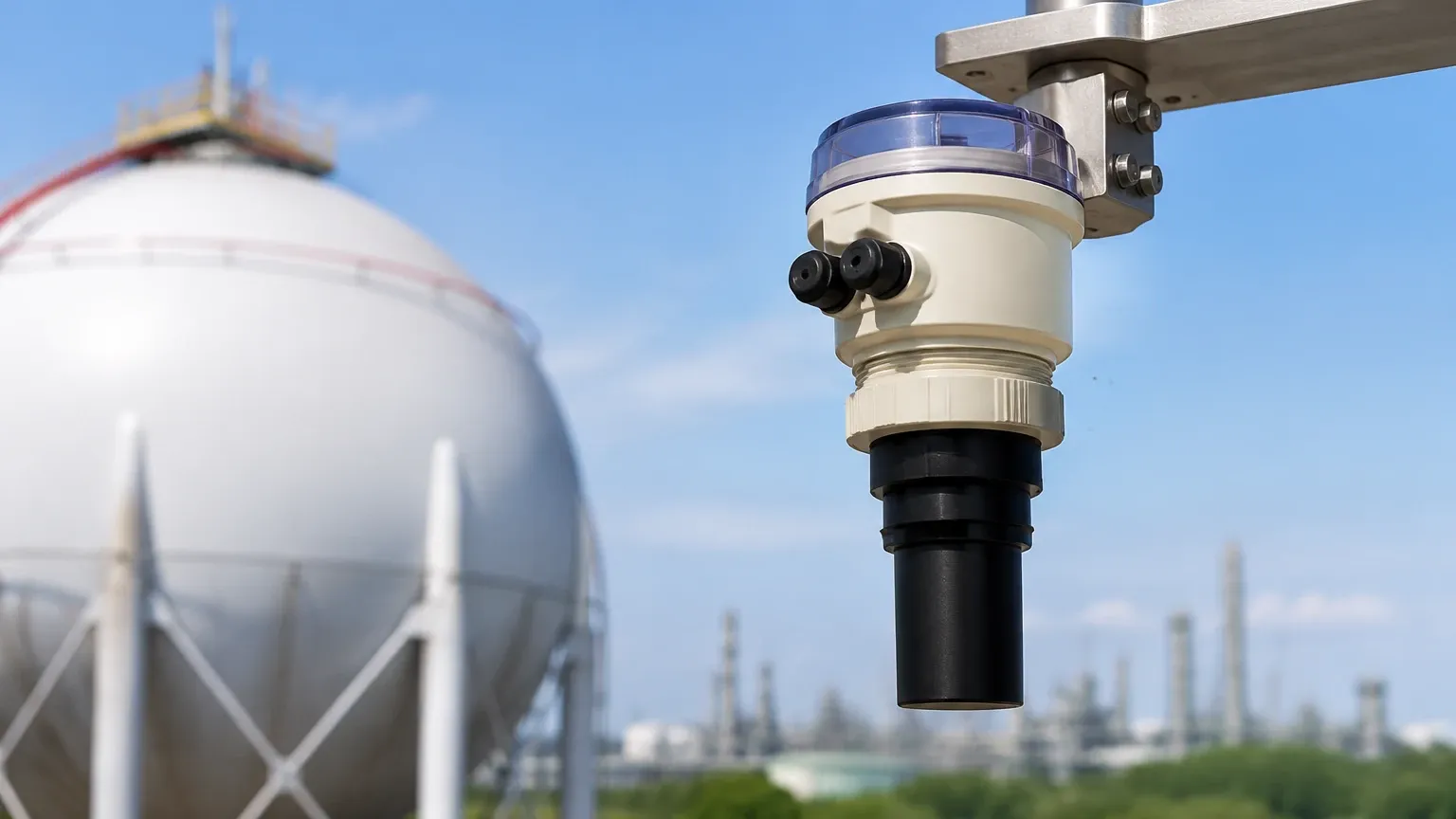
Limitations of Ultrasonic Technology
While versatile, ultrasonic level meters are not suitable for every application. Engineers must be aware of the following limitations:
1. Vacuum Conditions: Sound waves require a medium to travel. In a vacuum, ultrasonic measurement is impossible.
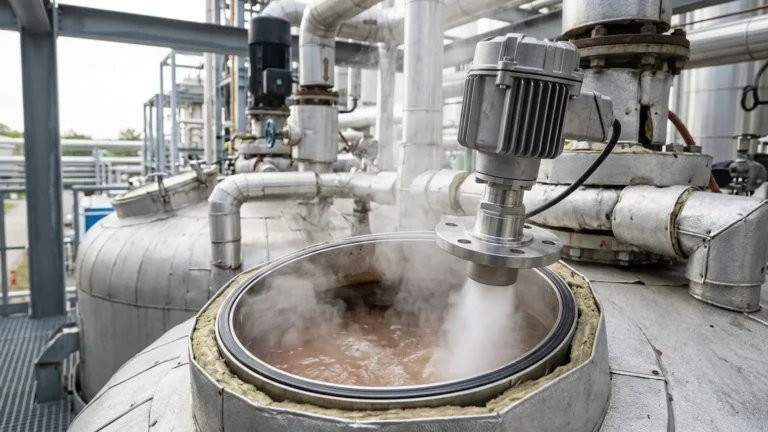
2. Heavy Foam: Thick, dense foam on the surface of a liquid can absorb the acoustic pulse rather than reflecting it, resulting in no signal return.
3. Extreme Dust or Steam: While low-frequency sensors handle some dust, extreme concentrations can attenuate the signal. In these cases, 80GHz Radar is often a more robust alternative.
4. Surface Turbulence: Rapidly agitating liquids can scatter the signal. This can sometimes be mitigated by using a stilling well (a vertical pipe that stabilizes the liquid surface).
Maintenance and Troubleshooting
Ultrasonic sensors are generally low-maintenance due to their lack of moving parts. However, in certain environments, condensation or dust buildup on the transducer face can occur.
* Condensation: In high-humidity applications, water droplets can form on the sensor face. Some sensors feature a self-cleaning function through high-frequency vibration, or a parabolic shield can be used to redirect moisture.
* Signal Loss: If the device reports a signal loss, check for surface foam, extreme temperature shifts, or whether the liquid level has entered the dead zone.
Frequently Asked Questions (FAQ)
Q: Can ultrasonic level meters be used for solids?
A: Yes, but with caveats. Solids like grain, sand, or plastic pellets have an angle of repose that can deflect the signal. A higher-power sensor with a narrower beam and specific solids-processing algorithms is required.
Q: How does the ultrasonic gas level sensor matador handle different tank materials?
A: These sensors are typically calibrated for steel or aluminum cylinders. The thickness of the wall affects the signal transmission; therefore, the sensor must be configured for the specific wall thickness of the vessel being measured.
Q: Is the speed of sound change significant?
A: Absolutely. The speed of sound changes by approximately 0.6 m/s for every 1°C change in temperature. Without the built-in temperature compensation found in professional Ultrasonic Level Meters, a 10°C shift could result in a measurement error of nearly 2%.
Q: What is the difference between integrated and split-type ultrasonic meters?
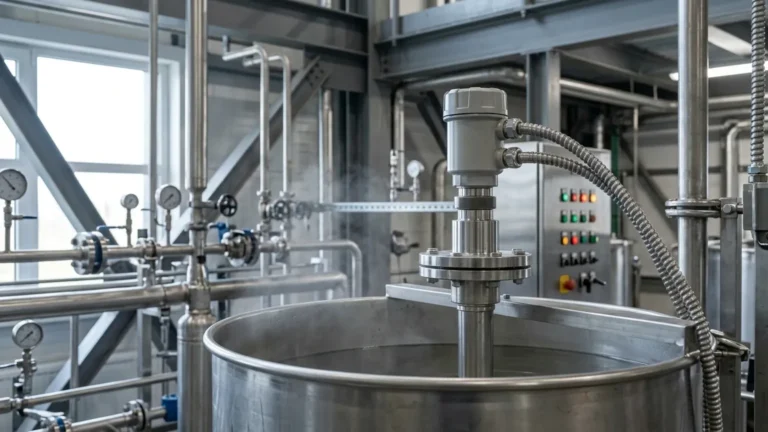
A: Integrated meters have the transducer and electronics in a single housing, which is easier to install. Split-type meters separate the transducer from the display/controller unit, allowing the user to read the level at eye level while the sensor is mounted high atop a silo or tank.
Conclusion
Ultrasonic technology provides a cost-effective, reliable, and non-contact method for level monitoring across a wide range of B2B industrial applications. Whether utilizing a standard top-mounted meter for wastewater management or a specialized ultrasonic gas level sensor matador for LPG cylinder monitoring, understanding the acoustic properties of the environment is the key to a successful installation. By adhering to proper installation geometries and considering the physical properties of the process medium, engineers can achieve high-precision measurements that contribute to safer and more efficient industrial operations.