Ultrasonic Level Sensor Seko 0 5m
Technical Guide to Ultrasonic Level Sensor Seko 0 5m and Short-Range Measurement Applications
In the landscape of industrial process control, non-contact level measurement has become the preferred standard for reliability and reduced maintenance. Among the various technologies available, ultrasonic sensors are widely utilized for their cost-effectiveness and versatility in liquid applications. A specific focus for many engineers is the ultrasonic level sensor seko 0 5m, a range-specific solution often integrated into chemical dosing systems and small-scale water treatment tanks.
This guide examines the engineering principles behind short-range Ultrasonic Level Meters, the technical specifications required for 5-meter applications, and the practical considerations for selecting and installing these instruments in industrial environments.
The Principle of Ultrasonic Level Measurement
Before selecting a specific sensor like the 0-5m variant, it is essential to understand the underlying physics of ultrasonic technology. These instruments operate on the Time-of-Flight (ToF) principle.
Time-of-Flight (ToF) Explained
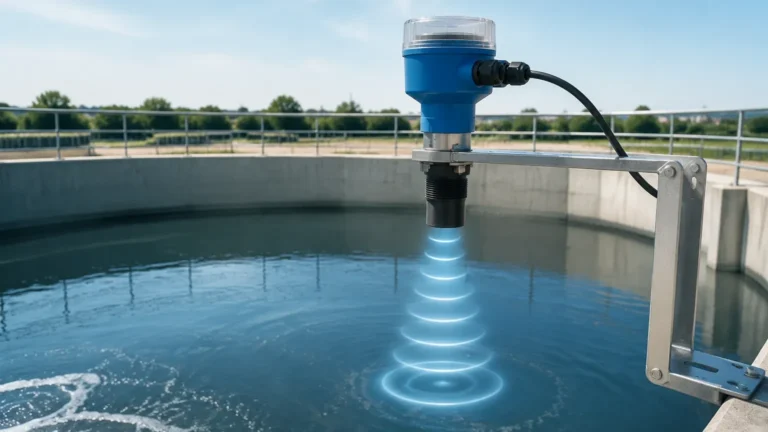
The sensor's transducer emits a high-frequency ultrasonic pulse (typically between 20 kHz and 200 kHz). This pulse travels through the air space in the tank, strikes the surface of the medium, and reflects back to the transducer. The electronics within the meter measure the time interval between the emission of the pulse and the reception of the echo.
Using the known speed of sound in air (approximately 343 m/s at 20°C), the distance is calculated using the formula:
Distance = (Speed of Sound × Time) / 2
The level of the liquid is then determined by subtracting this distance from the total height of the tank (the calibration point or "zero" level).
The Importance of the "Dead Zone"
Every ultrasonic sensor has a "dead zone" or "blocking distance" directly beneath the transducer face. In a 0-5m range sensor, this zone is typically between 0.2m and 0.3m (200mm to 300mm). Within this area, the sensor cannot accurately process the returning echo because the transducer is still vibrating from the initial pulse. For short-range applications like those requiring a 5m limit, managing this dead zone is critical to prevent "high-level" reading errors.
Technical Evaluation of the 0-5m Range Sensor
The ultrasonic level sensor seko 0 5m is frequently specified for chemical storage and dosing skids. At this range, the sensor must balance sensitivity with signal processing to filter out noise in confined spaces.
Key Specifications for 5-Meter Applications
When evaluating a sensor for a 5-meter maximum range, engineers should verify the following parameters:
| Feature | Requirement / Standard |
| :— | :— |
| Measurement Range | 0.25m to 5.0m (0.8ft to 16.4ft) |
| Accuracy | ±0.2% to ±0.5% of full scale |
| Output Signal | 4-20mA (Analog) or RS485 Modbus (Digital) |
| Power Supply | 24V DC (Standard for B2B automation) |
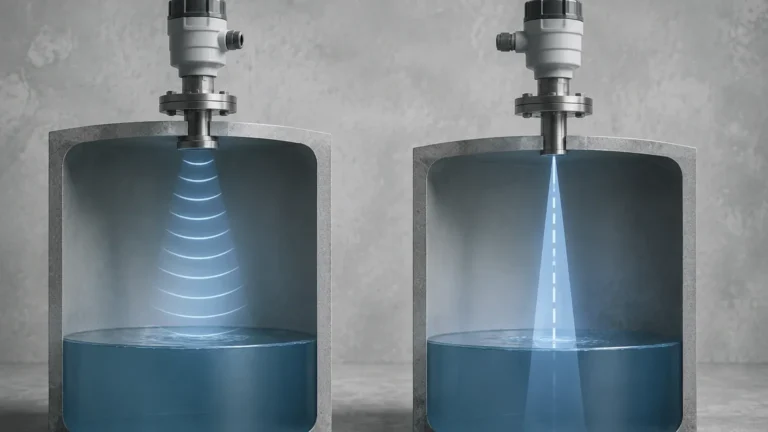
| Beam Angle | 8° to 12° (Narrower is better for small tanks) |
| Process Connection | G 1½" or G 2" Threaded |
| Material | PVDF or PP (For chemical compatibility) |
Why 5 Meters?
The 5-meter range is a "sweet spot" for many industrial applications. It covers the majority of intermediate bulk containers (IBCs), standard chemical storage tanks, and small open-channel flow flumes. Sensors designed specifically for this range often feature higher frequency transducers, which provide better resolution and are less susceptible to ambient acoustic noise compared to long-range (20m+) sensors.
Application Scenarios for Short-Range Sensors
1. Chemical Dosing and Treatment
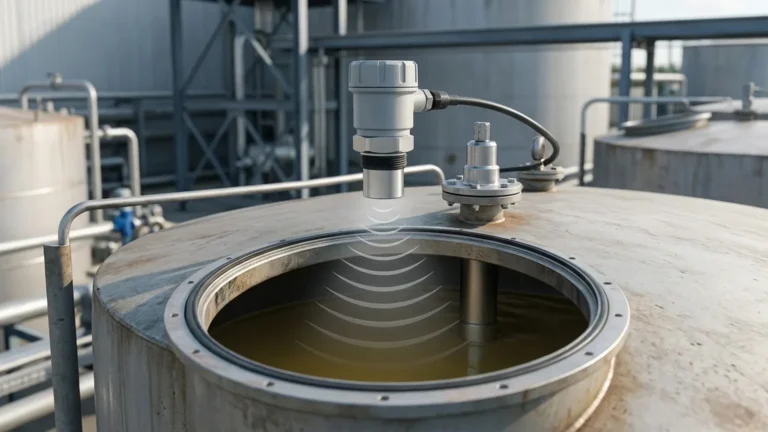
In water treatment plants, precise dosing of coagulants, disinfectants, and pH adjusters is vital. The ultrasonic level sensor seko 0 5m is often paired with dosing pumps to ensure the supply tank does not run dry, which could lead to pump damage or untreated water bypass.
2. Small Sump and Pit Monitoring
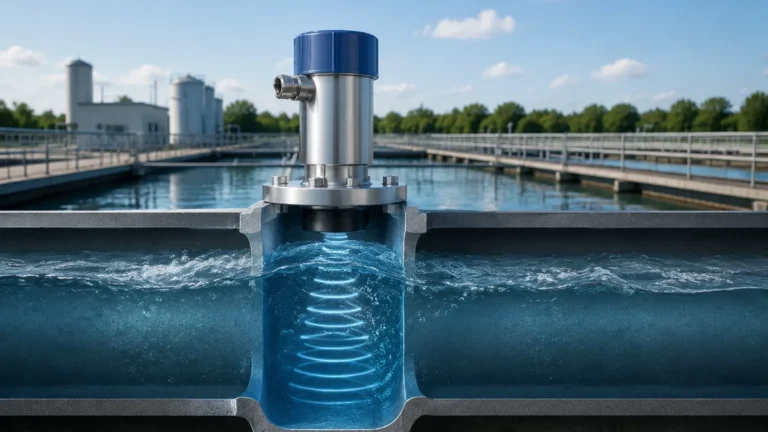
For factory drainage or wastewater sumps, a 5m range is usually sufficient. Ultrasonic sensors are preferred here because they do not come into contact with potentially corrosive or debris-laden fluids, unlike hydrostatic or float-based sensors.
3. Food and Beverage Processing
In clean-in-place (CIP) systems, non-contact measurement ensures that no sensor components contaminate the product. The ability to measure up to 5 meters allows for monitoring of various buffer tanks and ingredient silos.
Selection Criteria: Choosing the Right Ultrasonic Level Meter
When specifying Ultrasonic Level Meters, the range is only one part of the equation. Engineers must consider the environment and the medium being measured.
Medium Characteristics
* Foam: Heavy foam absorbs ultrasonic pulses. If the process involves significant agitation or foaming agents, an ultrasonic sensor may lose signal. In these cases, a radar level meter might be more appropriate.
* Vapor and Steam: High concentrations of steam or chemical vapors can change the speed of sound in the air space, leading to measurement errors. Many high-quality sensors include temperature compensation to mitigate this, but extreme vapors remain a challenge.
* Dust: While ultrasonic sensors handle some dust better than optical sensors, extreme dust in silos can attenuate the signal.
Tank Geometry
Internal obstructions such as ladders, heating coils, or agitator blades can create "false echoes." Advanced sensors allow for "Fixed Interference Suppression," where the software is taught to ignore echoes from static internal structures.
Installation Guidelines for Maximum Accuracy
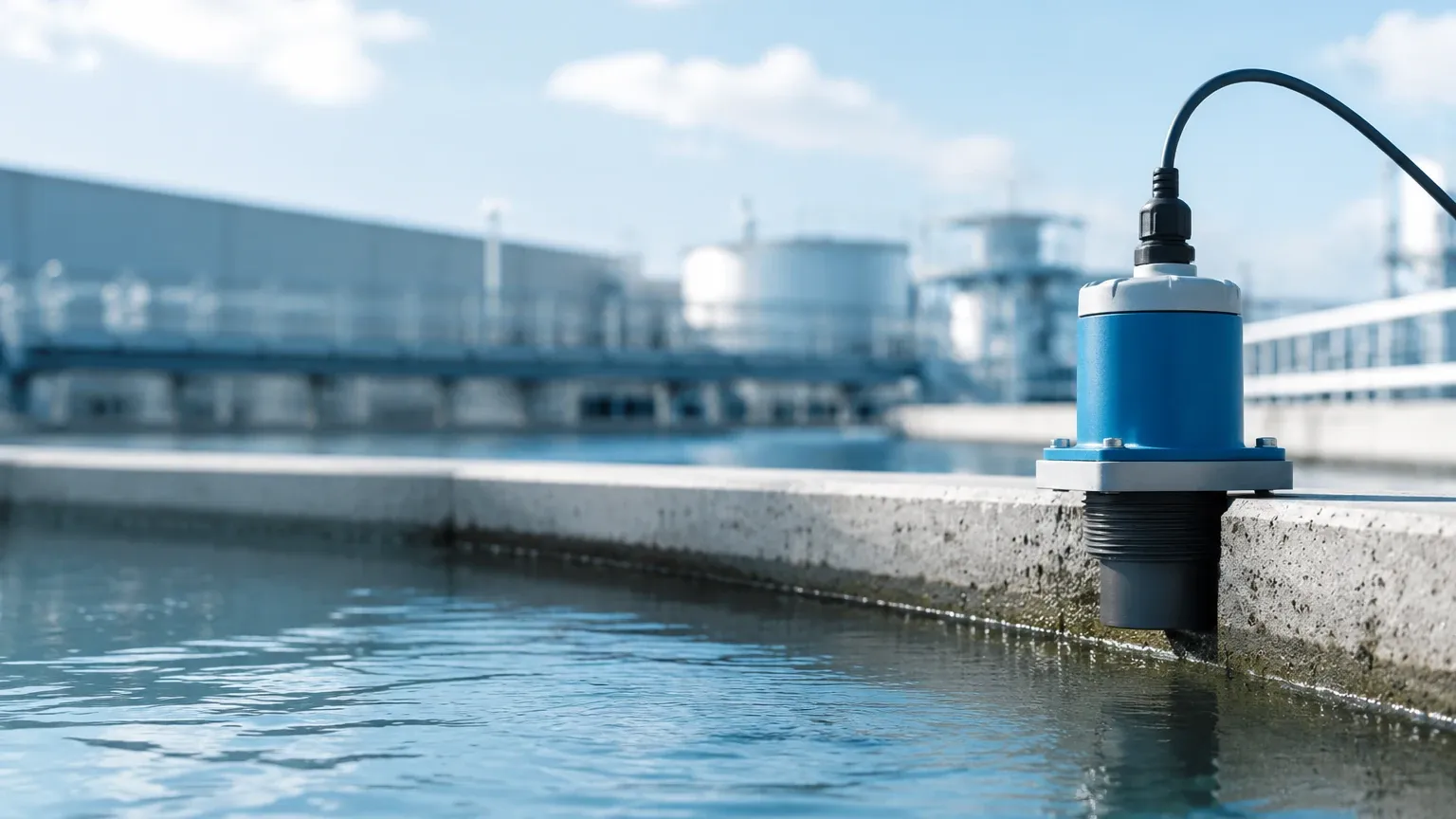
Correct installation is the most significant factor in the performance of an ultrasonic level sensor. Even the highest quality 0-5m sensor will fail if poorly positioned.
1. Perpendicularity: The sensor face must be perfectly parallel to the liquid surface. A tilt of even a few degrees can cause the echo to reflect away from the transducer, resulting in signal loss.
2. Distance from Walls: To avoid interference from the tank walls, the sensor should be installed at least 10% of the tank's height away from the wall. For a 5m tank, this means a minimum of 500mm from the side wall.
3. Avoid the Fill Stream: Never install the sensor directly above the point where liquid enters the tank. The turbulence and the falling liquid stream will disrupt the ultrasonic pulse.
4. Standpipe Usage: If the tank surface is turbulent or covered in foam, installing the sensor inside a stilling well or standpipe can provide a calm surface for measurement. Ensure the pipe is vented and has a smooth internal surface.
Limitations and Common Risks
While the ultrasonic level sensor seko 0 5m is a robust tool, it is not a universal solution. Engineers should be aware of the following limitations:
* Vacuum Applications: Ultrasonic waves require a medium (air or gas) to travel. They cannot function in a vacuum.
* High Pressure: High-pressure environments change the density of the gas, which significantly alters the speed of sound and can impede the transducer's vibration.
* Extreme Temperatures: Most ultrasonic sensors are rated for temperatures up to 70°C or 80°C. Beyond this, the piezoelectric elements in the transducer can degrade, and the speed-of-sound calculations become highly unstable.
Comparison: Ultrasonic vs. Other Technologies
| Technology | Best For | Main Limitation |
| :— | :— | :— |
| Ultrasonic | General liquid level, cost-sensitive projects | Foam, vacuum, high temp |
| Radar (80GHz) | High precision, foam, dust, vapors | Higher initial cost |
| Hydrostatic | Deep wells, pressurized tanks | Contact-based, maintenance-heavy |
| Magnetic Gauge | Visual confirmation, high pressure | Mechanical moving parts |
Frequently Asked Questions (FAQ)
Q: Can the ultrasonic level sensor seko 0 5m be used for solids?
A: While primarily designed for liquids, it can be used for fine solids or granules if the range is short. However, solids typically have an angle of repose that reflects the signal away from the sensor, effectively reducing the usable range by 50% or more.
Q: How do I handle the dead zone if my tank needs to be filled to the top?
A: You can use a nozzle or a standpipe to mount the sensor higher than the maximum liquid level. This ensures the liquid never enters the blocking distance.
Q: Does the color of the liquid affect the measurement?
A: No. Unlike optical or laser sensors, ultrasonic technology is completely unaffected by the color, transparency, or opacity of the liquid.
Q: How often does the sensor need calibration?
A: In stable environments, ultrasonic sensors are "set and forget." Recalibration is usually only necessary if the process gas changes (e.g., switching from air to CO2) or if there are extreme seasonal temperature shifts that exceed the internal compensation limits.
Conclusion
The selection of an ultrasonic level sensor seko 0 5m represents a strategic choice for short-range industrial monitoring. By understanding the Time-of-Flight principle and respecting the physical constraints of the installation environment—such as the dead zone and beam angle—operators can achieve highly accurate and maintenance-free level detection. For applications exceeding 5 meters or involving complex chemical vapors, exploring the broader range of Ultrasonic Level Meters and radar alternatives is recommended to ensure long-term process stability.