Ultrasonic Level Detectors
Ultrasonic Level Detectors: A Comprehensive Engineering Guide to Non-Contact Measurement
In the landscape of industrial process control, the ability to monitor fluid and solid levels without physical contact is a significant advantage. Ultrasonic level detectors have emerged as a primary solution for engineers seeking reliable, low-maintenance, and cost-effective measurement. By utilizing high-frequency sound waves, these instruments provide a versatile bridge between simple point-level detection and continuous monitoring in diverse environments ranging from municipal water treatment to complex chemical processing.
As a professional manufacturer, Welk specializes in providing high-accuracy Ultrasonic Level Meters designed to withstand the rigors of industrial automation. This guide explores the fundamental principles, selection criteria, and practical installation strategies for ultrasonic level detectors to help technical teams optimize their process efficiency.
Understanding the Measurement Principle
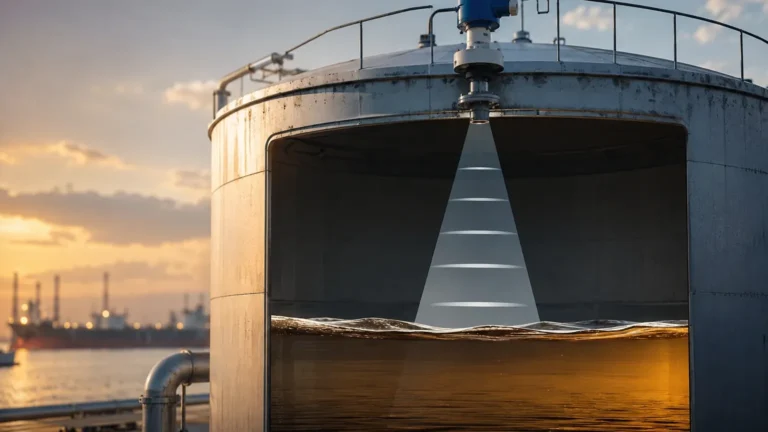
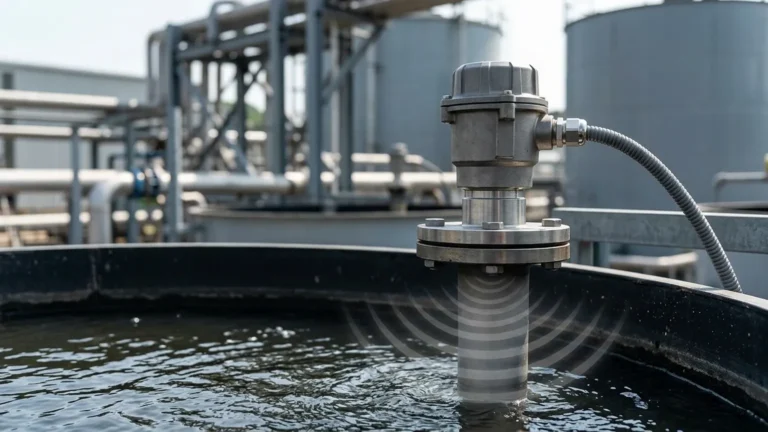
Ultrasonic level detectors operate on the "Time-of-Flight" (ToF) principle. The device consists of a transducer that acts as both a transmitter and a receiver.
The Pulse-Echo Cycle
1. Emission: The transducer emits a burst of ultrasonic pulses (typically in the range of 20 kHz to 200 kHz) toward the target surface.
2. Propagation: These sound waves travel through the air or gas medium in the tank.
3. Reflection: Upon hitting the surface of the material—whether liquid or solid—the sound waves are reflected back toward the sensor.
4. Detection: The transducer receives the reflected echo and converts the mechanical energy back into an electrical signal.
The Calculation
The internal microprocessor calculates the distance ($D$) between the sensor and the material surface using the formula:
$$D = \frac{c \times t}{2}$$
Where:
* $c$ is the speed of sound in the medium (approximately 344 m/s in air at 20°C).
* $t$ is the total time elapsed from emission to reception.
Since the height of the vessel ($H$) is a known constant, the actual level ($L$) is determined by subtracting the measured distance from the total height ($L = H – D$).
Temperature Compensation
The speed of sound is highly dependent on the temperature of the air through which it travels. For every 1°C change in temperature, the speed of sound changes by approximately 0.6 m/s. To maintain accuracy, modern ultrasonic level detectors include an integrated temperature sensor to automatically adjust the calculation based on real-time environmental conditions.
Ultrasonic Level Detectors vs. Continuous Meters
While the terms are often used interchangeably in casual conversation, there is a technical distinction in application intent:
* Ultrasonic Level Detectors: Often refers to systems used for point-level monitoring or threshold detection (e.g., high-level or low-level alarms). These are critical for preventing tank overflows or pump dry-running.
* Ultrasonic Level Meters: Typically refers to instruments providing a continuous 4-20mA or digital output (HART, Modbus) representing the exact level across the entire span of the vessel.
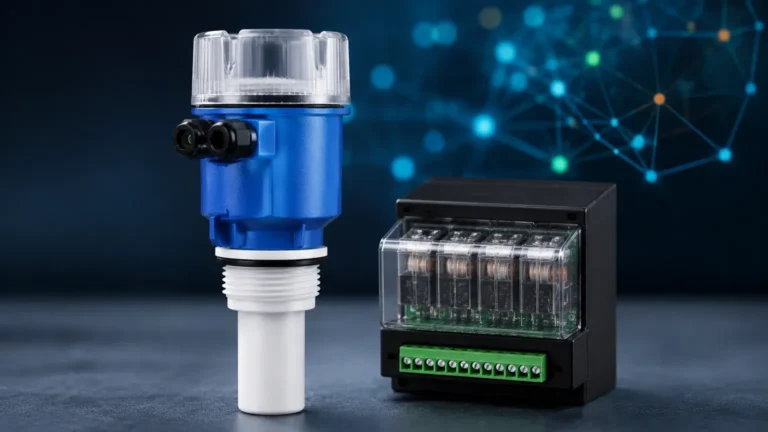
Welk provides integrated solutions that serve both functions, allowing for precise continuous tracking while simultaneously setting programmable relay outputs for alarm detection.
Technical Selection Criteria
Choosing the right ultrasonic instrument requires an analysis of the physical properties of the media and the vessel geometry. The following table provides a reference for common selection parameters.
Selection Reference Table
| Parameter | Standard Industrial Requirement | Welk Solution Capability |
| :— | :— | :— |
| Measurement Range | 0.3m to 15m (1ft to 49ft) | Up to 30m (98ft) for specialized models |
| Accuracy | ±0.25% to ±0.5% of span | High-precision options available |
| Output Signal | 4-20mA, RS485 Modbus | 4-20mA, HART, Modbus, Relays |
| Beam Angle | 8° to 12° | Narrow beam (6°-9°) for tight spaces |
| Process Temperature | -20°C to +60°C | Extended ranges for specific applications |
| Pressure Limit | Atmospheric (±0.3 bar) | Specialized housings for low pressure |
| Ingress Protection | IP65 / IP66 | IP67 / IP68 for submersible requirements |
Key Installation Considerations
Correct installation is the most critical factor in ensuring the reliability of ultrasonic level detectors. Because the technology relies on sound waves, any physical interference or atmospheric turbulence can degrade the signal.
1. The Blocking Distance (Dead Zone)
Every ultrasonic sensor has a "dead zone" immediately below the transducer face where it cannot accurately measure. This is the time required for the transducer to stop vibrating from the transmission pulse before it can listen for the echo.
* Guideline: Ensure the maximum possible liquid level never enters the blocking distance (typically 0.2m to 0.5m depending on the model).
2. Beam Angle and Obstructions
The sound wave spreads as it travels, forming a cone. If this cone intersects with tank walls, ladders, pipes, or agitators, it will create "false echoes."
* Guideline: Calculate the beam spread at the bottom of the tank. For a sensor with a 10° beam angle, the radius of the beam at 5 meters is approximately 0.44 meters. The sensor should be mounted away from the wall at a distance greater than this radius.
3. Orientation and Alignment
The transducer face must be perfectly parallel to the liquid surface. Even a few degrees of tilt can cause the reflected signal to bounce away from the receiver rather than back to it.
* Guideline: Use a spirit level during installation. For solids with a repose angle, specialized mounting flanges may be required to aim the sensor at the most representative point of the pile.
4. Mounting Location
* Avoid the Inflow: Never mount the detector directly above the fill stream. The turbulence and falling liquid will scatter the sound waves and cause erratic readings.
* Centrality: In flat-roofed tanks, avoid mounting exactly in the center if the roof is domed, as this can focus unwanted secondary reflections.
Limitations and Environmental Challenges
While ultrasonic technology is robust, certain process conditions are unsuitable for sound-based measurement:
* Vacuum Conditions: Sound requires a medium (air/gas) to travel. Ultrasonic detectors will not function in a vacuum.
* Heavy Foam: Thick, dense foam absorbs sound waves rather than reflecting them. In applications with heavy foaming, a radar level meter or a magnetic level gauge is often a better choice.
* Extreme Dust: While light dust is manageable, extremely dense dust (common in grain silos during filling) can attenuate the signal.
* High Pressure/High Temperature: Changes in gas density at high pressures significantly alter the speed of sound beyond the compensation capabilities of standard sensors.
Industrial Applications
Ultrasonic level detectors are the "workhorse" of several key industries due to their non-contact nature, which prevents contamination and corrosion of the sensor.
Water and Wastewater Treatment
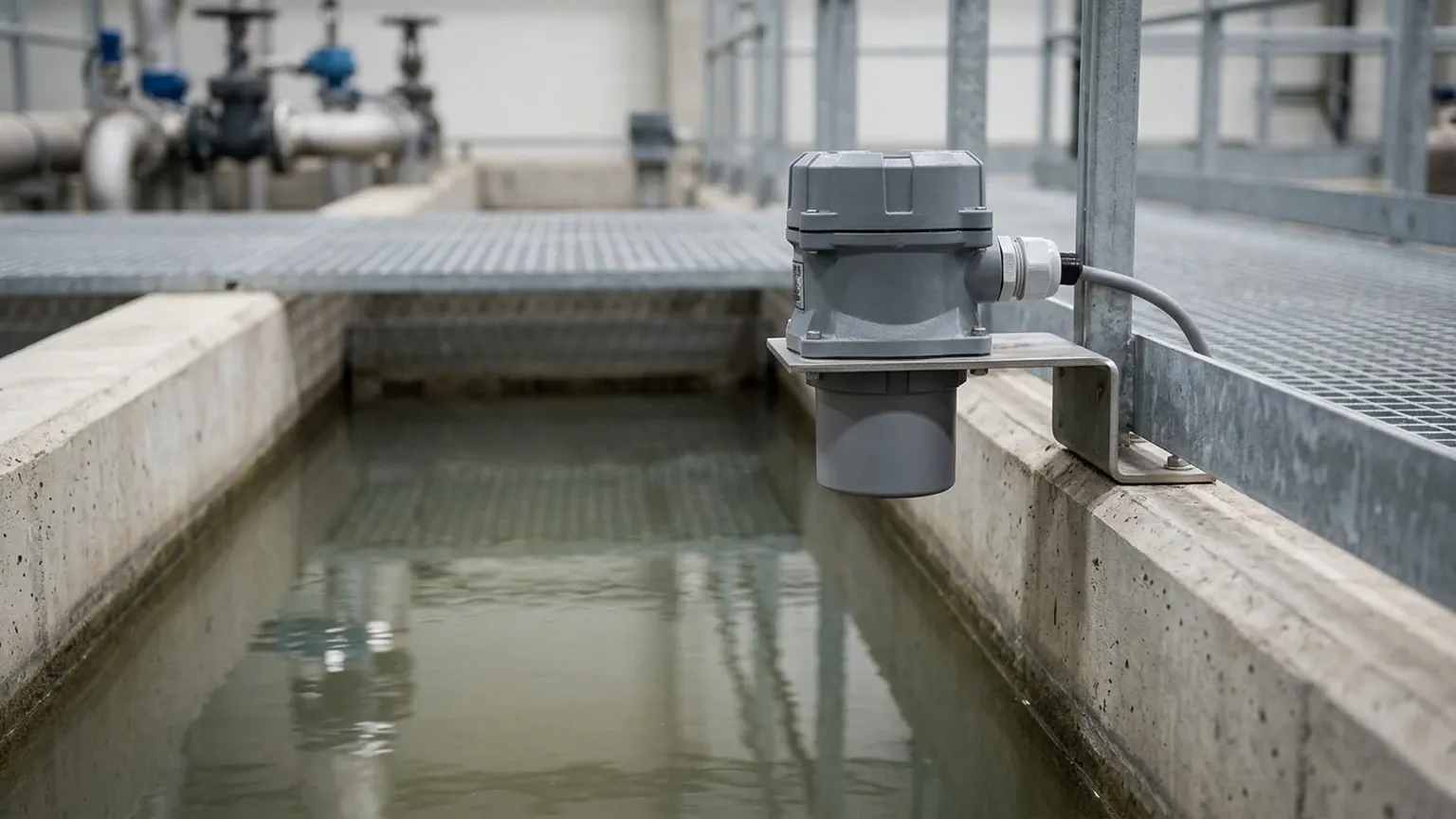
Used extensively for monitoring chemical storage tanks (alum, polymer, bleach), open channel flow measurement in flumes/weirs, and wet well level control. The IP68 ratings of Welk sensors make them ideal for flood-prone areas.
Chemical Processing
Ideal for acids, alkalis, and corrosive solvents where contact-based probes would degrade. Using PVDF or PTFE-faced transducers ensures long-term compatibility with aggressive vapors.
Food and Beverage
Since the sensor does not touch the product, it meets strict hygiene requirements. It is commonly used for monitoring water tanks, cleaning solutions, and bulk ingredient storage.
Maintenance and Troubleshooting
One of the primary benefits of ultrasonic level detectors is the lack of moving parts, which minimizes maintenance. However, periodic checks are recommended:
1. Transducer Cleaning: In high-humidity or dusty environments, condensation or buildup can occur on the transducer face. Wipe it periodically with a soft cloth and mild detergent. Do not use abrasive materials.
2. Signal Strength Monitoring: Most modern meters provide a diagnostic value for "Echo Strength." A gradual decline may indicate buildup or a failing component.
3. Cable Integrity: Ensure that cable glands are tight to prevent moisture ingress into the electronics housing.
Common Troubleshooting Steps
* Reading Jumps to Maximum: This often indicates the sensor has lost the echo (Loss of Echo). Check for foam, extreme turbulence, or if the level has dropped into a region blocked by an obstruction.
* Reading Stays at Dead Zone: This usually means the liquid has reached the sensor or there is a permanent obstruction (like a bracket) directly in front of the transducer.
Frequently Asked Questions (FAQ)
Q: Can ultrasonic level detectors measure solids?
A: Yes, but with caveats. Solids like grain, sand, or plastic pellets reflect sound less efficiently than liquids. The effective range is typically reduced by 50% compared to liquid measurement, and the sensor must be positioned to account for the angle of repose.
Q: How does wind affect the measurement?
A: In outdoor applications or open channels, strong wind can "blow" the sound waves away, causing a loss of signal. Using a stilling well or a protective sunshade/windshield can mitigate this.
Q: Is it possible to use ultrasonic sensors in pressurized tanks?
A: Standard ultrasonic sensors are designed for atmospheric pressure. While they can handle slight fluctuations (±0.3 bar), high-pressure tanks change the air density so much that the speed of sound calculation becomes inaccurate. Radar technology is preferred for high-pressure vessels.
Conclusion
Ultrasonic level detectors remain a cornerstone of industrial instrumentation because they balance performance with cost-efficiency. By understanding the physics of sound propagation and adhering to strict installation guidelines regarding beam angles and dead zones, engineers can achieve highly reliable level monitoring.
For projects requiring precise automation and durable hardware, Welk offers a range of Ultrasonic Level Meters tailored to specific industrial needs. Whether you are managing a municipal wastewater facility or a chemical storage depot, selecting the right ultrasonic technology ensures long-term operational safety and accuracy.