Ultrasonic Level Sensor for Fuel Tank
Ultrasonic Level Sensor for Fuel Tank: A Practical Engineering Guide
In industrial fuel management, accurate inventory tracking and leak detection are critical for operational efficiency and safety. Selecting an ultrasonic level sensor for fuel tank applications requires a deep understanding of acoustic principles, fluid dynamics, and the specific environmental challenges posed by hydrocarbon storage. As a non-contact measurement technology, Ultrasonic Level Meters offer a versatile solution for monitoring diesel, heating oil, and various industrial lubricants without the maintenance overhead associated with mechanical floats or pressure-sensitive diaphragms.
This guide explores the technical foundations of ultrasonic measurement, practical selection criteria for fuel storage, and the installation nuances that ensure long-term reliability in professional environments.
Measurement Principles of Ultrasonic Technology
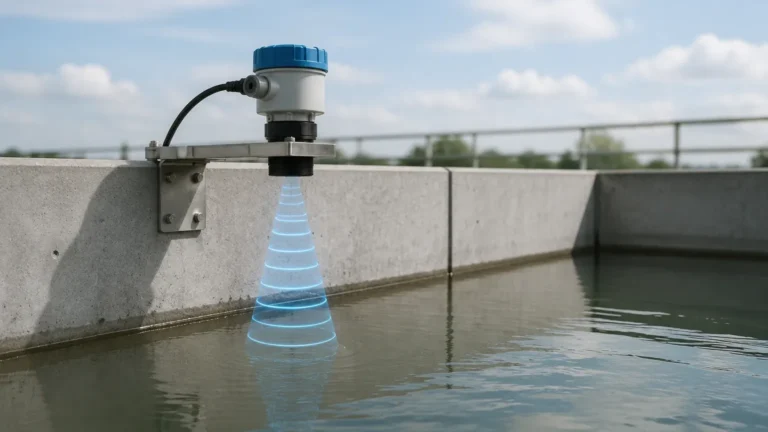
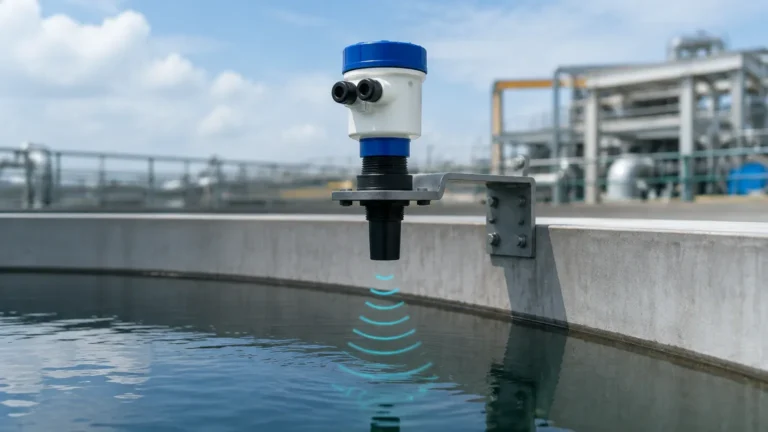
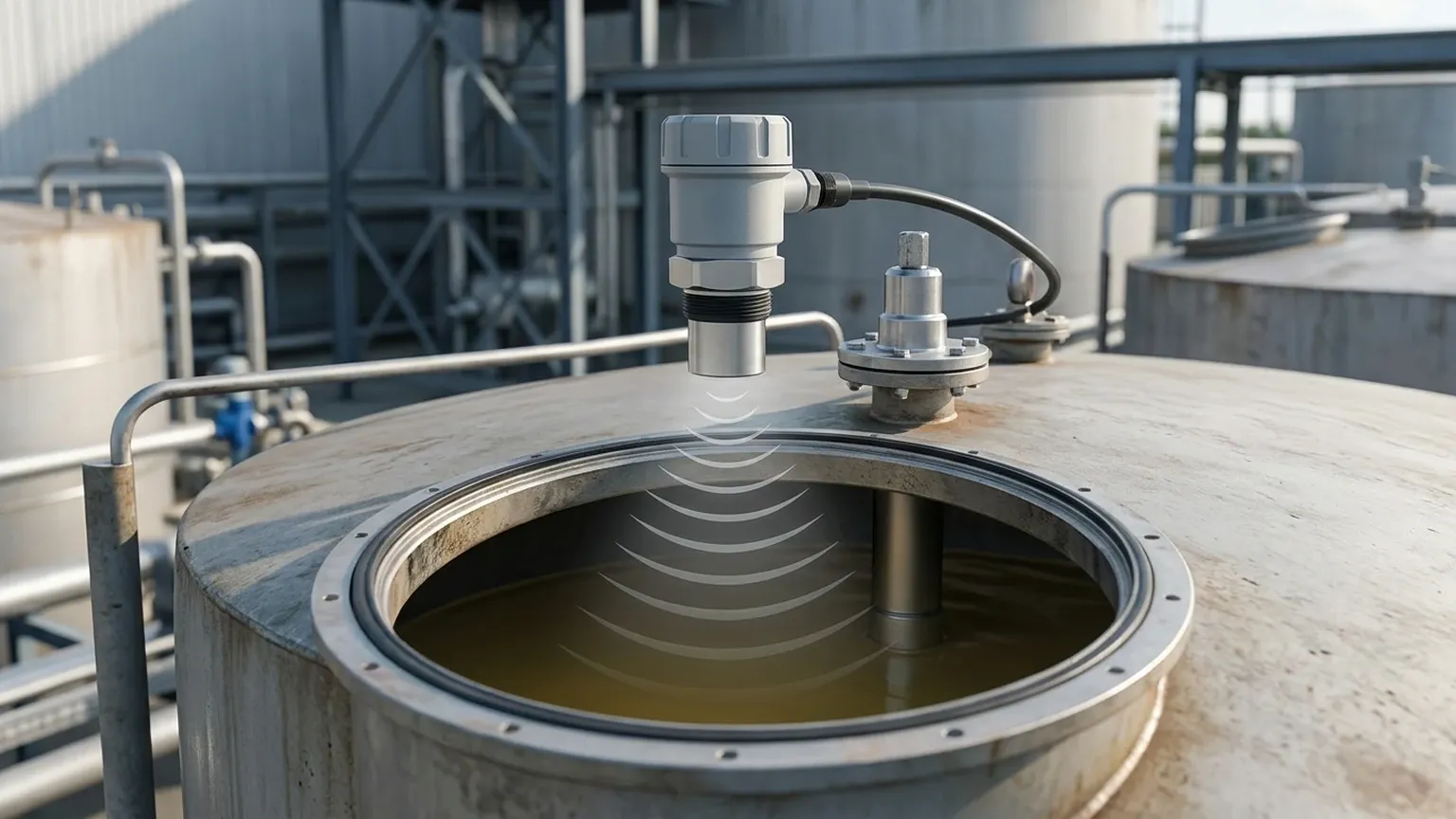
Ultrasonic level measurement is based on the "Time-of-Flight" (ToF) principle. The sensor, typically mounted at the top of the fuel tank, contains a piezoelectric transducer that converts electrical energy into high-frequency sound pulses. These pulses travel through the air gap (the ullage) between the sensor and the fuel surface.
The Calculation Process
Once the pulse reaches the fuel surface, it is reflected back toward the sensor. The device measures the time elapsed between the emission of the pulse and the reception of the echo. The distance from the sensor to the fuel surface is calculated using the following formula:
D = (c × t) / 2
Where:
* D is the distance to the fuel surface.
* c is the speed of sound in the medium (air/vapor mix).
* t is the measured time-of-flight.
The actual fuel level is then derived by subtracting this distance (D) from the total tank height (H), which is programmed into the meter during commissioning.
Signal Processing and Echo Filtering
Modern industrial sensors do not simply measure the first return signal. They utilize advanced digital signal processing (DSP) to distinguish between the true fuel surface echo and false reflections caused by internal tank structures, such as ladders, heating coils, or agitators. This "echo mapping" allows the sensor to ignore static obstructions and focus solely on the moving liquid level.
Why Choose an Ultrasonic Level Sensor for Fuel Tanks?
Fuel storage presents unique challenges, including the presence of flammable vapors and the need for high precision to prevent overfills. Ultrasonic technology provides several distinct advantages:
1. Non-Contact Measurement: Because the sensor never touches the fuel, there is no risk of corrosion or mechanical wear. This is particularly beneficial for fuels that may contain additives or contaminants that could degrade submerged components.
2. Ease of Retrofitting: Most ultrasonic sensors can be installed via a standard threaded connection or flange on the top of the tank, making them ideal for upgrading existing fuel storage facilities without draining the tank.
3. Low Maintenance: With no moving parts to seize or clog, these sensors require minimal intervention once calibrated.
4. Integrated Temperature Compensation: The speed of sound varies with air temperature. Industrial-grade ultrasonic meters include built-in temperature sensors to automatically adjust calculations, maintaining accuracy even as ambient conditions change.
Technical Selection Criteria
When specifying an ultrasonic level sensor for fuel tank use, engineers must evaluate several parameters to ensure the device matches the application requirements.
Selection Table: Industrial Ultrasonic Sensor Specifications
| Feature | Standard Duty | High-Precision / Long Range | Small Tank / OEM |
| :— | :— | :— | :— |
| Measurement Range | 0.4m to 10m | 0.5m to 30m | 0.2m to 4m |
| Accuracy | ±0.5% of Full Scale | ±0.25% of Full Scale | ±1.0% of Full Scale |
| Output Signal | 4-20mA / HART | 4-20mA / Modbus RS485 | 0-5V / 0-10V |
| Beam Angle | 8° to 12° | 5° to 8° | 10° to 15° |
| Operating Temp | -20°C to +60°C | -40°C to +80°C | -10°C to +50°C |
| IP Rating | IP65 / IP66 | IP67 / IP68 | IP65 |
Beam Angle and Tank Geometry
The beam angle is a critical factor. The ultrasonic pulse spreads out in a cone shape as it travels. If the beam is too wide, it may hit the tank walls or internal supports before reaching the fuel, causing false readings. For tall, narrow fuel tanks, a sensor with a narrow beam angle (e.g., 5° to 8°) is preferred to ensure the pulse remains clear of the tank sides.
Dead Zone (Blocking Distance)
Every ultrasonic sensor has a "dead zone" immediately below the transducer face (typically 0.2m to 0.5m). Within this zone, the sensor cannot accurately measure because the transducer is still vibrating from the pulse emission when the echo returns. It is essential to mount the sensor high enough so that the maximum fuel level never enters this dead zone.
Installation Considerations for Fuel Environments
Proper installation is the most significant factor in the performance of an ultrasonic level meter. Follow these guidelines to ensure accurate data:
1. Perpendicular Mounting
The sensor must be mounted so that the transducer face is perfectly parallel to the fuel surface. If the sensor is tilted, the ultrasonic pulse will reflect away from the receiver rather than back to it, leading to signal loss.
2. Positioning Away from Inlets
Do not install the sensor directly above the fuel inlet pipe. The turbulence and splashing caused during tank filling will create surface foam and air bubbles, which absorb ultrasonic energy and result in erratic readings.
3. Avoiding Obstructions
Ensure the path of the ultrasonic beam is clear of internal struts, ladders, or level switches. If obstructions are unavoidable, use a sensor with software-based echo masking to "gate out" the fixed reflections.
4. Vapor and Pressure Considerations
In closed fuel tanks, hydrocarbon vapors can accumulate. These vapors are denser than air and can slightly alter the speed of sound. For pressurized tanks or applications involving highly volatile fuels (like gasoline), it is often recommended to use a stilling well—a vertical pipe that guides the ultrasonic wave and provides a stable, vapor-consistent environment for measurement.
Limitations and Risks
While highly effective, ultrasonic technology is not a universal solution. Engineers should be aware of the following limitations:
* Heavy Foam: If the fuel surface is covered in thick foam (common during high-speed filling of certain diesel blends), the foam may absorb the ultrasonic pulse rather than reflecting it. In these cases, a guided wave radar or hydrostatic transmitter may be more appropriate.
* Vacuum or High Pressure: Ultrasonic waves require a medium (air/gas) to travel. They cannot function in a vacuum. Furthermore, significant pressure changes can alter the density of the air, impacting the speed of sound beyond what standard temperature compensation can correct.
* Extreme Temperatures: In very high-temperature applications, the air density gradients can cause the sound beam to refract (bend), potentially missing the receiver.
Frequently Asked Questions (FAQ)
Q: Can I use an ultrasonic sensor for gasoline tanks?
A: Yes, but with caution. Gasoline produces significant vapors that can affect sound speed. For commercial custody transfer or high-accuracy requirements, ensure the sensor is rated for hazardous areas (ATEX/Ex-proof) and consider using a stilling well to maintain a consistent vapor column.
Q: How do I handle a fuel tank with an irregular shape, like a horizontal cylindrical tank?
A: Most modern Ultrasonic Level Meters include a volume conversion function. By inputting the tank dimensions or a strapping table, the meter can convert the linear level measurement into liters or gallons, accounting for the non-linear volume changes in horizontal tanks.
Q: Does dust or condensation on the sensor face affect the reading?
A: A small amount of condensation is usually tolerated due to the vibration of the transducer face, which tends to self-clean. However, heavy buildup can dampen the signal. Choosing a sensor with a Teflon (PTFE) or PVDF face can help repel moisture and fuel residues.
Q: What is the maximum distance an ultrasonic sensor can measure?
A: Standard industrial units typically reach up to 15 meters, while high-power versions can extend to 30 meters. For fuel tanks, which are rarely deeper than 10-12 meters, standard range units are usually sufficient.
Conclusion
An ultrasonic level sensor for fuel tank applications provides a balance of accuracy, ease of use, and cost-effectiveness. By understanding the acoustic principles and adhering to strict installation guidelines—specifically regarding the dead zone and beam angle—operators can achieve reliable inventory monitoring. For complex tank geometries or volatile fuel types, consulting with a technical specialist to match the sensor's frequency and output to the specific environment is recommended to ensure long-term performance.