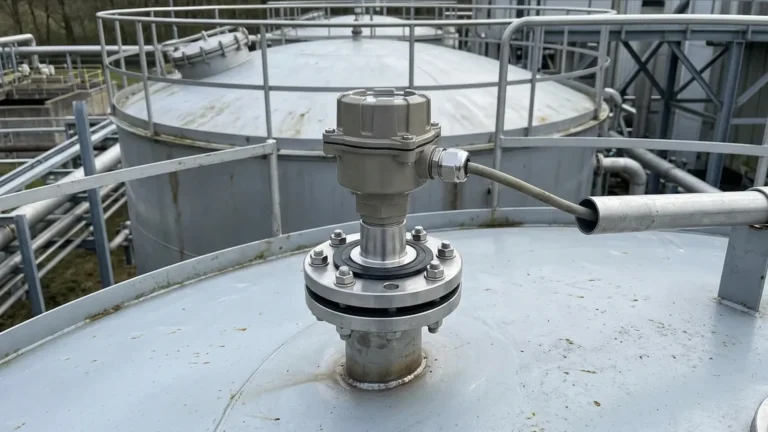
Ultrasonic Level Sensor Uses
Ultrasonic Level Sensor Uses: A Practical Engineering Guide to Non-Contact Measurement
In the landscape of industrial process control, selecting the right instrumentation is critical for operational efficiency and safety. Among the various technologies available, ultrasonic level sensors have emerged as a versatile and cost-effective solution for a wide array of liquid and solid monitoring tasks. This guide explores the fundamental principles, practical ultrasonic level sensor uses, and the technical considerations essential for engineering professionals and plant managers.
The Principle of Ultrasonic Level Measurement
Before diving into specific applications, it is essential to understand how these instruments function. Ultrasonic level measurement is a non-contact technology based on the "Time-of-Flight" (ToF) principle.
How It Works
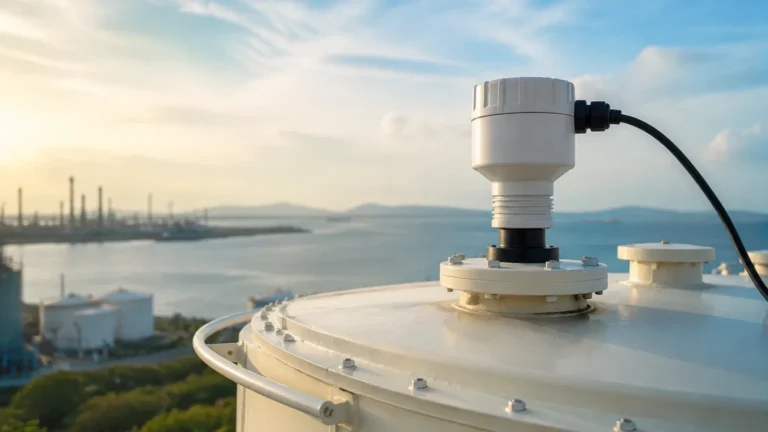
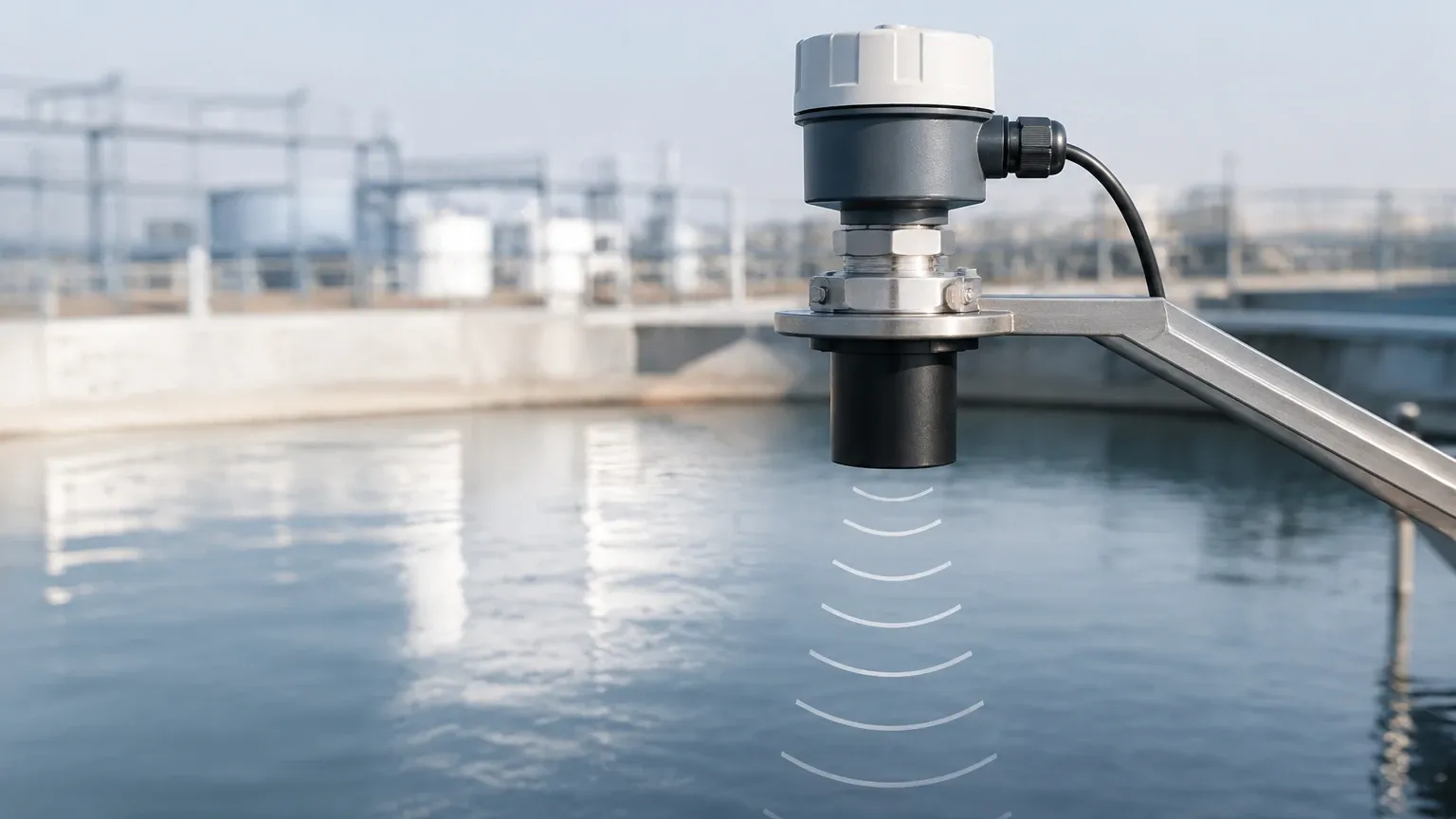
An ultrasonic transducer, typically mounted at the top of a vessel, emits high-frequency sound pulses (usually between 20 kHz and 200 kHz). These sound waves travel through the air space between the sensor and the material surface, reflect off the target, and return to the transducer.
The instrument calculates the distance ($D$) based on the time ($t$) elapsed between the emission and the reception of the pulse, using the speed of sound ($c$) in the medium (usually air):
$$D = \frac{c \times t}{2}$$
Since the height of the vessel ($H$) is a known constant, the level of the material ($L$) is determined by subtracting the measured distance from the total height ($L = H – D$).
Temperature Compensation
The speed of sound is not constant; it varies with the temperature of the air through which it travels. For instance, at 0°C, sound travels at approximately 331.5 m/s, while at 20°C, it increases to about 343 m/s. To maintain accuracy, professional-grade Ultrasonic Level Meters from manufacturers like Welk incorporate integrated temperature sensors to automatically compensate for these fluctuations.
Primary Ultrasonic Level Sensor Uses in Industry
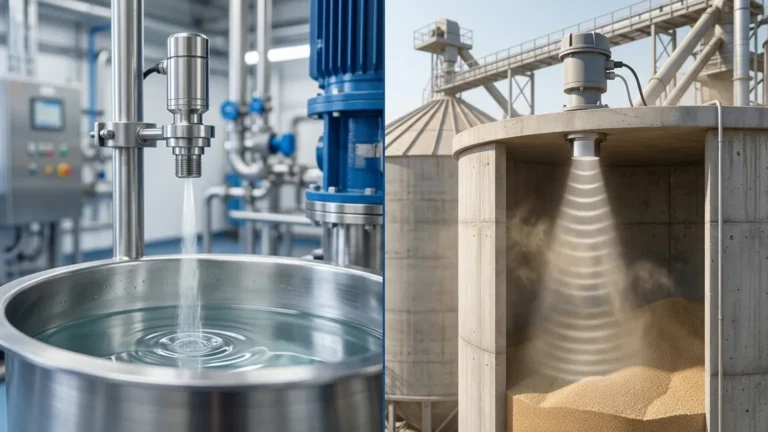
The versatility of ultrasonic technology allows it to be deployed across diverse sectors. Understanding the specific ultrasonic level sensor uses helps in determining if this technology is the right fit for a particular project.
1. Water and Wastewater Management
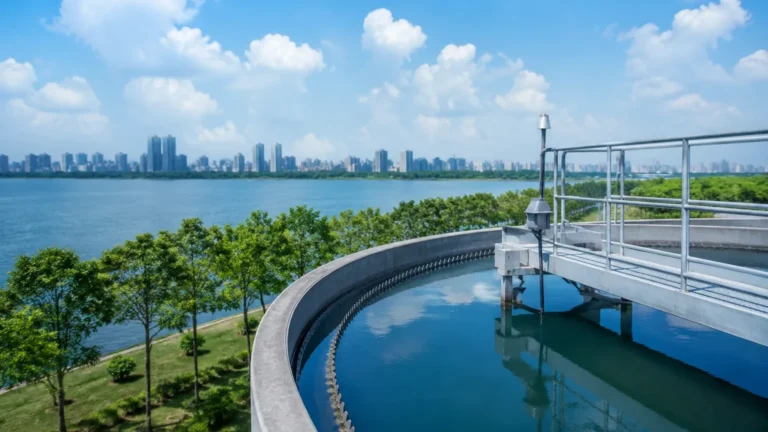
This is perhaps the most common application for ultrasonic sensors. Because the technology is non-contact, it is unaffected by the corrosive or viscous nature of raw sewage and wastewater.
* Sump and Lift Station Monitoring: Monitoring levels in wet wells to control pump cycles.
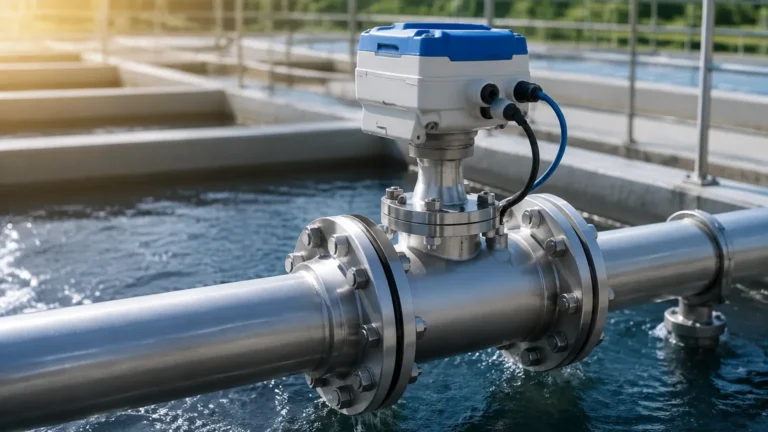
* Open Channel Flow: When used in conjunction with flumes or weirs, ultrasonic sensors measure the head height to calculate flow rates in discharge channels.
* Reservoir Level Control: Maintaining water levels in municipal storage tanks.
2. Chemical Processing
In environments where liquids are highly corrosive (acids, alkalis, or solvents), contact-based sensors like floating switches or pressure transmitters may degrade rapidly. Ultrasonic sensors, often housed in PVDF or PTFE (Teflon) bodies, provide a reliable alternative by remaining completely isolated from the medium.
* Chemical Storage Tanks: Monitoring inventory of reagents and process chemicals.
* Dosing Systems: Ensuring precise levels in mixing tanks for chemical treatment.
3. Food and Beverage Production
Hygiene is paramount in food processing. Non-contact measurement ensures that there is no risk of contamination from the sensor itself.
* Clean-in-Place (CIP) Systems: Monitoring levels of cleaning agents.
* Ingredient Storage: Measuring syrups, juices, or oils in stainless steel vessels.
* Waste Management: Monitoring organic waste collected during production.
4. Agriculture and Bulk Solids
While ultrasonic sensors are primarily used for liquids, they are also effective for certain bulk solids, provided the material surface is relatively flat and does not absorb sound.
* Grain Silos: Monitoring the fill level of small to medium-sized silos.
* Liquid Fertilizer Tanks: Tracking inventory for irrigation systems.
* Animal Feed Hoppers: Automating the replenishment of feed stocks.
5. Industrial Automation and Logistics
Beyond tank levels, ultrasonic sensors are utilized for distance detection and object positioning.
* Conveyor Monitoring: Detecting the presence or height of items on a production line.
* Roll Diameter Measurement: In paper or textile mills, measuring the diameter of a roll to control tension and speed.
Technical Selection Criteria
When specifying an ultrasonic level meter for an application, engineers must evaluate several technical parameters to ensure long-term reliability.
Selection Table: Key Specifications
| Parameter | Typical Range/Value | Engineering Consideration |
| :— | :— | :— |
| Measurement Range | 0.3m to 30m | Ensure the maximum range exceeds the tank height. |
| Dead Zone (Blanking) | 0.2m to 0.6m | The area directly below the sensor where measurement is impossible. |
| Beam Angle | 5° to 12° | Narrower beams are better for narrow tanks with internal obstructions. |
| Output Signal | 4-20mA, HART, RS485 | Compatibility with PLC/SCADA systems. |
| Operating Temperature | -40°C to +70°C | Ensure the sensor can handle ambient and process heat. |
| Housing Material | ABS, PVC, PVDF | Must be chemically compatible with the vapors in the tank. |
Installation Considerations
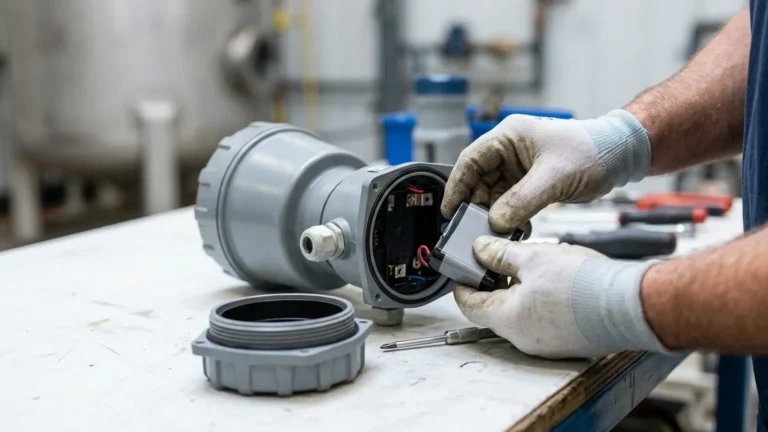
The performance of an ultrasonic sensor is heavily dependent on correct installation. Failure to follow these guidelines often results in "false echoes" or signal loss.
1. Avoid the Dead Zone: The sensor must be mounted high enough so that the maximum liquid level never enters the "dead zone" (also known as the blanking distance). If the liquid reaches this area, the sensor will provide an error or an incorrect reading.
2. Perpendicular Alignment: The transducer face must be perfectly parallel to the liquid surface. Even a slight tilt can cause the sound wave to reflect away from the sensor rather than back to it.
3. Clear Path (Beam Angle): The ultrasonic pulse spreads out in a cone shape. The path must be clear of internal obstructions such as ladders, heating coils, or agitators. If an obstruction is unavoidable, many Welk meters offer "false echo suppression" software to ignore these fixed signals.
4. Avoid the Inflow: Never mount the sensor directly above the point where liquid enters the tank. The turbulence and air bubbles created by the inflow will scatter the ultrasonic signal.
5. Stands and Nozzles: If mounting on a nozzle, ensure the nozzle is short and wide enough so that the beam does not hit the nozzle walls before exiting into the tank.
Limitations and Environmental Factors
While ultrasonic level sensor uses are diverse, the technology is not a "one-size-fits-all" solution. Certain environmental factors can interfere with sound wave propagation.
* Foam: Heavy, dense foam on the surface of a liquid acts as an acoustic insulator, absorbing the sound pulse rather than reflecting it. In such cases, radar or hydrostatic sensors may be more appropriate.
* Dust and Vapors: Extreme dust (in solids applications) or very thick steam/vapors can attenuate the signal. While ultrasonic sensors can handle moderate dust, radar is generally preferred for high-dust environments.
* Vacuum and Pressure: Sound requires a medium (air/gas) to travel. Therefore, ultrasonic sensors cannot function in a vacuum. High-pressure environments also change the density of the air, significantly affecting the speed of sound beyond the capabilities of standard temperature compensation.
* Surface Turbulence: Rapidly agitating liquids can scatter the signal. This can often be mitigated by using a "stilling well" (a vertical pipe that stabilizes the liquid surface for the sensor).
Frequently Asked Questions (FAQ)
Q: Can ultrasonic sensors measure the level of solids?
A: Yes, but with limitations. Solids like plastic pellets or grains can be measured, but the range is typically reduced by 50% compared to liquids because the uneven surface scatters the sound. Fine powders that create heavy dust during filling may also block the signal.
Q: How do I handle a tank with a lot of internal structures?
A: You should select a sensor with a narrow beam angle and utilize the "map" or "false echo suppression" feature in the transmitter's software. This allows the sensor to learn which echoes are from fixed structures and ignore them.
Q: Is it possible to use ultrasonic sensors in hazardous areas?
A: Yes, many Ultrasonic Level Meters are available with intrinsically safe (Ex ia) or flameproof (Ex d) ratings for use in explosive atmospheres, common in the oil and gas or chemical industries.
Q: What is the difference between an integrated and a remote ultrasonic sensor?
A: An integrated sensor has the transducer and the electronics in one housing. A remote system separates the transducer (mounted at the tank) from the controller (mounted at eye level or in a control room). Remote systems are useful for hazardous environments or when the tank top is difficult to access for configuration.
Conclusion
Ultrasonic level sensor uses span across nearly every modern industry, providing a reliable, non-contact method for monitoring inventory and controlling processes. By understanding the acoustic principles and environmental limitations of the technology, engineers can implement solutions that reduce maintenance costs and improve data accuracy. For specialized applications, manufacturers like Welk offer customized OEM/ODM services to ensure the instrumentation meets the exact requirements of the industrial environment.
When selecting your next level measurement solution, consider the physical properties of your medium and the geometry of your vessel to ensure that ultrasonic technology provides the precision your operation demands.