Ultrasonic Water Level Sensor Zigbee
Ultrasonic Water Level Sensor Zigbee: A Technical Guide to Wireless Level Monitoring
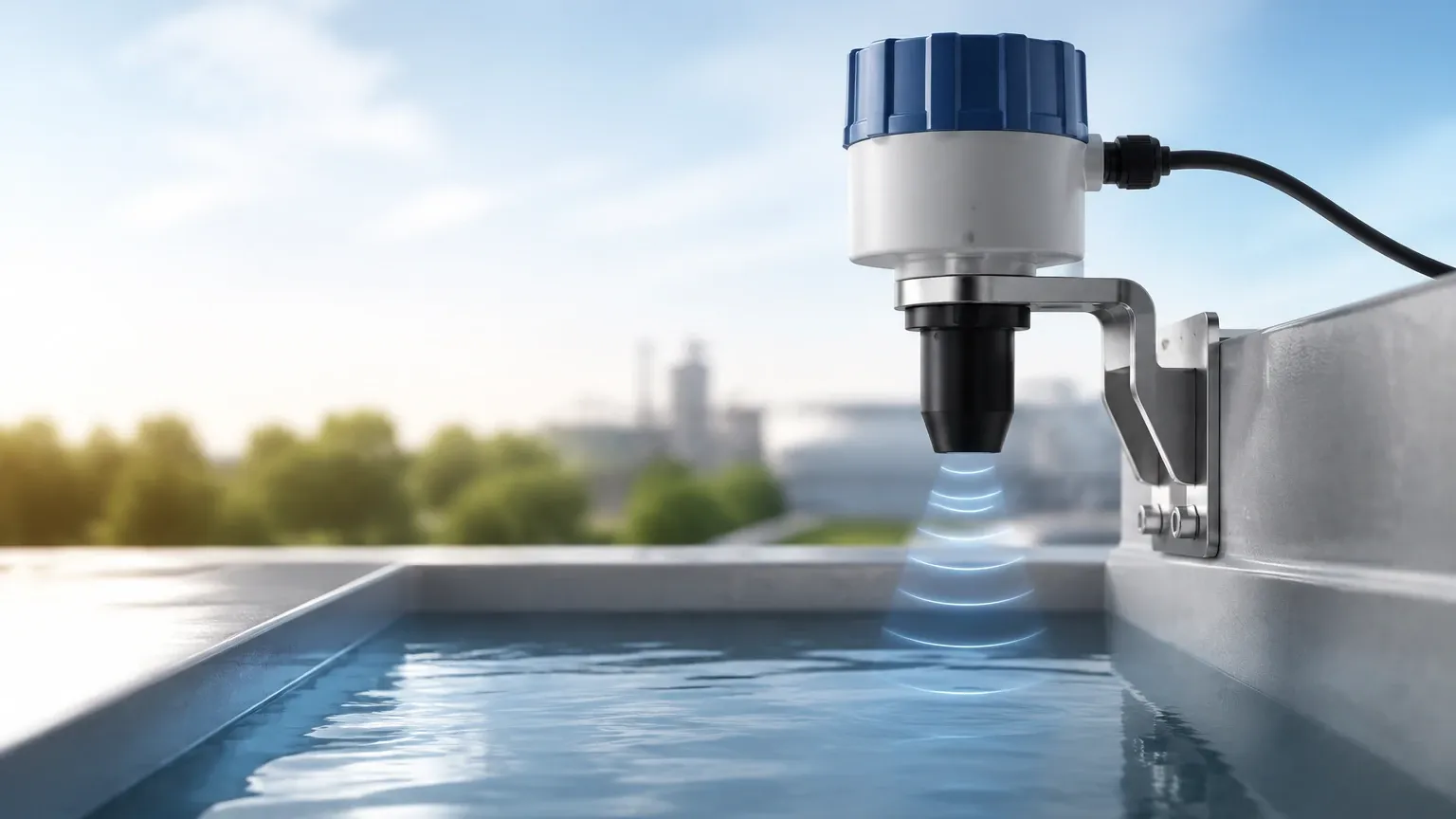
In the landscape of industrial automation and water management, the transition from wired to wireless infrastructure has significantly reduced installation costs and increased deployment flexibility. Among these technologies, the ultrasonic water level sensor zigbee has emerged as a specialized solution for remote monitoring, combining non-contact measurement precision with the low-power, mesh-networking capabilities of the Zigbee protocol. This guide explores the technical principles, selection criteria, and practical application of these instruments within professional process environments.
Understanding Ultrasonic Level Measurement Principles
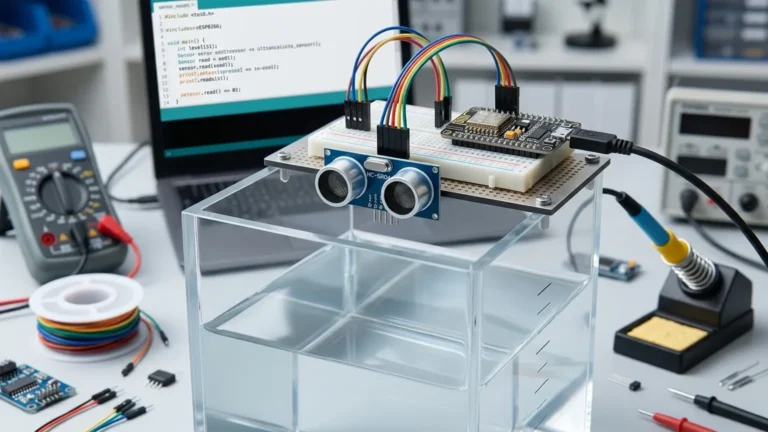
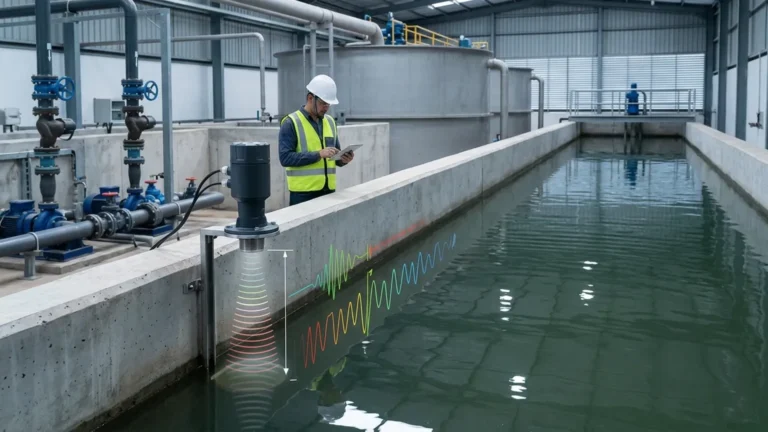
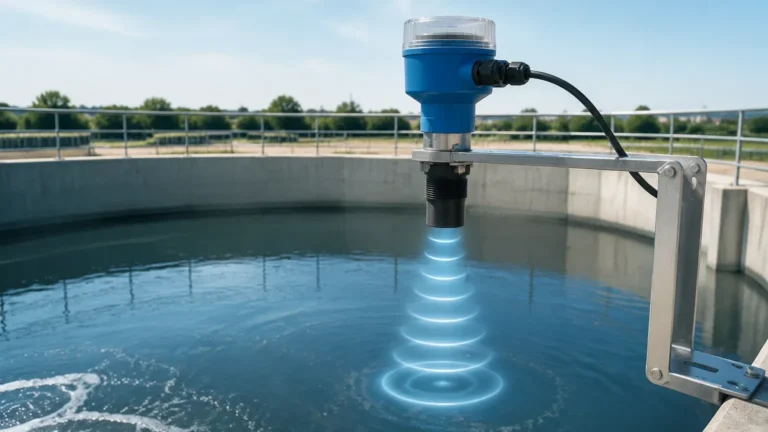
Before evaluating wireless communication protocols like Zigbee, it is essential to understand the core physics of the measurement. Ultrasonic level sensors operate on the "Time-of-Flight" (ToF) principle. The device's transducer emits a high-frequency acoustic pulse—typically between 20 kHz and 200 kHz—which travels through the air toward the target surface.
When the sound wave hits the surface of the water or liquid, a portion of the energy is reflected back to the sensor as an echo. The sensor’s internal processor calculates the distance to the surface using the formula:
Distance = (Speed of Sound × Time Delay) / 2
The speed of sound in air is approximately 343 meters per second at 20°C (68°F), but it is highly dependent on temperature. Professional Ultrasonic Level Meters incorporate integrated temperature sensors to compensate for these fluctuations, ensuring accuracy remains within ±0.25% to ±0.5% of the measured range.
The Dead Zone (Blocking Distance)
Every ultrasonic sensor has a "dead zone" or "blind spot" directly beneath the transducer face. This is the distance required for the transducer to stop vibrating from the transmission pulse before it can listen for the returning echo. For standard industrial sensors, this may range from 0.2 meters to 0.5 meters (approx. 8 to 20 inches). Understanding this limitation is critical for tank mounting to prevent false readings when the vessel is full.
The Role of Zigbee in Wireless Level Sensing
Zigbee is a wireless standard based on the IEEE 802.15.4 specification, designed for low-data-rate, low-power applications. In the context of an ultrasonic water level sensor zigbee, the protocol provides the communication bridge between the field instrument and the central gateway or SCADA system.
Key Advantages of Zigbee for Water Monitoring:
1. Mesh Networking: Unlike Bluetooth or standard Wi-Fi, Zigbee devices can form a mesh network. Each sensor can act as a router, passing data from more distant sensors back to the gateway. This extends the effective range in large facilities or water treatment plants.
2. Low Power Consumption: Zigbee is designed for battery-operated devices. A sensor can remain in a "sleep" state, waking up only to perform a measurement and transmit the data, allowing for battery lives of 2 to 5 years depending on the reporting interval.
3. Scalability: A single Zigbee gateway can theoretically support over 65,000 nodes, making it ideal for monitoring large numbers of distributed assets like manholes, irrigation channels, or chemical storage tanks.
4. Security: Zigbee utilizes 128-bit AES encryption, providing a secure layer for industrial data transmission.
Key Evaluation Criteria for Zigbee Ultrasonic Sensors
Selecting the right sensor requires a balance between the acoustic performance of the transducer and the reliability of the Zigbee radio link. Engineers should evaluate the following parameters:
1. Measurement Range
Standard ultrasonic sensors for water applications typically offer ranges of 5m, 10m, or 15m. For deep wells or large reservoirs, specialized high-power transducers are required. It is a best practice to select a sensor with a range at least 20% greater than the maximum expected distance to account for signal attenuation.
2. Beam Angle
The ultrasonic pulse is not a laser; it spreads out in a cone shape. A narrower beam angle (e.g., 5° to 10°) is preferable for narrow tanks or vessels with internal obstructions like ladders or agitators. A wider beam may cause interference by reflecting off the tank walls.
3. Environmental Protection (IP Rating)
Since these sensors are often used in wastewater or outdoor environments, an IP67 or IP68 rating is mandatory. This ensures the device is dust-tight and protected against immersion in water. For corrosive chemical tanks, the transducer face should be coated with PVDF or PTFE.
4. Zigbee Version and Compatibility
Ensure the sensor supports Zigbee 3.0, which offers better interoperability between different manufacturers. Confirm that the sensor's data profile is compatible with your existing gateway (e.g., a Modbus-to-Zigbee gateway or a proprietary industrial hub).
Technical Selection Table
| Feature | Industrial Zigbee Ultrasonic Sensor | Standard Wired Ultrasonic Meter |
| :— | :— | :— |
| Power Source | Internal Battery / Solar Panel | 24V DC / 110-220V AC Loop Powered |
| Data Output | Zigbee (Wireless Mesh) | 4-20mA, RS485 (Modbus), HART |
| Installation Cost | Low (No cabling required) | High (Trenching and wiring) |
| Update Rate | Periodic (e.g., every 15 mins) | Continuous / Real-time |
| Typical Range | 0.2m to 10m | 0.2m to 30m+ |
| Maintenance | Battery replacement required | Minimal (Solid-state) |
| Network Topology | Mesh or Star | Point-to-Point (Wired) |
Installation Considerations and Best Practices
To achieve reliable data from an ultrasonic water level sensor zigbee, proper physical installation is as important as the wireless configuration.
Mounting Position
* Perpendicularity: The sensor must be mounted perfectly perpendicular to the water surface. An angle deviation of even 2-3 degrees can cause the reflected signal to miss the transducer, leading to "Loss of Echo" errors.
* Wall Clearance: Avoid mounting the sensor too close to the tank wall. A general rule is to maintain a distance from the wall equal to at least 1/10th of the total tank height to avoid side-lobe interference.
* Inlet Avoidance: Do not mount the sensor directly above the water inlet. Turbulence and falling water will scatter the ultrasonic signal and create significant noise.
Signal Path Obstructions
Ensure the path between the sensor and the water surface is clear of pipes, brackets, or cooling coils. If obstructions are unavoidable, many advanced Ultrasonic Level Meters offer "False Echo Suppression" software, allowing the user to map out and ignore static reflections.
Zigbee Signal Strength
While Zigbee is a mesh protocol, the initial placement should consider the distance to the nearest router or gateway. Metal tank walls can act as a Faraday cage, blocking wireless signals. In such cases, an external antenna or a sensor with a remote Zigbee module mounted outside the tank may be necessary.
Limitations and Environmental Factors
Ultrasonic technology is highly effective for water, but it has specific physical limitations that engineers must recognize:
1. Vapor and Steam: Heavy steam or high concentrations of chemical vapors can change the density of the air, altering the speed of sound and causing measurement errors. In these environments, Radar (FMCW) technology is often preferred.
2. Surface Foam: Light, airy foam can absorb the ultrasonic pulse rather than reflecting it. If the water surface is consistently covered in thick foam, the sensor may report a "Loss of Echo."
3. Vacuum/Pressure: Ultrasonic sensors require an air medium to transmit sound. They cannot function in a vacuum. High-pressure environments also affect the speed of sound and the mechanical damping of the transducer.
4. Turbulence: Extreme surface agitation can scatter the sound waves. While software filtering can smooth out these readings, significant turbulence will reduce the effective maximum range of the sensor.
Frequently Asked Questions (FAQs)
Q: How long does the battery last on a Zigbee ultrasonic sensor?
A: Battery life depends on the measurement frequency. At a 15-minute reporting interval, most industrial units last 2 to 3 years. Increasing the interval to once per hour can extend life to over 5 years.
Q: Can Zigbee signals pass through concrete manhole covers?
A: Concrete significantly attenuates 2.4 GHz signals. For underground water or sewer monitoring, it is common to use a sensor with an antenna that is integrated into a specialized manhole cover or to use a lower-frequency protocol like LoRaWAN, though Zigbee can work if a router is placed nearby above ground.
Q: Is it possible to use these sensors for chemical level monitoring?
A: Yes, provided the transducer housing is made of chemically resistant materials like PVDF. However, you must verify that the chemical does not emit vapors that would interfere with the speed of sound.
Q: What is the maximum distance between a Zigbee sensor and the gateway?
A: In an open line-of-sight environment, the range is typically 75 to 100 meters (250 to 330 feet). In industrial settings with obstructions, this drops to 20-30 meters. However, the mesh capability allows you to extend this indefinitely by adding intermediate router nodes.
Conclusion
The integration of Zigbee technology into ultrasonic level measurement provides a cost-effective and scalable solution for modern water management. By understanding the acoustic requirements of the application and the networking characteristics of the Zigbee protocol, engineers can deploy robust monitoring systems that provide critical data without the constraints of traditional wiring. For projects requiring high accuracy and industrial-grade durability, selecting professional-grade Ultrasonic Level Meters remains the standard for ensuring operational continuity and data integrity.