Amperometric
Amperometric
In the field of industrial process control and liquid analysis, amperometric measurement stands as a cornerstone technology for determining the concentration of specific dissolved gases and ions. While physical parameters such as pressure, temperature, and level are critical for vessel management, chemical parameters provided by amperometric sensors ensure the quality, safety, and regulatory compliance of the process media. This article explores the principles, applications, and engineering considerations of amperometric technology, particularly as it relates to industrial water treatment and chemical processing environments where integrated instrumentation is essential.
Fundamentals of Amperometric Measurement Principles
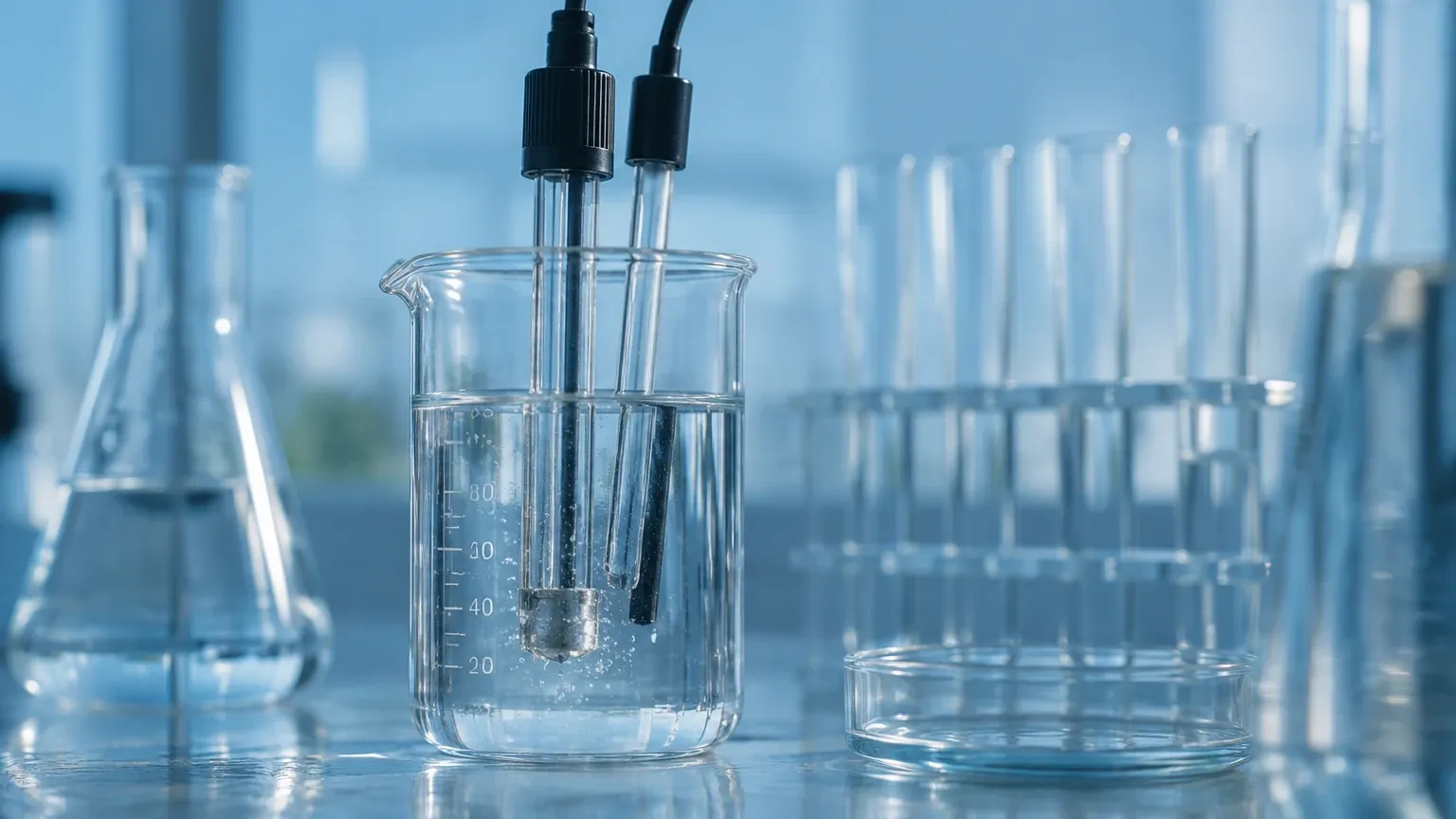
Amperometry is an electrochemical technique that measures the electric current produced by the oxidation or reduction of a chemical species at an electrode surface. Unlike potentiometric methods (such as pH measurement), which measure a voltage potential under zero-current conditions, amperometric sensors apply a constant electrical potential to a working electrode to drive a specific electrochemical reaction.
The Electrochemical Process
The fundamental principle relies on Faraday’s Law, which states that the current produced is directly proportional to the rate of the reaction, which in turn is proportional to the concentration of the target analyte. In a typical industrial sensor, the target molecule (such as Dissolved Oxygen, Chlorine, or Ozone) diffuses through a semi-permeable membrane and reaches the surface of a working electrode (cathode or anode).
1. Diffusion: The analyte moves from the bulk liquid through a membrane or a stagnant layer to the electrode.
2. Reaction: At the electrode, the analyte gains or loses electrons. For example, in oxygen measurement: $O_2 + 2H_2O + 4e^- \rightarrow 4OH^-$.
3. Current Generation: The flow of electrons creates a measurable current, typically in the nano-ampere (nA) or micro-ampere (µA) range.
Two-Electrode vs. Three-Electrode Systems
Traditional amperometric sensors often use a two-electrode system consisting of a working electrode and a reference/counter electrode. However, for higher precision and stability in varying water conditions, a three-electrode system is preferred. The third electrode (the counter electrode) carries the current, while the reference electrode maintains a stable potential, preventing the drift often associated with electrode polarization.
Key Components of Amperometric Sensors
To function reliably in harsh industrial environments, an amperometric sensor is comprised of several critical sub-assemblies:
* The Membrane: Usually made of Teflon (PTFE) or similar fluoropolymers, the membrane is selective. It allows gases or specific ions to pass while blocking solids, large molecules, and liquid water. The thickness of this membrane determines the response time and the sensitivity of the sensor.
* The Electrolyte: A conductive solution (often potassium chloride or an acidic buffer) that facilitates the movement of ions between the electrodes.
* Electrodes: Gold and platinum are commonly used for the working electrode due to their chemical inertness and catalytic properties. Silver/silver chloride (Ag/AgCl) is the standard for reference electrodes.
* Temperature Compensator: Since diffusion rates and chemical reaction kinetics are highly temperature-dependent, an integrated PT100 or PT1000 thermistor is required to normalize the readings to a standard temperature (typically 25°C).
Industrial Applications and Target Analytes
Amperometric sensors are indispensable in industries ranging from municipal water treatment to food and beverage production. Their ability to provide real-time, continuous data makes them superior to manual titration for automated dosing systems.
Disinfection Monitoring (Chlorine and Ozone)
In water treatment, maintaining a residual disinfectant level is vital for preventing microbial regrowth. Amperometric sensors measure "Free Chlorine" (hypochlorous acid and hypochlorite ions) or "Total Chlorine." Unlike colorimetric methods that require reagents, amperometric sensors provide a continuous signal for PID control of dosing pumps.
Dissolved Oxygen (DO) Control
In wastewater treatment, specifically in aeration basins, DO levels must be strictly controlled to support aerobic bacteria while minimizing energy costs from blowers. Amperometric DO sensors (often called Clark electrodes) are used to maintain levels typically between 1.0 mg/L and 3.0 mg/L.
Hydrogen Peroxide and Peracetic Acid
In the food industry and Clean-in-Place (CIP) systems, amperometric sensors monitor the concentration of oxidizing agents like $H_2O_2$ to ensure effective sterilization without leaving harmful residues on equipment.
Selection Criteria and Engineering Table
When specifying an amperometric sensor, engineers must evaluate the chemical compatibility of the process and the physical constraints of the installation. The following table provides a general guideline for selecting sensor types based on common industrial requirements.
| Parameter | Measurement Range | Typical Accuracy | Pressure Limit | Temperature Range |
| :— | :— | :— | :— | :— |
| Free Chlorine | 0–20 mg/L | ±2% or 0.01 mg/L | 1.0 bar (14.5 psi) | 0 to 45°C |
| Dissolved Oxygen | 0–20 mg/L or 0–200% sat | ±1% of reading | 3.0 bar (43.5 psi) | -5 to 50°C |
| Ozone ($O_3$) | 0–5.0 mg/L | ±1% or 0.005 mg/L | 0.5 bar (7.2 psi) | 0 to 40°C |
| Hydrogen Peroxide | 0–2000 mg/L | ±2% of range | 1.0 bar (14.5 psi) | 5 to 45°C |
Installation and Practical Considerations
The performance of an amperometric sensor is heavily influenced by how it is installed within the process flow. Unlike level sensors, which can often be mounted at the top of a tank, amperometric sensors require direct and consistent contact with the liquid media.
Flow Dependency
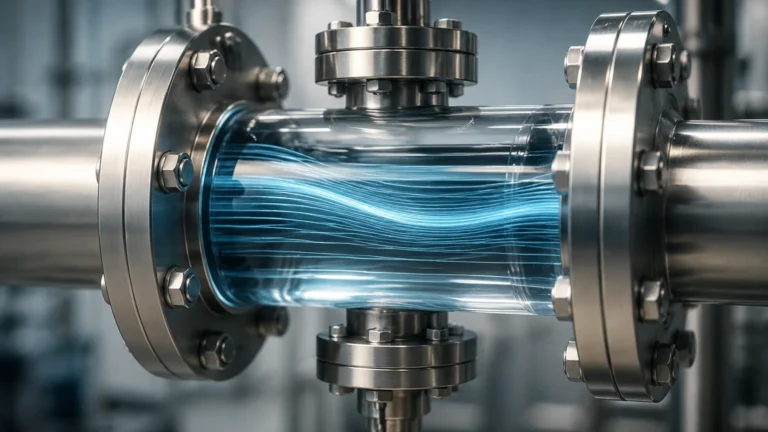
One of the most critical factors in amperometry is flow velocity. Because the sensor consumes the analyte at the electrode surface, a stagnant liquid will result in a "depletion zone," leading to artificially low readings. Most sensors require a minimum flow velocity (typically 0.15 m/s to 0.3 m/s) across the membrane. In many applications, this is achieved by installing the sensor in a dedicated flow cell with a regulated bypass line.
Positioning and Orientation
Sensors should be installed at an angle (usually 15° to 90° from the horizontal) to prevent air bubbles from becoming trapped against the membrane. Air bubbles act as an insulator, blocking the diffusion of the analyte and causing erratic signals. Furthermore, the sensor must always remain submerged; if the membrane dries out, the electrolyte can crystallize, damaging the electrode surface.
Integration with Level Systems
In complex process tanks, chemical analysis is rarely performed in isolation. For instance, in a chemical storage tank, an amperometric sensor might monitor concentration while a radar or ultrasonic meter monitors the volume. For comprehensive liquid management solutions, engineers often consult the Main Page to select complementary level measurement hardware that can withstand the same corrosive environments as the analytical sensors.
Limitations and Common Challenges
While highly effective, amperometric technology has specific limitations that must be addressed during the design phase:
1. Membrane Fouling: In wastewater or oily applications, fats, oils, and greases (FOG) can coat the membrane, preventing diffusion. Regular cleaning or the use of automated cleaning systems (such as water jets or air blasts) is necessary.
2. pH Sensitivity: The speciation of certain chemicals is pH-dependent. For example, free chlorine exists as hypochlorous acid (HOCl) and hypochlorite ($OCl^-$). Most amperometric chlorine sensors only measure HOCl. If the process pH fluctuates, the sensor reading will change even if the total chlorine remains constant. In such cases, pH compensation via a secondary probe is mandatory.
3. Chemical Interference: Strong oxidants can interfere with each other. An ozone sensor may show a positive bias if high levels of chlorine are present. Engineers must verify the cross-sensitivity of the chosen sensor against all chemicals present in the process stream.
4. Electrolyte Depletion: The electrolyte is a consumable. Depending on the concentration of the analyte and the temperature, the electrolyte may need replenishment every 3 to 12 months.
Maintenance and Calibration Protocols
To ensure long-term accuracy, a structured maintenance schedule is required.
* Zero-Point Calibration: This is performed using an analyte-free medium (e.g., nitrogen-purged water for DO sensors or dechlorinated water for chlorine sensors). It accounts for any background electronic noise or residual current.
* Slope Calibration: This is typically a single-point calibration performed against a laboratory reference method, such as a DPD (N,N-diethyl-p-phenylenediamine) colorimetric test for chlorine or the Winkler titration for oxygen.
* Membrane Replacement: Membranes should be inspected for tears or scaling. A damaged membrane can lead to electrolyte leakage or electrode poisoning, which often requires expensive factory refurbishment.
Synergies in Industrial Automation
Modern industrial plants utilize a multi-layered approach to instrumentation. Amperometric sensors provide the "quality" data, while level measurement instruments provide the "quantity" data. For example, in a cooling tower, an amperometric sensor ensures that biocides are at the correct concentration to prevent Legionella, while a hydrostatic level transmitter ensures the basin does not run dry, which would damage the pumps.
Reliable level measurement technologies—including radar, ultrasonic, and magnetic gauges—are essential for the safe operation of the tanks where these chemical reactions occur. Reviewing the available options on the Main Page allows engineers to source robust level transmitters that integrate seamlessly with the PLC or SCADA systems that also process the amperometric signals.
Frequently Asked Questions (FAQs)
Q: How often should I calibrate my amperometric sensor?
A: Calibration frequency depends on the stability of the process and the required accuracy. In stable municipal water applications, once a month may suffice. In industrial wastewater with high fouling potential, weekly or even daily verification against a lab standard may be necessary.
Q: Can amperometric sensors be used in pressurized pipes?
A: Yes, but only within their rated pressure limits. Most standard sensors are rated for 0.5 to 3.0 bar (approx. 7 to 43 psi). For high-pressure applications, specialized flow cells or pressure-compensated sensors are required to prevent the membrane from rupturing or the electrolyte from being forced out.
Q: What is the difference between an amperometric sensor and an ORP sensor?
A: An ORP (Oxidation-Reduction Potential) sensor measures the overall "activity" or oxidative capacity of the water in millivolts. It is non-specific. An amperometric sensor is selective; it measures the actual concentration (mg/L) of a specific chemical like free chlorine, regardless of other redox-active species, provided the pH is stable or compensated.
Q: Why is my sensor reading dropping over time even though the chemical dosing hasn't changed?
A: This is usually due to membrane fouling or electrolyte exhaustion. If the flow rate has decreased below the minimum threshold, the sensor will also show a lower-than-actual reading due to the formation of a depletion layer at the electrode.
Conclusion
Amperometric measurement is a sophisticated yet essential tool for modern industrial liquid analysis. By understanding the underlying electrochemical principles and adhering to strict installation and maintenance guidelines, engineers can achieve precise control over chemical dosing and process quality. When paired with reliable physical measurement tools, such as the level measurement solutions found on the Main Page, amperometric sensors form the backbone of a safe and efficient industrial automation strategy.