Medidor De Coriolis
Medidor De Coriolis
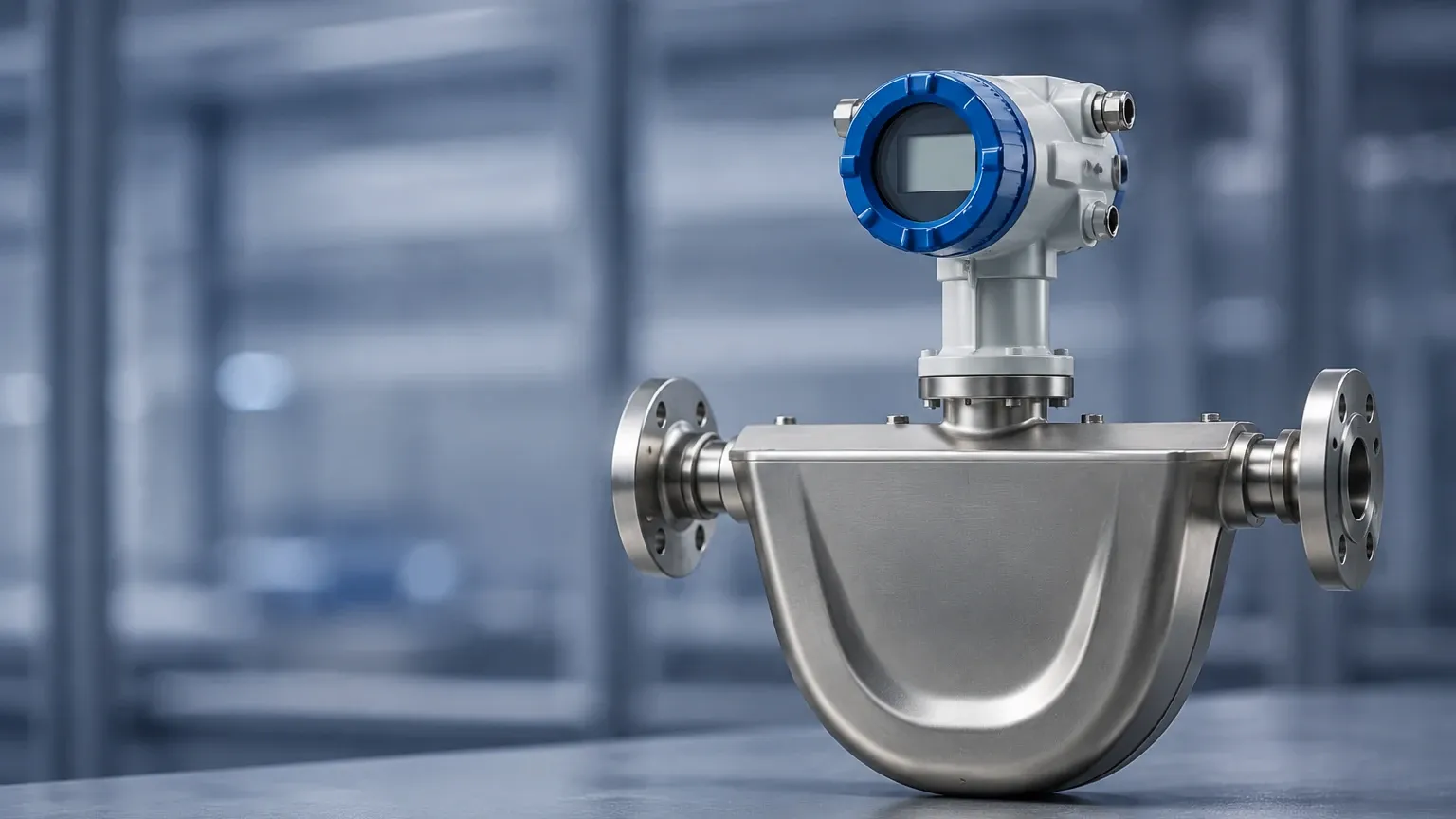
In the landscape of industrial process control, the medidor de Coriolis (Coriolis flowmeter) represents one of the most significant advancements in fluid measurement technology. Unlike volumetric flowmeters that measure the space a fluid occupies, a Coriolis meter measures mass flow directly. This distinction is critical in B2B sectors such as chemical processing, oil and gas, and food production, where the mass of a substance determines the chemical reaction stoichiometry or the commercial value of a product.
While industrial facilities often focus on level measurement—utilizing technologies like radar or ultrasonic sensors—the integration of mass flow and density data provided by a medidor de Coriolis is essential for comprehensive process automation. For engineers seeking a complete suite of measurement solutions, including advanced level sensors and flow integration, the Main Page of specialized manufacturers offers a broad technical overview of available instrumentation.
The Physics of Coriolis Measurement
The fundamental principle of a medidor de Coriolis is based on the Coriolis effect, an inertial force described by Gustave-Gaspard Coriolis in the 19th century. In an industrial meter, this effect is harnessed by inducing a controlled vibration in the flow tubes through which the fluid passes.
Oscillation and Phase Shift
When there is no flow, the tubes (typically U-shaped or straight) vibrate in a uniform, symmetrical manner. However, when a fluid moves through these vibrating tubes, the Coriolis force causes the tubes to twist. The inlet side of the tube resists the upward motion, while the outlet side is pushed further. This resulting twist is known as a phase shift.
The magnitude of this phase shift is directly proportional to the mass flow rate of the fluid. Because the measurement is based on inertia and mass, it is independent of the fluid’s temperature, pressure, viscosity, and conductivity. This makes the medidor de Coriolis exceptionally versatile for measuring everything from cryogenic liquids to high-viscosity resins.
Density and Temperature Measurement
Beyond mass flow, these instruments are multi-variable. The resonant frequency at which the tubes vibrate changes depending on the density of the fluid inside them. A denser fluid increases the mass of the vibrating system, lowering the frequency. By measuring this frequency, the meter provides real-time density data. Furthermore, an internal Resistance Temperature Detector (RTD) monitors the tube temperature to compensate for changes in material elasticity, providing a third process variable: temperature.
Synergies Between Flow and Level Measurement
In practical engineering, flow and level measurement are rarely isolated. For instance, in hydrostatic level measurement, the accuracy of the level reading depends entirely on knowing the exact density of the liquid. If the density changes due to temperature fluctuations or concentration shifts, a standard hydrostatic transmitter will report an incorrect level.
By pairing a hydrostatic level transmitter with a medidor de Coriolis, the system can use the meter's real-time density output to dynamically calibrate the level calculation. This level of integration is a hallmark of modern industrial automation. For technical specifications on how different sensors interact within a process loop, reviewing the Main Page of an instrument provider can clarify the selection of compatible hardware.
Key Evaluation Criteria for Selection
Selecting a medidor de Coriolis requires a detailed analysis of the process conditions. Unlike simpler flowmeters, the high precision of Coriolis technology necessitates careful matching of the meter’s physical design to the application.
Tube Geometry
* U-Shaped Tubes: These are the most common and offer the highest sensitivity and widest turndown ratios. They are ideal for low-flow applications but can be difficult to drain in sanitary processes.
* Straight Tubes: These are preferred for fluids that are prone to clogging or for applications requiring low pressure drops. They are also easier to clean (CIP/SIP) in the food and beverage industry.
Material Compatibility
Standard meters are often constructed from 316L stainless steel. However, for corrosive chemicals like hydrochloric acid or high-salinity brines, exotic materials such as Hastelloy C-22 or Tantalum are required to prevent premature failure of the vibrating tubes.
Pressure Drop
Because the fluid must often be diverted into two smaller tubes or through a curved path, Coriolis meters can introduce a pressure drop. Engineers must ensure that the available system pressure can accommodate the meter’s requirements, especially when dealing with high-viscosity liquids.
Technical Selection Table
| Feature | U-Tube Design | Straight Tube Design | Dual Tube Configuration |
| :— | :— | :— | :— |
| Sensitivity | High | Moderate | Very High |
| Pressure Drop | Moderate to High | Low | Moderate |
| Cleanability | Difficult (Traps fluid) | Excellent (Self-draining) | Moderate |
| Vibration Resistance | Good | Moderate | Excellent (Balanced) |
| Typical Accuracy | 0.05% to 0.1% | 0.1% to 0.2% | 0.05% |
| Installation Footprint | Large (Vertical depth) | Compact (Inline) | Moderate |
Installation Considerations and Best Practices
To maintain the high accuracy (often ±0.05% of rate) associated with a medidor de Coriolis, installation must follow strict engineering guidelines.
Vibration Isolation
Since the meter operates on the principle of controlled vibration, external mechanical vibrations from pumps or heavy machinery can interfere with the sensor's readings. It is essential to use robust piping supports on both the upstream and downstream sides of the meter. Flexible connectors are sometimes used, but the meter itself must be rigidly mounted to a stable structure.
Orientation for Fluid Phases
* Liquids: The meter should ideally be installed in a "flag" position (vertical flow upwards) to ensure the tubes remain full and to prevent the accumulation of air bubbles.
* Gases: For gas measurement, the meter is often installed with the tubes pointing upwards (if U-shaped) to allow any condensed liquids to drain out of the sensor.
Zero Calibration
A "zero check" is the most critical step after installation. This must be performed under actual process conditions (temperature and pressure) with the tubes completely full of fluid but with zero flow. Any residual stress from the piping can affect the zero point and, consequently, the accuracy of the entire flow range.
Limitations and Practical Risks
While the medidor de Coriolis is highly accurate, it is not a universal solution for every problem.
1. Entrained Gas: The presence of air bubbles in a liquid (two-phase flow) can dampen the tube vibration, leading to a "stalling" of the electronics or significant measurement errors. Advanced digital signal processing (DSP) in modern meters has mitigated this, but it remains a risk in applications like tanker unloading.
2. Initial Cost: Coriolis meters are among the most expensive flow measurement technologies. The ROI must be justified by the need for high accuracy, mass measurement, or the ability to measure multiple variables simultaneously.
3. Size and Weight: For pipe diameters above 250 mm (approx. 10 inches), Coriolis meters become extremely heavy and bulky, often requiring specialized structural supports and significantly increasing installation costs.
Frequently Asked Questions (FAQ)
Q: Can a medidor de Coriolis measure the flow of non-conductive liquids?
A: Yes. Unlike electromagnetic flowmeters, Coriolis meters do not rely on electrical conductivity. They work perfectly with hydrocarbons, deionized water, and other non-conductive fluids.
Q: How often does a Coriolis meter require recalibration?
A: Because there are no moving parts subject to wear (like bearings in a turbine meter), the calibration is very stable. Many industries perform a "verification" check annually, but full factory recalibration may only be needed every 3 to 5 years depending on the criticality of the process.
Q: Does the viscosity of the fluid affect the accuracy?
A: Generally, no. The mass measurement is independent of viscosity. However, extremely high viscosity will increase the pressure drop across the meter, which must be accounted for during the pump sizing phase.
Q: Can it measure the level of a tank directly?
A: No, it is an inline flow and density meter. However, as mentioned previously, its density data is vital for correcting the readings of level measurement instruments. For more information on dedicated level sensors, visit the Main Page.
Conclusion
The medidor de Coriolis is an indispensable tool for high-precision industrial processes. By providing direct mass flow, density, and temperature in a single device, it simplifies the instrumentation architecture while increasing data reliability. When integrated with robust level measurement strategies, these meters allow for unparalleled control over fluid inventory and process efficiency. Engineers should always consult comprehensive technical resources and manufacturer data on the Main Page to ensure that the chosen instrumentation meets the specific chemical and mechanical demands of their application.