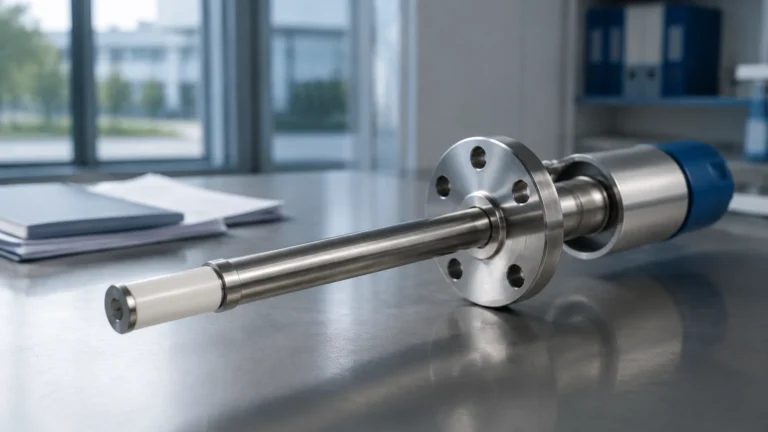
Fmx21
Fmx21
In the field of industrial level measurement, hydrostatic pressure remains one of the most reliable and widely adopted methods for monitoring liquid levels in tanks, wells, and open bodies of water. The fmx21 represents a specialized class of submersible level transmitters designed to provide high-precision measurements even in challenging environmental conditions. As a hydrostatic probe, its performance is dictated by the physics of fluid pressure, making it a staple in water treatment, environmental monitoring, and chemical processing.
Understanding the technical nuances of the fmx21 is essential for engineers and project managers who require long-term stability and resistance to corrosive media. This guide examines the measurement principles, technical specifications, installation requirements, and selection criteria necessary to integrate these sensors into industrial automation systems. For those seeking a broader overview of industrial instrumentation, the Main Page provides a gateway to various measurement technologies and support.
Understanding the Hydrostatic Measurement Principle
The fmx21 operates on the hydrostatic principle, which states that the pressure at a specific point within a static liquid is proportional to the height of the liquid column above that point. This relationship is mathematically expressed as:
P = ρ · g · h
Where:
* P is the hydrostatic pressure (measured in bar or pascals).
* ρ (rho) is the density of the liquid (kg/m³).
* g is the acceleration due to gravity (approximately 9.81 m/s²).
* h is the height of the liquid column (meters).
The fmx21 probe is submerged to the bottom of the vessel or well. A pressure-sensitive diaphragm, typically made of high-purity ceramic or stainless steel, detects the weight of the liquid. To ensure accuracy, the sensor must account for atmospheric pressure acting on the surface of the liquid. This is achieved through a ventilation capillary tube integrated into the suspension cable, which allows the internal side of the sensor diaphragm to "breathe" and reference the ambient air pressure. By neutralizing the atmospheric component, the sensor provides a true reading of the liquid level based solely on the hydrostatic head.
Technical Specifications and Design Features
The fmx21 is engineered for durability, often featuring a robust housing and specialized materials to withstand immersion. The choice of materials is critical for ensuring compatibility with the process media.
Sensor Diaphragm Materials
Most high-end hydrostatic probes like the fmx21 utilize a ceramic cell (typically 99.9% Al2O3). Ceramic is preferred in many B2B applications because it is chemically inert, highly resistant to abrasion, and capable of handling significant overpressure without permanent deformation. For specific applications involving heavy oils or specialized chemicals, stainless steel diaphragms (e.g., 316L or Hastelloy) may be used.
Cable and Housing
The cable serves both as the mechanical support and the signal transmission line. Common materials include:
* Polyethylene (PE): Suitable for standard water and wastewater applications.
* Fluorinated Ethylene Propylene (FEP): Recommended for aggressive chemicals and higher temperature ranges.
* Polyurethane (PUR): Offers excellent mechanical strength and flexibility for deep-well installations.
Signal Output
The fmx21 typically provides a 4-20mA analog signal, often with HART (Highway Addressable Remote Transducer) protocol capabilities. This allows for remote configuration, diagnostics, and integration into digital control systems such as PLC or SCADA networks.
Selection Criteria and Practical Selection Table
Choosing the correct fmx21 configuration requires a detailed analysis of the process environment. Failure to account for fluid density or chemical compatibility can lead to measurement errors or premature sensor failure.
| Application Parameter | Recommended Specification | Consideration |
| :— | :— | :— |
| Potable Water | Stainless steel housing, PE cable | Ensure NSF or equivalent food-grade certifications. |
| Wastewater/Sewage | Ceramic diaphragm, PUR/FEP cable | Resistance to H2S and organic solvents is vital. |
| Seawater/Brine | Plastic or CuNi housing, FEP cable | Standard stainless steel may suffer from pitting corrosion. |
| Deep Wells | High tensile strength cable, PUR | Account for cable stretch in very deep installations (>100m). |
| Chemical Storage | Hastelloy or Ceramic, FEP cable | Verify chemical compatibility charts for the specific acid/base. |
When evaluating these options, referring to the Main Page can help in identifying the specific sensor accessories required for different industrial environments.
Installation and Commissioning Best Practices
Proper installation is the most significant factor in the longevity of an fmx21 probe. Because the sensor is submerged, it is susceptible to mechanical stress and electrical interference.
Mechanical Mounting
* Stilling Wells: In tanks with agitators or high turbulence, the probe should be installed inside a stilling well (a perforated pipe). This prevents the probe from swinging, which could damage the cable or cause erratic readings.
* Suspension: The probe should be suspended using a dedicated mounting clamp that grips the cable without crushing the internal ventilation tube. Never allow the probe to rest directly on the floor of a tank where silt and sediment can accumulate and block the diaphragm.
* Anchor Weights: For deep-water applications or areas with flow, additional weights can be attached to the probe to ensure it remains vertical.
Electrical and Atmospheric Connection
* Ventilation: The ventilation tube in the cable must remain unobstructed. It is recommended to use a junction box with a GORE-TEX or similar breathable membrane that allows air pressure equalization while blocking moisture entry.
* Surge Protection: Since fmx21 probes are often used in outdoor wells or large tanks, they are vulnerable to lightning strikes. Installing a surge arrester in the signal loop is a standard engineering precaution.
Calibration and Density Adjustment
Since the sensor measures pressure, any change in the liquid's density will affect the level reading. If the fmx21 is calibrated for water (ρ = 1.0) but used in a salt solution (ρ = 1.2), the indicated level will be 20% higher than the actual level. Modern HART-enabled probes allow for density compensation factors to be programmed directly into the transmitter.

Limitations and Operational Challenges
While the fmx21 is a versatile tool, it is not a universal solution for every level measurement task. Engineers must be aware of its inherent limitations:
1. Density Fluctuations: In processes where the liquid density changes significantly due to temperature shifts or chemical concentration variations, hydrostatic measurement will lose accuracy unless real-time density compensation is applied.
2. Pressurized Tanks: The standard fmx21 is designed for atmospheric (open) vessels. In a pressurized tank, the sensor would measure the sum of the liquid head and the gas blanket pressure, leading to incorrect readings. For pressurized vessels, differential pressure transmitters are required.
3. Sedimentation: In applications like mining or wastewater primary treatment, heavy solids can settle around the sensor. This can insulate the diaphragm from the true pressure or cause physical damage.
4. Mechanical Damage: The diaphragm is a precision component. Cleaning the sensor with sharp objects or high-pressure water jets can rupture the diaphragm, destroying the unit.
Comparison with Alternative Technologies
In the B2B procurement process, the fmx21 is often compared against ultrasonic and radar level meters.
* Vs. Ultrasonic: Ultrasonic sensors are non-contact, which is an advantage for corrosive or coating liquids. However, they struggle with foam, dust, and vapor. The fmx21 is unaffected by surface conditions like foam.
* Vs. Radar: Radar is highly accurate and works in vacuum or high-pressure conditions. However, radar is significantly more expensive. The fmx21 offers a more cost-effective solution for deep-well and simple water storage applications where contact with the media is permissible.
Frequently Asked Questions (FAQs)
Q: How often should the fmx21 be calibrated?
A: In stable water applications, an annual check is usually sufficient. In corrosive or high-fouling environments, semi-annual inspections are recommended to ensure the diaphragm is clean and the zero-point hasn't drifted.
Q: Can the cable be shortened in the field?
A: Yes, most fmx21 cables can be shortened. However, extreme care must be taken not to block or kink the internal ventilation capillary. Special termination kits are often required to reseal the cable end properly.
Q: What happens if moisture enters the ventilation tube?
A: Moisture in the tube can lead to internal corrosion of the electronics or create a "water plug" that prevents atmospheric pressure equalization, leading to significant measurement errors. Always use a proper junction box with a desiccant or breathable filter.
Q: Is the fmx21 suitable for high-temperature liquids?
A: Standard models are typically rated up to 70°C or 80°C. For higher temperatures, specialized versions with FEP cables and high-temp seals are required, though hydrostatic probes are generally not the first choice for boiling liquids.
Conclusion
The fmx21 remains a cornerstone of industrial level instrumentation due to its simplicity, reliability, and precision in submerged applications. By understanding the relationship between pressure and depth, and by selecting the appropriate materials for the process media, facilities can achieve maintenance-free operation for years. Whether monitoring groundwater levels or managing wastewater treatment stages, the fmx21 provides the data necessary for efficient process control. For further technical documentation and to explore a full range of level measurement solutions, professionals are encouraged to consult the Main Page for expert guidance and product specifications.