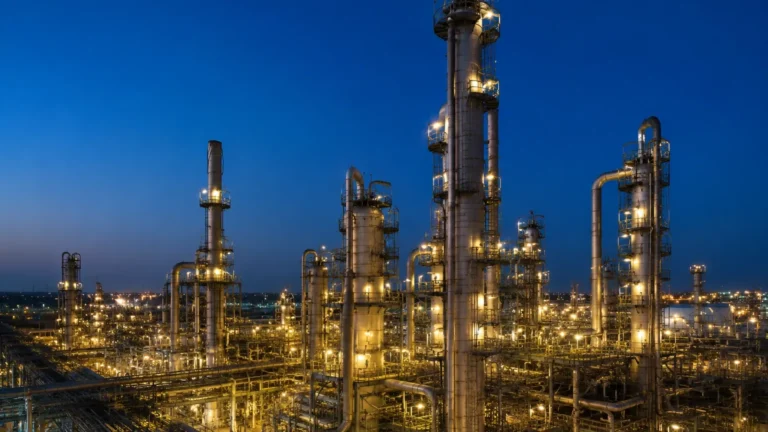
Trinova Mobile Al
Trinova Mobile Al
In the industrial corridor of the Gulf Coast, particularly within the heavy manufacturing and chemical processing hubs of Mobile, Alabama, the precision of process instrumentation is a cornerstone of operational safety and efficiency. Organizations looking for local expertise often turn to established regional representatives like Trinova Mobile AL to bridge the gap between complex engineering requirements and the deployment of high-performance hardware. For engineers and procurement specialists in this region, selecting the right level measurement technology requires a deep understanding of both the physical principles of the instruments and the specific environmental challenges posed by the Alabama climate.
Effective level measurement is not a one-size-fits-all discipline. Whether managing caustic chemicals in a refinery or monitoring wastewater levels in a municipal facility, the choice between radar, ultrasonic, or hydrostatic sensors depends on the media's properties, the vessel's geometry, and the ambient conditions. This guide examines the technical foundations of modern level sensing and provides a framework for selecting the most reliable solutions for industrial applications.
Principles of Level Measurement Technology
Before selecting a specific instrument, it is essential to understand the physics governing the most common measurement types. Each technology interacts with the process media differently, offering distinct advantages depending on the application.
Radar Level Measurement (Non-Contact)
Radar level meters operate on the principle of Time-of-Flight (ToF). The sensor emits high-frequency electromagnetic waves (typically in the 26 GHz or 80 GHz range) toward the surface of the material. These waves reflect off the surface and return to the sensor. By measuring the time interval between emission and reception, the device calculates the distance to the product surface.
Modern radar sensors, such as those featured on our Main Page, utilize Frequency Modulated Continuous Wave (FMCW) technology. Unlike pulse radar, FMCW transmits a continuous signal with a constantly changing frequency. This allows for higher precision and a better signal-to-noise ratio, making it ideal for environments with heavy vapor, dust, or turbulence.
Ultrasonic Level Sensors
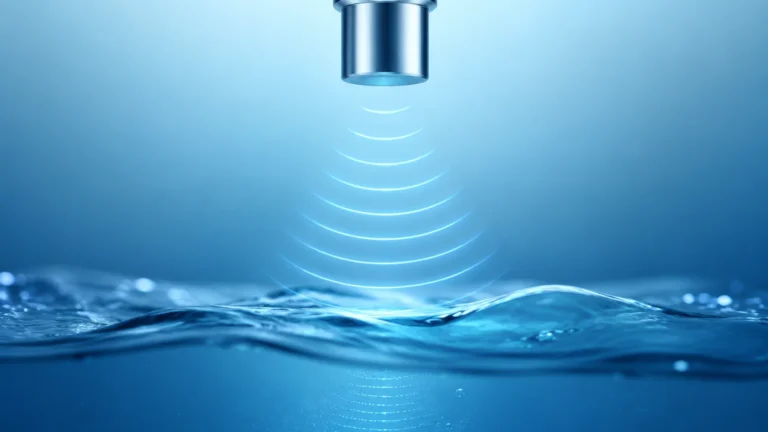
Ultrasonic sensors also use the ToF principle but rely on mechanical sound waves rather than electromagnetic waves. The transducer emits an ultrasonic pulse that travels through the air, reflects off the liquid or solid surface, and returns. Because sound velocity is affected by air temperature, these sensors usually include integrated temperature compensation.
Ultrasonic technology is highly cost-effective for water and wastewater applications. However, its accuracy can be degraded by heavy foam, vacuum conditions, or high-pressure environments where the density of the transmission medium (air or gas) changes significantly.
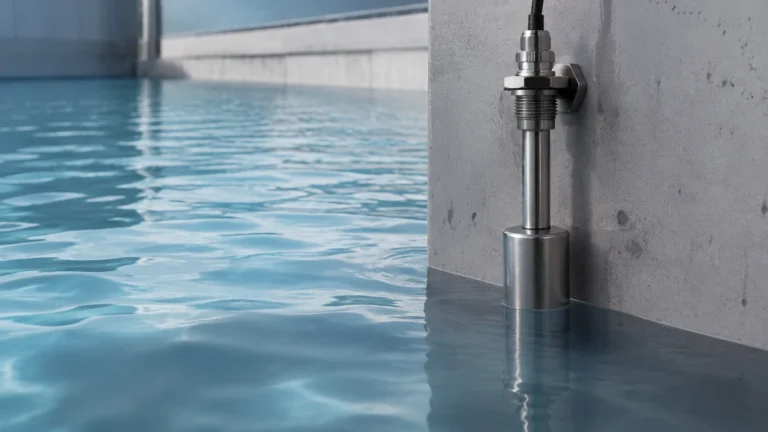
Hydrostatic Level Transmitters
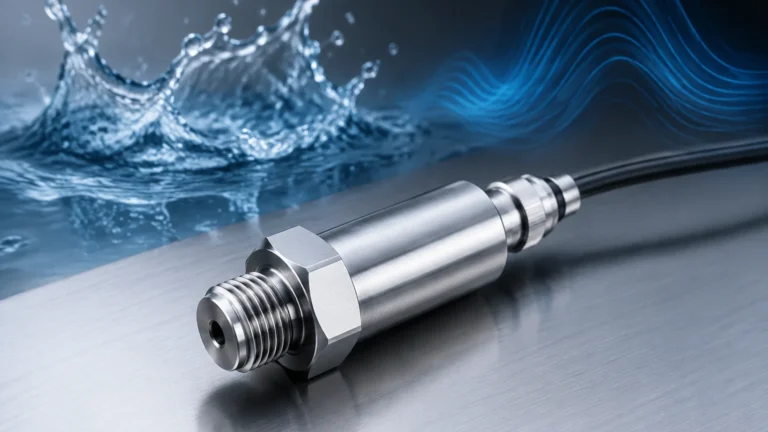
Hydrostatic measurement is a contact-based method that relies on the relationship between the height of a liquid column and the pressure it exerts at the base of the tank. The formula $P = \rho \cdot g \cdot h$ (where $P$ is pressure, $\rho$ is density, $g$ is gravity, and $h$ is height) allows the sensor to determine the level based on the measured pressure.
This method is exceptionally reliable for vented tanks and deep wells. It is less sensitive to surface foam or turbulence than non-contact methods but requires accurate knowledge of the fluid's density to maintain precision.
Magnetic Level Gauges
Magnetic level gauges consist of a bypass chamber attached to the side of a vessel. Inside the chamber, a float containing a permanent magnet moves up and down with the liquid level. This magnet interacts with an external indicator (flaps or a tracker) or a reed-chain transmitter to provide a visual and electronic reading. This is a robust solution for high-pressure and high-temperature applications where glass gauges would be unsafe.
Selection Criteria for Mobile, AL Industrial Applications
The industrial landscape in Mobile, Alabama, is characterized by high humidity, saline air near the coast, and a concentration of chemical and pulp-and-paper facilities. When evaluating instrumentation via Trinova Mobile AL or other regional suppliers, the following criteria must be prioritized:
1. Media Characteristics
* Dielectric Constant (εr): For radar measurement, the reflectivity of the surface depends on the dielectric constant. Materials with low εr (like oils) reflect less energy than those with high εr (like water). High-frequency 80 GHz radar is often required for low-dielectric materials.
* Corrosivity: In the chemical plants of the Gulf Coast, sensors must often be constructed from PTFE, PVDF, or high-grade stainless steel to resist corrosion.
* Viscosity and Coating: If the media is prone to buildup, non-contact radar is preferred over contact probes to reduce maintenance cycles.
2. Process Conditions
* Temperature and Pressure: Extreme process temperatures can affect the electronics of a sensor. Remote-mounted electronics or specialized cooling fins may be necessary.
* Vapor and Foam: In many chemical reactions, heavy vapor or foam layers can absorb ultrasonic signals. In these instances, radar is the superior choice due to its ability to penetrate most vapors.
3. Environmental Factors
Mobile, AL experiences significant rainfall and high humidity. Sensors must have a high Ingress Protection (IP) rating, typically IP67 or IP68, to prevent moisture from entering the housing. Furthermore, salt-spray resistance is a critical factor for facilities located near the Port of Mobile.
Technology Comparison Table
| Technology | Best For | Limitations | Maintenance Level |
| :— | :— | :— | :— |
| Radar (80 GHz) | Aggressive chemicals, narrow tanks, low εr solids | Higher initial cost | Very Low |
| Ultrasonic | Water treatment, open channels, sumps | Affected by foam and wind | Low |
| Hydrostatic | Deep wells, vented tanks, constant density liquids | Requires contact with media | Moderate |
| Magnetic Gauge | High pressure/temp, visual redundancy | Moving parts (float) can stick | Moderate |
| Level Switch | Overfill protection, point level detection | Not for continuous measurement | Low |
Installation Considerations for Maximum Accuracy
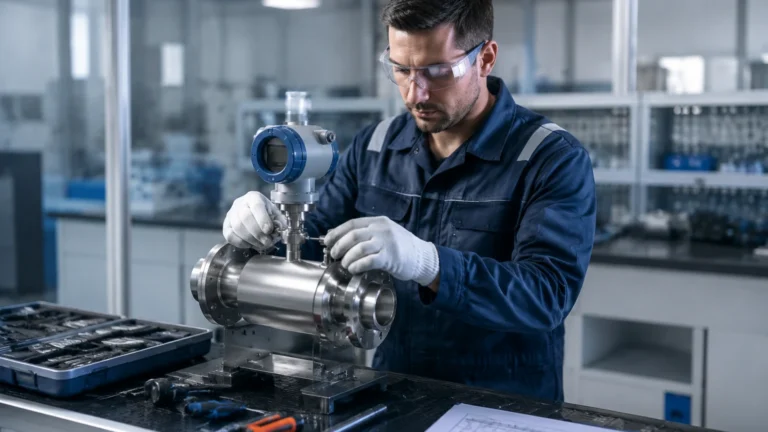
Proper installation is as critical as selecting the right technology. When working with local service providers like Trinova Mobile AL, ensure the following engineering guidelines are followed:
1. Nozzle Positioning: For radar and ultrasonic sensors, the device should not be mounted in the center of a domed tank, as this can cause multiple reflections. It should also be kept away from the tank wall to avoid interference. Typically, a position 1/6th of the tank diameter from the wall is recommended.
2. Avoiding Obstructions: Internal structures such as agitators, heating coils, or ladders can create "false echoes." Advanced radar units allow for "false signal suppression," where the sensor is taught to ignore static reflections from these objects.
3. Stilling Wells: In tanks with heavy turbulence or surface agitation, installing a radar sensor inside a stilling well (a vertical pipe) can provide a calm surface for measurement, significantly increasing reliability.
4. Venting: For hydrostatic transmitters, the reference side of the sensor must be properly vented to the atmosphere to compensate for changes in barometric pressure, unless a differential pressure setup is used for pressurized tanks.

Addressing Common Risks and Limitations
Every measurement technology has a "blind zone" or "blocking distance." This is the area immediately below the sensor where measurement is not possible. For ultrasonic sensors, this is often 0.25m to 0.5m (approx. 10 to 20 inches). For radar, this zone is much smaller but still exists. Engineers must ensure that the maximum fill level of the tank does not enter this zone to avoid signal loss.
Another risk in the Mobile region is lightning strikes and power surges, which are common during summer storms. Utilizing surge protection modules and ensuring proper grounding of the instrument housing is vital for protecting the investment in high-end sensors.
Frequently Asked Questions (FAQ)
Q: Can I use one sensor for both liquid and solid levels?
A: While some radar sensors are versatile, solids measurement typically requires a sensor designed to handle uneven surfaces and dust. Radar is generally better for solids than ultrasonic due to the way sound waves scatter on angled surfaces.
Q: How does humidity in Alabama affect my ultrasonic sensor?
A: Humidity changes the density of the air, which in turn changes the speed of sound. While most sensors have temperature compensation, extreme humidity fluctuations can cause minor accuracy drifts. Radar is unaffected by humidity.
Q: Is radar always better than ultrasonic?
A: Not necessarily. For simple water storage or open-channel flow in municipal applications, ultrasonic sensors are highly effective and more budget-friendly. Radar is preferred when process conditions (pressure, vacuum, vapor) become complex.
Q: What information should I have ready when contacting a supplier like Trinova Mobile AL?
A: You should provide the tank dimensions, the chemical composition of the media, the operating temperature and pressure ranges, and the required output signal (e.g., 4-20mA, HART, Modbus).
Conclusion
Navigating the complexities of level measurement in an industrial setting requires a balance of theoretical knowledge and practical regional experience. By understanding the core principles of radar, ultrasonic, and hydrostatic technologies, and accounting for the specific environmental variables found in Mobile, AL, engineers can implement solutions that reduce downtime and enhance safety. For those seeking a comprehensive range of high-quality instruments, exploring the options on our Main Page provides a starting point for reliable, cost-effective measurement. Whether working through a local representative like Trinova Mobile AL or sourcing directly from a specialized manufacturer, the priority remains the same: accuracy, durability, and a deep alignment with the specific needs of the process environment.