Ph Autosampler
Ph Autosampler
In modern industrial wastewater management and process control, the ability to monitor chemical parameters accurately and consistently is paramount. A pH autosampler represents a critical piece of infrastructure for facilities that require automated, representative sampling of liquid streams for pH analysis and other chemical assessments. These systems eliminate the variability of manual grab sampling, ensuring that environmental compliance and process efficiency are maintained through data-driven insights.
While pH measurement is a specific chemical analysis, the deployment of a pH autosampler is frequently intrinsically linked to level and flow measurement. For engineers and plant managers, understanding how these systems interface with industrial instrumentation—such as those found on the Main Page of professional measurement providers—is essential for designing a robust monitoring station.
Understanding the Role of pH Autosamplers in Industrial Processes
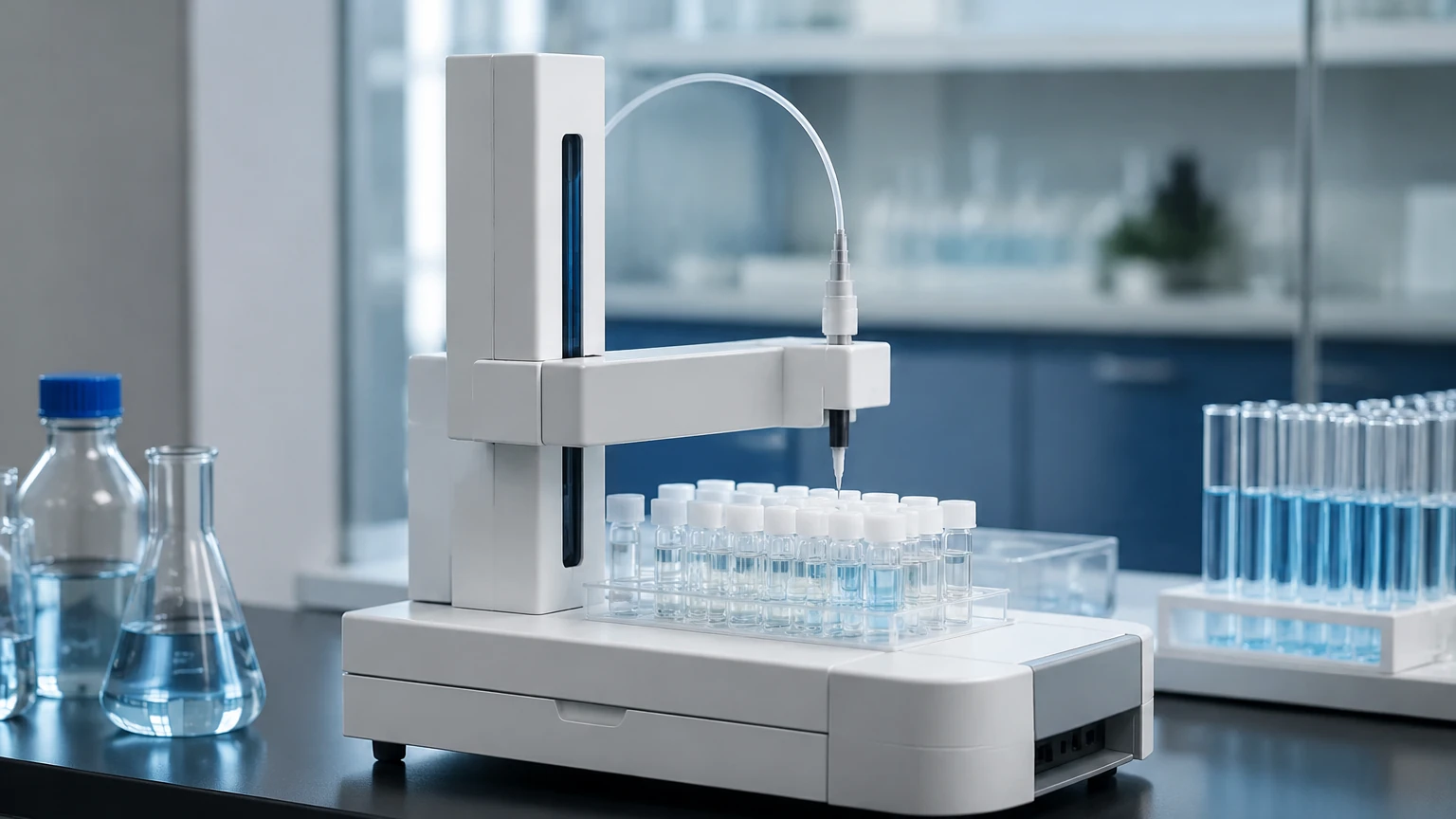
A pH autosampler is an automated device designed to collect liquid samples from a source (such as a tank, open channel, or pipe) at programmed intervals or in response to specific triggers. These samples are typically stored in individual bottles within a refrigerated or insulated housing for subsequent laboratory analysis. Many advanced units also feature integrated pH probes that provide real-time data while simultaneously capturing a physical sample for verification.
The primary objective of using a pH autosampler is to obtain a representative profile of a facility’s effluent or process fluid. In industries like chemical manufacturing, food and beverage, and municipal water treatment, pH levels can fluctuate rapidly. A single manual sample taken at 10:00 AM may not reflect a significant chemical spike that occurs at 2:00 PM. Automated sampling provides the temporal resolution necessary to identify these fluctuations.
Principles of Operation: From Sampling to Measurement
The operation of a pH autosampler involves several distinct mechanical and electronic stages. Understanding these measurement and collection principles is the first step in selecting the right equipment for a specific application.
1. Sample Acquisition Methods
Most industrial autosamplers utilize one of two primary methods for drawing liquid: peristaltic pumps or vacuum-pressure systems.
* Peristaltic Pumps: These are the most common in portable and stationary units. A rotating roller compresses a flexible tube, creating a vacuum that draws the liquid. This method is advantageous because the liquid never touches the pump's mechanical parts, reducing the risk of cross-contamination and making maintenance simpler.
* Vacuum-Pressure Systems: These systems use a vacuum pump to draw the sample into a metering chamber. Once the desired volume is reached, the vacuum is released, and the sample is discharged into the collection bottle. This method is often preferred for high-lift applications or when high precision in sample volume is required.
2. pH Measurement Integration
When a unit is designated as a pH autosampler, it usually incorporates a potentiometric pH sensor. This sensor consists of a glass electrode and a reference electrode. When immersed in the sample, a voltage (electromotive force) is generated that is proportional to the hydrogen ion activity in the liquid. The internal controller converts this voltage into a pH value (typically ranging from 0 to 14).
3. Distribution Logic
The "auto" in autosampler refers to the distribution system. A motorized distributor arm moves over a tray of bottles (ranging from 1 to 24 or more). The system can be programmed to:
* Time-Proportional Sampling: Collect a sample every X minutes.
* Flow-Proportional Sampling: Collect a sample every Y liters (requiring integration with a flow meter).
* Event-Based Sampling: Trigger a sample collection only when the pH exceeds a pre-set threshold (e.g., if pH drops below 6.0 or rises above 9.0).
Integration with Level Measurement Systems
In practical engineering, a pH autosampler rarely operates in isolation. Its effectiveness is often dependent on accurate level and flow data. This is where the synergy between chemical sampling and level instrumentation becomes apparent.
Flow Measurement via Level
In many wastewater applications, flow is measured in open channels using primary devices like Parshall flumes or Weirs. To calculate the flow rate, an ultrasonic or radar level transmitter is used to measure the head (height) of the liquid. The level meter converts this height into a flow rate (e.g., cubic meters per hour). The pH autosampler receives a pulse or a 4-20mA signal from the level meter to perform flow-proportional sampling. This ensures that more samples are taken during high-flow periods, providing a more accurate "flow-weighted" average of the pH and chemical load.
Tank Level Monitoring
In batch treatment tanks, an autosampler may be programmed to begin sampling only when a certain liquid level is reached. Radar level meters are often preferred here due to their non-contact nature and high accuracy, ensuring the sampling intake line is properly submerged before the pump activates.
Technical Selection Criteria for pH Autosamplers
Selecting the appropriate pH autosampler requires an evaluation of both the liquid characteristics and the site environment. The following table outlines key criteria for engineers:
| Feature | Specification / Consideration | Application Context |
| :— | :— | :— |
| Housing Material | Stainless Steel or GRP (Glass Reinforced Plastic) | Corrosive environments vs. standard municipal use |
| Cooling System | Active Refrigeration or Passive Ice Cooling | Required for preserving organic samples or high-temp fluids |
| Sample Volume | 20 ml to 1000 ml per bottle | Depends on lab requirements for analysis |
| Maximum Lift | Typically 6 to 8 meters (20 to 26 feet) | Distance from the liquid surface to the sampler pump |
| Intake Velocity | Minimum 0.5 m/s (1.6 ft/s) | Required to prevent solids from settling in the intake line |
| Communication | 4-20mA, Modbus RS485, or Ethernet | Integration with SCADA and level measurement systems |
Installation Considerations and Best Practices
For a pH autosampler to provide reliable data, installation must follow strict engineering guidelines. Poorly placed intake lines or sensors can lead to biased data and frequent mechanical failures.
Intake Line Placement
The intake strainer should be positioned in the center of the flow stream, where the liquid is well-mixed. It should be high enough to avoid sucking up bottom sediment but low enough to remain submerged during low-flow conditions. If the site uses a level meter to monitor flow, the sampler intake should be located near the level sensor’s measurement point to ensure the data correlates.
Suction Line Slope
The suction line should have a continuous slope from the sampler down to the source. This prevents the formation of "liquid traps" or loops where water can sit and freeze in winter or grow algae in summer. After each sample cycle, most professional units perform a "purge" where the pump runs in reverse to blow air through the line, clearing it for the next sample.
pH Probe Maintenance
Unlike the mechanical sampling components, the pH probe requires frequent attention. It must remain wet to function correctly. Many pH autosamplers include a small reservoir or "trap" that keeps the probe submerged in the process liquid or a storage solution between sampling events. Regular calibration using pH 4.0, 7.0, and 10.0 buffer solutions is mandatory, typically on a weekly or bi-weekly basis depending on the fouling nature of the fluid.
Limitations and Operational Risks
While highly effective, pH autosamplers have limitations that must be managed through proactive design and maintenance.
1. Cross-Contamination: If the intake line is not properly purged between samples, residues from the previous sample can affect the pH reading and chemical composition of the current sample. High-quality systems use a pre-rinse cycle where the line is flushed with the new sample liquid before the actual sample is diverted to the bottle.
2. Temperature Sensitivity: pH measurements are temperature-dependent. If the liquid temperature varies significantly, the autosampler must have Automatic Temperature Compensation (ATC). Furthermore, if the physical samples are being analyzed for other parameters (like BOD or COD), the internal refrigeration must maintain a steady 4°C (39°F).
3. Solids Loading: In wastewater with high fats, oils, and grease (FOG) or large suspended solids, intake lines can become clogged. Regular inspection of the intake strainer is necessary. In these environments, non-contact level sensors (like radar) are often used to trigger the sampler because they are not affected by the debris that might clog a traditional float switch.
4. Power Requirements: Stationary refrigerated samplers require a stable AC power supply. In remote locations where only DC power or solar is available, engineers often must choose between a portable non-refrigerated unit or investing in a significant battery/solar array.
Frequently Asked Questions (FAQs)
Q: How often should I calibrate the integrated pH sensor in my autosampler?
A: In most industrial applications, a weekly calibration check is recommended. If the liquid is highly acidic, alkaline, or contains oils that coat the glass electrode, more frequent calibration or the use of automated cleaning systems may be required.
Q: Can a pH autosampler be used in hazardous (Ex) zones?
A: Yes, but you must specify an ATEX or IECEx certified unit. These are typically stationary units with explosion-proof housings and intrinsically safe electronics. It is also common to use air-purged enclosures in these environments.
Q: What is the maximum distance I can run an intake line?
A: While some pumps can pull liquid over long horizontal distances (up to 30 meters or 100 feet), the vertical lift is the limiting factor. Most peristaltic pumps struggle beyond 8 meters (26 feet) of vertical lift. Long horizontal runs also increase the risk of sample degradation and require longer purge times.
Q: How do I coordinate the sampler with my existing level meter?
A: Most level meters provide a pulse output (e.g., 1 pulse per 1000 liters) or a 4-20mA analog output. The pH autosampler's controller can be programmed to accept these inputs. For detailed wiring and configuration, it is best to review product options and application support on the Main Page of your instrumentation provider.
Conclusion
The pH autosampler is a foundational tool for industrial compliance and process optimization. By automating the collection and initial measurement of liquid samples, it provides a level of accuracy and frequency that manual sampling cannot match. However, the success of an autosampling program depends heavily on the integration of the sampler with other process instruments. By combining pH data with precise level and flow measurement, facilities can achieve a comprehensive understanding of their liquid streams, ensuring both environmental responsibility and operational excellence.