Flow Meter Measuring Device
Flow Meter Measuring Device
In the landscape of industrial process control, the flow meter measuring device stands as a fundamental tool for ensuring operational efficiency, safety, and regulatory compliance. Whether managing water treatment facilities, chemical processing plants, or oil and gas refineries, the ability to quantify the movement of liquids, gases, and steam is essential. While level measurement focuses on the volume or height of a medium within a vessel, flow measurement addresses the rate of transfer between points in a system. For many engineers, these two disciplines are inextricably linked, often requiring integrated solutions to maintain systemic balance.
Selecting the correct flow meter measuring device requires a deep understanding of fluid dynamics, pipe geometry, and the physical properties of the medium being measured. This guide examines the core principles of flow measurement, provides selection frameworks, and outlines the critical installation factors that influence long-term accuracy.
Core Principles of Flow Measurement
Before selecting a device, it is necessary to understand the physical laws that govern different measurement technologies. Most industrial flow meters fall into one of several categories based on their operating principle.
Electromagnetic Flow Meters (Magmeters)
Electromagnetic meters operate based on Faraday’s Law of Induction. This law states that a conductor moving through a magnetic field produces an electrical signal directly proportional to the velocity of the conductor. In this application, the conductive liquid (such as water or acids) acts as the conductor. As the fluid flows through the magnetic field generated by the meter’s coils, electrodes pick up the induced voltage.
* Best for: Conductive liquids, slurries, and wastewater.
* Advantage: No moving parts and no pressure drop.
* Limitation: Cannot measure non-conductive fluids like oils or deionized water.
Ultrasonic Flow Meters
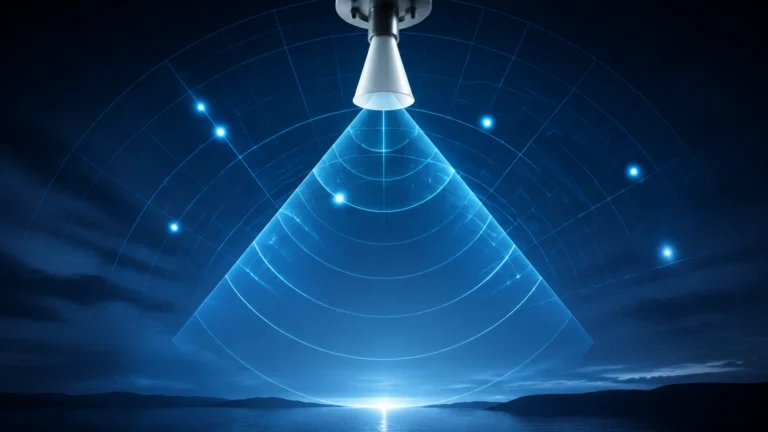
Ultrasonic devices use sound waves to determine flow velocity. There are two primary types: Transit-Time and Doppler. Transit-time meters send ultrasonic pulses back and forth across the pipe; the difference in time it takes for the signal to travel with the flow versus against it is used to calculate velocity. Doppler meters, conversely, reflect sound waves off bubbles or particles in the fluid to measure the frequency shift.
* Best for: Clean liquids (Transit-Time) or aerated/dirty liquids (Doppler).
* Advantage: Non-invasive "clamp-on" options are available, allowing for installation without cutting pipes.
* Limitation: Accuracy can be affected by extreme temperature fluctuations or high concentrations of solids that block the signal.
Vortex Flow Meters
Vortex meters utilize the Karman Vortex Street principle. When a fluid encounters a "shedder bar" placed in the flow stream, it creates alternating vortices (swirls) downstream. The frequency at which these vortices are shed is directly proportional to the flow velocity.
* Best for: Steam, gases, and low-viscosity liquids.
* Advantage: Highly reliable in high-temperature and high-pressure environments.
* Limitation: Requires a minimum Reynolds number to function; not suitable for very low flow rates.
Differential Pressure (DP) Meters
DP meters are among the oldest and most common technologies. They work by placing a constriction in the pipe (such as an orifice plate or Venturi tube) to create a pressure drop. According to Bernoulli’s equation, the square root of the pressure difference between the upstream and downstream sides is proportional to the flow rate.
* Best for: General-purpose gas and liquid measurement.
* Advantage: Well-understood standards and low initial cost for the primary element.
* Limitation: Significant permanent pressure loss and susceptibility to wear over time.
Practical Selection Criteria for Flow Metering
Choosing a flow meter measuring device is not a one-size-fits-all process. Engineers must evaluate several variables to ensure the chosen technology can withstand the process conditions while providing the required precision. To explore specific instrument specifications for your application, you may Review product options and application support to align your flow requirements with integrated level control systems.
Fluid Characteristics
The most critical factor is the state of the fluid. Is it a liquid, gas, or steam? For liquids, viscosity and conductivity are paramount. High-viscosity fluids may require positive displacement meters, while low-conductivity fluids rule out electromagnetic options. If the fluid is corrosive, the wetted parts of the meter must be constructed from compatible materials like Hastelloy, PTFE, or high-grade stainless steel.
Process Conditions
* Temperature and Pressure: Every meter has a maximum rating. Vortex and DP meters are typically more robust for high-heat steam applications, whereas plastic-bodied ultrasonic or magmeters may be limited to lower temperatures.
* Flow Range (Turndown Ratio): This is the ratio between the maximum and minimum flow the meter can accurately measure. If a process fluctuates significantly, a meter with a high turndown ratio (like 100:1 for some ultrasonic models) is necessary.
Accuracy and Repeatability
Accuracy refers to how close the measurement is to the true value, while repeatability is the meter’s ability to produce the same result under the same conditions. In custody transfer applications (where money changes hands based on flow), high accuracy is non-negotiable. In simple process monitoring, repeatability might be more important than absolute accuracy.
Comparison Table: Flow Meter Technologies
| Technology | Suitable Media | Accuracy (Typical) | Turndown Ratio | Pressure Drop | Maintenance |
| :— | :— | :— | :— | :— | :— |
| Electromagnetic | Conductive Liquids | ±0.5% | 20:1 to 100:1 | None | Low |
| Ultrasonic | Liquids / Gases | ±1.0% | 50:1 | None | Low |
| Vortex | Steam / Gas / Liquid | ±1.0% | 15:1 | Medium | Medium |
| Turbine | Clean Liquids / Gas | ±0.25% | 10:1 | High | High |
| Differential Pressure | Liquid / Gas / Steam | ±1.0% to ±2.0% | 4:1 | High | Medium |
Installation Considerations and Best Practices
Even the most expensive flow meter measuring device will fail to provide accurate data if installed incorrectly. Most flow measurement errors are rooted in poor installation rather than hardware failure.
Straight Pipe Requirements
Most meters require a "fully developed flow profile" to measure accurately. Turbulence caused by elbows, valves, or pumps can distort the flow. The standard rule of thumb is the 10D/5D rule: provide a straight pipe length of 10 times the pipe diameter upstream of the meter and 5 times the diameter downstream. Some technologies, like certain ultrasonic or electromagnetic meters, are more forgiving, but providing straight runs is always recommended.
Orientation and Piping
* Horizontal vs. Vertical: For liquid applications, vertical upward flow is often preferred to ensure the pipe remains completely full. If installed horizontally, the meter should be placed at a low point in the piping to prevent air pockets, which can cause significant measurement errors in ultrasonic and electromagnetic meters.
* Full Pipe Condition: Most flow meters (except for specialized open-channel meters) require a 100% full pipe to calculate volume correctly. If the pipe is only partially full, the meter will over-read the velocity relative to the actual volume.
Grounding and Interference
Electromagnetic flow meters are particularly sensitive to electrical noise. Proper grounding to the fluid is essential to ensure the micro-volt signals generated by the flow are not lost in background interference. Similarly, ultrasonic meters should be kept away from variable frequency drives (VFDs) and other sources of high-frequency vibration.
The Relationship Between Flow and Level Measurement
In many industrial scenarios, flow and level measurement are used in tandem to provide a complete picture of the process. For example, in open-channel flow measurement (such as in a Parshall flume at a wastewater plant), a level sensor—such as an ultrasonic or radar level meter—is used to measure the head of the water. This level reading is then converted into a flow rate using a known mathematical formula for that specific flume geometry.
In storage tank management, flow meters track the "In" and "Out" rates, while level sensors provide the absolute "Inventory" check. Discrepancies between the integrated flow totals and the level change can alert operators to leaks or calibration drifts. For comprehensive system design, visiting the Main Page of a dedicated instrumentation provider can help in selecting compatible level and flow technologies that communicate via the same industrial protocols (e.g., 4-20mA HART, Modbus, or Profibus).
Limitations and Common Risks
While modern flow meter measuring devices are highly advanced, they are not infallible. Understanding their limitations is key to avoiding process downtime.
1. Cavitation: If the pressure in a liquid line drops below the vapor pressure, bubbles form. When these bubbles collapse, they can damage meter internals (especially turbine blades) and cause erratic readings.
2. Scaling and Buildup: In chemical or wastewater applications, minerals or biological matter can build up on the inner walls of the meter or on electrodes. This changes the internal diameter of the pipe and insulates sensors, leading to a gradual loss of accuracy.
3. Gas Entrainment: Small amounts of gas in a liquid line can cause ultrasonic meters to lose their signal or cause electromagnetic meters to read incorrectly. Air eliminators should be used upstream if gas entrainment is a known issue.
Frequently Asked Questions (FAQ)
Q: Can I use a water flow meter for oil?
A: Generally, no. Water flow meters like magmeters require conductivity, which oil lacks. Furthermore, the viscosity of oil is much higher, which affects the Reynolds number and the calibration of the device.
Q: How often should a flow meter be calibrated?
A: This depends on the industry and the criticality of the measurement. In regulated industries like pharma or food and beverage, annual calibration is standard. For general process monitoring, a verification check every 2-3 years may suffice unless a shift in data is observed.
Q: What is the difference between mass flow and volumetric flow?
A: Volumetric flow measures the space the fluid occupies (e.g., liters per minute). Mass flow measures the actual weight of the fluid (e.g., kilograms per minute). Mass flow is preferred for gases because gas volume changes significantly with temperature and pressure.
Q: Can I install a flow meter immediately after a pump?
A: It is not recommended. Pumps create significant turbulence and pressure pulsations. You should ideally place the flow meter on the discharge side of the pump with at least 20-30 pipe diameters of straight run, or use a flow straightener.
Conclusion
Implementing an effective flow meter measuring device is a cornerstone of modern industrial automation. By understanding the underlying physics of the technology—whether it be electromagnetic, ultrasonic, or vortex-based—and adhering to strict installation guidelines, engineers can ensure reliable data for years to come. When integrated with robust level measurement solutions, these instruments provide the transparency needed to optimize resource usage and maintain safety across complex process environments.