Nivelco Radar Level Transmitter
Nivelco Radar Level Transmitter: Engineering Selection and Application Guide
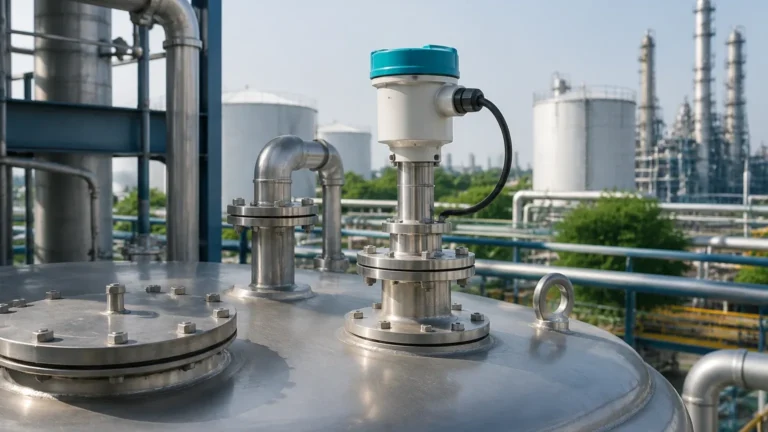
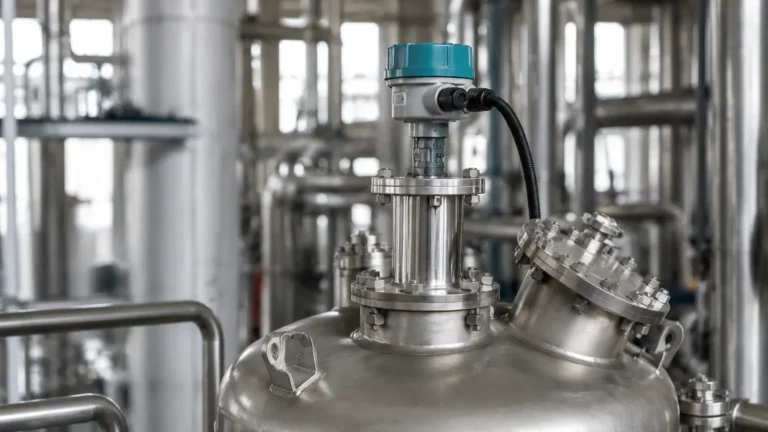
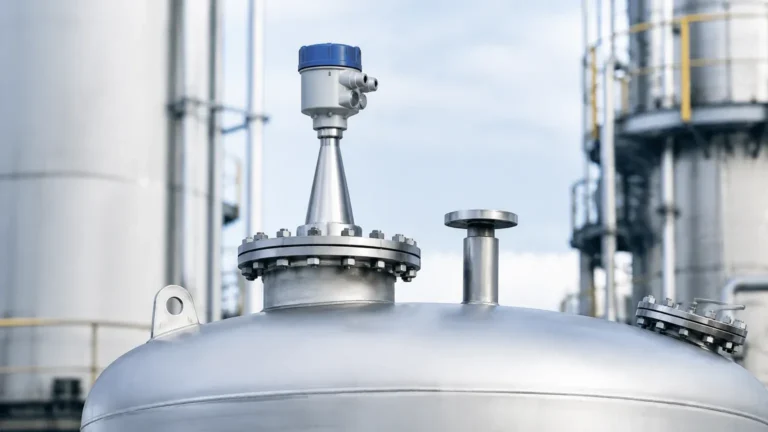
In the landscape of industrial automation, non-contact level measurement has become the standard for reliability in challenging environments. Among the various technologies available, the nivelco radar level transmitter—specifically the PiloTREK series—represents a sophisticated solution for liquid and slurry level monitoring. This guide provides a technical deep dive into the operating principles, selection criteria, and installation requirements for radar-based systems, assisting engineers in optimizing their process control loops.
Understanding Radar Level Measurement Principles
Before selecting a specific Radar Level Meters solution, it is essential to understand the physics governing the measurement. Radar level transmitters typically utilize one of two primary methods: Pulse Radar or Frequency Modulated Continuous Wave (FMCW).
Pulse Radar Technology
Pulse radar instruments emit short microwave pulses toward the material surface. The sensor measures the "Time of Flight" (ToF)—the duration between the emission of the pulse and the reception of the echo. Since the speed of light is constant, the distance is calculated as:
*Distance = (Speed of Light × Time of Flight) / 2*
FMCW (Frequency Modulated Continuous Wave)
Modern high-precision transmitters, including many advanced radar level meters, often employ FMCW technology. Instead of discrete pulses, the device emits a continuous signal with a constantly changing frequency (a frequency sweep). The reflected signal is compared to the emitted signal at that exact moment. The frequency difference (beat frequency) is directly proportional to the distance. FMCW is generally preferred for high-accuracy applications and environments with significant signal noise.
The Role of Dielectric Constant (εr)
Radar waves reflect off the surface of the medium based on its dielectric constant. Materials with high dielectric constants (e.g., water, εr ≈ 80) reflect signals strongly. Hydrocarbons and organic solvents (εr < 3) reflect signals weakly, requiring more sensitive electronics or specialized antenna configurations to maintain a reliable signal-to-noise ratio.
Technical Features of Nivelco Radar Level Transmitters
The Nivelco PiloTREK series is designed as a 2-wire integrated transmitter operating primarily in the 24 GHz (K-band) or 80 GHz (W-band) range. These devices provide a 4–20 mA output, often with HART protocol compatibility for remote configuration and diagnostics.
Key Specifications
* Measuring Range: Typically up to 30 meters (98 feet) for liquids, depending on the antenna type and dielectric constant.
* Accuracy: Standard models offer ±3 mm (0.12 inches) accuracy, while high-precision versions can achieve ±1 mm.
* Process Temperature: Standard ranges from -30°C to +100°C, with high-temperature variants reaching up to +180°C.
* Process Pressure: Capable of operating in environments from vacuum up to 25 bar (362 psi).
Selection Criteria for Industrial Applications
Choosing the correct nivelco radar level transmitter requires a detailed analysis of the process environment. The following table outlines the primary selection factors for common industrial scenarios.
Selection Matrix
| Process Condition | Recommended Antenna Type | Frequency Consideration | Notes |
| :— | :— | :— | :— |
| Standard Liquid Storage | Stainless Steel Horn | 24 GHz | Cost-effective and reliable for most water-based fluids. |
| Corrosive Chemicals | Plastic Encapsulated (PTFE/PP) | 24 GHz or 80 GHz | Ensures chemical compatibility and prevents antenna degradation. |
| Small Tanks / Narrow Nozzles | Small Diameter Horn or 80 GHz | 80 GHz | Higher frequency allows for a narrower beam angle, avoiding wall reflections. |
| Agitated Surfaces / Foam | Large Horn Antenna | 24 GHz | Lower frequencies tend to penetrate light foam better than high frequencies. |
| High Temperature/Pressure | Ceramic Seal / Heavy Duty Horn | 24 GHz | Requires specialized sealing to protect the electronics. |
Installation Guidelines and Engineering Constraints
Correct installation is the most critical factor in the performance of a radar level meter. Even the most advanced nivelco radar level transmitter will fail if the signal path is obstructed or if the beam interacts poorly with the tank geometry.
1. Beam Angle and Obstructions
The radar signal spreads in a cone shape. The beam angle is determined by the frequency and the antenna diameter. Engineers must ensure that no internal structures—such as ladders, heating coils, or agitators—intersect this cone. If an obstruction is unavoidable, many modern transmitters offer "False Echo Masking," allowing the software to ignore static reflections from fixed internals.
2. Nozzle Geometry
The mounting nozzle should be as short as possible. If the nozzle is too long or narrow, it can cause internal reflections (ringing) that create a "dead zone" at the top of the tank. For a standard 24 GHz transmitter, the nozzle height should ideally not exceed its diameter unless an extension or specialized horn is used.
3. Positioning
* Avoid the Center: Never mount a radar transmitter in the exact center of a domed-roof tank, as this can concentrate multiple reflections and cause signal interference.
* Wall Distance: Maintain a minimum distance from the tank wall (typically 1/6th of the tank diameter) to prevent side-wall interference.
* Inlet Flow: Ensure the transmitter is not positioned directly above the product inlet to avoid measuring the turbulence of the inflowing liquid.
4. Dead Zones (Blocking Distance)
Every radar sensor has a minimum detection distance (the dead zone) near the antenna. For Nivelco units, this is typically between 0.2m and 0.5m. The maximum fill level of the tank must be calibrated to remain below this threshold to prevent measurement errors.
Limitations and Application Risks
While radar is highly versatile, it is not a universal solution. Engineers should be aware of the following limitations:
* Heavy Foam: While thin layers of foam are often transparent to radar, thick, dense foam (like that found in some fermentation or chemical processes) can absorb or scatter the signal entirely. In these cases, a guided wave radar or a hydrostatic pressure transmitter may be more appropriate.
* Extremely Low Dielectric Media: For liquefied gases or ultra-pure solvents with εr < 1.4, the reflection may be too weak for standard non-contact radar. A stilling well or a coaxial bypass pipe can be used to concentrate the signal.
* Vacuum Effects: While radar works in a vacuum, the sealing materials (O-rings) must be rated for vacuum service to prevent air ingress or sensor damage.

Comparison: Radar vs. Ultrasonic Measurement
In B2B procurement, radar is often compared to ultrasonic sensors. While ultrasonic sensors are cheaper, radar offers several distinct advantages in industrial engineering:
1. Medium Independence: Radar waves are electromagnetic and do not require a medium (air) to travel. Ultrasonic waves are sound waves and are affected by changes in air temperature, pressure, and vapor composition.
2. Vapor and Dust: Radar easily penetrates heavy steam, vapors, and dust, whereas ultrasonic signals are often attenuated or reflected by these conditions.
3. Vacuum Performance: Radar functions perfectly in a vacuum; ultrasonic sensors cannot operate without an atmosphere to carry the sound.
Maintenance and Calibration
One of the primary benefits of the nivelco radar level transmitter is its low maintenance requirement due to the lack of moving parts. However, a periodic maintenance schedule should include:
* Antenna Inspection: Check for material buildup or condensation on the antenna face. While many units can "see through" thin coatings, heavy buildup will eventually degrade performance.
* Loop Testing: Verify the 4–20 mA output against a manual dip-tape measurement to ensure the scaling and calibration remain accurate.
* Firmware Updates: Ensure the signal processing algorithms are up to date, especially if the process conditions have changed since the initial installation.
International Buyer’s Checklist
When sourcing Radar Level Meters for global projects, international buyers should confirm the following technical details with the manufacturer:
1. Certification Requirements: Does the site require ATEX, IECEx, or FM approvals for hazardous areas?
2. Flange Standards: Specify whether DIN, ANSI, or JIS flanges are required to match existing vessel connections.
3. Communication Protocol: Confirm if the control system requires HART 7, Modbus RS485, or Profibus.
4. Material Traceability: For pharmaceutical or food applications, ensure that wetted parts have 3.1 material certificates and FDA compliance where necessary.
Frequently Asked Questions (FAQ)
Q: Can a radar level transmitter measure solids?
A: Yes, but with caveats. Solids like grain or plastic pellets have an angle of repose that can deflect the radar signal away from the receiver. High-frequency (80 GHz) transmitters with specialized solids algorithms are typically required for reliable bulk solid measurement.
Q: How does turbulence affect the measurement?
A: Surface turbulence causes the reflected signal to scatter. Nivelco transmitters use software filtering (damping) to average these fluctuations, providing a stable output even in agitated tanks.
Q: Is it possible to use a radar transmitter in a plastic tank?
A: Yes. Radar waves can pass through plastic. In some applications, the transmitter can be mounted *outside* the top of a plastic tank, measuring the level through the tank wall, provided the wall material is not conductive and the signal loss is accounted for.
Q: What is the impact of heavy condensation on the antenna?
A: Condensation can cause signal attenuation. For applications with high humidity, choosing an antenna with a PTFE dropper or an encapsulated face helps moisture bead off and minimizes interference.
By adhering to these engineering principles and selection guidelines, process managers can ensure that their level measurement instrumentation provides the accuracy and longevity required for modern industrial operations.