Oem Pressure Transducer
Oem Pressure Transducer
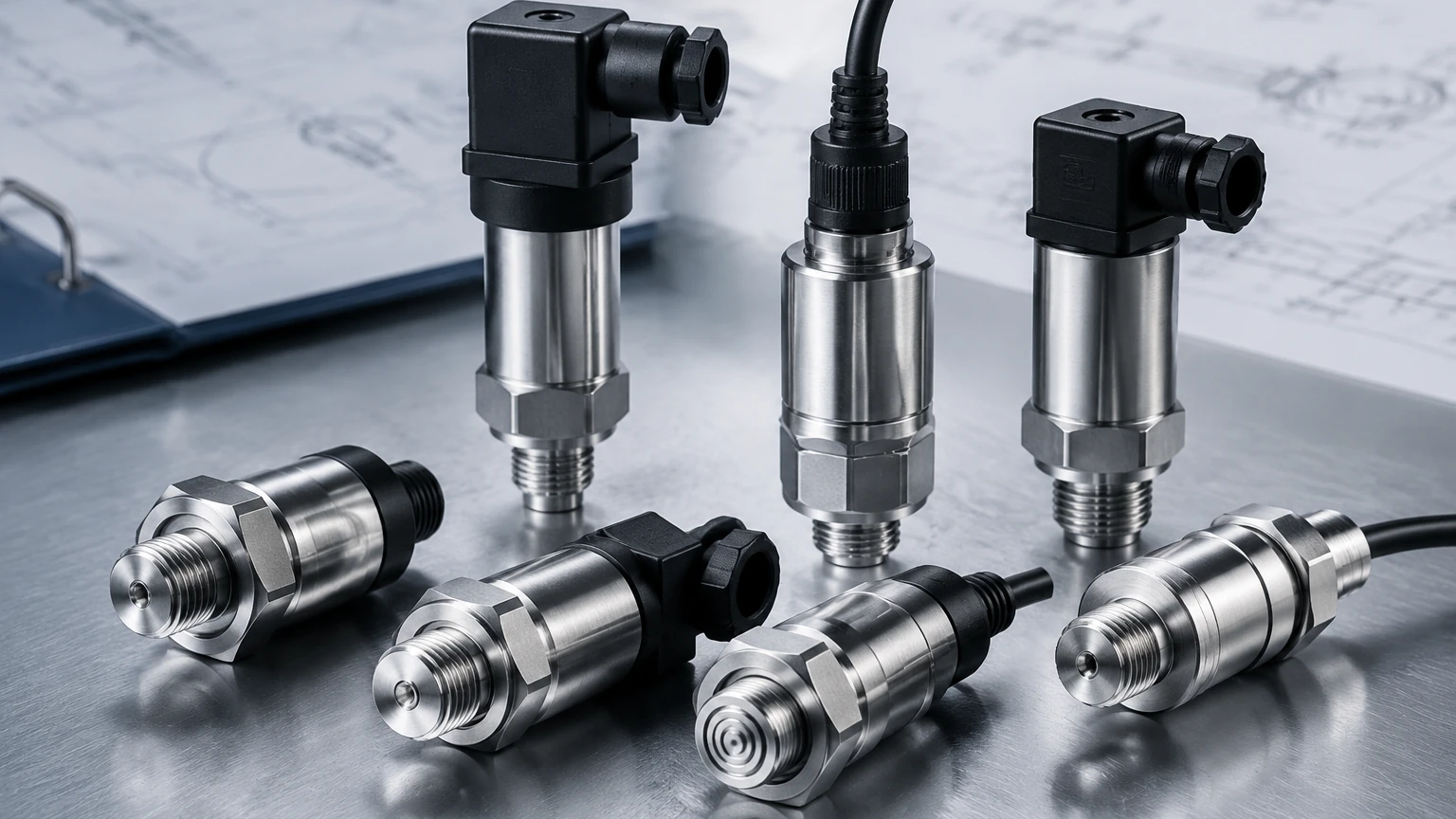
In the landscape of industrial automation and equipment manufacturing, the pressure transducer serves as a fundamental sensory component. For Original Equipment Manufacturers (OEMs), sourcing an oem pressure transducer involves more than purchasing a finished product; it requires selecting a sensing element or a semi-finished module that can be seamlessly integrated into larger systems, such as medical devices, automotive engines, or industrial level measurement assemblies.
At its core, a pressure transducer converts mechanical pressure into a measurable electrical signal. For engineers and system integrators, understanding the underlying physics and the specific requirements of the application environment is critical to ensuring long-term reliability and accuracy. This guide explores the technical principles, selection criteria, and integration strategies for OEM pressure sensing technology.
Measurement Principles of Pressure Transducers
Before selecting a transducer, it is essential to understand the sensing technologies available. Each principle offers distinct advantages regarding sensitivity, durability, and cost-effectiveness.
Piezoresistive Sensing
Piezoresistive transducers are among the most common in OEM applications due to their high sensitivity and established manufacturing processes. These sensors typically utilize a silicon diaphragm with integrated resistors. When pressure is applied, the diaphragm deforms, causing a change in the electrical resistance of the resistors (the piezoresistive effect). This change is measured using a Wheatstone bridge circuit.
* Advantages: High sensitivity, excellent linearity, and compact size.
* Applications: General industrial automation, medical equipment, and hydrostatic level measurement.
Capacitive Sensing
Capacitive pressure transducers measure changes in electrical capacitance caused by the movement of a diaphragm. The diaphragm acts as one plate of a capacitor, and a fixed electrode acts as the other. As pressure moves the diaphragm, the gap between the plates changes, altering the capacitance.
* Advantages: High resolution, low power consumption, and excellent stability at low pressure ranges.
* Applications: HVAC systems, cleanroom monitoring, and leak detection.
Thin-Film and Strain Gauge
These sensors involve bonding or depositing strain gauges onto a metal diaphragm (often stainless steel). When pressure is applied, the metal deforms slightly, stretching the strain gauges and changing their resistance.
* Advantages: Extreme durability, high resistance to shock and vibration, and suitability for high-pressure ranges (up to 1,000 bar or 14,500 psi).
* Applications: Heavy hydraulics, oil and gas equipment, and high-temperature industrial processes.
The Role of OEM Customization
An oem pressure transducer differs from a standard off-the-shelf sensor in its level of customization. Manufacturers like Welk provide solutions that allow OEMs to specify various parameters to fit a proprietary housing or a specific system architecture.
1. Mechanical Interface: OEMs can specify custom thread types (G1/2, NPT, or flush diaphragms) and materials such as 316L stainless steel, titanium, or Hastelloy for corrosive environments.
2. Electrical Output: While 4-20 mA is the industrial standard, OEM modules often require digital outputs like I2C, SPI, or Modbus for direct microprocessor integration, or ratiometric voltage outputs (0.5V to 4.5V).
3. Form Factor: Sensors can be supplied as bare sensing elements, compensated capsules, or fully enclosed transmitters depending on the level of integration required by the customer.
For comprehensive system designs, engineers often refer to the Main Page of specialized manufacturers to evaluate how these transducers integrate into broader level and flow control architectures.
Hydrostatic Level Measurement Applications
One of the primary uses for an OEM pressure transducer in the industrial sector is hydrostatic level measurement. This method relies on the principle that the pressure at a specific depth in a liquid is proportional to the height of the liquid column above it.
The Calculation
The formula used is:
P = ρ × g × h
Where:
* P = Hydrostatic pressure (Pa)
* ρ (Rho) = Density of the liquid (kg/m³)
* g = Gravitational acceleration (approx. 9.81 m/s²)
* h = Height of the liquid (m)
OEMs building water treatment systems or chemical dosing skids often integrate pressure modules into the bottom of tanks or submersible probes to provide continuous level feedback based on this pressure-to-depth relationship.
Selection Criteria for OEM Pressure Transducers
When evaluating a transducer for a new project, the following table provides a framework for comparing essential specifications.
| Parameter | Specification Range (Typical) | Importance for OEM Integration |
| :— | :— | :— |
| Pressure Range | 0–10 mbar to 0–1000 bar | Must match the maximum expected system pressure including surges. |
| Accuracy | 0.1% to 1.0% FS | Determines the precision of the end-device's readings. |
| Operating Temperature | -40°C to +125°C (-40°F to 257°F) | Critical for outdoor or high-heat industrial environments. |
| Output Signal | Analog (4-20mA, 0-10V) or Digital (I2C, Modbus) | Must be compatible with the system's controller or PLC. |
| Housing Material | SS316L, Ceramic, Plastic | Dictates chemical compatibility and lifespan in harsh media. |
| Long-term Stability | <0.2% FS / Year | Reduces the frequency of field recalibration for the end-user. |
Installation and Engineering Considerations
Successful integration of an oem pressure transducer requires careful attention to physical installation and environmental protection.
Mounting and Orientation
While many transducers are position-insensitive, low-pressure sensors (below 100 mbar) may show a small zero-shift if mounted in a different orientation than they were calibrated. Engineers should design mounts that minimize mechanical stress on the sensor body, as torque applied during installation can sometimes distort the sensing diaphragm.
Media Compatibility
The wetted parts of the transducer must be compatible with the process fluid. For water treatment, 316L stainless steel is standard. However, for seawater or highly acidic chemicals, materials like Hastelloy C or ceramic diaphragms are necessary to prevent corrosion and premature failure.
Electrical Protection
In industrial environments, electromagnetic interference (EMI) and voltage surges are common. OEM designers should ensure that the transducer's signal conditioning circuit includes adequate shielding and surge protection, especially if the sensor is located far from the main control unit.
Atmospheric Venting
For gauge pressure measurements (pressure relative to atmospheric), the transducer requires a vent. In submersible applications, this is usually a small tube running through the signal cable. It is vital to ensure this vent is protected from moisture ingress using a desiccant filter or a specialized breathing membrane.
Limitations and Potential Risks
Despite their versatility, pressure transducers have limitations that must be addressed during the design phase:
* Temperature Drift: All sensors experience some change in accuracy as temperature fluctuates. While high-end OEM modules include internal temperature compensation, extreme shifts can still introduce errors.
* Overpressure and Pressure Spikes: Exceeding the rated "proof pressure" of a transducer can permanently deform the diaphragm, leading to a permanent offset or total failure. OEMs should consider using snubbers or choosing sensors with high overpressure ratings in hydraulic systems.
* Clogging: In wastewater or slurry applications, standard pressure ports can become clogged with solids. In these cases, a flush diaphragm design—where the sensing surface is level with the process connection—is required.
Frequently Asked Questions (FAQ)
Q: What is the difference between a pressure sensor, transducer, and transmitter?
A: While often used interchangeably, a "sensor" is the basic element, a "transducer" typically includes signal conditioning to provide a voltage or digital output, and a "transmitter" is a more robust device designed to send a 4-20 mA signal over long distances in industrial environments.
Q: Can I use a standard pressure transducer for level measurement?
A: Yes, provided you know the density of the liquid. By measuring the hydrostatic pressure at the bottom of a vessel, the height of the liquid can be accurately calculated. This is a common practice in OEM tank gauging systems.
Q: How often do OEM pressure transducers need calibration?
A: This depends on the stability of the sensor and the criticality of the application. High-quality piezoresistive sensors often maintain their accuracy for several years, but annual calibration is recommended for regulated industries like food and beverage or pharmaceuticals.
Q: What is a ratiometric output?
A: A ratiometric output is a voltage signal that is proportional to the supply voltage. For example, if the supply is 5V, the output might range from 0.5V to 4.5V. This is highly efficient for battery-powered or microprocessor-based OEM devices.
Q: How do I protect the sensor from water ingress?
A: For OEM components, the Ingress Protection (IP) rating is key. Submersible sensors require IP68 ratings, while those used in outdoor equipment typically require at least IP65 or IP67 with sealed electrical connectors like M12 or Packard connectors.
Conclusion
Selecting the right oem pressure transducer is a balance of technical performance, material compatibility, and cost. By understanding the measurement principles—whether piezoresistive for general use or capacitive for low-pressure precision—and accounting for installation variables like atmospheric venting and media compatibility, manufacturers can build reliable systems that withstand the rigors of industrial use. For those seeking specialized level measurement components, evaluating the technical documentation and product ranges available from experienced manufacturers remains the most effective path toward successful system integration.