Oxysense
Oxysense
In the landscape of industrial process control, the precise measurement of atmospheric conditions is as critical as the monitoring of liquid volumes. While level measurement ensures that tanks do not overflow or run dry, oxygen sensing technology—often referred to in the context of Oxysense systems—ensures the quality, safety, and longevity of the product within those tanks. This guide explores the principles of non-invasive oxygen measurement, its integration with level sensing technologies, and how engineers can select the right tools for comprehensive process monitoring.
Understanding the Principles of Optical Oxygen Measurement
Oxysense technology primarily utilizes optical sensors to determine the concentration of oxygen within a closed environment. Unlike traditional electrochemical sensors that consume oxygen during the measurement process, optical sensors rely on a principle known as fluorescence quenching.
The Fluorescence Quenching Mechanism
The core of this technology is a specialized luminophore—a fluorescent dye embedded in a gas-permeable polymer. When this luminophore is exposed to a specific wavelength of light (usually blue or UV), it becomes excited and emits light of a longer wavelength (usually red).
If oxygen molecules are present, they collide with the excited luminophore and absorb its energy before it can emit light. This results in a decrease in both the intensity and the lifetime of the fluorescence. By measuring the phase shift or the decay time of the emitted light, the system can calculate the partial pressure of oxygen with high precision. Because this is a physical interaction rather than a chemical reaction, the sensor is not consumed, leading to longer service intervals and higher stability.
Non-Invasive vs. Invasive Sensing
One of the primary advantages of optical oxygen measurement is the ability to perform non-invasive testing.
1. Non-Invasive (Through-the-Glass): A sensor "spot" is placed inside a transparent container (such as a glass vial or a sight glass on a tank). An external reader sends light through the wall and captures the return signal. This maintains the integrity of sterile environments.
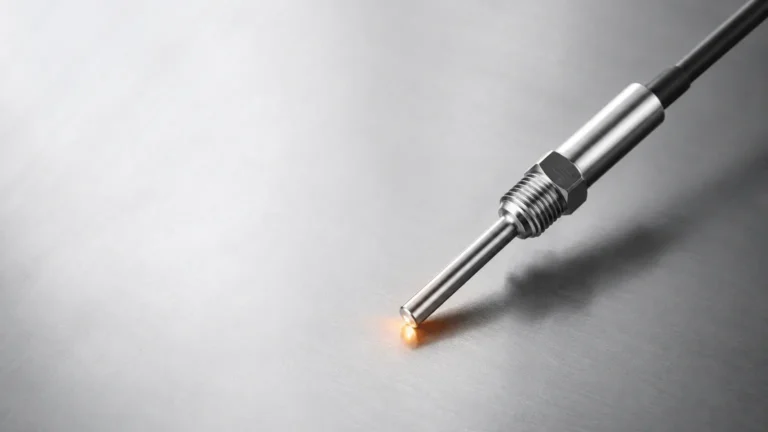
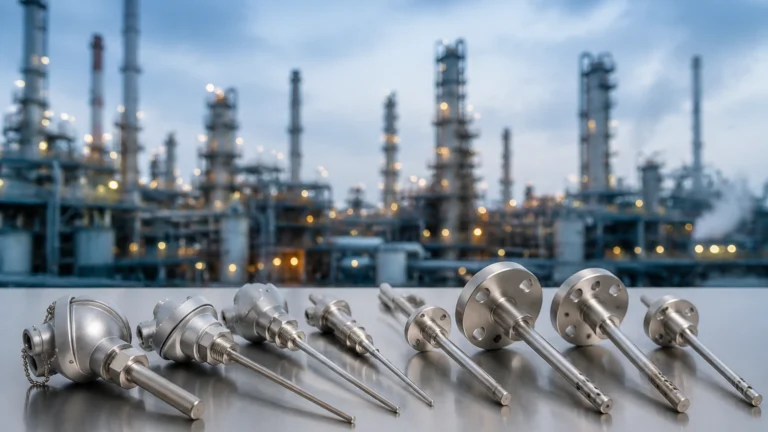
2. Invasive (Probes): For opaque industrial vessels, stainless steel probes are inserted into the process stream. These probes often utilize fiber optics to transmit the light signal to the sensing tip.
The Relationship Between Oxygen Sensing and Level Measurement
In many B2B industrial applications, oxygen monitoring and level measurement are two sides of the same coin. For instance, in the chemical and oil and gas sectors, storage tanks are often "blanketed" with nitrogen to displace oxygen and prevent combustion or oxidation of the product.
When a Main Page level meter, such as a high-frequency radar or an ultrasonic sensor, detects a drop in liquid level, it indicates that more headspace has been created. This headspace must be filled with inert gas. If the oxygen levels rise during this transition, it indicates a failure in the blanketing system. Integrating Oxysense data with level transmitter outputs allows for a holistic view of vessel safety.
Application Examples
* Food and Beverage: Monitoring the headspace in juice or wine tanks. As the level fluctuates, oxygen ingress must be strictly controlled to prevent spoilage.
* Pharmaceuticals: Ensuring that the nitrogen purge in a reactor remains effective as the liquid level rises and falls during batch processing.
* Water Treatment: In aerobic digestion, oxygen levels must be maintained for microbial health, while level sensors manage the throughput of the basins.
Key Evaluation Criteria for Oxygen and Level Systems
When selecting instrumentation for a facility, engineers must evaluate several technical parameters to ensure compatibility with the process media and environment.
1. Measurement Range and Sensitivity
For oxygen sensing, the requirements vary significantly between liquid-phase and gas-phase measurements.
* Trace Level: 0 to 1,000 ppm (parts per million), critical for power plant boiler feed water or semiconductor manufacturing.
* Ambient Level: 0% to 25% O2, used for safety and general process monitoring.
Similarly, for level measurement, the choice between a radar level meter and a hydrostatic transmitter depends on whether the goal is to measure a 2m (6.5 ft) tall chemical tote or a 30m (98.4 ft) storage silo.
2. Temperature and Pressure Compensation
Both oxygen and level sensors are affected by environmental variables. Optical oxygen sensors are sensitive to temperature changes, which alter the quenching rate. High-quality systems include an integrated thermistor to provide real-time compensation. In level measurement, ultrasonic sensors must account for air temperature as it affects the speed of sound, whereas radar sensors are largely immune to these fluctuations.
3. Material Compatibility
In corrosive environments, the wetted parts of the sensor must be resilient. For oxygen probes, this often means 316L stainless steel or Hastelloy. For level measurement, PTFE-coated antennas or PVDF sensor bodies are common requirements to prevent chemical degradation.
Technical Comparison: Sensor Selection Table
The following table provides a comparison of common sensing technologies used in conjunction with oxygen monitoring systems.
| Technology | Primary Application | Accuracy | Limitations |
| :— | :— | :— | :— |
| Optical Oxygen (Oxysense) | Headspace & Dissolved O2 | ±0.1% O2 | Sensitive to extreme light interference |
| Radar Level Meter | Non-contact liquid level | ±1-3 mm | Higher initial cost |
| Ultrasonic Level Sensor | Water/Wastewater level | ±0.25% of range | Affected by foam and heavy vapor |
| Hydrostatic Transmitter | Deep well/Vented tanks | ±0.1% to 0.5% | Contact-based; density dependent |
| Magnetic Level Gauge | High-pressure visual level | Visual reference | Requires bypass chamber installation |

Installation Considerations and Best Practices
Proper installation is paramount to achieving the rated accuracy of any industrial instrument. Whether installing an oxygen probe or a level transmitter, the following guidelines should be observed:
Oxygen Sensor Placement
* Avoid Dead Zones: Ensure the sensor is placed in a location with representative flow or gas mixing. In tanks, avoid placing sensors too close to the nitrogen inlet, as this will provide a false low-oxygen reading.
* Light Shielding: For optical sensors, ensure the sensing spot is not exposed to direct sunlight or high-intensity artificial light, which can interfere with the fluorescence detection.
* Orientation: Probes should ideally be installed at an angle (e.g., 15° to 45°) to prevent gas bubbles from becoming trapped on the sensing membrane in liquid applications.
Level Meter Installation
* Nozzle Geometry: For radar and ultrasonic sensors, the nozzle height and diameter must be within the manufacturer's specifications to prevent "ringing" or signal interference from the nozzle walls.
* Obstruction Clearance: Ensure the signal beam does not intersect with agitators, ladders, or heating coils.
* Venting: For hydrostatic transmitters, ensure the vent tube in the cable is clear to allow for atmospheric pressure compensation.
Common Risks and Mitigation Strategies
Industrial environments present several challenges that can lead to measurement drift or hardware failure.
1. Biofouling: In water treatment or fermentation, biological growth can coat the sensor tip. Regular cleaning or the use of sensors with anti-fouling coatings is necessary.
2. Pressure Spikes: Rapid changes in pressure can damage the delicate membranes of some oxygen sensors. Selecting a robust industrial-grade probe with a high pressure rating (e.g., up to 10 bar / 145 psi) is essential.
3. Signal Attenuation: In level measurement, heavy dust or steam can weaken the signal. In these cases, high-frequency (80GHz) radar is often preferred over ultrasonic technology due to its superior penetration capabilities.
Frequently Asked Questions (FAQs)
Q: How often do optical oxygen sensors need calibration?
A: Unlike electrochemical sensors that drift as the electrolyte is consumed, optical sensors are very stable. In many applications, a factory calibration can last for several months to a year, though monthly verification is recommended for critical processes.
Q: Can Oxysense technology measure oxygen in liquids?
A: Yes, the same fluorescence quenching principle applies to dissolved oxygen (DO). The oxygen molecules in the liquid equilibrate with the sensing polymer, allowing for accurate measurement in water, oils, or fuels.
Q: What is the maximum temperature for these sensors?
A: Standard industrial oxygen probes can typically handle up to 80°C (176°F). For high-temperature applications, cooling jackets or specialized high-temp sensors must be utilized. For level measurement, radar sensors can often withstand temperatures exceeding 250°C (482°F).
Q: Is it possible to integrate these sensors into a PLC?
A: Most modern oxygen and level transmitters offer standard industrial outputs, including 4-20mA (with HART), Modbus RS485, or Profibus, allowing for seamless integration into existing SCADA or PLC systems.
Conclusion and Next Steps
Effective process control requires a multi-faceted approach. By combining the specialized oxygen monitoring capabilities of Oxysense-style technology with the robust reliability of industrial level measurement, facilities can ensure both safety and product quality.
When planning your next instrumentation upgrade, it is vital to confirm the chemical compatibility of all wetted materials, the required measurement range, and the integration capabilities of your control system. For those seeking to optimize their liquid management systems, exploring a wide range of Main Page solutions—from radar to magnetic gauges—is the best way to find a cost-effective and accurate fit for your specific application. Always consult with a technical specialist to review your process parameters before finalizing a purchase to ensure the longevity and performance of your monitoring equipment.