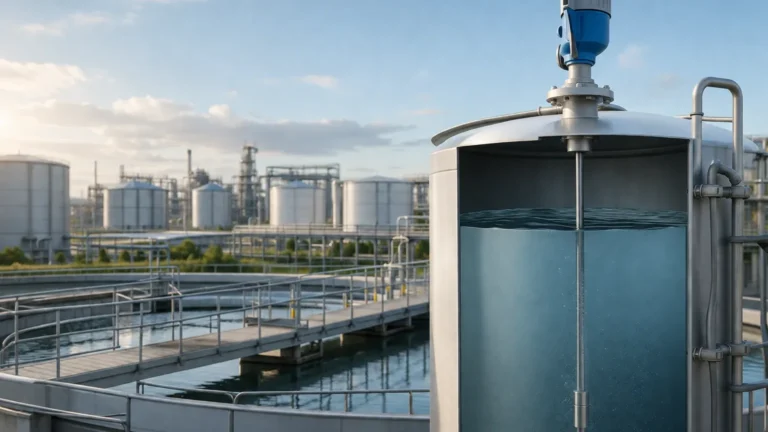
Dissolve Oxygen Sensor
Dissolve Oxygen Sensor
In industrial liquid analysis and process control, the dissolve oxygen sensor stands as a critical instrument for monitoring the health of aquatic ecosystems, the efficiency of wastewater treatment, and the quality of chemical production. Dissolved oxygen (DO) refers to the amount of free, non-compound oxygen present in water or other liquids. Because oxygen is a fundamental requirement for aerobic organisms and a key reactant in many chemical processes, its precise measurement is essential for maintaining operational standards and regulatory compliance.
While level measurement technologies—such as those found on the Main Page of industrial instrumentation providers—manage the quantity and volume of fluids in a tank, the dissolve oxygen sensor manages the biological and chemical "quality" of that fluid. This article provides a comprehensive engineering reference for understanding DO measurement principles, sensor selection, and installation best practices.
1. Measurement Principles of Dissolved Oxygen
Before selecting a dissolve oxygen sensor, it is vital to understand the two primary physical principles used to detect oxygen molecules in a liquid medium: electrochemical and optical.
Electrochemical Sensors (Polarographic and Galvanic)
Electrochemical DO sensors operate by measuring a chemical reaction that occurs at an electrode surface. These sensors typically consist of an anode, a cathode, and an electrolyte solution, all separated from the process liquid by a gas-permeable membrane.
* Polarographic Sensors: These require an external voltage (polarizing voltage) to be applied to the electrodes. When oxygen diffuses through the membrane, it is reduced at the cathode, creating a current proportional to the partial pressure of oxygen.
* Galvanic Sensors: These use two dissimilar metals for the anode and cathode, creating a self-polarizing system. The chemical reaction begins immediately upon immersion, and the resulting current is measured.
Both types are sensitive to flow; because they consume oxygen during the measurement process, the liquid must be constantly moving (typically at least 0.3 m/s or 1 ft/s) to ensure a fresh supply of oxygen reaches the membrane.
Optical Sensors (Luminescence-Based)
Optical dissolve oxygen sensors, often referred to as LDO (Luminescent Dissolved Oxygen) sensors, utilize the principle of fluorescence quenching. The sensor tip contains a luminophore layer. When exposed to blue light from an internal LED, the luminophore becomes excited and emits red light as it returns to its ground state.
If oxygen molecules are present, they collide with the excited luminophore and "quench" the fluorescence, causing the red light to fade faster or with less intensity. The sensor measures the phase shift or the decay time of the red light. Unlike electrochemical versions, optical sensors do not consume oxygen and are therefore not dependent on flow velocity.
2. Key Evaluation Criteria for Sensor Selection
Choosing the right dissolve oxygen sensor requires balancing maintenance requirements, accuracy needs, and environmental conditions. The following table compares the two primary technologies across common industrial metrics.
Comparison Table: Electrochemical vs. Optical DO Sensors
| Feature | Electrochemical (Membrane) | Optical (Luminescence) |
| :— | :— | :— |
| Measurement Principle | Amperometric (Oxygen reduction) | Fluorescence quenching |
| Oxygen Consumption | Yes (Requires flow/stirring) | No (Measurement is passive) |
| Maintenance Frequency | High (Membrane/Electrolyte change) | Low (Annual cap replacement) |
| Response Time (T90) | Fast (30–60 seconds) | Moderate (60–90 seconds) |
| Calibration Stability | Moderate (Frequent drift) | High (Long-term stability) |
| Interference | H2S, CO2, and heavy metals | High turbidity or stray light |
| Initial Cost | Lower | Higher |
| Total Cost of Ownership | Higher (Labor/Consumables) | Lower (Minimal intervention) |
Environmental Factors
When evaluating a dissolve oxygen sensor, engineers must consider the following factors:
1. Temperature: DO solubility is highly temperature-dependent. Sensors must include an integrated temperature probe (PT100 or PT1000) for automatic compensation.
2. Salinity: Dissolved salts reduce the solubility of oxygen. In seawater or brackish applications, salinity correction factors must be applied in the transmitter software.
3. Pressure: Changes in atmospheric or process pressure affect the partial pressure of oxygen. High-altitude installations require barometric pressure compensation.
3. Installation Considerations and Best Practices
Proper installation is as important as sensor selection. Even the most accurate dissolve oxygen sensor will provide misleading data if placed in a stagnant zone or an area of excessive turbulence.
Positioning and Orientation
* Angle of Insertion: Sensors should ideally be installed at a 45-degree angle to the vertical. This prevents air bubbles from accumulating on the sensor membrane or optical cap, which would cause artificially high DO readings.
* Immersion Depth: The sensor should be submerged deep enough to avoid surface aeration effects but high enough to avoid the sludge layer at the bottom of a tank (typically 0.5 to 2 meters / 1.6 to 6.5 feet from the surface in wastewater basins).
* Flow Requirements: For electrochemical sensors, ensure the probe is located in a high-flow area or equipped with a mechanical stirrer. Optical sensors are more flexible but still benefit from moderate flow to prevent biofouling.
Integration with Level Control
In many industrial setups, DO monitoring is integrated into the same automation loop as level measurement. For instance, in a wastewater aeration tank, ultrasonic or radar level meters (available through the Main Page of specialized manufacturers) monitor the basin level to prevent overflow during heavy rain events. Simultaneously, the dissolve oxygen sensor controls the VFD (Variable Frequency Drive) of the aeration blowers. If the DO level drops below a setpoint (e.g., 2.0 mg/L), the blowers ramp up to ensure the biological sludge remains healthy.
4. Common Risks and Limitations
While modern dissolve oxygen sensors are robust, they are susceptible to specific industrial hazards:
* Biofouling: In wastewater and aquaculture, algae and bacterial films can grow on the sensor tip. This creates a localized micro-environment that does not represent the bulk liquid, leading to sluggish response times. Automatic cleaning systems (compressed air or water jets) are highly recommended.
* Chemical Poisoning: Electrochemical sensors can be "poisoned" by hydrogen sulfide (H2S), which permeates the membrane and reacts with the internal anode, permanently damaging the sensor. Optical sensors are generally immune to H2S.
* Membrane Damage: In abrasive slurries, the thin membrane of an electrochemical sensor can be punctured by suspended solids. Optical sensors use a much thicker, ruggedized sensing cap that is more resistant to physical abrasion.
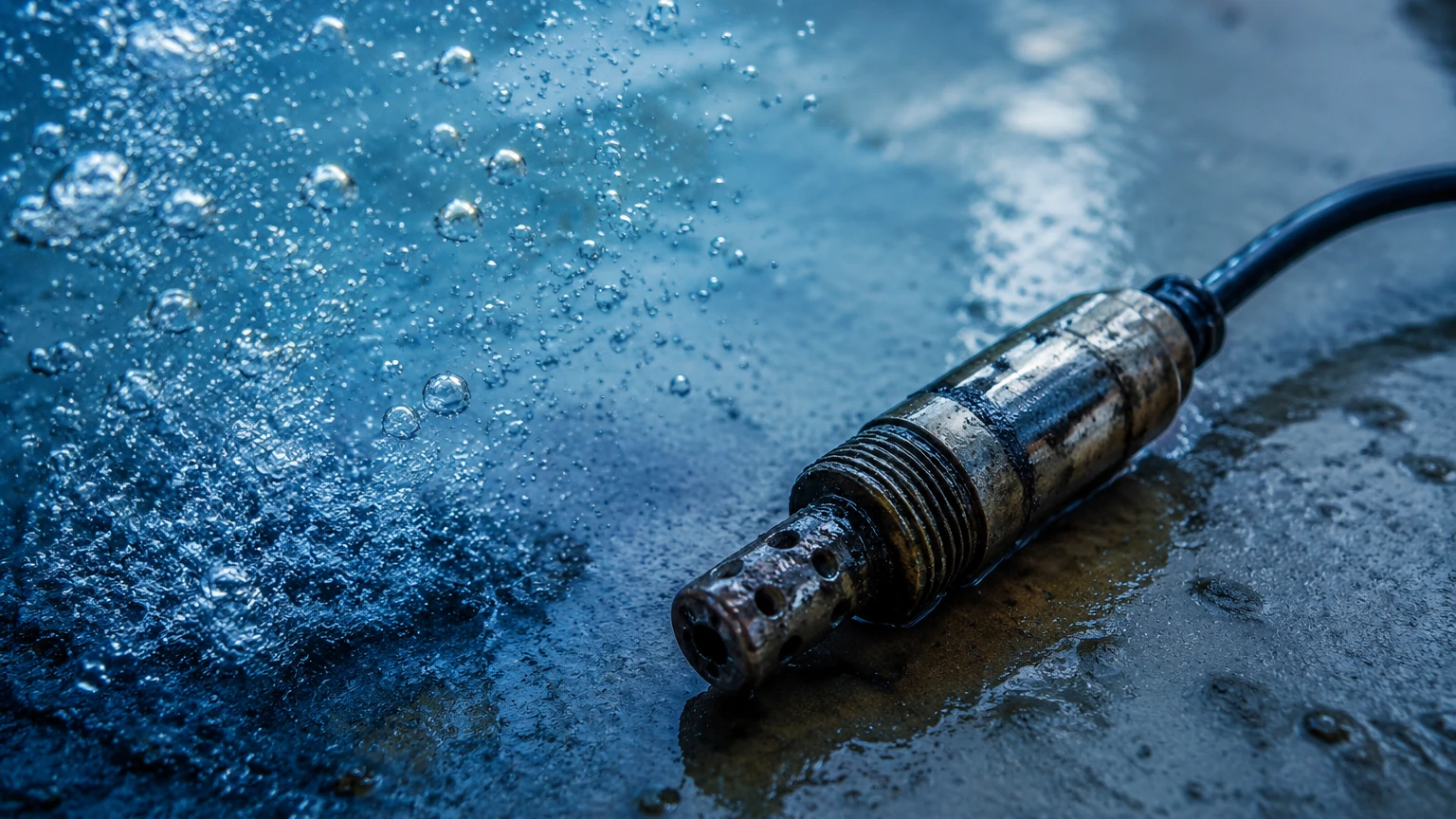
5. Maintenance and Calibration Procedures
To ensure long-term accuracy, a dissolve oxygen sensor requires a structured maintenance schedule.
Calibration Methods
1. Air Calibration (Most Common): The sensor is held in water-saturated air (just above the water surface). Since the percentage of oxygen in the atmosphere is constant (approx. 20.9%), this provides a reliable slope calibration point.
2. Zero-Point Calibration: The sensor is immersed in an oxygen-free solution (e.g., water with dissolved sodium sulfite). This is particularly important when measuring low DO levels (below 1.0 mg/L), such as in boiler feed water applications.
3. Winkler Titration: For high-precision laboratory verification, a manual chemical titration (the Winkler method) can be used to cross-check the electronic sensor's performance.
Maintenance Tasks
* Electrochemical: Inspect the membrane for wrinkles or tears every 2–4 weeks. Replace the electrolyte solution and membrane every 3–6 months depending on the process severity.
* Optical: Clean the optical window periodically. Replace the sensing cap once every 12–24 months. Most modern transmitters will provide a "sensor health" indicator based on the luminescence decay intensity.
6. Frequently Asked Questions (FAQs)
Q: Can I use a dissolve oxygen sensor in non-aqueous liquids?
A: Most DO sensors are designed for water-based applications. In non-polar solvents or oils, the membrane or optical coating may degrade. Always consult the manufacturer for chemical compatibility charts.
Q: What is the difference between mg/L and % Saturation?
A: mg/L (or ppm) measures the actual concentration of oxygen by weight. % Saturation measures the partial pressure of oxygen relative to the maximum amount of oxygen that can dissolve in water at that specific temperature and pressure. Most industrial processes use mg/L for control logic.
Q: How does a dissolve oxygen sensor handle freezing temperatures?
A: While the sensor can often operate near 0°C (32°F), the liquid must remain fluid. If the process liquid freezes, the expansion of ice can rupture membranes or crack optical windows. In cold climates, immersion heaters or bypass loops are necessary.
Q: Why is my DO reading drifting in a high-pressure pipe?
A: DO sensors measure partial pressure. If the pressure in the pipe fluctuates, the reading will fluctuate even if the oxygen concentration is stable. You must use a transmitter that accepts a pressure input for real-time compensation.
7. Conclusion and Next Steps
The dissolve oxygen sensor is an indispensable tool for modern process automation. By understanding the fundamental differences between electrochemical and optical technologies, engineers can select a solution that minimizes maintenance while maximizing uptime. Whether managing a complex wastewater treatment plant or a sensitive chemical reactor, the integration of DO sensing with reliable level measurement—such as the solutions found on the Main Page—ensures a holistic approach to industrial fluid management.
Before finalizing a project specification, stakeholders should confirm the expected flow rates, the presence of interfering chemicals like H2S, and the required communication protocols (e.g., 4-20mA, Modbus RTU, or HART) to ensure seamless integration into the facility's SCADA system.