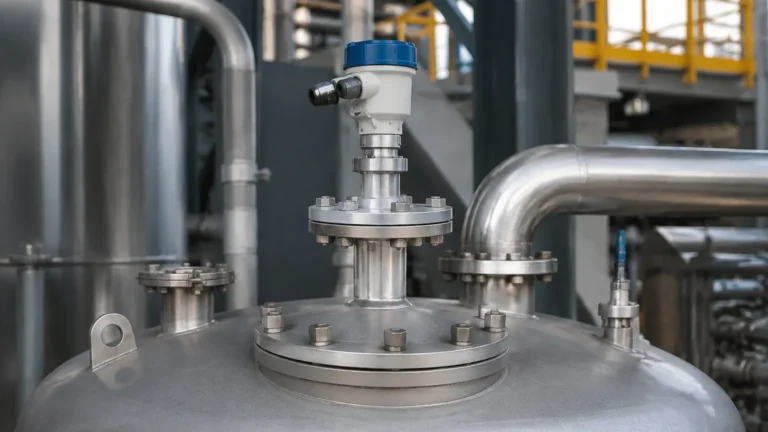
Radar Level Transmitter Vegapuls 6x
Radar Level Transmitter Vegapuls 6x: A Technical Guide to 80 GHz Measurement
In the field of industrial process automation, precise level measurement is critical for inventory management, process safety, and operational efficiency. Among the various technologies available, non-contact radar has emerged as the most versatile solution for both liquid and bulk solid applications. The introduction of the radar level transmitter Vegapuls 6x represents a significant shift in how engineers approach sensor selection, moving away from specialized models for different media toward a unified, high-frequency platform.
This article examines the underlying physics of radar measurement, the specific technical advantages of 80 GHz technology, and the practical considerations for implementing Radar Level Meters in complex industrial environments.
—
1. Principles of Radar Level Measurement
Before selecting a specific instrument like the radar level transmitter Vegapuls 6x, it is essential to understand the measurement principles that govern its operation. Radar sensors generally utilize one of two methods: Pulse Radar or Frequency Modulated Continuous Wave (FMCW).
Time-of-Flight (ToF) and Pulse Radar
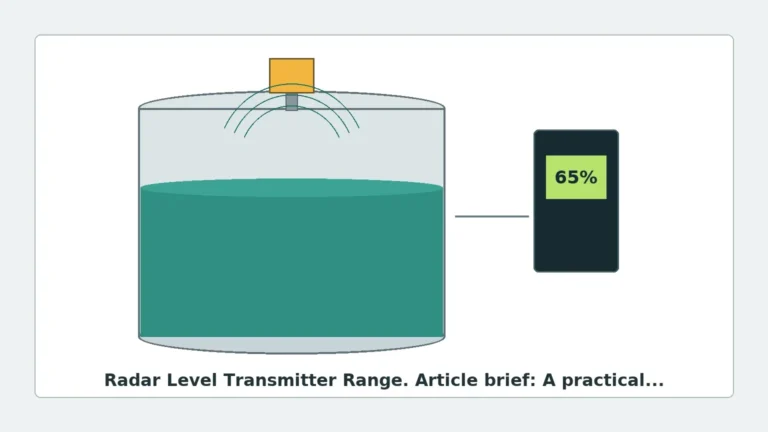
Traditional radar sensors emit short microwave pulses toward the medium's surface. These pulses are reflected and returned to the sensor. The instrument measures the "Time-of-Flight" (the duration between emission and reception). Since the speed of light is constant, the distance to the product surface is calculated as:
*Distance = (Speed of Light × Time) / 2*
FMCW (Frequency Modulated Continuous Wave)
Modern high-frequency instruments, including the Vegapuls 6x, typically utilize the FMCW principle. Instead of sending discrete pulses, the transmitter emits a continuous signal with a constantly changing frequency (a frequency sweep). The signal reflected from the surface is received with a frequency shift compared to the signal being emitted at that exact moment. The difference in frequency is directly proportional to the distance.
Why 80 GHz Matters:
The frequency of the radar signal determines the wavelength. A higher frequency (80 GHz) results in a shorter wavelength, which allows for several engineering advantages:
1. Narrower Beam Angle: High-frequency signals can be focused into a very tight beam (as small as 3°), reducing the risk of interference from internal tank structures like agitators or ladders.
2. Higher Sensitivity: Shorter wavelengths reflect more effectively off media with low dielectric constants, such as plastic pellets or hydrocarbons.
3. Smaller Antennas: High-frequency components allow for smaller process connections without sacrificing signal focus.
—
2. Overview of the Radar Level Transmitter Vegapuls 6x
The radar level transmitter Vegapuls 6x was developed to simplify the selection process for industrial users. Previously, engineers had to choose between various models (such as the Vegapuls 61, 62, 63, 64, 67, or 69) based on whether they were measuring liquids or solids, or if the environment was corrosive or high-pressure.
The Vegapuls 6x consolidates these capabilities into a single modular platform. It is designed to handle temperatures ranging from -196°C to +450°C and pressures from vacuum to 160 bar. By using a unified signal processing chip, the device can be configured via software for virtually any industrial application, from wastewater treatment to high-pressure chemical reactors.
Key Technical Specifications
| Parameter | Specification |
| :— | :— |
| Measuring Range | Up to 120 meters |
| Frequency | 80 GHz (W-band) |
| Accuracy | ±1 mm |
| Beam Angle | Minimum 3° |
| Dielectric Constant (εr) | ≥ 1.1 |
| Process Connections | Threaded, Flanged, or Hygienic |
| Safety Integrity Level | SIL 2/3 certified |
—
3. Selection Criteria for Industrial Applications
When specifying Radar Level Meters, engineers must evaluate the physical properties of the media and the constraints of the vessel.
Dielectric Constant (εr)
The dielectric constant of the material determines how much of the radar energy is reflected back to the sensor. Water-based liquids have a high εr (~80) and are easy to measure. Oils and hydrocarbons have low εr values (1.7 to 2.5), which result in weaker return signals. The 80 GHz technology in the Vegapuls 6x provides a high signal-to-noise ratio, making it capable of measuring media with εr as low as 1.1.
Surface Conditions
* Turbulence: Rapidly moving liquid surfaces can scatter radar signals. FMCW processing helps filter out this noise.
* Foam: Dense, conductive foam can absorb radar signals. In such cases, a lower frequency or a guided wave radar might be considered, though 80 GHz often penetrates light foam effectively.
* Dust: In bulk solids, heavy dust during filling can attenuate signals. The high dynamic range of the Vegapuls 6x allows it to maintain a signal even in dusty silos.
Selection Table by Industry
| Industry | Application | Recommended Configuration |
| :— | :— | :— |
| Chemical | Corrosive Acid Tanks | PTFE-encapsulated antenna |
| Oil & Gas | Fuel Storage | High-accuracy 80 GHz with bypass pipe |
| Food & Bev | Milk/Juice Silos | Hygienic fittings (Tri-clamp) |
| Mining | Ore Crushers | Heavy-duty housing, 120m range |
| Water/Wastewater | Open Channels | Plastic housing, IP68 rating |
—
4. Installation Considerations and Constraints
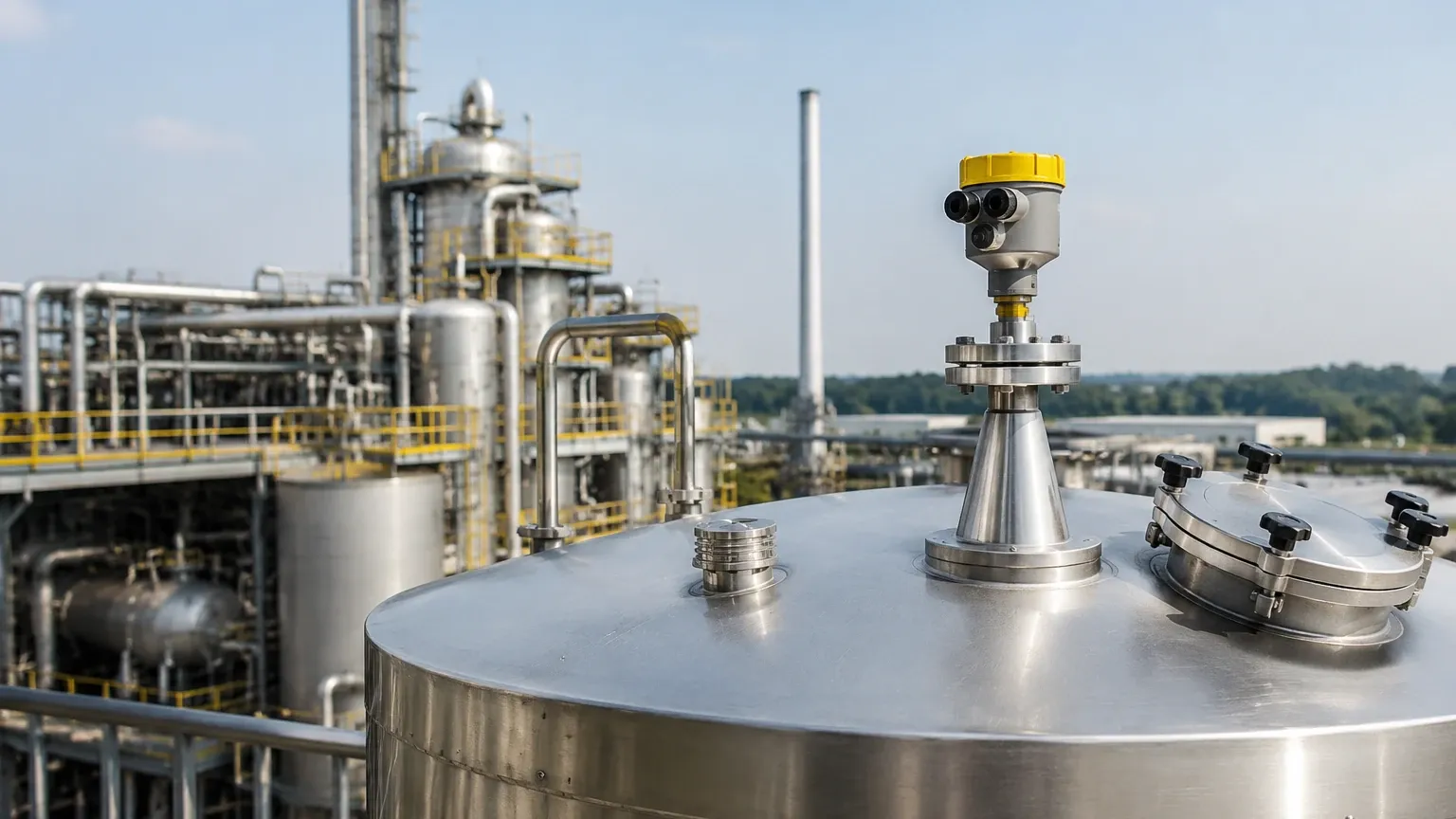
Correct installation is the most critical factor in ensuring the long-term reliability of a radar level transmitter Vegapuls 6x. Even the most advanced 80 GHz sensor can fail if improperly mounted.
Beam Path and Obstructions
The radar beam must have a clear path to the product surface. While the 3° beam angle of the Vegapuls 6x is narrow, it still expands over distance.
* Calculation: At a distance of 10 meters, a 3° beam has a diameter of approximately 0.52 meters.
* Constraint: Ensure that no heating coils, agitators, or support beams enter this cone. If obstructions are unavoidable, the sensor's software can perform "False Echo Suppression" to map out and ignore these static reflections.
Nozzle Mounting
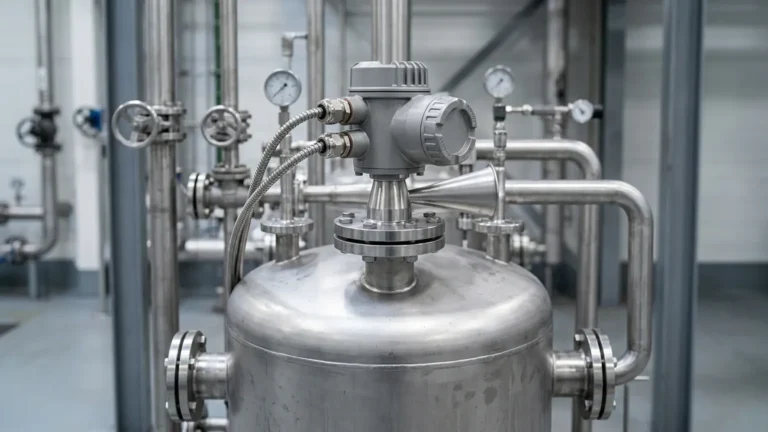
A common issue with older radar technology was "nozzle noise," where the signal would reflect off the inside of the mounting nozzle. Because 80 GHz radar has a very small wavelength, the antenna can be mounted flush with the nozzle or even retracted into long nozzles without significant signal degradation. However, it is always best practice to ensure the antenna tip extends slightly past the nozzle end to prevent internal reflections.
Orientation and Polarization
The radar signal is polarized. For rectangular tanks or vessels with specific internal geometries, rotating the sensor can sometimes help minimize interference from the tank walls. Most Vegapuls 6x units include a marking on the housing to indicate the polarization plane.
—
5. Application Risks and Limitations
While the radar level transmitter Vegapuls 6x is highly versatile, it is not a "silver bullet" for every application. Engineers should be aware of the following risks:
1. Condensation and Buildup: Although 80 GHz radar is less sensitive to buildup than ultrasonic sensors, heavy condensation or viscous product buildup on the antenna lens can attenuate the signal. In these cases, a sensor with a convex lens or a purging (air-flush) connection should be used.
2. Extremely Low Dielectric Solids: In very light powders (like fumed silica), the radar signal may pass through the material and reflect off the bottom of the tank rather than the surface.
3. Vacuum and High Pressure: While the Vegapuls 6x handles high pressure well, the physical seal (the process seal) must be compatible with the chemical nature of the medium to prevent gas migration into the sensor electronics.
4. Cybersecurity: As industrial plants become more connected, sensors are potential entry points for cyber threats. The Vegapuls 6x includes integrated security features (IEC 62443-4-2) to ensure that the Bluetooth adjustment and digital communication channels are protected.
—
6. Frequently Asked Questions (FAQ)
Q: Can I use the Vegapuls 6x for both liquids and solids?
A: Yes. The Vegapuls 6x is designed as a universal sensor. The internal signal processing can be toggled between liquid and solid modes to optimize the tracking algorithm for different surface profiles.
Q: How does the Vegapuls 6x compare to older 26 GHz radar sensors?
A: The primary difference is the beam focus. A 26 GHz sensor typically has a beam angle of 8° to 20°, whereas the 80 GHz Vegapuls 6x can achieve 3°. This makes the 80 GHz version much better suited for narrow tanks or tanks with internal obstructions.
Q: Is it possible to calibrate the sensor without filling the tank?
A: Yes. Since radar is a non-contact technology based on the speed of light, it does not require a "wet calibration." You simply input the tank height and the desired measurement range into the software.
Q: What maintenance is required for a radar level transmitter?
A: Under normal conditions, radar level transmitters are maintenance-free because they have no moving parts. If the medium is prone to heavy crystallization or buildup, periodic cleaning of the antenna lens or the use of an automated air-purge system is recommended.
—
7. Conclusion for International Buyers
For international procurement and engineering teams, the shift toward a unified platform like the radar level transmitter Vegapuls 6x reduces the complexity of spare parts management and training. Instead of maintaining inventory for five different radar models, a single modular series can cover the vast majority of plant requirements.
When selecting Radar Level Meters, always confirm the following with your supplier:
* The dielectric constant of your medium.
* The maximum process temperature and pressure.
* The exact dimensions of the mounting nozzle.
* Required safety certifications (ATEX, SIL, etc.).
By prioritizing the 80 GHz FMCW principle, industrial facilities can achieve millimeter-precise measurements even in the most challenging process conditions, ensuring safety and reliability across the entire production cycle.