Liquid Mass Flow Meter
Liquid Mass Flow Meter
In industrial process control, the precision of fluid measurement often determines the quality of the final product and the efficiency of the operation. While volumetric flow measurement is common, it is frequently insufficient for applications where temperature and pressure fluctuations alter the density of the fluid. A liquid mass flow meter addresses this by measuring the actual mass of the fluid passing through a system, providing a data point that remains constant regardless of environmental changes. For engineers and facility managers, understanding the underlying physics and selection criteria for these instruments is essential for optimizing chemical dosing, custody transfer, and fuel management.
Measurement Principles: How Mass is Determined
Unlike volumetric meters that measure the space a fluid occupies, a liquid mass flow meter determines the quantity of matter. There are two primary methods for achieving this: direct mass measurement and inferred mass measurement.
Coriolis Principle (Direct Measurement)
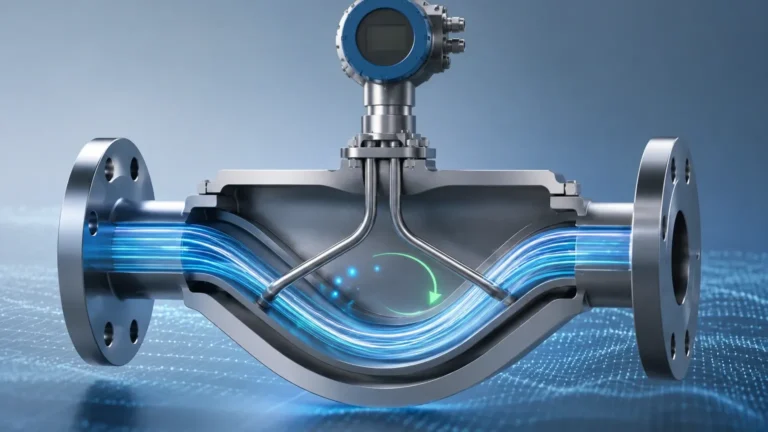
The Coriolis meter is widely considered the gold standard for direct mass flow measurement. It operates based on the Coriolis effect, which is an inertial force generated when a fluid moves through a vibrating tube.
Inside the meter, one or two measuring tubes are vibrated at their natural frequency by an electromagnetic drive coil. When a liquid flows through these vibrating tubes, the momentum of the fluid causes a slight "twist" or phase shift in the tube's vibration. Sensors located at the inlet and outlet of the tubes detect this phase shift. The magnitude of the shift is directly proportional to the mass flow rate. Because this measurement relies on inertia and momentum rather than volume, it is inherently independent of changes in viscosity, density, or temperature. Most Coriolis meters also measure the vibration frequency itself, which allows them to calculate the fluid's density in real-time, providing a multi-variable output.
Thermal Mass Principle (Direct Measurement)
Thermal mass flow meters operate on the principle of heat transfer. While more common in gas applications, specific designs are utilized for liquid mass flow meter applications, particularly in low-flow or high-purity environments.
These meters typically use two sensing elements: one that measures the ambient temperature of the fluid and another that is heated. As the liquid flows past the heated sensor, it carries away heat (convective cooling). The meter either measures the amount of power required to maintain a constant temperature difference between the two sensors or measures the temperature drop at a constant power input. Since the heat-carrying capacity of a fluid is related to its mass, the cooling effect can be calibrated to provide a mass flow reading. This method is highly sensitive but requires the fluid's specific heat properties to remain constant.
Inferred Mass (Multivariable Volumetric)
Inferred mass measurement is not a single instrument but a system. It combines a volumetric flow meter (such as a turbine, vortex, or ultrasonic meter) with separate sensors for temperature and pressure. By using these variables, a flow computer calculates the fluid density and subsequently the mass flow ($Mass = Volume \times Density$). While cost-effective for stable processes, this method is prone to cumulative errors from multiple sensors and is less responsive to rapid density changes compared to a dedicated liquid mass flow meter.
Key Evaluation Criteria for Industrial Selection
Selecting the right instrument requires a balance between technical requirements and budgetary constraints. When evaluating a liquid mass flow meter, the following criteria are paramount:
1. Accuracy and Repeatability
For custody transfer or high-value chemical blending, accuracy levels of ±0.1% of the flow rate are often required. Coriolis meters typically meet these standards. In contrast, for general process monitoring where ±1.0% is acceptable, thermal or compensated volumetric systems may be more appropriate.
2. Fluid Properties and Compatibility
Consider the chemical aggressiveness, viscosity, and presence of solids. Coriolis meters are generally robust against viscosity changes but can be affected by entrained air or gas bubbles, which disrupt the tube vibration. Thermal meters require a clean, single-phase fluid to ensure consistent heat transfer.
3. Pressure Drop
Every meter introduces some resistance to flow. Coriolis meters with curved tubes can create a significant pressure drop (often measured in bars or kPa), which may require larger pumps. Straight-tube Coriolis designs or thermal meters offer lower pressure drops but may have different accuracy profiles.
4. Flow Range (Turndown Ratio)
The turndown ratio defines the range between the maximum and minimum flow the meter can accurately measure. High-quality liquid mass flow meters often offer turndowns of 100:1 or better, allowing for precise measurement during both peak production and low-flow maintenance cycles.
Technology Comparison Table
| Feature | Coriolis Mass Meter | Thermal Mass Meter | Volumetric + Compensation |
| :— | :— | :— | :— |
| Primary Measurement | Direct Mass | Direct Mass (Heat Transfer) | Volume (Calculated Mass) |
| Typical Accuracy | ±0.1% to ±0.2% | ±1.0% to ±2.0% | ±1.0% to ±5.0% |
| Fluid Density Effect | None | Significant (Requires Calibration) | Compensated by Sensors |
| Viscosity Effect | Negligible | Moderate | Significant |
| Maintenance | Low (No moving parts) | Low | Moderate (Multiple sensors) |
| Relative Cost | High | Medium | Low to Medium |
Installation Considerations
To ensure the performance of a liquid mass flow meter, proper installation is as critical as the device selection itself.
* Orientation: For liquid applications, Coriolis meters should ideally be installed with the tubes pointing downward (in a "U" shape) or in a vertical line with upward flow. This prevents gas bubbles from becoming trapped in the tubes, which can cause measurement noise or "stalling" of the vibration.
* Straight Pipe Runs: While Coriolis meters are generally less sensitive to flow profiles than volumetric meters, thermal mass meters and compensated systems require significant straight pipe runs (typically 10–20 diameters upstream) to ensure a stable, laminar flow profile.
* Vibration Isolation: Because Coriolis meters rely on internal vibration, they must be isolated from external mechanical vibrations. Using robust mounting brackets and flexible couplings can prevent interference from nearby pumps or heavy machinery.
* Zero Calibration: Upon installation and under full process pressure and temperature, the meter must be "zeroed" with the fluid at a complete standstill. This accounts for the specific stresses of the piping system on the meter body.
Limitations and Common Risks
While highly capable, a liquid mass flow meter is not a universal solution. Engineers should be aware of the following risks:
1. Entrained Air: In Coriolis meters, even a small percentage of air bubbles can cause the tubes to vibrate erratically, leading to large errors. This is often managed by installing air eliminators upstream.
2. Initial Capital Expenditure: The sophisticated electronics and precision-machined tubes of mass flow meters make them more expensive than traditional level or volumetric sensors. The ROI must be justified through improved yield or reduced waste.
3. Material Erosion: In high-velocity applications with abrasive slurries, the thin-walled tubes of a Coriolis meter can wear over time, shifting the calibration or eventually leading to tube failure.
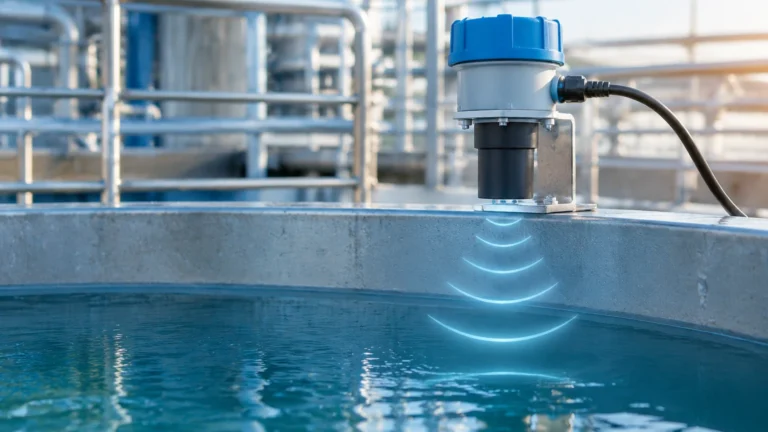
In many industrial setups, mass flow measurement works in tandem with level measurement. For instance, while a flow meter tracks the movement of liquid into a vessel, a hydrostatic or radar level transmitter provides the necessary redundancy for inventory verification. For a comprehensive look at how these technologies integrate into a complete process control strategy, visiting the Main Page of an established instrumentation manufacturer like Welk can provide technical specifications for both flow and level solutions.
Frequently Asked Questions (FAQ)
Q: Can a liquid mass flow meter measure the flow of non-conductive liquids?
A: Yes. Unlike electromagnetic flow meters, which require a conductive fluid, Coriolis and thermal mass flow meters are independent of electrical conductivity and work perfectly with oils, solvents, and deionized water.
Q: Does temperature change affect the accuracy of a Coriolis meter?
A: The measurement principle itself is independent of temperature-induced density changes. However, temperature can affect the elasticity of the metal tubes. High-quality meters include an internal RTD (Resistance Temperature Detector) to automatically compensate for these changes in tube stiffness.
Q: How often does a mass flow meter need recalibration?
A: In stable, non-corrosive environments, these meters can maintain accuracy for several years. However, in regulated industries like pharmaceuticals or oil and gas, annual or biennial calibration is standard. Many modern units offer "on-board diagnostics" that can verify the health of the meter without removing it from the line.
Conclusion and Next Steps
The transition from volumetric to mass-based measurement represents a significant step toward process maturity. By choosing a liquid mass flow meter, operators gain a deeper understanding of their material balance, leading to tighter quality control and reduced operational costs. When selecting a device, always prioritize the specific needs of your fluid—considering viscosity, potential for aeration, and required precision.
For engineers looking to specify a complete measurement suite, including the level sensors that often complement flow data in tank farm management, reviewing the technical resources available on the Main Page is a recommended next step. Ensuring that your flow and level instruments are compatible in terms of communication protocols and material standards will streamline both installation and long-term maintenance.