Cryogenic Flow Meters
Cryogenic Flow Meters
Cryogenic flow measurement represents one of the most demanding challenges in industrial process control. Cryogenic fluids, typically defined as substances kept in a liquid state at temperatures below -150°C (-238°F), include liquid nitrogen (LN2), liquid oxygen (LOX), liquid argon, liquified natural gas (LNG), and liquid hydrogen (LH2). Because these fluids exist very close to their boiling points, any minor change in pressure or temperature can cause a phase transition, leading to inaccuracies or mechanical failure in standard instrumentation.
Selecting the right cryogenic flow meters requires a deep understanding of fluid dynamics at absolute temperatures, material science, and the specific thermodynamic properties of the media. This guide provides a technical overview of measurement principles, selection criteria, and installation best practices for engineers and procurement professionals.
Understanding Cryogenic Flow Measurement Principles
Before selecting a specific meter, it is essential to understand how flow is measured in extreme cold. The primary goal is to maintain the fluid in a sub-cooled liquid state throughout the measurement process. If the pressure drops too low or the temperature rises too high, the liquid may "flash" into gas, creating a two-phase flow (liquid and gas) that most meters cannot accurately quantify.
Mass Flow vs. Volumetric Flow
In cryogenic applications, mass flow measurement is generally preferred over volumetric measurement. This is because the density of cryogenic liquids changes significantly with temperature and pressure. A volumetric meter (measuring liters or cubic meters) requires secondary sensors for temperature and pressure to calculate the actual mass, whereas a mass flow meter (measuring kilograms or pounds) provides a direct reading regardless of density fluctuations.
The Role of Reynolds Number
Cryogenic fluids often have very low viscosity. For example, liquid hydrogen has a viscosity significantly lower than water. This results in high Reynolds numbers, meaning the flow is almost always turbulent. Flow meters must be calibrated to handle these high-velocity, low-viscosity profiles to ensure linearity across the operating range.
Primary Technologies for Cryogenic Flow Meters
Several technologies have been adapted for cryogenic service, each with specific advantages and limitations regarding accuracy, pressure drop, and maintenance.
Coriolis Mass Flow Meters
Coriolis meters are often considered the gold standard for cryogenic service, particularly for high-value fluids like LNG. They operate on the principle of the Coriolis effect, where the fluid moving through vibrating tubes causes a phase shift proportional to the mass flow rate.
* Advantages: Direct mass flow measurement, high accuracy (often ±0.1% to ±0.5%), and no moving parts in the fluid stream.
* Limitations: High initial cost and sensitivity to external vibrations. They also require careful thermal management to prevent the vibration tubes from becoming brittle.
Turbine Flow Meters
Turbine meters utilize a rotor suspended in the flow stream. The velocity of the fluid turns the rotor, and the speed of rotation is proportional to the volumetric flow rate.
* Advantages: Excellent repeatability and relatively low cost for the level of precision provided.
* Limitations: Moving parts are a significant risk factor. Bearings must be specially designed (often using ceramic or self-lubricating materials) because standard lubricants freeze solid at cryogenic temperatures. They are also susceptible to damage if "overspeeding" occurs due to gas slugs.
Differential Pressure (DP) Meters
DP meters, such as orifice plates or Venturi tubes, measure the pressure drop across a constriction in the pipe. According to Bernoulli’s principle, the square root of the pressure drop is proportional to the flow rate.
* Advantages: No moving parts, well-understood technology, and easy to service.
* Limitations: Limited turndown ratio (usually 3:1 or 4:1) and a permanent pressure drop that can induce flashing in the cryogenic liquid.
Ultrasonic Flow Meters (Transit-Time)
These meters use ultrasonic transducers to measure the time it takes for a sound pulse to travel with and against the flow.
* Advantages: Non-intrusive (clamped on the outside) or full-bore designs with no pressure drop. Ideal for retrofitting existing cryogenic lines.
* Limitations: Signal attenuation can occur if there are bubbles or impurities in the cryogenic fluid. Precise transducer alignment is critical at low temperatures due to pipe contraction.
Material Selection and Structural Integrity
Standard carbon steel is unsuitable for cryogenic service because it becomes extremely brittle and prone to catastrophic fracture at low temperatures. Cryogenic flow meters must be constructed from materials that maintain ductility and impact strength at temperatures reaching -196°C (77 K) or lower.
1. 316/316L Stainless Steel: The most common material for meter bodies and flanges due to its excellent low-temperature toughness.
2. Inconel and Hastelloy: Used for specialized components like bellows or sensors that require high strength and corrosion resistance.
3. PTFE/Teflon: Often used for seals and gaskets, though specialized "cryogenic grade" polymers are required to prevent shrinking and leakage.
4. Ceramic Bearings: In turbine meters, ceramic bearings are preferred over steel to prevent seizing and to handle the lack of lubrication in fluids like liquid nitrogen.
Installation and Maintenance Requirements
Proper installation is as critical as the meter selection itself. Failure to account for the unique physics of cryogenics will lead to measurement drift or hardware failure.
Thermal Expansion and Contraction
When a system is cooled from ambient temperature to -160°C, the piping will contract significantly. For a 10-meter section of stainless steel pipe, this contraction can be as much as 30-40 mm. Flow meters must be installed with expansion loops or bellows to prevent mechanical stress on the meter body flanges.
Insulation and the "Cold Box"
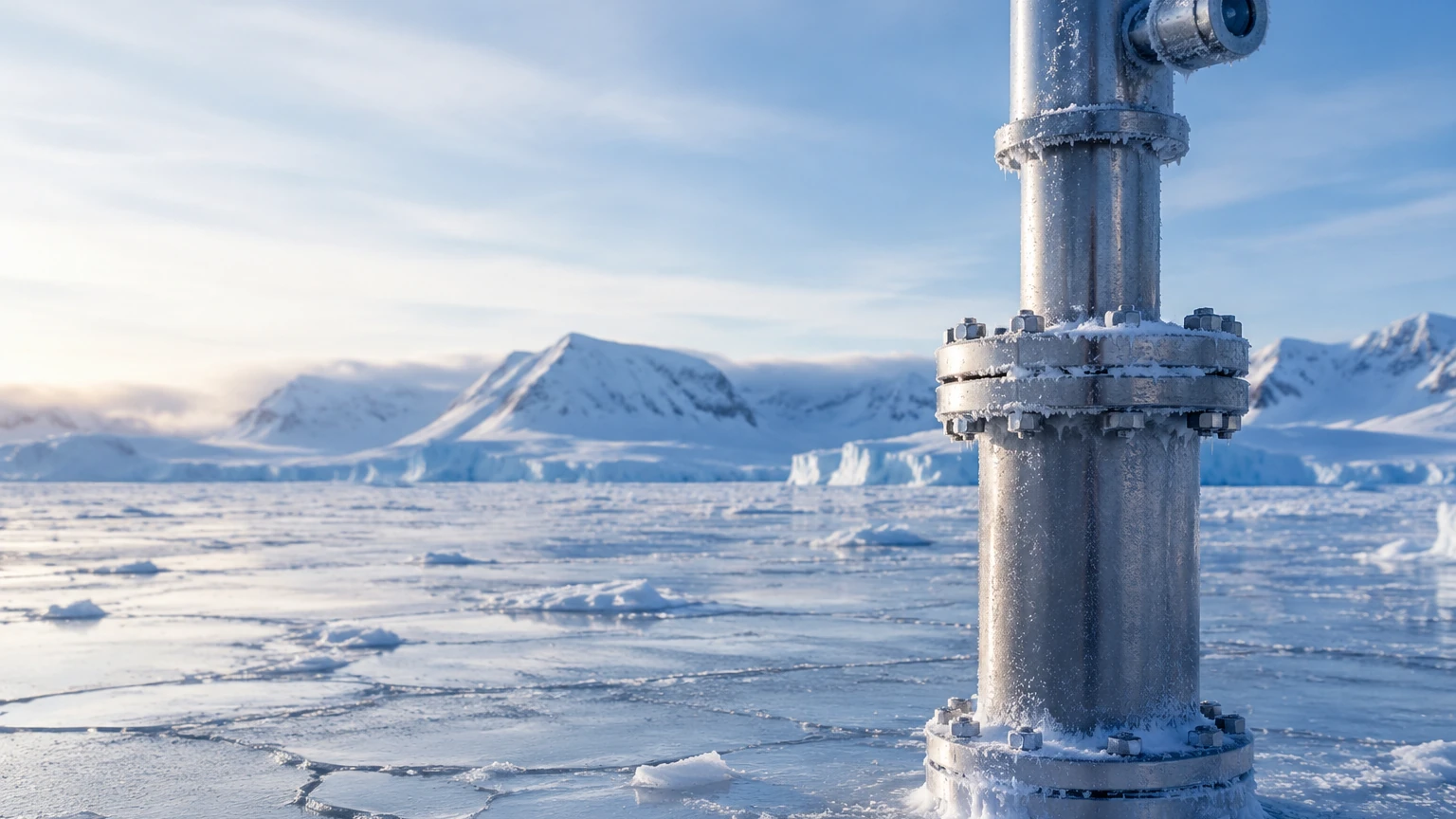
To prevent heat gain and the formation of ice on the exterior of the meter, high-performance insulation is required. Vacuum-jacketed piping is the most effective method. If the meter is not vacuum-jacketed, it is often housed in a "cold box" filled with perlite or polyurethane foam. The electronics and transmitters must be mounted away from the cold pipe using thermal stand-offs to prevent the circuitry from freezing.
Straight Run Requirements
Most cryogenic flow meters require a specific length of straight pipe upstream and downstream to ensure a stable, non-swirling flow profile. Typically, 10 to 20 pipe diameters upstream and 5 diameters downstream are recommended. If space is limited, flow conditioners may be necessary.
Managing Two-Phase Flow and Flashing Risks
Flashing is the most common cause of error in cryogenic measurement. It occurs when the local pressure drops below the vapor pressure of the liquid. To prevent this, engineers should:
* Maintain Back Pressure: Ensure the downstream pressure is high enough to keep the fluid in the liquid phase. A common rule of thumb is to maintain a back pressure at least twice the pressure drop across the meter.
* Sub-cooling: If possible, sub-cool the liquid before it reaches the meter to provide a "temperature buffer" against flashing.
* Avoid High Points: Install the flow meter at a low point in the piping system where the static pressure is highest, preventing gas pockets from accumulating in the meter body.
Selection Guide and Comparison Table
The following table summarizes the performance characteristics of common technologies used for cryogenic measurement.
| Feature | Coriolis | Turbine | Differential Pressure | Ultrasonic |
| :— | :— | :— | :— | :— |
| Primary Measurement | Mass | Volume | Volume/Velocity | Velocity |
| Accuracy (Typical) | ±0.1% to ±0.5% | ±0.25% to ±1.0% | ±1.0% to ±2.0% | ±0.5% to ±2.0% |
| Turndown Ratio | 20:1 | 10:1 | 4:1 | 10:1 |
| Pressure Drop | Low to Medium | High | High | Negligible |
| Moving Parts | None | Yes (Rotor) | None | None |
| Maintenance Need | Low | Moderate | Low | Low |
| Best Application | Custody Transfer | Process Control | Large Pipe/Steam | Retrofits/Clean Liquid |
For engineers looking to integrate these flow solutions with comprehensive tank monitoring and industrial automation, reviewing a broad range of instrumentation is beneficial. You can find more information on integrated measurement technologies by visiting the Welk Main Page.
Frequently Asked Questions (FAQs)
1. Can I use a standard water flow meter for liquid nitrogen?
No. Standard meters are not rated for cryogenic temperatures. The materials will become brittle and shatter, and the internal clearances are not designed for the thermal contraction that occurs at -196°C.
2. How do I calibrate a cryogenic flow meter?
Calibration is ideally performed using the actual cryogenic fluid at operating temperatures. However, because this is expensive and logistically difficult, many manufacturers use water calibration and apply mathematical correction factors based on the fluid's Reynolds number and thermal expansion coefficients of the meter material.
3. What is the impact of Boil-Off Gas (BOG) on measurement?
BOG creates bubbles in the liquid. In a Coriolis meter, this can cause "slug flow" which disrupts the vibration frequency, leading to large errors. In turbine meters, gas bubbles can cause the rotor to spin at dangerously high speeds, leading to bearing failure.
4. Why is 316L stainless steel preferred over 304 stainless steel?
While both are austenitic stainless steels, 316L contains molybdenum, which provides better resistance to pitting and maintains slightly better mechanical properties at extremely low temperatures, although 304 is often acceptable for less critical cryogenic applications.
5. Does the orientation of the meter matter?
Yes. For cryogenic liquids, it is generally recommended to install the meter in a vertical line with upward flow. This ensures the meter remains full of liquid and allows any gas bubbles to pass through quickly rather than becoming trapped in the sensor body.
Conclusion
Implementing cryogenic flow meters requires a balance between precision requirements and the physical realities of low-temperature environments. By prioritizing mass flow measurement through Coriolis technology or utilizing the rugged simplicity of DP meters, operators can ensure reliable data for custody transfer and process safety. Always confirm material certifications and pressure ratings with the manufacturer before finalizing a system design to ensure compliance with international safety standards for cryogenic storage and transport.