Micro Motion 3700
Micro Motion 3700
In the landscape of industrial process control, the integration of flow, density, and level measurement is essential for maintaining operational efficiency and safety. While direct level measurement technologies like radar and ultrasonic sensors are staples in tank gauging, high-precision transmitters such as the Micro Motion 3700 play a specialized role in the broader ecosystem of fluid management. This article examines the technical architecture of the Micro Motion 3700, its measurement principles, and how it complements standard industrial level measurement solutions in complex process environments.
Measurement Principles and Coriolis Technology
The Micro Motion 3700 is a dedicated transmitter designed to work with Coriolis mass flow and density sensors. To understand the value of the 3700, one must first understand the Coriolis principle it utilizes. Unlike volumetric flow meters that measure the space a fluid occupies, Coriolis meters measure the actual mass moving through the system.
The Coriolis Effect
Inside the sensor connected to the 3700, one or two tubes are vibrated at their natural frequency by an electromagnetic drive coil. As fluid flows through these vibrating tubes, the Coriolis effect causes them to twist. The amount of twist is directly proportional to the mass flow rate. Highly sensitive pick-off coils measure this displacement in terms of a time delay or phase shift between the inlet and outlet sides of the tube.
Density Measurement via Frequency
Simultaneously, the 3700 calculates the density of the fluid. The resonant frequency at which the tubes vibrate changes depending on the mass of the tubes and the fluid inside them. A denser fluid increases the total mass, thereby lowering the vibration frequency. By measuring this frequency precisely, the 3700 can determine the fluid's density in real-time, often with an accuracy of ±0.0005 g/cm³ (±0.5 kg/m³).
Temperature Compensation
Because fluid density and tube elasticity are temperature-dependent, the system incorporates an internal Resistance Temperature Detector (RTD). The 3700 processes this temperature data to correct the mass flow and density calculations, ensuring accuracy across varying process conditions.
The Role of the 3700 Transmitter in Process Control
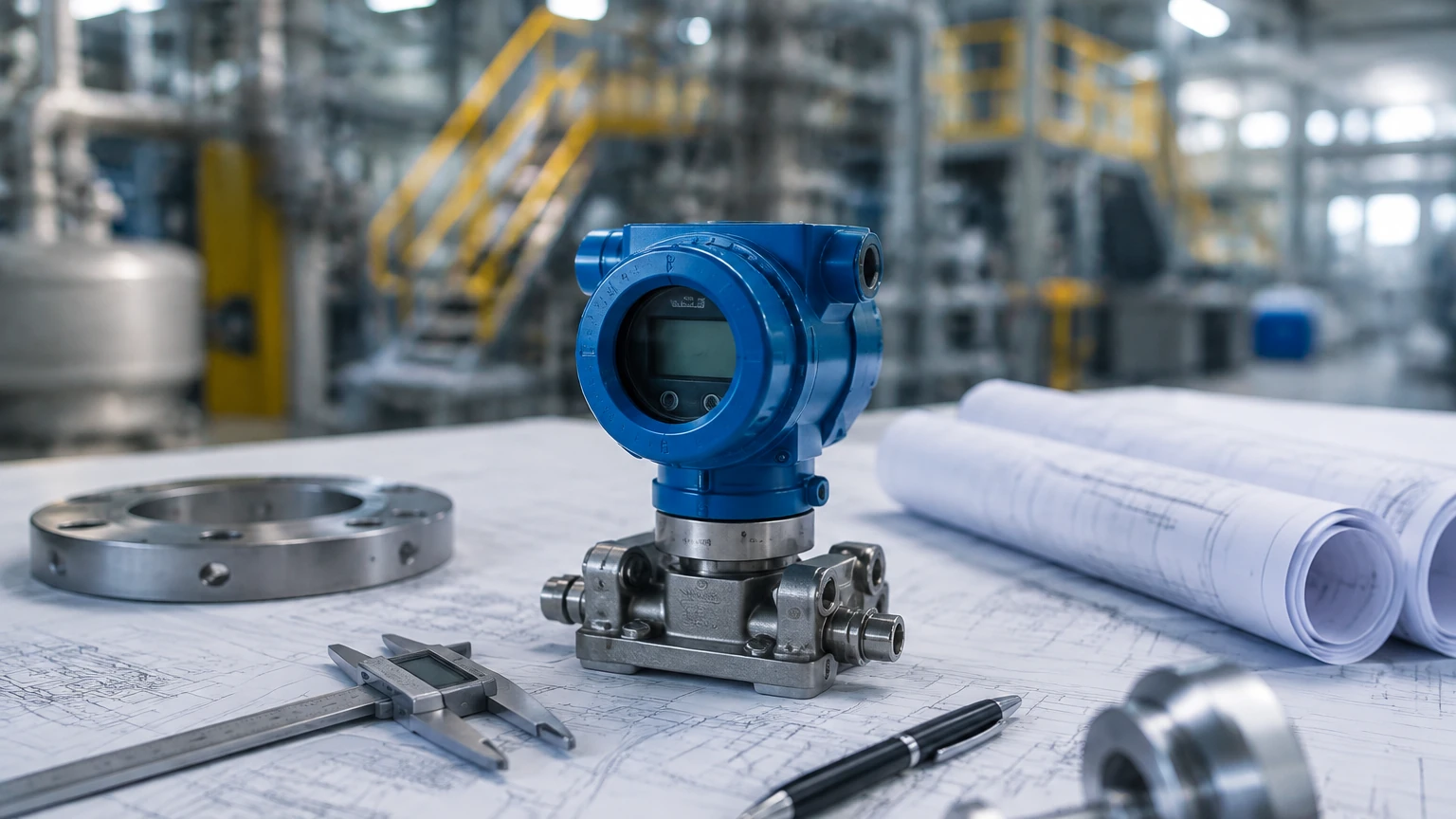
The Micro Motion 3700 serves as the "brain" of the Coriolis system. It is a multivariable digital (MVD) transmitter that converts raw signals from the sensor into usable data for a Distributed Control System (DCS) or Programmable Logic Controller (PLC).
Key functions of the 3700 include:
- Signal Processing: It filters out process noise and vibration that could otherwise interfere with the delicate Coriolis measurements.
- Data Integration: It provides multiple outputs, including 4-20 mA signals, frequency/pulse outputs, and digital protocols such as HART, Modbus, or Foundation Fieldbus.
- Configuration and Diagnostics: The 3700 allows engineers to perform "Smart Meter Verification," a diagnostic suite that checks the integrity of the sensor tubes without interrupting the process.
For engineers managing complex liquid inventories, reviewing various product options and application support on our Main Page can help clarify how these high-end transmitters integrate with more traditional level sensing hardware.
Bridging Density Measurement and Hydrostatic Level
While the Micro Motion 3700 is primarily a flow and density transmitter, its density data is frequently used to enhance the accuracy of level measurement systems. In many industrial applications, level is calculated using hydrostatic pressure transmitters. The relationship is defined by the formula:
P = ρ × g × h
Where:
- P is the hydrostatic pressure (measured by a transmitter at the bottom of the tank).
- ρ (rho) is the fluid density.
- g is the gravitational constant.
- h is the height (level) of the liquid.
In processes where the fluid density is inconsistent—such as in chemical blending or oil-water separation—a static assumption of density leads to significant errors in level calculation. By using the real-time density output from a Micro Motion 3700, the control system can dynamically adjust the density variable in the hydrostatic equation, providing a far more accurate level reading than a standalone pressure sensor could achieve.
Comparative Analysis: Coriolis vs. Direct Level Technologies
When designing a process loop, it is important to distinguish when to use a Coriolis-based system (like the 3700) versus direct level measurement tools like radar or ultrasonic sensors offered by Welk.
| Feature | Micro Motion 3700 (Coriolis) | Radar Level Meters | Ultrasonic Level Sensors |
| :— | :— | :— | :— |
| Primary Variable | Mass Flow, Density, Temp | Distance to Surface | Distance to Surface |
| Level Accuracy | Indirect (via density) | Very High (direct) | High (direct) |
| Media Contact | Wetted (In-line) | Non-contact | Non-contact |
| Pressure Limits | Up to 400 bar+ | Up to 100 bar+ | Typically < 3 bar |
| Installation | In-line piping | Tank top / Flange | Tank top / Bracket |
| Cost | High | Moderate | Low to Moderate |
In applications like water treatment or basic chemical storage, a Welk radar level meter is usually the most cost-effective and accurate choice for surface monitoring. However, in high-value custody transfer or reactor feeds where mass balance is critical, the 3700 provides the necessary density and mass data that level meters alone cannot provide.
Selection and Engineering Guidelines
Selecting the right configuration for a Micro Motion 3700 requires a detailed understanding of the process fluid and the environmental conditions. Engineers should confirm the following criteria before procurement:
1. Housing and Environment
The 3700 is available in different housing materials, typically epoxy-coated aluminum or stainless steel. For offshore or highly corrosive chemical environments, stainless steel is mandatory to prevent housing degradation. It is rated for NEMA 4X (IP66/67) to withstand wash-downs and outdoor exposure.
2. Output Protocol Compatibility
Ensure the transmitter’s digital communication protocol matches the existing plant infrastructure. While HART is standard for many legacy systems, Foundation Fieldbus or Profibus may be required for modern, high-speed data integration in automated plants.
3. Power Requirements
The 3700 typically requires a 18 to 30 VDC power supply or a 85 to 265 VAC supply depending on the model. Verification of available power at the installation site is a common but critical step in the design phase.
Installation Considerations and Best Practices
Proper installation of the sensor and the 3700 transmitter is vital for maintaining the high accuracy specified by the manufacturer.
- Mounting Stability: The Coriolis sensor must be mounted on a rigid structure. Excessive vibration from nearby pumps or motors can introduce noise into the frequency measurement, which the 3700 must then filter out, potentially slowing response times.
- Zero Calibration: After installation and under full-pipe, zero-flow conditions, a "zero calibration" must be performed. This allows the 3700 to account for the specific mechanical stresses of the piping layout.
- Wiring and Shielding: To prevent Electromagnetic Interference (EMI), signal cables between the sensor and the 3700 should be shielded and kept away from high-voltage power lines.
- Fluid State: Coriolis meters perform best with single-phase fluids. If the liquid contains significant entrained gas (slug flow), the 3700’s density and mass flow readings may fluctuate. Specialized software options within the 3700 can help mitigate the effects of entrained gas, but physical air eliminators are preferred.
Limitations and Common Risks
While the Micro Motion 3700 is a robust instrument, it is not a universal solution for every measurement challenge. Engineers must be aware of the following risks:
1. Capital Expenditure: The combined cost of a Coriolis sensor and a 3700 transmitter is significantly higher than that of a hydrostatic or ultrasonic level transmitter. It should be reserved for applications where density or mass flow data provides a clear ROI.
2. Pressure Drop: Because Coriolis sensors require the fluid to pass through narrow tubes, there is an inherent pressure drop across the device. This must be calculated during the piping design phase to ensure it does not starve downstream equipment.
3. Scaling and Coating: If the process fluid is prone to scaling or coating the interior of the tubes, the resonant frequency will change, leading to inaccurate density readings. Regular cleaning or the use of large-bore sensors can reduce this risk.
Frequently Asked Questions (FAQ)
Q: Can the Micro Motion 3700 be used for gas measurement?
A: Yes, the 3700 is capable of measuring gas mass flow, although the density measurement for gases is less precise than for liquids due to the much lower mass of the gas relative to the sensor tubes.
Q: How does the 3700 handle hazardous areas?
A: The 3700 is available with various certifications, including ATEX, CSA, and IECEx, for use in Class I, Division 1 or Division 2 environments. Always check the specific approval code on the device nameplate.
Q: Is the 3700 compatible with older Micro Motion sensors?
A: The 3700 is designed to be backwards compatible with many older sensor models, but it is essential to verify the core processor compatibility before upgrading an existing installation.
Q: How often does the 3700 require recalibration?
A: In many stable applications, the 3700 can go years without a factory recalibration. However, using the built-in Smart Meter Verification (SMV) tool allows for periodic health checks that satisfy most regulatory and quality audit requirements.
Conclusion
The Micro Motion 3700 remains a cornerstone of high-precision process measurement. By providing simultaneous mass flow, density, and temperature data, it offers a level of process insight that simple level meters cannot match. However, for most bulk storage and simple level control tasks, the specialized level instruments found on our Main Page provide the necessary accuracy with lower complexity and cost. Understanding the synergy between these technologies allows engineers to build more resilient and efficient process control systems.