Thermo Switches
Thermo Switches
In the landscape of industrial automation and process safety, thermo switches serve as critical components for temperature regulation and equipment protection. These devices, designed to open or close an electrical circuit when a specific temperature threshold is reached, are indispensable in preventing overheating, managing cooling systems, and ensuring the stability of chemical reactions. While often overshadowed by more complex continuous temperature transmitters, the discrete nature of the thermo switch provides a fail-safe mechanism that is both reliable and cost-effective.
For engineers and plant managers, understanding the underlying physics, mechanical variations, and integration strategies for these devices is essential. This guide explores the technical foundations of thermal switching, its relationship with level measurement systems, and the practical considerations required for industrial deployment. For more detailed technical specifications and to explore our full range of industrial instrumentation, you may visit our Main Page.
Measurement Principles and Operation
Thermo switches operate on several distinct physical principles, each suited to specific environmental conditions and precision requirements. The primary goal of any thermo switch is to convert a thermal change into a mechanical or electronic displacement sufficient to actuate a switch contact.
Bimetallic Strip Technology
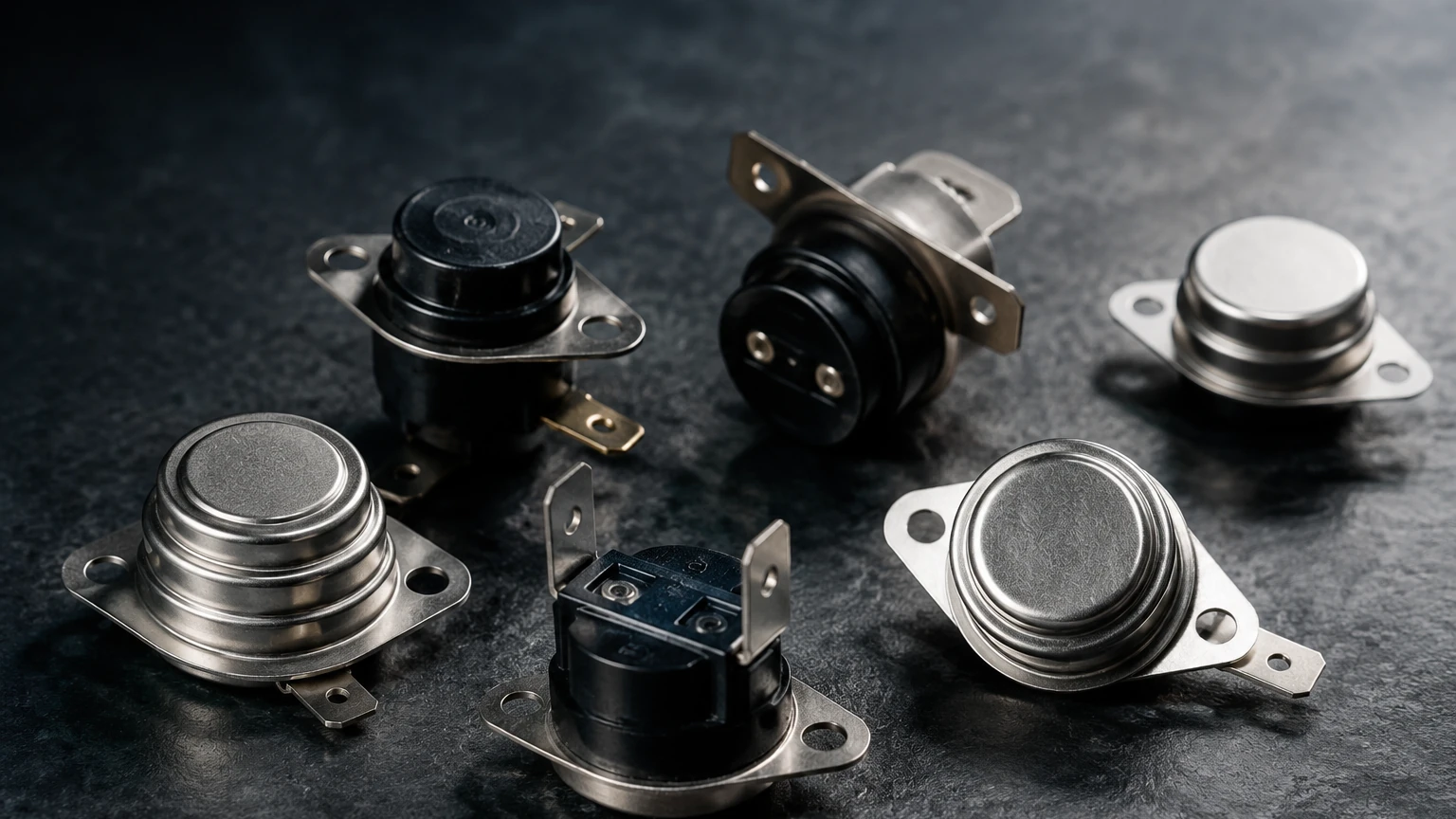
The most common mechanical principle involves the bimetallic strip. This component consists of two different metals—such as brass and steel—bonded together. These metals have different coefficients of linear expansion. As temperature rises, one metal expands faster than the other, causing the strip to bend. When the strip reaches a predetermined curvature, it hits a contact point, completing or breaking the circuit.
Industrial-grade bimetallic switches often utilize a "snap-action" disc. This design prevents the gradual arcing that can occur with slow-moving contacts, ensuring a crisp transition between the "on" and "off" states. This is particularly important in high-voltage applications where contact wear must be minimized.
Liquid and Gas Expansion
Commonly referred to as capillary or bulb switches, these devices rely on the volumetric expansion of a fluid (liquid or gas) contained within a sealed sensing bulb. As the temperature increases, the fluid expands, exerting pressure through a capillary tube onto a bellows or diaphragm located within the switch housing. This pressure eventually overcomes a spring-loaded mechanism to actuate the switch. This principle allows the sensing element to be located several meters away from the electrical switch body, making it ideal for high-vibration or hazardous environments.
Electronic and Solid-State Switching
Modern industrial processes increasingly utilize electronic thermo switches. These devices employ Resistance Temperature Detectors (RTDs) or thermistors to monitor temperature. A microprocessor compares the resistance value against a programmed setpoint. When the threshold is met, a solid-state relay or electromechanical relay is triggered. Electronic switches offer the highest precision and the ability to adjust hysteresis (the difference between the trip point and the reset point) digitally.
Technical Comparison of Thermo Switch Types
Selecting the correct technology requires a balance between accuracy, environmental resilience, and budget. The following table provides a comparison of the primary types used in industrial settings.
| Feature | Bimetallic Switch | Capillary/Liquid Expansion | Electronic Switch |
| :— | :— | :— | :— |
| Sensing Range | -50°C to +300°C | -100°C to +400°C | -200°C to +600°C+ |
| Accuracy | ±3°C to ±10°C | ±1°C to ±3°C | ±0.1°C to ±0.5°C |
| Response Time | Moderate | Slow to Moderate | Fast |
| Power Required | None (Passive) | None (Passive) | Required (DC or AC) |
| Hysteresis | Fixed (Mechanical) | Fixed or Adjustable | Fully Programmable |
| Cost | Low | Medium | High |
| Typical Life | 100,000 cycles | 100,000 cycles | 1,000,000+ cycles |
Integration with Level Measurement Systems
In the context of industrial level measurement—a core focus at Welk—thermo switches are frequently used as auxiliary safety devices. Level and temperature are often intrinsically linked in process tanks. For instance, in oil and gas storage, the viscosity of the fluid is temperature-dependent. A thermo switch ensures that heaters are active only when the fluid is within a safe temperature range, preventing the medium from solidifying or, conversely, reaching a flash point.
Furthermore, thermo switches provide "run-dry" protection for pumps. If a level sensor fails to detect a low-level condition, a pump may continue to operate without fluid, leading to rapid frictional heating. A thermo switch mounted on the pump casing or the discharge line can detect this temperature spike and shut down the system before catastrophic mechanical failure occurs.
Engineers looking to integrate these technologies into a broader automation framework should Review product options and application support to ensure compatibility between level transmitters and thermal safety overrides.
Selection Criteria for Industrial Applications
When specifying thermo switches for a project, several critical factors must be confirmed to ensure long-term reliability.
1. Setpoint and Reset Point (Hysteresis)
Every thermo switch has a setpoint (where it trips) and a reset point (where it returns to its original state). The difference between these two is the hysteresis or "deadband." In a cooling application, if the hysteresis is too small, the system may "chatter," rapidly turning on and off, which can damage motors and compressors. Industrial bimetallic switches usually have a fixed hysteresis of 5°C to 10°C, while electronic versions allow for precise tuning.
2. Contact Configuration
* Normally Open (NO): The circuit is open until the temperature rises to the setpoint. Ideal for triggering cooling fans or alarms.
* Normally Closed (NC): The circuit is closed until the temperature rises. Common for heaters and safety cut-offs where power must be removed during an over-temperature event.
* SPDT (Single Pole Double Throw): Provides both NO and NC contacts, offering maximum flexibility for control logic.
3. Environmental and Enclosure Ratings
Industrial environments expose switches to moisture, dust, and corrosive chemicals. For outdoor or wash-down areas, an IP65 or IP67 rating is required. In hazardous locations (oil refineries, grain silos), the switch must be explosion-proof (ATEX/IECEx certified) to prevent the electrical arc of the contact from igniting the atmosphere.
4. Wetted Materials
If the thermo switch probe is in direct contact with the process medium, the material must be chemically compatible. Stainless steel (316L) is the standard for most water and oil applications, but aggressive acids may require PTFE coatings or exotic alloys like Hastelloy.
Installation and Maintenance Best Practices
Proper installation is as important as the device selection itself. A poorly mounted thermo switch will suffer from "thermal lag," where the internal sensing element is significantly cooler or hotter than the actual process medium.
* Use of Thermowells: In pressurized systems or tanks that cannot be drained, thermo switches should be installed within a thermowell. This is a metal sleeve that protects the sensor from pressure and corrosion while allowing for easy removal. However, the air gap between the sensor and the thermowell wall can slow response times. The use of thermal conductive paste is recommended to bridge this gap.
* Orientation: For liquid expansion switches, the bulb should be fully submerged in the medium. In gas-filled systems, the orientation is less critical, but the capillary tube must be protected from kinking or sharp bends, which could restrict fluid movement and alter the setpoint.
* Wiring and Shielding: For electronic thermo switches, signal integrity is paramount. Wiring should be kept away from high-voltage power lines to prevent electromagnetic interference (EMI) from causing false trips.
Limitations and Common Risks
While thermo switches are robust, they are not without limitations. Mechanical fatigue is the primary cause of failure in bimetallic and bellows-style switches. Over time, the repeated bending of metal or the expansion of bellows can lead to setpoint drift, where the switch trips at a slightly different temperature than originally calibrated.
Another risk is contact oxidation. In environments with high humidity or corrosive gases, the electrical contacts inside the switch can develop a layer of non-conductive oxide. This results in a failure to complete the circuit even when the mechanical trigger has moved. Choosing switches with gold-plated contacts or hermetically sealed housings can mitigate this risk in low-current signaling applications.
Frequently Asked Questions (FAQs)
Q: Can a thermo switch be used for continuous temperature monitoring?
A: No. A thermo switch is a discrete device (on/off). For continuous data (e.g., 4-20mA or Modbus output), a temperature transmitter or RTD probe is required.
Q: What is the difference between a thermo switch and a thermal fuse?
A: A thermo switch is resettable. Once the temperature drops below the reset point, it can operate again. A thermal fuse is a one-time safety device that melts and permanently breaks the circuit when triggered, requiring physical replacement.
Q: How often should industrial thermo switches be calibrated?
A: For critical safety applications, an annual calibration check is recommended. This involves placing the sensing element in a controlled temperature bath and verifying the trip point with a calibrated thermometer.
Q: Are there thermo switches designed for cryogenic temperatures?
A: Yes, specifically designed electronic switches and certain gas-actuated capillary switches can operate down to -200°C (-328°F), though these require specialized materials to prevent embrittlement.
Conclusion
Thermo switches remain a cornerstone of industrial safety and process control. By providing a simple, often passive method of temperature-based logic, they protect expensive machinery and ensure the safety of plant personnel. Whether used as a primary control for a cooling system or a secondary safety limit in a tank monitored by advanced level meters, selecting the right thermo switch requires a deep understanding of the application's thermal dynamics and environmental constraints.
For engineering teams planning their next installation, confirming the setpoint precision, housing durability, and chemical compatibility is the first step toward a reliable system. To see how these components fit into a complete industrial measurement solution, visit our Main Page for further guidance and product documentation.