Ultrasonic Water Meter Clamp on
Ultrasonic Water Meter Clamp on
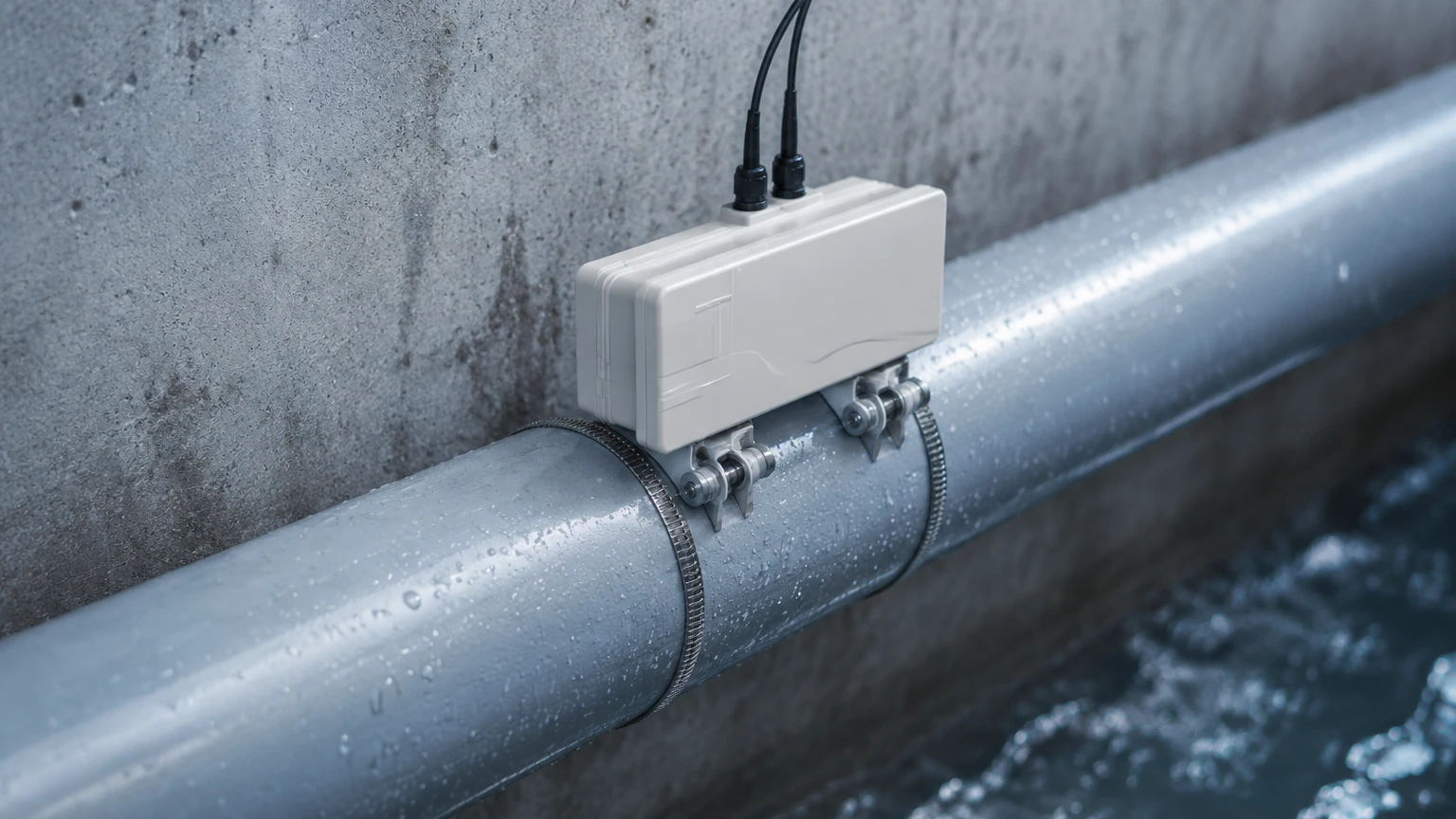
In modern industrial automation and water management, the ability to measure flow rates without interrupting the process or compromising the integrity of the piping system is a significant operational advantage. The ultrasonic water meter clamp on represents a non-invasive solution for liquid flow measurement, utilizing ultrasonic transducers that attach to the exterior of a pipe. This technology eliminates the need for pipe cutting, welding, or process downtime, making it a preferred choice for retrofitting existing systems and for applications where fluid hygiene or pressure integrity is paramount.
As a professional manufacturer of industrial measurement instruments, Welk provides high-precision solutions that integrate seamlessly into complex infrastructures. Understanding the underlying physics, selection criteria, and installation requirements is essential for engineers and facility managers to ensure long-term accuracy and reliability.
Measurement Principles: How Clamp-On Technology Works
Ultrasonic flow measurement primarily relies on two distinct methods: transit-time and Doppler effect. For standard water applications, the transit-time method is the most prevalent.
Transit-Time Method (Delta-T)
This principle is based on the difference in the time it takes for an ultrasonic pulse to travel between two transducers. One transducer sends a signal downstream (with the flow), and the other sends a signal upstream (against the flow).
* Downstream travel: The sound wave is accelerated by the fluid velocity.
* Upstream travel: The sound wave is resisted by the fluid velocity.
By measuring the precise time difference (delta-t) between these two signals, the meter calculates the flow velocity. Since the cross-sectional area of the pipe is known, the electronics can convert this velocity into a volumetric flow rate. This method is highly effective for clean liquids with low concentrations of suspended solids or gas bubbles.
Doppler Effect
The Doppler method is used when the fluid contains particles, bubbles, or high turbidity. The transducers transmit a signal of a known frequency into the liquid. This signal reflects off moving particles or bubbles, causing a frequency shift (the Doppler shift). The magnitude of this shift is proportional to the flow velocity. While less common for pure water applications, it is vital for wastewater or slurry management.
Technical Selection Criteria
Selecting the correct ultrasonic water meter clamp on requires an evaluation of the pipe environment and the fluid properties. Unlike inline meters, the performance of a clamp-on device is heavily dependent on the pipe wall and the coupling between the sensor and the pipe.
Pipe Material and Condition
The pipe must be capable of conducting ultrasonic waves. Common materials include carbon steel, stainless steel, cast iron, ductile iron, PVC, and copper. However, pipes with internal liners (such as cement, rubber, or glass) can pose challenges if the liner is not bonded perfectly to the pipe wall. Any air gap between the liner and the wall will reflect the ultrasonic signal, preventing it from reaching the fluid.
Fluid Characteristics
For a transit-time ultrasonic water meter clamp on to function correctly, the fluid should ideally be homogeneous and free of excessive aeration. A high concentration of bubbles or solids (typically >5% by volume) can attenuate the signal.
Key Specifications Table
| Parameter | Standard Specification | High-Performance Range |
| :— | :— | :— |
| Pipe Size Range | DN15 to DN1200 | Up to DN6000 |
| Accuracy | ±1.0% to ±2.0% of reading | ±0.5% with field calibration |
| Fluid Temperature | -30°C to 90°C | Up to 160°C (High-temp sensors) |
| Repeatability | 0.2% | 0.1% |
| Velocity Range | 0.01 to 12 m/s | 0.01 to 32 m/s |
| Outputs | 4-20mA, Pulse, Modbus RTU | HART, Profibus, BACnet |
Installation Considerations and Mounting Methods
The accuracy of a clamp-on meter is directly related to the quality of the installation. Proper surface preparation and transducer positioning are critical steps.
Surface Preparation
Before mounting the transducers, the pipe surface must be cleaned. Rust, scale, and thick layers of paint should be removed using a wire brush or grinder to ensure a smooth, flat contact area. A acoustic coupling agent (grease or gel) is applied between the transducer face and the pipe to eliminate air gaps.
Transducer Mounting Configurations
Depending on the pipe diameter and fluid conditions, one of three mounting methods is typically used:
1. V-Method: The most common method for pipe sizes between DN15 and DN200. The signals reflect off the opposite pipe wall once. This method provides a good balance between signal strength and accuracy.
2. Z-Method: Used for larger pipes (typically DN200 and above) or in cases where the fluid is slightly attenuated. The transducers are mounted on opposite sides of the pipe, and the signal crosses the pipe once.
3. W-Method: Used for very small diameter pipes (DN15 to DN50). The signal reflects three times off the pipe walls, increasing the transit time and improving resolution for low-flow detection.
Straight Run Requirements
To ensure a stable flow profile, the meter should be installed in a section of pipe with sufficient straight runs. The standard engineering guideline is "10D Upstream and 5D Downstream." This means there should be a straight pipe length equal to 10 times the pipe diameter before the meter and 5 times the diameter after it, away from valves, pumps, or elbows that cause turbulence.
Advantages in Industrial Applications
The ultrasonic water meter clamp on is widely utilized across various sectors due to its versatility. For those seeking comprehensive measurement solutions, including radar and hydrostatic options, the Main Page of Welk offers a broader view of available industrial instrumentation.
* Water Treatment: Monitoring flow in large-diameter intake pipes where cutting the pipe would be prohibitively expensive.
* HVAC and Building Management: Measuring chilled water and hot water flow for energy auditing without draining the system.
* Chemical Processing: Measuring corrosive or ultrapure liquids where contact with a metal sensor would lead to contamination or sensor failure.
* Leak Detection: Portable clamp-on units are frequently used for temporary flow surveys to identify leaks in municipal or industrial water networks.
Limitations and Potential Risks
While highly effective, engineers must be aware of the limitations inherent to clamp-on technology:
1. Signal Attenuation: In very old pipes, internal scale buildup (tuberculation) can scatter the ultrasonic signal, leading to "Signal Lost" errors.
2. Wall Thickness Accuracy: The meter calculates flow based on the internal diameter. If the user enters an incorrect wall thickness or pipe material, the resulting flow calculation will be inaccurate.
3. Ambient Noise: In environments with extreme mechanical vibration or high-frequency electrical noise, the sensitive ultrasonic electronics may require additional shielding or specialized mounting.
Comparison: Clamp-On vs. Inline Ultrasonic Meters
| Feature | Clamp-On Ultrasonic | Inline Ultrasonic |
| :— | :— | :— |
| Installation | Non-invasive, no pipe cutting | Requires pipe cutting and flanges |
| Pressure Drop | Zero | Zero (Full bore) |
| Maintenance | Easy, sensors can be replaced without stop | Requires process shutdown for removal |
| Initial Cost | Higher for small pipes, lower for large | Lower for small pipes, very high for large |
| Contamination Risk | None | Low |
Frequently Asked Questions (FAQs)
Q: Can a clamp-on meter work on any pipe material?
A: It works on most metal and plastic pipes. However, it will not work on composite pipes with air layers (like some types of corrugated pipes) or pipes that are heavily corroded internally.
Q: How often does the coupling gel need to be reapplied?
A: For permanent installations, high-quality silicone-based or solid coupling pads are used, which can last for many years. For portable surveys, standard gel is sufficient for the duration of the test.
Q: Is the meter affected by water pressure?
A: No. Since the sensors are outside the pipe, the internal pressure does not affect the measurement principle, provided the pipe does not deform significantly under pressure.
Q: Can it measure flow in partially filled pipes?
A: No. Transit-time ultrasonic meters require a full pipe to ensure the sound wave travels through the liquid from one side to the other. If the pipe is partially empty, the signal will be interrupted.
Conclusion
The ultrasonic water meter clamp on is a sophisticated tool that solves many of the traditional challenges associated with flow measurement. By providing a non-contact, high-accuracy method for monitoring water and other clean liquids, it reduces the total cost of ownership and simplifies maintenance. When implemented with a clear understanding of the pipe conditions and correct installation procedures, it serves as a reliable cornerstone of industrial fluid management. For further technical specifications and to explore a full range of level and flow measurement technologies, engineers are encouraged to review product options and application support on the Welk website.