Ultrasonic Level.meters
Ultrasonic Level Meters: A Comprehensive Engineering Guide to Non-Contact Measurement
In the landscape of industrial automation, accurate level measurement is a fundamental requirement for process control, inventory management, and safety. Among the various technologies available, Ultrasonic Level Meters have emerged as a preferred solution for many liquid and solid applications due to their non-contact nature and cost-effectiveness. As a professional manufacturer, Welk provides advanced measurement instruments designed to meet the rigorous demands of water treatment, chemical processing, and oil and gas industries.
This guide provides a detailed technical overview of ultrasonic technology, offering engineering insights into its measurement principles, selection criteria, and installation requirements to ensure reliable performance in diverse industrial environments.
Understanding the Operating Principle of Ultrasonic Level Meters
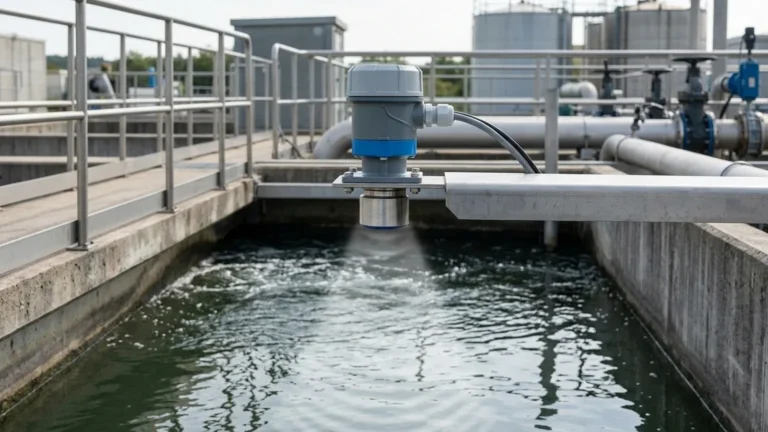
The fundamental operation of an ultrasonic level meter is based on the "Time-of-Flight" (ToF) principle. The instrument consists of a transducer and an electronic processing unit. The transducer acts as both a transmitter and a receiver of high-frequency sound waves.
The Measurement Cycle
1. Emission: The transducer emits a burst of ultrasonic pulses (typically in the range of 20 kHz to 200 kHz) toward the surface of the medium.
2. Reflection: When these sound waves encounter a change in acoustic impedance—such as the transition from air to a liquid or solid surface—they are reflected back toward the sensor.
3. Reception: The transducer detects the returning echo and converts the mechanical energy back into an electrical signal.
4. Calculation: The internal electronics measure the time elapsed ($t$) between the emission and the reception. Since the speed of sound ($c$) in air is known (approximately 340 m/s at 20°C), the distance ($D$) to the surface is calculated using the formula:
$$D = \frac{c \times t}{2}$$
The actual level ($L$) is then determined by subtracting the measured distance from the total height of the tank or vessel ($H$):
$$L = H – D$$
Modern Ultrasonic Level Meters utilize sophisticated digital signal processing (DSP) to filter out false echoes from internal tank obstructions, such as agitators or ladders, ensuring that only the true surface level is reported.
Key Advantages in Industrial Applications
The adoption of ultrasonic level.meters in industrial settings is driven by several inherent advantages of the technology:
* Non-Contact Measurement: Because the sensor never touches the process media, it is immune to corrosion, coating, or scaling from aggressive chemicals. This significantly reduces maintenance requirements and extends the lifespan of the instrument.
* Versatility: These meters are suitable for a wide range of media, including water, wastewater, acids, alkalis, and various granulated solids.
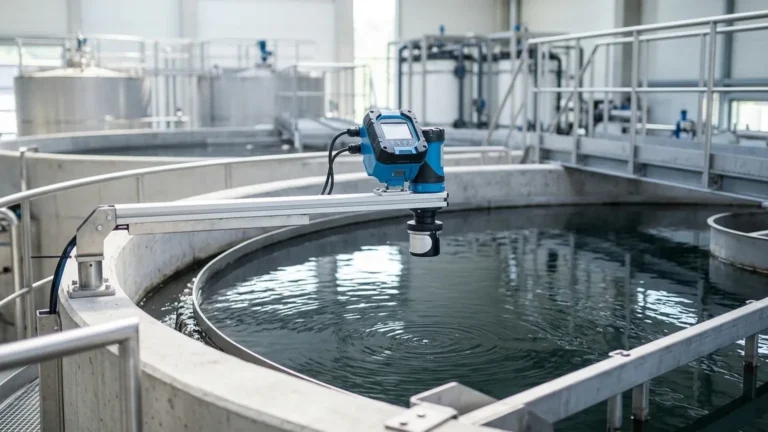
* Ease of Installation: Most units are designed for top-mounting, which simplifies installation in existing tanks without requiring bottom or side penetrations.
* Cost-Efficiency: Compared to radar level technology, ultrasonic solutions offer a high degree of accuracy and reliability at a lower capital expenditure, making them ideal for large-scale deployments in water management and irrigation.
* Integrated Control Features: Many Welk ultrasonic sensors include built-in relays for pump control and open-channel flow measurement capabilities, providing a multi-functional solution in a single device.
Critical Selection Criteria for Engineering Projects
Selecting the correct ultrasonic level meter requires a thorough analysis of the application environment. Engineers should confirm the following parameters before procurement:
1. Measurement Range
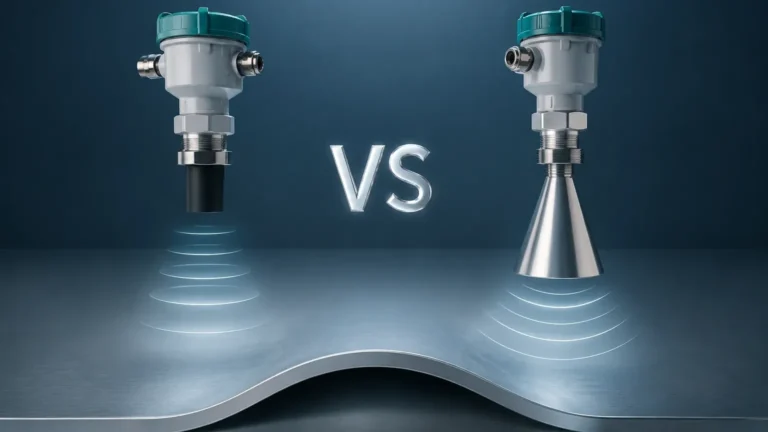
Ultrasonic sensors are available in various frequencies. Lower frequency sensors (e.g., 20-40 kHz) have a longer range (up to 30 or 40 meters) but larger transducers. Higher frequency sensors (e.g., 60-80 kHz) offer better resolution and smaller dead zones but are limited to shorter ranges (typically under 10 meters).
2. Process Temperature and Pressure
The speed of sound is highly dependent on the temperature and density of the medium through which it travels. Most industrial ultrasonic meters include an integrated temperature sensor to compensate for these changes. However, if the process involves significant temperature gradients or high pressures (typically exceeding 0.3 MPa), the accuracy may be compromised.
3. Surface Conditions
The nature of the surface significantly affects echo quality. A calm liquid surface provides a strong, specular reflection. In contrast, heavy foam, extreme turbulence, or high-angle solid slopes can scatter or absorb the ultrasonic pulse. In cases of heavy foam, alternative technologies like radar or hydrostatic transmitters may be required.
4. Chemical Compatibility
While the measurement is non-contact, the transducer face is exposed to the tank atmosphere. For corrosive environments, transducers should be constructed from chemically resistant materials such as PVDF (Polyvinylidene fluoride) or PTFE (Polytetrafluoroethylene).
Practical Selection Table
| Feature | Ultrasonic Level Meter | Radar Level Meter | Hydrostatic Transmitter |
| :— | :— | :— | :— |
| Measurement Type | Non-contact | Non-contact | Contact |
| Common Media | Liquids, Slurries, Solids | Liquids, Solids | Liquids Only |
| Accuracy | ±0.25% to 0.5% of range | ±1mm to 3mm | ±0.1% to 0.5% FS |
| Max Temperature | -40°C to +80°C (typical) | Up to +450°C | Up to +125°C |
| Vacuum Resistance | Poor (requires medium) | Excellent | Good |
| Cost Profile | Low to Moderate | Moderate to High | Moderate |
Installation Best Practices and Avoiding Common Pitfalls
To ensure the long-term reliability of ultrasonic level.meters, proper installation is paramount. Engineers should adhere to the following guidelines:
The Dead Zone (Blocking Distance)
Every ultrasonic sensor has a "dead zone" immediately below the transducer face where measurement is impossible. This is the time required for the transducer to stop vibrating after emission and become ready to receive. Ensure the maximum liquid level never enters this zone (typically 0.2m to 0.6m depending on the model).
Beam Angle and Obstructions
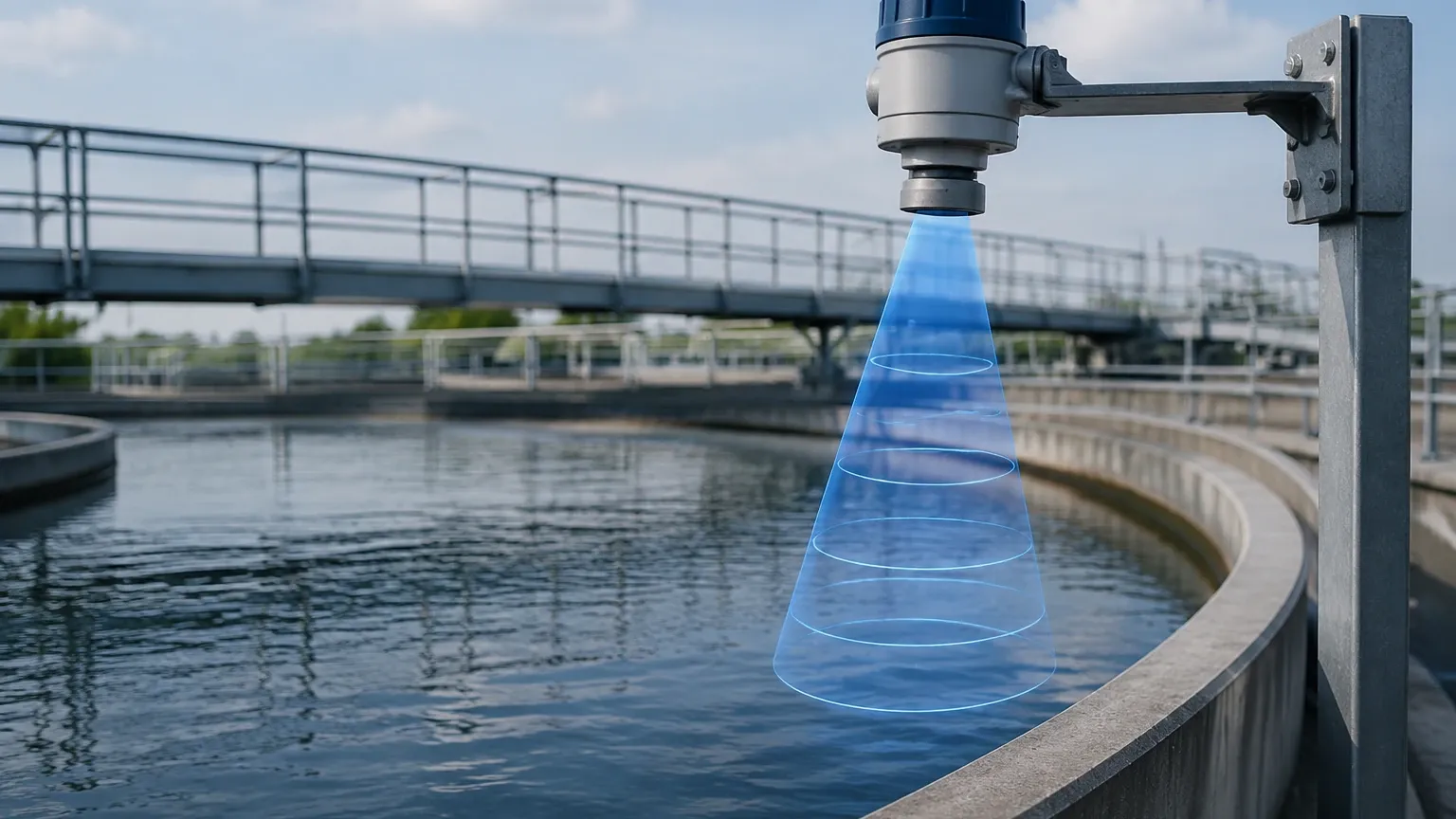
The ultrasonic pulse spreads in a cone shape (usually 5° to 12°). The beam must be kept clear of internal obstructions such as pipes, reinforcement beams, or the tank wall. A general rule is to mount the sensor at least 1/6th of the tank diameter away from the wall to avoid multipath interference.
Mounting Orientation
The transducer must be mounted perfectly perpendicular to the liquid surface. Even a few degrees of tilt can cause the reflected signal to miss the receiver, leading to a "Loss of Echo" (LOE) error.
Environmental Shielding
For outdoor installations, a sunshade is recommended to prevent the sensor housing from overheating, which can lead to inaccurate temperature compensation and premature electronic failure.
Environmental Limitations and Technology Comparisons
While ultrasonic technology is robust, it is not a universal solution. Engineers must be aware of its physical limitations:
* Vacuum Conditions: Sound waves require a medium (air or gas) to travel. Therefore, ultrasonic meters cannot function in a vacuum.
* Heavy Dust or Vapor: While moderate dust is manageable, extremely dense dust or heavy steam can attenuate the sound signal. In these scenarios, high-frequency radar is often more reliable as electromagnetic waves are not affected by air density or particulate matter.
* Acoustic Noise: High-frequency mechanical noise in the environment can occasionally interfere with the sensor's reception. Welk's advanced filtering algorithms mitigate this, but placement away from noisy valves or pneumatic systems is still advised.
Frequently Asked Questions (FAQ)
Q: Can ultrasonic level meters be used on solids?
A: Yes, but with considerations. Solids like grain, sand, or coal create a conical pile rather than a flat surface. This scatters the sound waves. Using a sensor with a higher power output and a gimbal mount to aim the transducer is often necessary for reliable solid level measurement.
Q: How does wind affect outdoor ultrasonic measurements?
A: Strong wind can "blow" the sound pulse away or create air turbulence that dissipates the signal. In open-air applications like river level monitoring, a stilling well or a protective shroud is often used to stabilize the measurement environment.
Q: What is the difference between an integrated and a split-type meter?
A: An integrated meter has the sensor and electronics in a single housing, which is easier to install and wire. A split-type meter separates the sensor (mounted on the tank) from the controller (mounted at eye level or in a control room). Split-types are preferred when the tank top is difficult to access or when the environment at the mounting point is particularly harsh.
Q: Is calibration required frequently?
A: Generally, no. Once the empty and full distances are programmed, the meter remains stable. Recalibration is only necessary if the process medium changes significantly (e.g., a different gas composition in the tank headspace) or if the instrument is moved to a different vessel.
Conclusion
Ultrasonic Level Meters represent a mature, reliable, and cost-effective technology for a vast array of industrial level sensing tasks. By understanding the underlying physics and adhering to strict installation standards, process engineers can achieve high-precision results with minimal maintenance overhead. For applications involving standard liquids and bulk solids, Welk's range of ultrasonic solutions provides the accuracy and durability required for modern industrial automation.
Before finalizing a specification, it is recommended to confirm the specific chemical compatibility and environmental constraints of your site. For detailed technical data and model comparisons, engineers should consult the official product documentation to ensure the selected instrument aligns with the project's operational requirements.