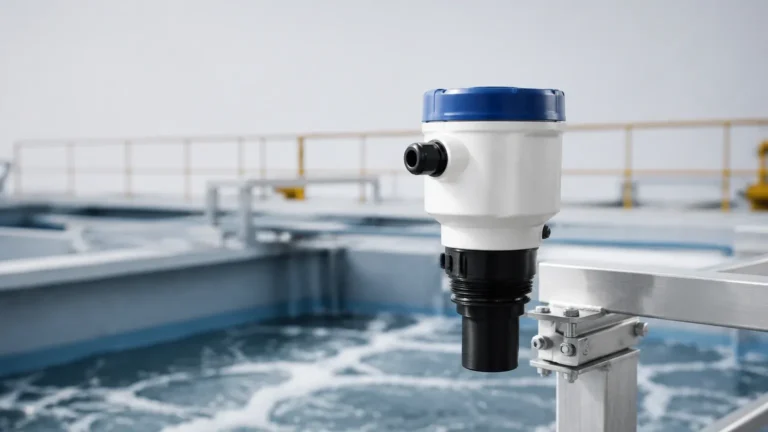
How Does an Ultrasonic Meter Work
How Does an Ultrasonic Meter Work: A Technical Guide to Non-Contact Level Measurement
In the landscape of industrial automation and process control, selecting the right instrumentation is critical for operational efficiency and safety. Among the various technologies available, Ultrasonic Level Meters have become a standard solution for non-contact level measurement in water treatment, chemical processing, and general manufacturing. Understanding the underlying physics and engineering principles is essential for any engineer or procurement specialist tasked with integrating these devices into a process system.
This guide provides a comprehensive technical overview of the measurement principles, selection criteria, and installation best practices for ultrasonic technology.
The Fundamental Measurement Principle
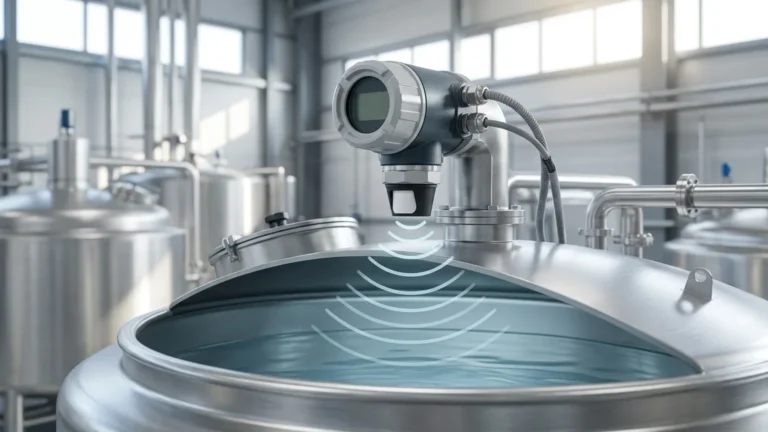
To answer the question, how does an ultrasonic meter work, one must look at the concept of "Time-of-Flight" (ToF). Ultrasonic level meters operate by emitting high-frequency sound waves (ultrasound) from a transducer toward the surface of a liquid or solid medium.
The Time-of-Flight (ToF) Mechanism
1. Emission: The transducer, which contains a piezoelectric crystal, converts electrical energy into mechanical pulses. These pulses travel through the air at the speed of sound.
2. Reflection: When the sound waves encounter a change in density—specifically the interface between the air and the process medium—they are reflected back toward the sensor as an echo.
3. Reception: The transducer switches to "receiving mode" to capture the returning echo. The electronics then calculate the time interval between the transmission and the reception.
4. Calculation: The distance is determined using the formula:
Distance = (Speed of Sound × Time) / 2
Since the height of the vessel (the "Empty Distance") is a known parameter programmed into the meter, the device subtracts the measured distance from the vessel height to determine the actual level of the material.
Key Components of an Ultrasonic Level Meter
Modern industrial instruments, such as those manufactured by Welk, consist of several integrated components designed to withstand harsh industrial environments:
* The Transducer: This is the "heart" of the meter. It typically uses piezoelectric ceramics to generate frequencies ranging from 20 kHz to over 70 kHz. The frequency chosen often depends on the required range; lower frequencies travel further but require larger transducers.
* Signal Processing Electronics: These circuits filter out noise and false echoes caused by internal tank obstructions (like ladders or agitators). Advanced algorithms, such as False Echo Suppression, allow the meter to distinguish the true material surface from background interference.
* Temperature Sensor: Because the speed of sound in air changes with temperature (approximately 0.17% per degree Celsius), an integrated temperature sensor is vital for real-time compensation to maintain accuracy.
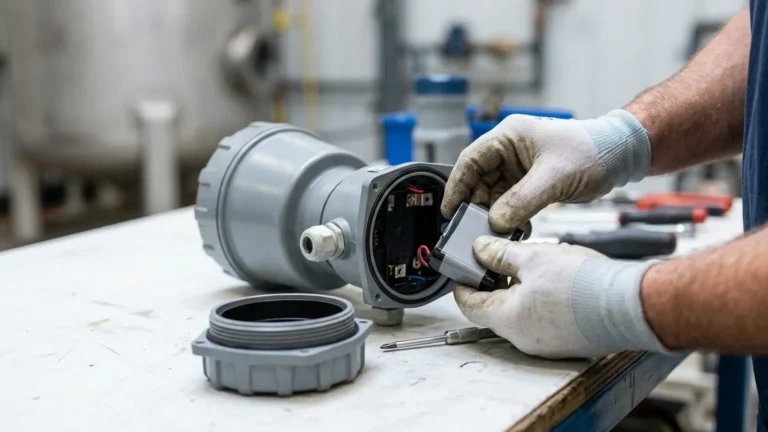
* Housing and Interface: Industrial units are typically housed in IP66/IP67 or IP68 rated enclosures (plastic or stainless steel) and provide outputs such as 4-20mA, Modbus RS485, or HART protocols.
Environmental Factors and Accuracy
When evaluating how does an ultrasonic meter work in a real-world factory setting, environmental variables must be considered. The speed of sound is not a constant; it is influenced by the composition of the gas through which it travels.
* Temperature Variations: As mentioned, temperature compensation is mandatory. If a tank has a significant temperature gradient (e.g., hot liquid at the bottom and cold air at the top), the accuracy may fluctuate slightly.
* Pressure: Ultrasonic meters are generally designed for atmospheric or near-atmospheric pressure. High pressure increases the density of the air, which can affect the sonic pulse propagation.
* Vapor and Gas Composition: If the space above the liquid is filled with a gas other than air (such as heavy CO2 or nitrogen), the speed of sound will differ significantly from the factory-calibrated air speed. In these cases, the meter must be calibrated for the specific gas constant.
Practical Selection Table
Choosing the right model depends on the specific application requirements. Below is a general selection guide for industrial ultrasonic level meters.
| Feature | Compact/Integrated Type | Split/Remote Type | Chemical Resistant Type |
| :— | :— | :— | :— |
| Typical Range | 0.4m to 15m | 0.4m to 30m+ | 0.4m to 10m |
| Output Options | 4-20mA, RS485 | 4-20mA, Relays, RS485 | 4-20mA (Isolated) |
| Power Supply | 24V DC | 220V AC or 24V DC | 24V DC |
| Transducer Material | ABS / Nylon | ABS / PVC | PVDF / PTFE |
| Best Use Case | Small tanks, open channels | Large sumps, remote monitoring | Corrosive acid/alkali storage |
| Installation | Top-mounted (Thread/Flange) | Bracket or Flange | Flange (Corrosion resistant) |
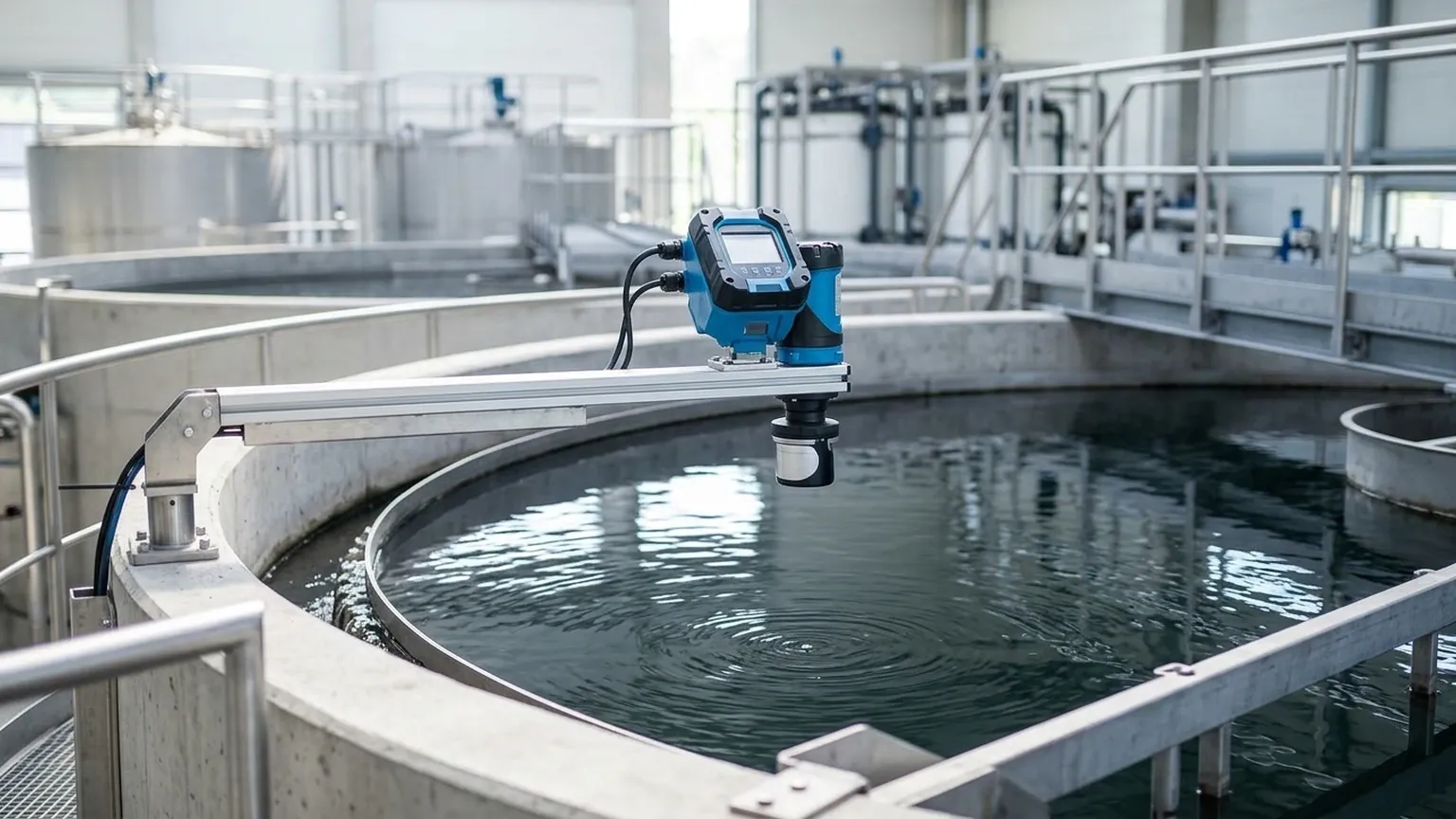
Installation Considerations and Best Practices
Even the most advanced ultrasonic meter will fail to provide accurate data if installed incorrectly. Engineers should adhere to the following guidelines:
1. The Dead Zone (Blocking Distance)
Every ultrasonic transducer has a "dead zone" immediately in front of the sensor face (typically 0.2m to 0.6m depending on the model). In this zone, the transducer cannot switch from emitting to receiving fast enough to capture the echo. The maximum liquid level must never enter this dead zone.
2. Beam Angle and Obstructions
The ultrasonic pulse spreads out in a cone (usually between 5° and 12°). If this beam hits a tank wall, a cooling pipe, or a ladder, it will create a false echo. The meter should be installed at a distance from the wall—typically 1/6th of the tank diameter—to avoid these reflections.
3. Avoiding Turbulence and Foam
Heavy foam on the surface of a liquid acts as an acoustic absorber, soaking up the sound pulse rather than reflecting it. If foam is present, an ultrasonic meter may lose the signal. Similarly, heavy turbulence can scatter the echo. In these scenarios, using a stilling well (a vertical pipe) can help provide a calm surface for measurement.
4. Mounting Orientation
The transducer face must be perfectly perpendicular to the liquid surface. If the sensor is tilted, the reflected pulse may bounce away from the receiver, leading to a "Loss of Echo" error.
Limitations of Ultrasonic Technology
While highly versatile, there are specific conditions where ultrasonic technology is not recommended:
* Vacuum Applications: Sound waves cannot travel through a vacuum. If the process vessel is under a full vacuum, a radar level meter is required.
* High Dust Environments: While ultrasonic meters can handle some dust, extreme concentrations (such as during the pneumatic filling of a cement silo) can attenuate the signal.
* Extreme Temperatures: Standard ultrasonic sensors are usually limited to operating temperatures below 80°C (176°F). For high-temperature steam applications, contact-based or radar-based sensors are often preferred.
Frequently Asked Questions (FAQ)
Q: Can ultrasonic level meters measure solids?
A: Yes, but the range is typically reduced by about 50% compared to liquids. Solids like grain or sand have an angle of repose that scatters the sound waves, and the uneven surface reflects less energy back to the sensor.
Q: How does wind affect an ultrasonic meter?
A: In outdoor applications like reservoir monitoring, strong winds can "blow" the sonic pulse away from the receiver path, especially over long distances (e.g., >10m). Protective shields or shorter-range sensors can mitigate this.
Q: Is it possible to use an ultrasonic meter in a pressurized tank?
A: Most standard units are rated for -0.02 MPa to 0.2 MPa. For higher pressures, the mechanical housing and the physics of sound propagation become limiting factors.
Q: What is the difference between an ultrasonic level transmitter and a level switch?
A: A level meter (or transmitter) provides continuous measurement (e.g., 55% full), whereas a level switch only indicates if the material has reached a specific point (e.g., High/Low alarm).
Conclusion
Understanding how does an ultrasonic meter work allows process engineers to leverage this non-contact technology for reliable, low-maintenance level monitoring. By accounting for the speed of sound, managing the dead zone, and selecting the appropriate transducer materials, facilities can achieve high-precision measurements across a variety of industrial fluids.
For those seeking robust, cost-effective solutions for water treatment or chemical storage, Welk offers a range of Ultrasonic Level Meters designed to meet rigorous industrial standards. When selecting a device, always confirm the process temperature, chemical compatibility, and tank geometry to ensure the best possible performance.