Remote Tank Level Monitoring Systems
Remote Tank Level Monitoring Systems
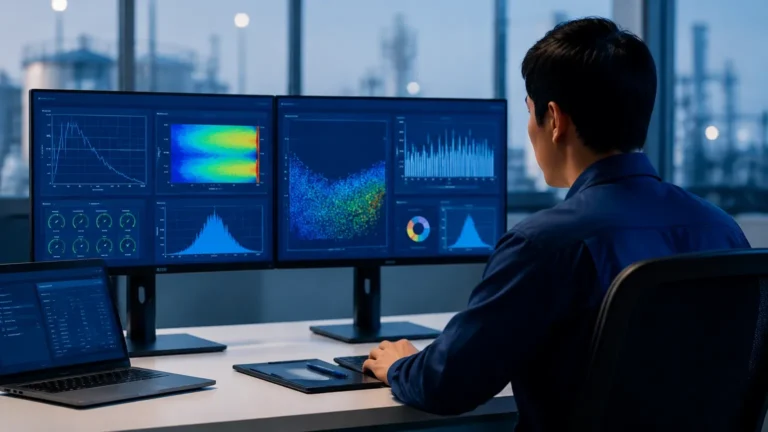
In modern industrial environments, the transition from manual tank gauging to automated remote tank level monitoring systems has become a standard for operational efficiency, safety, and inventory management. These systems allow engineers and plant managers to monitor liquid or solid levels in real-time from a centralized control room or via mobile devices, eliminating the risks associated with manual climbing and exposure to hazardous materials.
Implementing a robust monitoring solution requires a deep understanding of the underlying measurement principles, the communication infrastructure, and the specific environmental constraints of the application. As a professional manufacturer, Welk provides a range of instruments designed to integrate seamlessly into these digital ecosystems. This guide provides a technical overview of how these systems function and how to select the appropriate technology for industrial use.
Understanding Remote Tank Level Monitoring Systems
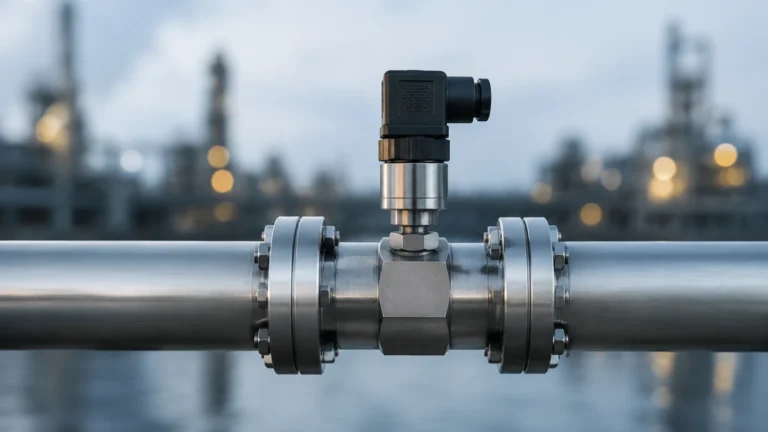
Remote tank level monitoring systems are integrated solutions consisting of a primary level sensor, a signal transmitter, a communication gateway, and a data visualization interface. Unlike local indicators, these systems transmit data over long distances using wired or wireless protocols, enabling centralized oversight of multiple tanks across different geographic locations.
For a comprehensive review of the hardware components required for these setups, engineers can consult the Main Page of our technical catalog. The primary objective of these systems is to provide accurate, continuous data that can be used for automated refilling, leak detection, and process optimization.
Core Measurement Principles and Technologies
Before selecting a remote monitoring architecture, it is essential to understand the measurement principles of the sensors that feed data into the system. Each technology has specific strengths and limitations based on the physical properties of the medium and the tank environment.
1. Radar Level Measurement (ToF and FMCW)
Radar level meters are the gold standard for high-precision remote monitoring. They operate on the Time-of-Flight (ToF) principle or Frequency Modulated Continuous Wave (FMCW) technology.
* Principle: The sensor emits high-frequency microwave pulses (typically at 26GHz or 80GHz). These pulses reflect off the surface of the medium and return to the sensor. The system calculates the distance based on the time it takes for the pulse to travel to the surface and back.
* Advantages: Radar is non-contact and unaffected by changes in temperature, pressure, or the presence of dust and vapors. 80GHz radar, in particular, offers a narrow beam angle, which is ideal for tanks with internal obstructions like agitators or heating coils.
2. Ultrasonic Level Measurement
Ultrasonic sensors are widely used in water treatment and general liquid storage due to their cost-effectiveness.
* Principle: The sensor transmits ultrasonic sound waves. The time taken for the echo to return from the liquid surface determines the distance.
* Advantages: It is a non-contact method suitable for many corrosive liquids.
* Limitations: Ultrasonic waves are mechanical and require a medium (air) to travel. Therefore, they are sensitive to air temperature fluctuations, heavy foam, and vacuum conditions, which can attenuate the signal.
3. Hydrostatic Level Measurement
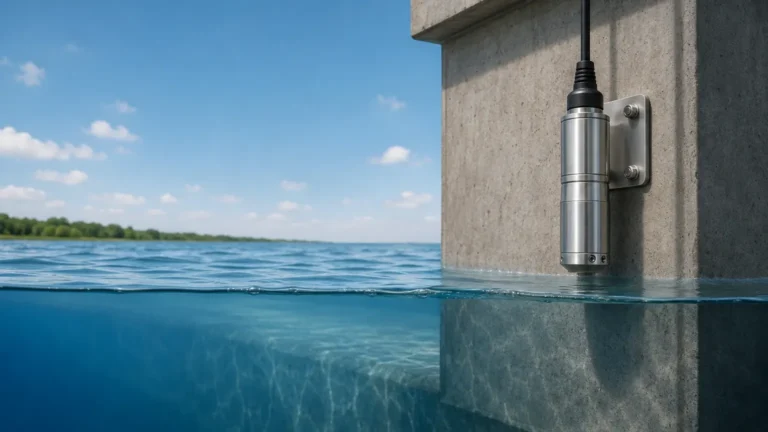
Hydrostatic transmitters are contact-based sensors that measure the pressure exerted by a liquid column.
* Principle: Based on the formula $P = \rho \cdot g \cdot h$ (where $P$ is pressure, $\rho$ is density, $g$ is gravity, and $h$ is height), the sensor measures the pressure at the bottom of the tank and converts it into a level reading.
* Advantages: This method is highly reliable for deep wells and vented tanks where non-contact sensors might struggle with signal reflection.
4. Magnetic Level Gauges with Transmitters
For high-pressure and high-temperature applications, magnetic level gauges provide both a local visual indication and a remote signal.
* Principle: A float containing a magnet moves with the liquid level. A reed chain or magnetostrictive transmitter mounted on the outside of the chamber senses the float's position and converts it into a 4-20mA or digital signal.
System Architecture and Connectivity Options
A remote tank level monitoring system is only as effective as its ability to transmit data. In industrial B2B contexts, several connectivity standards are utilized depending on the distance and existing infrastructure.
Wired Connectivity
* 4-20mA HART: The most common industrial standard. It allows for a digital signal to be superimposed on the analog current loop, providing diagnostic information alongside the level reading.
* Modbus RTU (RS485): A robust serial communication protocol used to connect multiple sensors to a PLC (Programmable Logic Controller) or SCADA system over a single cable.
Wireless Connectivity
For remote sites where cabling is prohibitively expensive, wireless technologies are preferred:
* LoRaWAN: Ideal for long-range (up to 10km-15km) and low-power applications. It is perfect for monitoring tanks in large agricultural fields or sprawling industrial complexes.
* NB-IoT and 4G/5G: These cellular-based systems allow sensors to connect directly to the cloud without the need for a local gateway, provided there is cellular coverage.
* Satellite: Used for extremely remote oil and gas assets where no terrestrial network exists.
Practical Selection Criteria for Industrial Applications
Selecting the right components for remote tank level monitoring systems requires a systematic evaluation of the application's physical and chemical parameters. The following table summarizes the key considerations for the most common technologies.
Selection Table: Level Measurement Technologies
| Feature | Radar (80GHz) | Ultrasonic | Hydrostatic | Magnetic Gauge |
| :— | :— | :— | :— | :— |
| Measurement Type | Non-contact | Non-contact | Contact (Submersible) | Contact (Bypass) |
| Max Range | 120 meters | 15 meters | 200 meters | 6 meters (standard) |
| Accuracy | ±1 mm | ±0.25% of span | ±0.1% to ±0.5% | ±5 mm |
| Pressure Limit | Up to 160 bar | Atmospheric | Up to 40 bar | Up to 320 bar |
| Temp. Limit | -40°C to +250°C | -40°C to +80°C | -20°C to +80°C | -196°C to +450°C |
| Best For | Corrosive, solids, high precision | Water, wastewater | Deep wells, fuel tanks | High-pressure steam, toxic liquids |
Key Evaluation Factors
1. Medium Properties: Is the liquid corrosive? Does it have a low dielectric constant? (Low dielectric liquids like oils reflect radar signals less effectively than water).
2. Tank Geometry: Are there internal ladders, agitators, or spray balls? Radar with a narrow beam is required for cluttered environments.
3. Environmental Conditions: Is there heavy foam or steam? Foam can absorb ultrasonic waves and scatter radar signals. In these cases, hydrostatic or guided wave radar might be more appropriate.
4. Power Availability: If the tank is in a remote area without power, low-power sensors (like those using LoRaWAN or NB-IoT) with long-life batteries are necessary.

Installation and Maintenance Considerations
Proper installation is critical to the accuracy of remote tank level monitoring systems. Even the most advanced sensor will fail if improperly positioned.
1. Mounting Position
Sensors should generally be mounted at 1/3 to 1/2 of the tank radius away from the wall to avoid signal interference from wall reflections. For ultrasonic and radar sensors, the mounting must be perfectly perpendicular to the liquid surface.
2. Avoiding the Dead Zone
Every non-contact sensor has a "dead zone" or "blocking distance" directly beneath the sensor face where measurement is impossible. The sensor must be installed high enough so that the maximum liquid level never enters this zone.
3. Signal Obstructions
Ensure the signal path is clear of inflow streams. If a tank is filled from the top, the falling liquid can create turbulence and false echoes. The sensor should be placed as far as possible from the inlet.
4. Maintenance and Calibration
While modern radar and ultrasonic sensors are largely maintenance-free due to the lack of moving parts, they should be checked periodically for buildup on the sensor face. Hydrostatic sensors in wastewater may require periodic cleaning to prevent the diaphragm from clogging.
Limitations and Potential Risks
While remote monitoring offers significant benefits, engineers must be aware of potential risks to ensure system reliability.
* Connectivity Interruption: In wireless systems, signal interference or network outages can lead to data gaps. Critical systems should include local data logging or redundant communication paths.
* Accuracy Drift: Over time, environmental factors or sensor aging can cause slight deviations. Regular zero-point verification is recommended.
* Cybersecurity: As monitoring systems move to the cloud, protecting the data from unauthorized access becomes paramount. Using encrypted protocols like MQTT with TLS is standard practice for modern IoT level sensors.
* Power Management: For battery-powered remote units, extreme cold can significantly reduce battery life. Thermal insulation or solar harvesting may be required in northern climates.
Frequently Asked Questions (FAQ)
Q: Can radar level meters measure solids like grain or cement?
A: Yes, high-frequency radar (80GHz) is excellent for solids. It can penetrate dust and handle the uneven surfaces typically found in silos.
Q: How does foam affect the accuracy of remote monitoring?
A: Foam is a challenge for both ultrasonic and radar sensors. Thick, dense foam can absorb the signal entirely. In such cases, a Welk hydrostatic transmitter or a guided wave radar (GWR) is often a more reliable choice.
Q: Is it possible to monitor a tank without cutting into it?
A: Yes, if the tank is made of plastic or fiberglass and contains a non-metallic liquid, certain radar sensors can measure through the tank roof. Alternatively, external ultrasonic sensors can be clamped onto the outside of pipes, though this is less common for bulk tank level measurement.
Q: What is the typical battery life for a wireless remote level sensor?
A: Depending on the reporting frequency (e.g., once per hour) and the protocol (LoRaWAN), batteries can last between 3 to 5 years. High-frequency reporting (e.g., every minute) will drain batteries much faster.
Q: Can these systems integrate with existing SCADA or ERP systems?
A: Most modern remote tank level monitoring systems support standard protocols like Modbus, OPC UA, or MQTT, making it straightforward to integrate level data into enterprise-level software for inventory and supply chain management.
By carefully matching the measurement technology to the specific process conditions and selecting a robust communication framework, industrial operators can achieve a high level of transparency and control over their liquid and solid assets. Welk continues to innovate in this space, providing the hardware and expertise necessary to build reliable remote monitoring infrastructures.