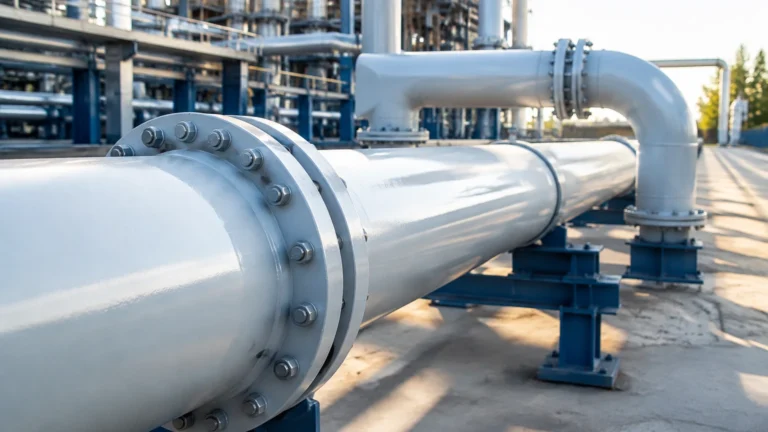
Cooling Tower Controller
Cooling Tower Controller
In industrial thermal management, the cooling tower serves as the primary heat rejection mechanism for processes ranging from power generation to chemical manufacturing. To maintain the efficiency, safety, and longevity of these systems, a cooling tower controller is employed to automate water chemistry, blowdown cycles, and water level management. At the heart of any effective control system lies precise instrumentation, particularly level measurement sensors that provide the real-time data necessary for the controller to make operational decisions.
Effective cooling tower management requires a balance between water conservation and the prevention of scaling, corrosion, and biological growth. This article examines the technical requirements of a cooling tower controller, the measurement principles of the sensors that support it, and the criteria for selecting the right instrumentation for industrial environments.
Understanding the Role of a Cooling Tower Controller in Industrial Processes
A cooling tower controller is an integrated electronic system designed to monitor and regulate the physical and chemical parameters of cooling water. Its primary objective is to optimize the "cycles of concentration"—the ratio of the concentration of dissolved solids in the tower water to the concentration in the makeup water.
As water evaporates from the tower, pure H2O is lost, leaving behind minerals and impurities. If left unchecked, these impurities concentrate, leading to scale formation on heat exchangers and cooling tower fill. The controller manages this by initiating a "blowdown" (discharging a portion of the concentrated water) and triggering "makeup" (adding fresh water). This entire process relies on accurate level sensing to ensure the basin never runs dry and that the volume remains sufficient for pump operation.
For engineers looking to integrate high-performance sensors into their control loops, reviewing Main Page options for radar and ultrasonic technologies is a critical first step in system design.
Level Measurement Principles for Cooling Tower Control
Before a cooling tower controller can execute a command, it must receive accurate input from level sensors. Several measurement principles are commonly used in cooling tower basins and sumps, each with distinct physical characteristics.
1. Ultrasonic Level Measurement
Ultrasonic sensors operate on the Time-of-Flight (ToF) principle. The sensor emits a high-frequency sound pulse (typically between 20 kHz and 75 kHz) that travels through the air, reflects off the water surface, and returns to the transducer. The controller calculates the distance based on the speed of sound.
* Advantages: Non-contact measurement prevents sensor fouling from water treatment chemicals.
* Considerations: The speed of sound is affected by air temperature. Most industrial ultrasonic sensors, such as those provided by Welk, include integrated temperature compensation to maintain accuracy across varying seasonal conditions.
2. Radar (Microwave) Level Measurement
Radar sensors also use the ToF principle but utilize electromagnetic pulses instead of sound waves. These pulses travel at the speed of light and are virtually unaffected by air temperature, pressure, or the presence of steam and vapor—common occurrences in cooling tower environments.
* Advantages: Highly accurate (often within ±2 mm) and immune to the heavy mist and turbulence found in large industrial towers.
* Considerations: Higher initial cost compared to ultrasonic, but often lower total cost of ownership due to reduced maintenance.
3. Hydrostatic Level Measurement
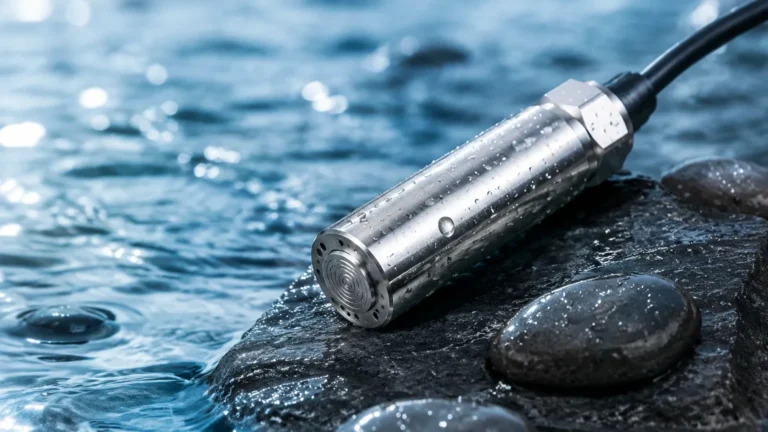
This principle measures the pressure exerted by the liquid column above the sensor. The pressure (P) is proportional to the height of the liquid (h) and its density (ρ), according to the formula P = ρgh.
* Advantages: Simple installation in deep sumps and unaffected by surface foam or floating debris.
* Considerations: The sensor is in constant contact with the water, meaning it must be constructed from corrosion-resistant materials like 316L stainless steel or specialized plastics to withstand cooling water chemicals.
Key Components and Functional Integration
A comprehensive cooling tower controller does more than just monitor levels; it integrates several subsystems into a cohesive management strategy.
Makeup Water Automation
The controller monitors the basin level using a continuous level transmitter. When the level drops below a programmed setpoint—due to evaporation, drift, or blowdown—the controller opens a solenoid valve to admit makeup water. Precise level control prevents "short-cycling" of the makeup valve, which can lead to premature mechanical failure.
Blowdown Control
Blowdown is often triggered by conductivity sensors that measure Total Dissolved Solids (TDS). However, the cooling tower controller must interlock this function with the level sensor. If the water level is already at a critical low, the controller must prioritize makeup over blowdown to protect the circulation pumps from cavitation.
Chemical Dosing
To prevent bio-fouling and scale, chemicals are dosed into the system. High-end controllers use "feed and bleed" logic, where chemical pumps are activated based on the volume of makeup water added. This requires the controller to calculate the volume based on the change in level within the basin or by integrating a flow meter on the makeup line.
Selection Criteria for Level Sensors in Cooling Tower Applications
Selecting the appropriate instrumentation for a cooling tower controller requires an evaluation of the specific operating environment. The following table summarizes the key selection factors for the most common technologies.
| Feature | Ultrasonic Sensors | Radar Level Meters | Hydrostatic Transmitters |
| :— | :— | :— | :— |
| Measurement Type | Non-contact | Non-contact | Contact (Pressure) |
| Accuracy | ±0.25% of range | ±2 mm to ±5 mm | ±0.1% to ±0.5% of span |
| Steam/Vapor Resistance | Moderate (can be affected) | Excellent | Excellent |
| Foam Sensitivity | High (may lose signal) | Moderate | None |
| Maintenance Req. | Low | Very Low | Moderate (cleaning required) |
| Typical Range | 0.3m to 15m | 0.3m to 30m+ | 1m to 20m |
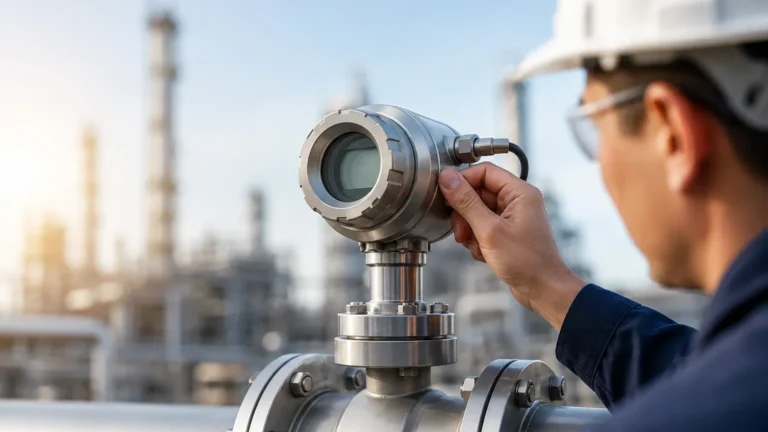
When specifying a system, engineers should prioritize sensors that offer 4-20mA or RS485 Modbus outputs, allowing for seamless integration with a centralized cooling tower controller or a broader PLC/SCADA system.

Installation Guidelines and Best Practices
The reliability of a cooling tower controller is only as good as the physical installation of its sensors. Poor placement can lead to erratic readings and system instability.
1. Avoid Turbulence: Level sensors should not be mounted directly above the makeup water inlet or near the return header where splashing is prevalent. Turbulence can cause "noise" in the signal. If turbulence is unavoidable, a stilling well (a vertical pipe that dampens surface movement) should be used.
2. Blocking Distance (Dead Zone): All non-contact sensors have a minimum distance they cannot measure (the "dead zone"). For an ultrasonic sensor, this might be 0.25m to 0.5m (10" to 20"). Ensure the sensor is mounted high enough so the water level never enters this zone.
3. Beam Angle: Radar and ultrasonic sensors emit a cone-shaped beam. Ensure there are no structural supports, pipes, or ladders within this beam angle, as they will cause false reflections.
4. Environmental Protection: While many sensors are rated IP67 or IP68, the cooling tower environment is highly corrosive. Using sunshades for outdoor installations and ensuring cable glands are properly sealed will extend the life of the electronics.
Operational Limitations and Environmental Challenges
Despite advancements in technology, certain conditions can challenge a cooling tower controller's accuracy:
* Heavy Foam: In systems with high organic loading or certain chemical treatments, thick foam can develop on the water surface. Ultrasonic pulses may be absorbed by the foam, leading to a "loss of echo" error. In these cases, radar or hydrostatic sensors are preferred.
* Ambient Noise: In very loud industrial environments, high-decibel acoustic noise can occasionally interfere with ultrasonic frequencies. Shielded cables and proper grounding are essential to prevent electrical interference from large pump motors.
* Temperature Extremes: In cold climates, ice formation in the basin can trap hydrostatic sensors or create false surfaces for ultrasonic units. Basin heaters are often integrated into the cooling tower controller logic to mitigate this risk.
Frequently Asked Questions (FAQs)
Q: Can I use a simple float switch for cooling tower control?
A: While float switches can be used for high/low alarms, they do not provide the continuous data needed for sophisticated cooling tower controllers to optimize water usage and chemical dosing. Continuous level transmitters (ultrasonic or radar) are recommended for modern efficiency standards.
Q: How often should the level sensors be calibrated?
A: For most Welk ultrasonic and radar units, factory calibration is stable for several years. However, a manual check (comparing the sensor reading to a physical dipstick measurement) should be performed every 6 to 12 months as part of routine maintenance.
Q: What is the benefit of using a 26GHz or 80GHz radar over ultrasonic?
A: Higher frequency radar (like 80GHz) has a narrower beam and better penetration through heavy steam and condensation. If your cooling tower operates at high temperatures or in enclosed spaces where steam accumulates, radar is the superior choice.
Q: How does the controller handle pump protection?
A: The cooling tower controller is typically programmed with a "Low-Low" level cutout. If the basin level drops below the suction pipe of the pumps, the controller will force an emergency shutdown of the pumps to prevent dry-running and catastrophic seal failure.
Conclusion
An optimized cooling tower controller is a prerequisite for sustainable industrial operations. By accurately managing water levels and chemistry, these systems reduce water waste, lower energy consumption by preventing scale-related heat transfer loss, and protect expensive mechanical assets. Selecting the right level measurement technology—whether it be the robust non-contact capabilities of radar or the cost-effective reliability of ultrasonic sensors—ensures that the controller has the high-quality data it needs to function effectively.
For technical specifications and to explore the full range of level measurement solutions suitable for cooling tower applications, engineers are encouraged to consult professional resources and Review product options and application support to ensure their system meets the rigorous demands of modern industrial automation.